
Precision medicine delivers personalized cancer care based on an individual’s genomics, lifestyle, and environment. Precision medicine implements the use of biomarkers, molecular testing, and targeted therapies to tailor treatment plans that address the unique needs of every patient.
Helping to bring personalized cancer care into focus, ACCC transforms complex science into clear and actionable education that brings clarity to patient care decisions. From essential knowledge on cancer screening updates to clinically impactful biomarker testing and new cancer diagnostic assay development, the ACCC Precision Medicine Library has fundamental resources that match the professional needs and preferred learning styles of the multidisciplinary cancer team.
ACCC develops targeted educational resources and programs that help multidisciplinary cancer care teams stay up to date on the latest advancements in cancer diagnostics. This includes resources on subjects including biomarkers, measurable residual disease (MRD) testing, multi-cancer early detection, and pathology.
ACCC develops targeted educational resources and programs that help multidisciplinary cancer care teams stay up to date on the latest advancements in cancer diagnostics. This includes resources on subjects including biomarkers, measurable residual disease (MRD) testing, multi-cancer early detection, and pathology.
ACCC offers a variety of educational and practical resources to help community programs achieve a more coordinated care experience for their patients. This includes projects and resources on eliminating disparities in precision medicine, genetic counseling, and precision medicine stewardship.
This 3-part educational video series spotlights community oncology practices that have successfully implemented tumor treating fields (TTF) therapy as an option for patients with some brain cancers, including glioblastoma and astrocytoma. This therapy uses low-intensity, intermediate-frequency alternating electric fields to disrupt mitosis in cancer cells, inhibiting tumor growth and inducing cell death. Administered using transducer arrays placed on the skin, TTF therapy is noninvasive and has been incorporated into treatment guidelines in several countries. However, uptake in the community setting has been variable, with some clinicians lacking awareness or understanding of how to administer the therapy.
In this series, experts from Orlando Health Cancer Institute, Willis Knighton Cancer Center, and Costal Cancer Center share insights from real-world experience administering TTF therapy, including strategies for multidisciplinary care coordination and initiating treatment.
Stay tuned for part 3 of this series.

ACCC launched its Precision Medicine Stewardship Program to highlight institutions that have successfully built the infrastructure, workflows, and leadership models needed to deliver precision medicine at scale. TriHealth Cancer and Blood Institute in Cincinnati, Ohio, offers a compelling example of what it takes to move from aspiration to execution.

In a recent conversation with ACCC, Kevan Simms, MBA, PMP, Assistant Vice President of Precision Medicine at Ochsner Health, shared how his organization is building a scalable stewardship model that not only improves current oncology care but also prepares for the future.
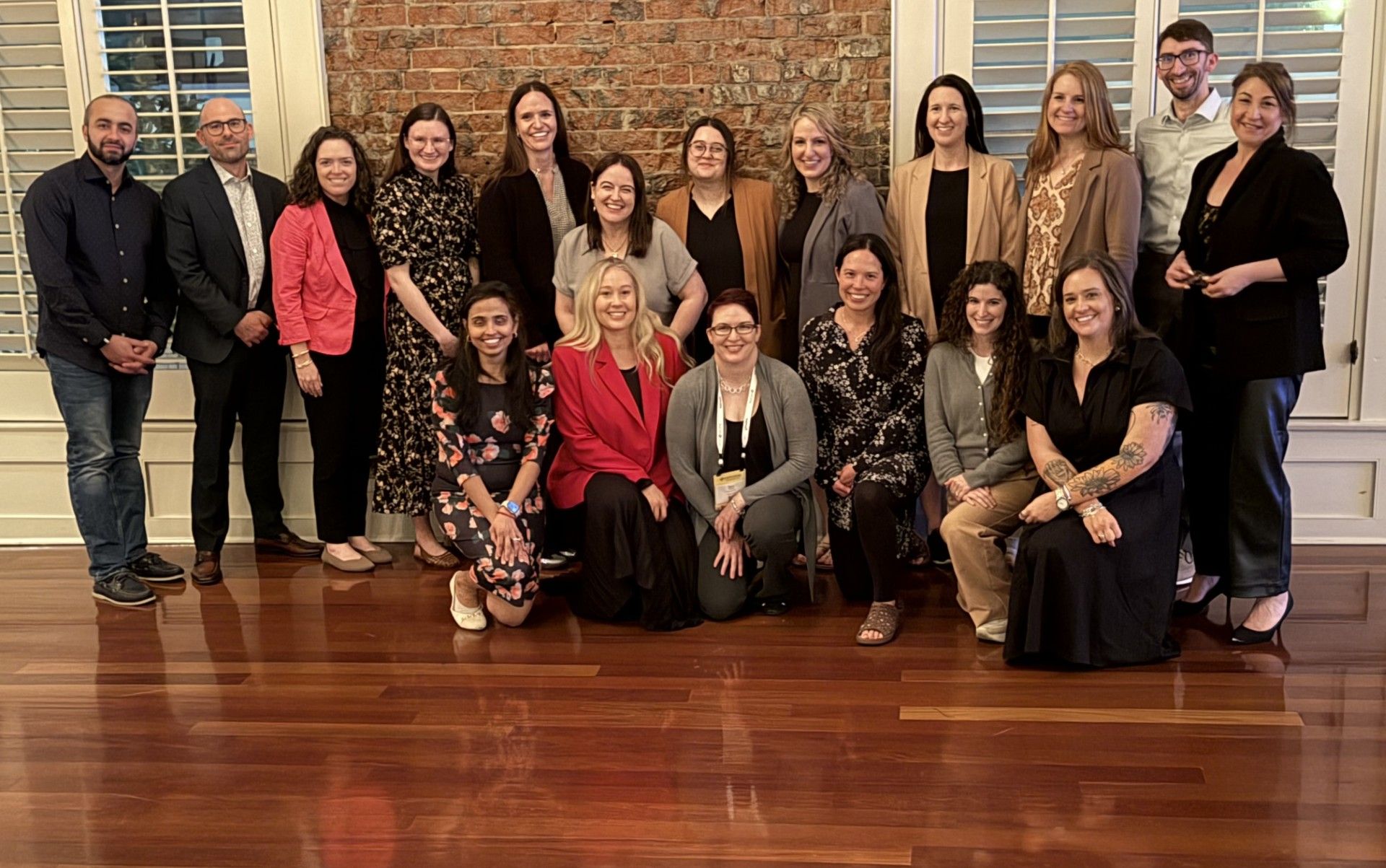
During the HOPA 2026 annual conference, ACCC brought together a small group of oncology pharmacists for a practical, candid conversation about challenges with the implementation of bispecific antibodies that was deeply grounded in real-world experience and what it takes to operationalize care.

In recognition of Bladder Health Awareness Month, ACCC shares the results of a recent quality improvement study, which provides impactful steps cancer centers can take to mitigate disparities in bladder cancer.
In this episode, CANCER BUZZ speaks with Erin Pierce, MSN, APRN, FNP-C, Associate Clinical Investigator and Nurse Practitioner at HonorHealth Research Institute, and Kristen Kipping-Johnsson, MPH, Director of Network Research Operations at the University of Chicago, about how each of their cancer programs are approaching DCT implementation. Their discussion explores how decentralized components, such as community-based treatment delivery, centralized research infrastructure, and hybrid trial designs, can increase participation opportunities for patients in both community and academic settings.
In this episode, CANCER BUZZ explores how it feels physically and emotionally for patients to begin and continue BsAb therapy. Grounded in real-world insights, this discussion highlights the logistical and emotional challenges that arise during the step-up period and early treatment phases and identifies opportunities for care teams to better support patients throughout their journey.
In this episode, CANCER BUZZ speaks with Manojkumar Bupathi, MD, President of Rocky Mountain Cancer Centers, about how ADCs are reshaping the care model toward earlier, structured collaboration between urology and medical oncology.
In this episode, CANCER BUZZ speaks with Terence Friedlander, MD, and Iva Petrovchich Colón, NP, both part of the team treating bladder cancer at the University of California, San Francisco (UCSF), about how their cancer program manages the toxicity profile of ADCs in order to prioritize patient outcomes and quality of life.
Gain insights on reshaping multidisciplinary cancer care team workflows to enable laboratory professionals to improve biomarker testing efficiency.

While recent advances in precision medicine have substantially changed the management of lung cancer, care must be taken to ensure that these advances do not worsen health disparities. This study included a case component that divided overall respondents into two cohorts to observe how patient characteristics, such as age, socio-economic status, race/ethnicity, and health literacy, affected the likelihood of ordering biomarker testing.
This article explores the exciting potential for pharmacists in the cardio-oncology setting, where their knowledge of oncolytic therapies, drug interactions, and toxicity management proves integral to patient care.
ACCC shares how Sanford Health introduced its own “precision medicine steward” through the development of a pilot Oncology Nurse Navigator, Genomics (ONNG) role, which has improved coordination of its biomarker testing program.
Presented at The American Society for Clinical Pathology (ASCP) 2022 Annual Meeting, September 7-9, 2022.
Presented at the 2021 ASCO Quality Care Symposium, September 24 - 25, 2021.
Presented at the IASLC 2021 World Conference on Lung Cancer, September 8-14, 2021
Presented at the SITC Annual Conference.