While breast cancer is a high-profile disease, receiving significant private and public research funding and focused awareness and prevention initiatives, patients with metastatic breast cancer face unique challenges. According to the Metastatic Breast Cancer (MBC) Alliance “public messaging about the [breast cancer] ‘cure’ and survivorship is so pervasive that people diagnosed at stage IV with metastatic breast cancer can be stigmatized by the perception that they’ve failed to take care of themselves or undergo annual screening.” In addition, many metastatic breast cancer patients face a number of communication challenges, including:
The new, online ACCC Metastatic Breast Cancer Resource Library connects you to curated materials (webinars, articles, blogs, and more) specific to supporting your MBC patients through specialized support tools and tailored education.
Search by topic, resource type (e.g., webinar, article, blog, tool), point of care, or by the effective practices identified in the ACCC Metastatic Breast Cancer project workbook—then share these nationally available, free resources with your patients.
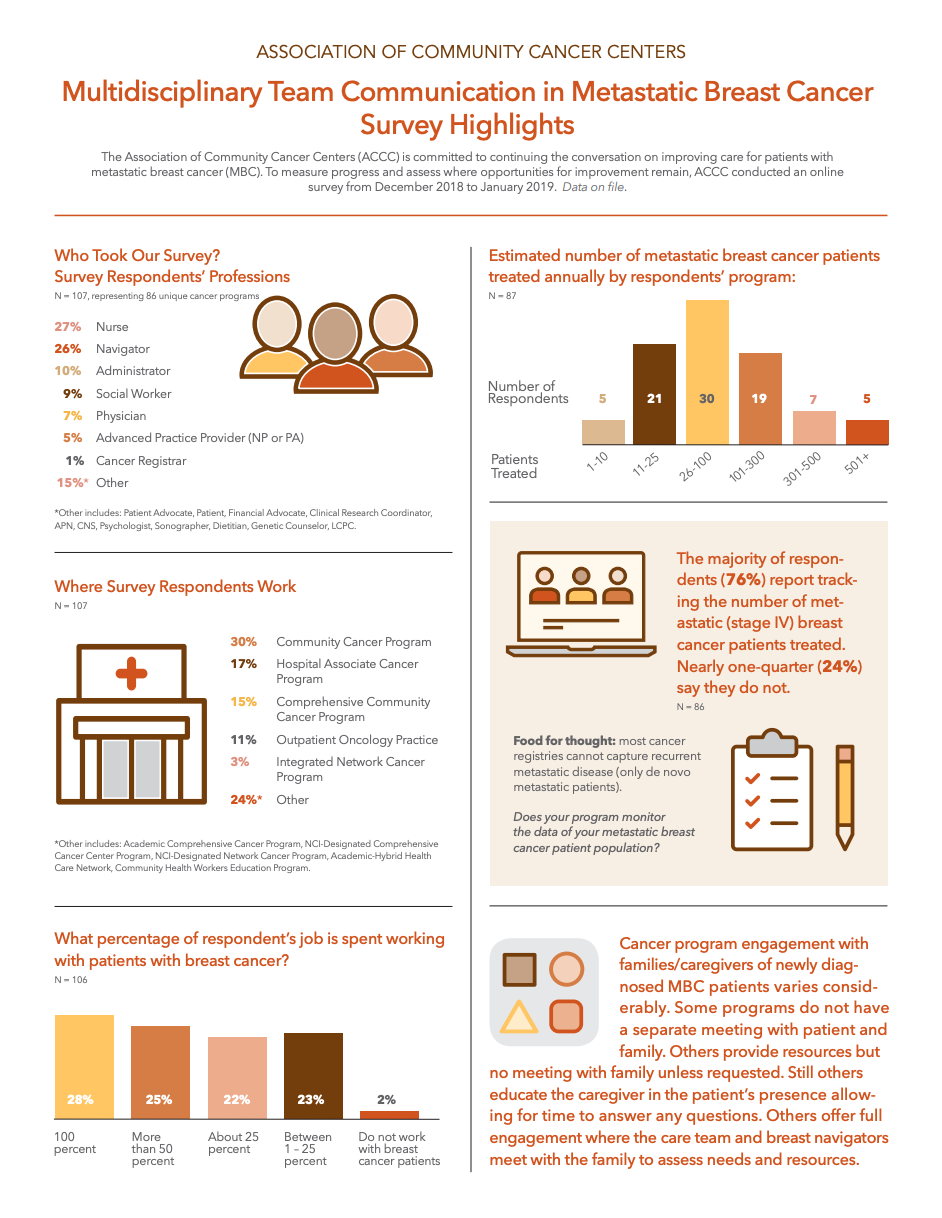
ACCC conducted a Multidisciplinary Team Communication in MBC survey of over 100 care team members—representing 86 unique cancer programs—that measured progress and assessed areas for continued improvement in caring for patients with metastatic disease.
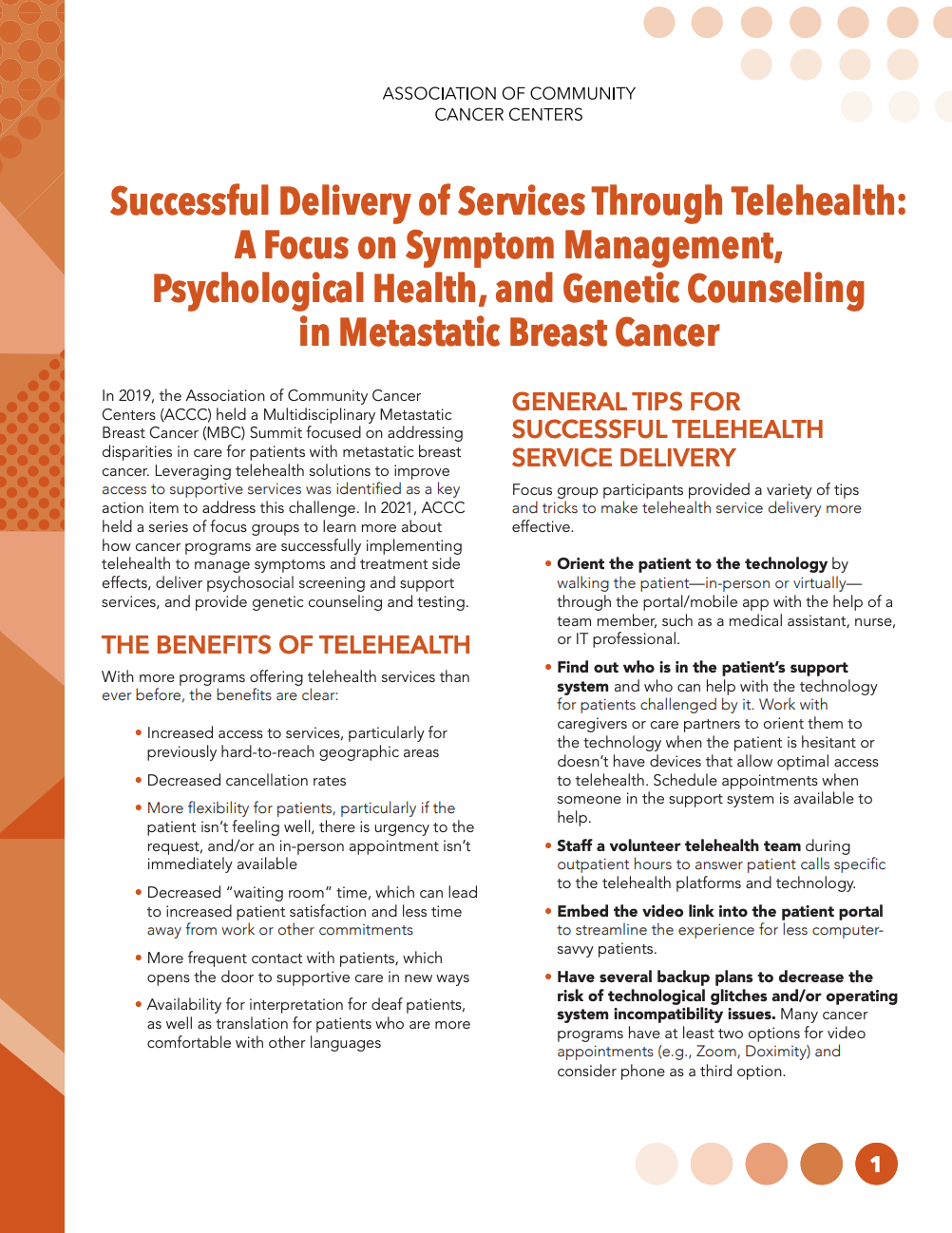
ACCC members share how they are successfully implementing telehealth to manage symptoms and treatment side effects, deliver psychosocial screening and support services, and provide genetic counseling and testing.

From challenging misconceptions about breast cancer to incorporating paramedical tattooing for survivors after reconstruction, gather valuable takeaways from Oncology Issues in observance of Breast Cancer Awareness Month.
Genetic counselors—as members of the cancer care team—can help patients better understand their cancer diagnosis, make informed treatment decisions, and navigate the financial costs of testing.
Presented at the 2019 ASCO Quality Care Symposium in San Diego, CA.
Presented at the 2018 Multinational Association of Supportive Cancer Care (MASCC) and International Society of Oral Oncology (ISOO) Annual Meeting in Vienna, Austria.