Author(s):

Sanford Health is the largest rural health system in the United States, with a commitment to transforming the health care experience and providing access to world-class health care in America’s heartland. Headquartered in Sioux Falls, South Dakota, the organization has 55,000 employees and serves over 2 million patients and nearly 425,000 health plan members across the upper Midwest including South Dakota, North Dakota, Minnesota, Wyoming, Iowa, Wisconsin, and the Upper Peninsula of Michigan. The integrated nonprofit health system includes a network of 58 hospitals, 289 clinic locations, 145 senior care communities, 4500 physicians and advanced practice providers, and nearly 1100 active clinical trials and studies. The organization’s transformational virtual care initiative brings patients closer to care with access to 80 specialties.
Established in 2007, the Sanford World Clinic initiative started with the idea that everyone has the right to receive quality health care close to home and a commitment to sharing knowledge and best practices with rural communities to expand access to primary care services. By operating clinic facilities both in developed and developing nations, Sanford World Clinic provides not only primary care health infrastructure and services, but also access to specialty care, helping communities address more complex medical needs close to home, often in rural and resource-scarce areas. In addition, Sanford World Clinic supports medical education and research opportunities by creating global learning environments for clinicians, trainees, and researchers, fostering innovation and the exchange of best practices across borders. The initiative also serves as a valuable retention and engagement tool for Sanford Health enterprise employees, offering meaningful opportunities for global service, professional growth, and mission-driven work. Sanford World Clinic seeks to engage individuals and partner organizations who share its vision of expanding primary health care to populations that currently lack access.
Unlike mission-based or mobile treatment programs, Sanford World Clinic provides communities with permanent, sustainable health care infrastructure for generations. Each Sanford World Clinic benefits from complete integration with Sanford Health’s physicians, research scientists, nurses, and operational staff, allowing teams to combine clinical services and scientific discovery to provide the most advanced care available.
Sanford’s work in Ghana began in 2011. The country was selected for its strong potential to improve health outcomes for the following reasons:
Cape Coast was the first Sanford World Clinic location in Ghana. Today, Sanford World Clinic owns and operates 4 clinic locations in Ghana, which are located along the southern border in Adenta, Kasoa, Mankessim, and Cape Coast.
One of our early lessons was that a pediatric-only model was not enough—families needed comprehensive care. So, from the beginning, Sanford World Clinic – Ghana shifted toward full primary care services that could support everyone in the community.
We also realized the importance of relationship-building with local government and community leaders. That collaboration led to a 2014 MOU (memorandum of understanding) with the Ministry of Health and Ghana Health Service, which really laid the groundwork for everything that has come since.
A few examples include Sanford World Clinic’s investment into Ghana’s Community-Based Health Planning and Services facilities—everything from installing wells and solar panels to improving internet connectivity and training government health care workers. One of the latest collaboration efforts with the Ghana government has been around HPV vaccination. Sanford World Clinic – Ghana paved a pathway and provided HPV vaccinations and education to about 2500 boys and girls. We have now moved to a supportive role with Ghana Health Service as it pushes forward with a public program following our model.
As the system matured, the focus of Sanford World Clinic – Ghana turned to strengthening infrastructure and improving quality. We implemented one of the first electronic health record systems in the country, centralized procurement, and earned SafeCare certification across our clinics. After COVID-19, Sanford World Clinic – Ghana started expanding into more specialty areas, including:
Taking a big-picture view of the work done by Sanford World Clinic – Ghana, the story is really about growth and adaptation. We have gone from offering only primary care to providing emergency care, maternity services, diagnostics, specialty care, and preventive health, while continuously working hand in hand with our government and community partners.

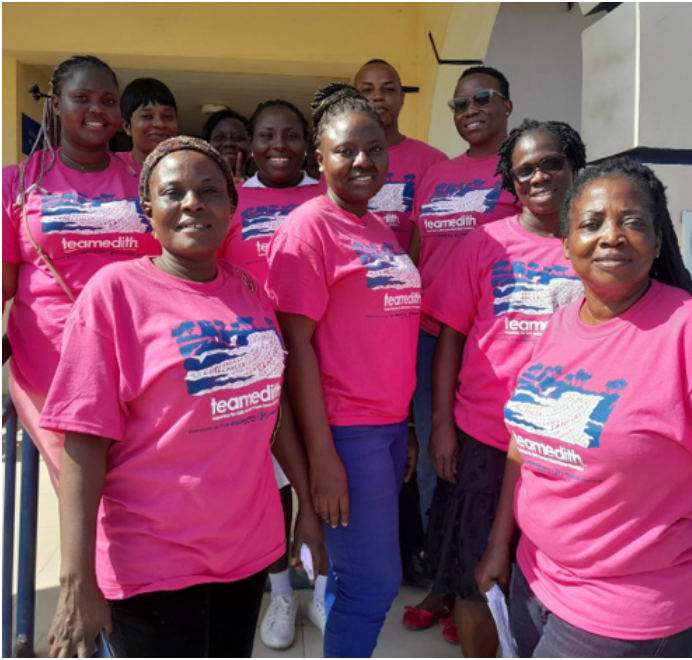
Sanford Health Ghana Kasoa nurses participate in a breast cancer screening event in October 2025.

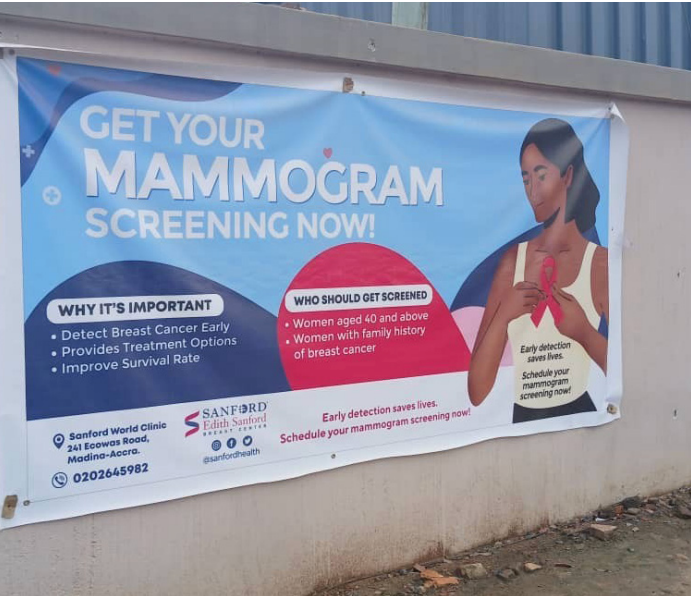
Promoting the new mammogram service offered at Sanford Health Ghana Adenta.
Women comprise the largest portion of the patient population served by Sanford World Clinic – Ghana. Our Ghanaian staff has experienced firsthand the growing burden of cancer on the country’s population. Ghana, as a heavily populated, low- to middle-income nation, is in dire need of tools to address the increasing incidence, morbidity, and mortality of cancer.
Developing countries in general and Ghana in particular struggle with the late detection of breast and cervical cancer. In Ghana, these are the top 2 cancers in women for both incidence and mortality. With over 5000 cases estimated in 2022, and almost 2400 (2369) deaths, breast cancer has become the most common cancer-related death among Ghanaian women, and the incidence of breast cancer continues to rise. In fact, across sub-Saharan Africa, mortality rates of both breast and cervical cancers are some of the highest in the world.1
Along with the rising rate of breast cancer overall, it is also becoming increasingly more common among younger Ghanaian women. Nearly 70% of women diagnosed with breast cancer in Ghana are in advanced stages of the disease when they present, resulting in limited treatment success and a high death rate. According to Global Cancer Observatory data,2 Ghanaian women experience almost 3 times the mortality rate of breast cancer compared with developed countries. The advanced stage at diagnosis is multifactorial: patients tend to delay seeking health care (often up to 10 months after the onset of symptoms), there is a lack of awareness of the disease at its early stages, and there is stigma associated with the disease.3
Cervical cancer also affects Ghanaian women disproportionately. The World Health Organization (WHO) estimates the annual age-standardized cervical cancer incidence rate in Ghana as 27/100,000, which is 4 times the US rate, while the age-standardized mortality rate is 16.9/100,000, or 8 times the US rate.
Historically, Ghana’s health care advancement resources have been primarily focused on infectious diseases and trauma. However, with the increasing prevalence of women’s cancers and the poor survival rate, breast and cervical cancers are severely impacting not only the health of women, but also the socioeconomic status of the family.
Ghana does not have the resources to implement a mammography screening program (less than 2% of the women in Ghana have had a mammogram and most of the mammograms performed were diagnostic, not screening) nor a cervical cancer screening program (less than 5% of Ghanaian women have had a pap smear or HPV typing). Therefore, development of a low-resource tool to aid in early detection is imperative.

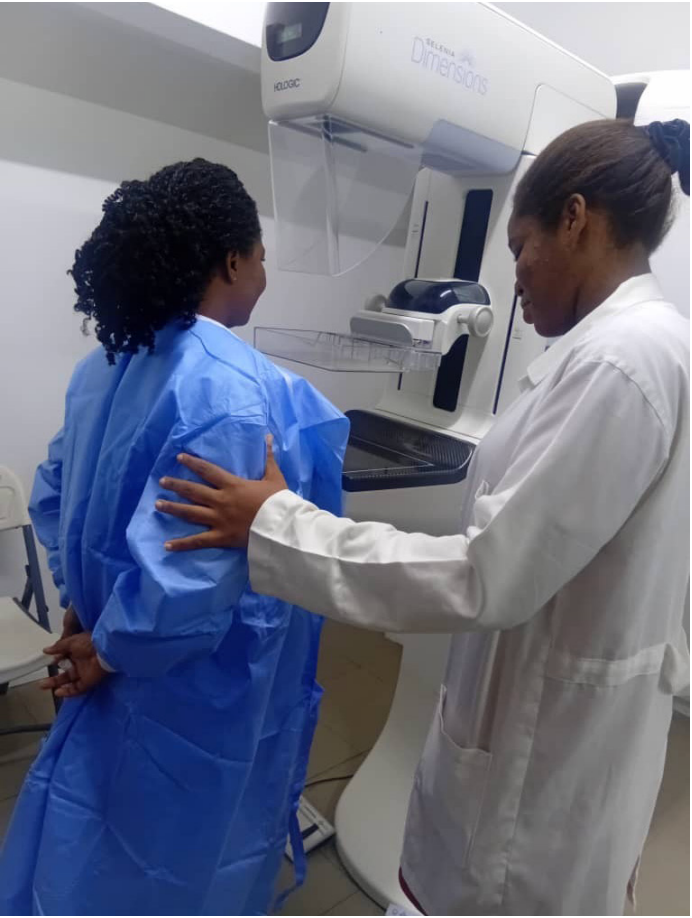
First patient receiving a mammogram in October at Sanford Health Ghana Adenta.
Sanford World Clinic – Ghana wanted to expand its primary care provision to address the growing burden of breast and cervical cancers. Hence, the Survey of Women of Ghana on Breast and Cervical Cancer (SWOGBACC) study was born.
Data collection and patient access in Ghana continue to be challenging. To aid in the acquisition of accurate data, our team needed to design a study that combined the rigor of a clinical trial (adhering to the Ghanaian rules and regulations for sensitive data protection and institutional review board approval) with operational implementation that is feasible during standard clinical care. The study is about as close to clinical application as possible, and thus required the collaboration of Ghanaian health care leaders, researchers experienced in survey design and interpretation, and a primary care site to create a survey and care model that was scientifically sound but also applicable in the Ghanaian clinical setting.
The SWOGBACC study aimed to determine the role of a screening survey for the early detection of breast and cervical cancer among Ghanaian women. Specifically, it was designed to:
The successful implementation of the study and its potential application in clinical care were dependent upon close collaboration with Ghanaian leaders and health care experts throughout the study design, communication, and implementation periods. Sanford World Clinic – Ghana engaged research leaders, breast and cervical cancer experts, and health care entities early and often in study design and implementation. The study was designed following a May 2022 discussion that brought together experts from the University of Ghana’s West African Genetic Medicine Centre, the University of Ghana Medical School, Roche Pharmaceuticals-Ghana, Sanford Health, Sanford World Clinic – Ghana, and Yemaachi Biotech.
The SWOGBACC study tested the feasibility of a low-resource tool (survey) combined with 3 clinical tools that were already in use to impact the growing burdens of breast and cervical cancers:
Clinical tools have been introduced gradually into standard care at Sanford World Clinic – Ghana clinics, with appropriate training for health care providers (physicians, midwives, and nurses) provided. For instance, in 2021, Sanford World Clinic – Ghana provided training for clinical breast exams using the tactical training system from Mammacare.4 The nurses and midwives used this training to provide consistent and effective clinical breast exams for SWOGBACC study participants and for Sanford World Clinic – Ghana clinical patients. Evaluation of the training effectiveness and the health care professional’s anticipated use of clinical breast exams in clinical care was published in 2024 in the International Journal of Africa Nursing Sciences.5
SWOGBACC also supported a pathway to acquire a thermocoagulation unit to provide “screen and treat” options for precancerous cervical lesions in line with WHO guidelines for thermal ablation. In Ghana, transportation is often difficult for women, so being able to both screen and treat patients in 1 visit is especially appealing. In the SWOGBACC study alone, the screening and treatment for precancerous lesions provided accessible treatment for 6 women.
With experience in survey design and interpretation, Judith A. Osae-Larbi, a health psychologist and research fellow at the University of Ghana’s West African Genetic Medicine Centre, was chosen as the study principal investigator (PI). Dr. Osae-Larbi led the development of the SWOGBACC survey tool, as well as the study protocol and processes leading to the ethical approval of the study. Co-investigators included:
Subject matter expert consultants, including Yaw Bediako, PhD, CEO of Yemaachi Biotech; Kim Martens, RN, nursing and clinical operations, Sanford World Clinic; and Sharon Hunt, MS, medical researcher at Sanford Health, aided in optimizing the study design for scientific validity and operational feasibility. To enhance the impact of the study, the Mankessim clinic location was selected. The dedication of Mankessim’s leadership and staff, including Dr Kwaku Darkwa, vice president and chief medical officer, Sanford World Clinic – Ghana; and Thywill Degley, the clinical supervisor at the Mankessim clinic, reinforced the site selection and helped propel the study to successful completion.
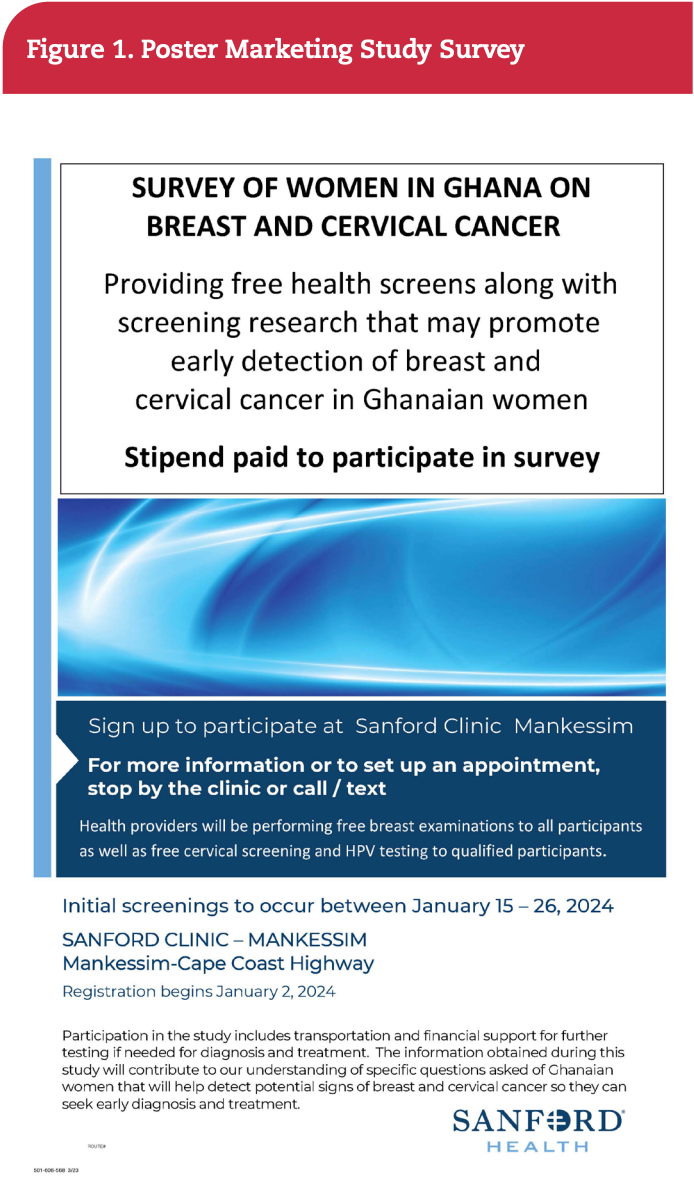
The two-stage study was preceded by an intensive community engagement strategy. Sanford World Clinic – Ghana staff generated community support through face-to-face and media communication and educational efforts with community, religious, corporate, and health care leaders, followed by targeted publicity, including interviews granted by the study PI and Sanford World Clinic – Ghana staff. This preparation led to successful participant recruitment, beginning in January of 2024 and completing data collection in February 2024, well ahead of anticipated recruitment and data collection timelines. Invitations and information regarding the study were trialed and edited to ensure clear and complete information outlining benefits and expectations for potential participants (Figure 1).

Both Study 1 and Study 2 took place at the Mankessim clinic. Study 1 sought to investigate the effectiveness of the SWOGBACC screening survey (whether administered by health professionals or self-administered) in early detection of breast and cervical cancer symptoms in (1) detecting breast and cervical cancer symptoms, (2) increasing awareness and knowledge, and (3) predicting risk of breast and cervical cancer in Ghanaian women. Study 2 explored the acceptability of the SWOGBACC survey by engaging the participating women, as well as health care professionals and the survey administrators in 1-1 interviews and 2 separate focus groups.
The study utilizes health care tools from Mammacare’s clinical breast exam training, Evalyn brush and Yemaachi Biotech’s Sheba kit to collect cervical samples and conduct HPV analysis, and benefitted from consultation and training from one of the leading breast surgeons in Ghana, Dr Florence Dedey, and Dr Kofi Effah, a leader in cervical cancer detection and treatment in Ghana.
The survey tool was thoughtfully designed. The foundation of the survey was created by Sanford Health’s genetic counseling team, led by Jay Flanagan and Rebecca Lomen, who leveraged their knowledge and experience in implementing surveys for assessing risk for breast and cervical cancer. This Sanford Health team collaborated closely with PI Dr Osae-Larbi and her team to expand the survey to provide additional education, detect early symptoms, and counter myths and misconceptions. These teams elicited feedback from women and health care professionals throughout the design process. Since many women were unfamiliar with risk factors for and early signs of both breast and cervical cancer, the survey builders focused on providing education along with collecting valid data. As an example, the teams wanted to educate women on early identification of breast disease and struggled to find images that were educational without being offensive. Most of the images depicting breast disease used White models, reducing their effectiveness for the survey’s patient population. The teams were sensitive to the study’s Muslim population and searched for images that would accurately portray breast disease in an appropriate and culturally sensitive manner. The teams landed upon the “carton of lemons” after viewing and rejecting more explicit images (Figure 2).6

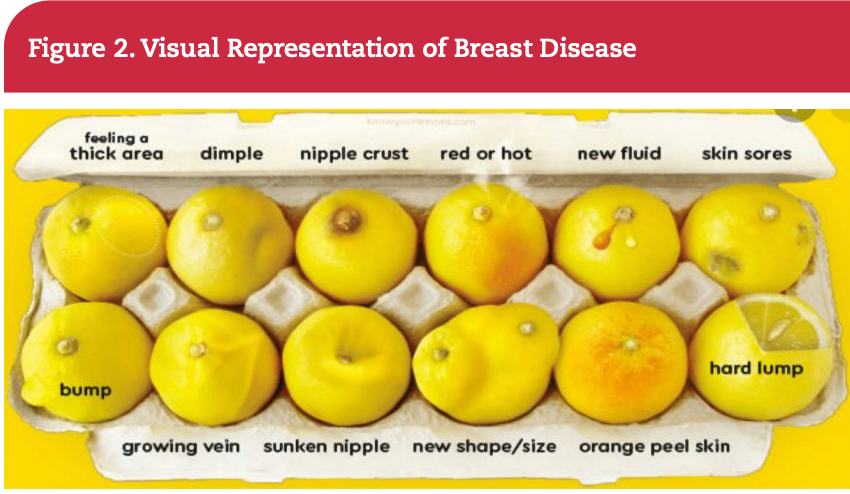
Feedback from survey participants suggested that these images were helpful and welcome. For example, one participant shared, “There is a lot of benefit. If I didn’t come here, I wouldn’t have known all this. The lemon pictures helped me understand what a problem in my breast might look like. So, it has helped me a lot. The questions help a lot. There are some things you have never heard of before. But the more you answer the questions, the more you get to know some things.”
Interviews with study participants and health care professionals were instrumental in fine-tuning the survey to be most useful. SWOGBACC was ambitious in trying to provide education, counter myths and misunderstandings, and assess the risk of both breast and cervical cancer, increasing the length of the survey. Both participants and health care professionals recognized the benefits of this education but were dismayed by the length of the survey. As the study team continues to analyze the data and determine the usefulness of each question, it plans to hone the survey to a more workable length, allowing the tool to be useful in clinical practice.
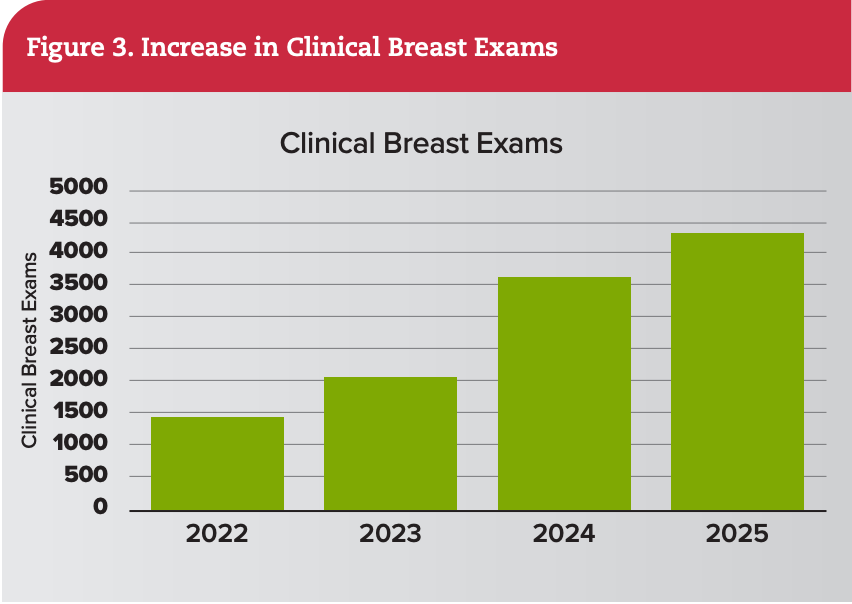
In a country of 38 million people with fewer than 25 mammogram machines nationwide, early detection remains a major challenge in Ghana; due to the lack of equipment, 50% of women who receive a positive diagnosis die before receiving treatment. One SWOGBACC tenet was to ensure the appropriate diagnosis, follow-up, and/or treatment for women who participated in the study. Sanford World Clinic – Ghana partnered with Cape Coast Teaching Hospital to refer women for advanced diagnostic testing or treatment, provide transportation, and engage a health care navigator to aid women through their journey. Unfortunately, even with financial support and transportation, Sanford World Clinics – Ghana had difficulty referring women for diagnostic mammograms due to the very limited capacity. After SWOGBACC closed, Sanford World Clinics – Ghana launched a mammography service using a donated 2D machine from Sanford Health in Worthington, Minnesota. Through collaboration with the Ghana Health Service, Sanford World Clinics – Ghana secured accreditation for NHIS reimbursement for mammography services, ensuring broad access to this critical service. Figure 3 depicts growth in clinical breast exams.

Sanford World Clinic’s commitment to the health and well-being of Ghanaians continues to grow. In the coming years, Sanford World Clinic – Ghana will focus on expanding partnerships with leading breast surgeons and establishing evidence-based clinical guidelines for physicians and health care professionals. These efforts will strengthen early detection, treatment, and long-term management of breast health, ensuring a seamless continuum of care for every patient.
And this is just the beginning of our impact. Sanford World Clinic – Ghana creates significant opportunities across the entire Sanford Health enterprise. It meaningfully expands our global footprint and demonstrates that we are not just talking about being a premier rural health care provider in the United States and around the world—we are actively living our tenet. Successfully operating high-quality, sustainable health care facilities in rural, resource-limited settings speaks volumes about who we are as an organization and what we can achieve.
Sanford World Clinic – Ghana is recognized as both a retention and recruitment tool for the health care system. Sanford Health is developing unique ways for its staff and providers to engage in this global initiative, including participating in international research, sharing expertise through education, and delivering patient care. These experiences encourage fresh thinking, introduce new approaches, and provide a broader perspective on problem-solving that strengthens our work across the system.
One area Sanford World Clinic – Ghana is especially excited about is the opportunity it is creating for medical students and residents. Ghana offers hands-on exposure to global health, cross-cultural care, and systems-based thinking in ways that simply cannot be replicated in a classroom. Learners work alongside local providers, gain firsthand insight into the challenges of delivering care in different environments, and bring those lessons back into the Sanford Health system—a tremendous benefit for professional development and for building the future workforce.
Overall, Sanford World Clinic – Ghana is not just a global health project—it is a strategic advantage. It enables us to grow, innovate, attract, and retain talent, and live out the Sanford Health mission in a tangible and meaningful way.
Want to learn more about Sanford World Clinic, Sanford World Clinic – Ghana, and other global health initiatives? Visit sanfordhealth.org/initiatives/world-clinic.
Sharon Hunt, MBA, is head of World Clinic Integration, and Karoliina Slack, MBA is vice president of Sanford World Clinic in Sioux Falls, South Dakota. Judith Osae-Larbi, PhD, is a health psychologist at the West African Genetic Medicine Centre, College of Health Sciences, University of Ghana, in Accra, Ghana.
1. Roberts LR, Rivers BM, Yates CC, et al. Unmet needs in oncology clinical research and treatment in Africa: focus on Ghana. Oncologist. 2022;27(9):760-767. doi:10.1093/oncolo/oyac109
2. Data visualization tools for exploring the global cancer burden in 2022. International Agency for Research on Cancer. World Health Organization. Accessed April 2, 2026. https://gco.iarc.who.int/today
3. Mensah S, Kyei I, Agbedinu K, Shiako J, Yorke D, Gyedu A. Assessing breast cancer diagnosis and management in Ghana per the global breast cancer initiative key performance indicators. JCO Glob Oncol. 2025 May:11:e2400653. doi:10.1200/GO-24-00653
4. The first global training network for clinical breast examination. MammaCare. Accessed March 5, 2026. https://learn.mammacare.org
5. Callies D, Schievelbein D, Elverson C, Osae-Larbi J. Clinical breast exam training using tactually accurate computer simulation among healthcare providers in Ghana. Int J Africa Nurs Sci. 2024;20:100716. https://doi.org/10.1016/j.ijans.2024.100716
6. Know your lemons® for early detection. Know Your Lemons® for Early Detection. Accessed April 3, 2026. https://knowyourlemons.org/






Recognizing the critical role advanced practice providers and allied health professionals play in the care continuum, the American Oncology Network provides infrastructure, leadership, and professional growth opportunities to empower these members of the cancer care team to practice at the top of their license.