
Breast cancer accounts for approximately 30 percent of all new cancers in the United States. Estimates show 288,000 new cases of invasive breast cancer will be diagnosed annually. Risk for breast cancer increases with age, but is also dependent on other factors such as genetic mutations, health history, etc. Breast cancer variations also occur depending on race and ethnicity.
Advances in early detection and treatment have helped to reduce breast cancer mortality, however disparities remain among cancer patients. ACCC education programs examine the latest multidisciplinary education and resources regarding health disparities in breast cancer care, the latest clinical advances, and initiatives that aim to improve the quality of breast cancer patient care.
Read how these ACCC Cancer Program Members have developed innovative programs to provide efficient, quality care to their patients with breast cancer.

From challenging misconceptions about breast cancer to incorporating paramedical tattooing for survivors after reconstruction, gather valuable takeaways from Oncology Issues in observance of Breast Cancer Awareness Month.

Artificial intelligence is increasingly being used by cancer care professionals to streamline workflows, optimize screening, and identify the best treatment and survivorship plans for patients with cancer. Learn how the technology's potential is being harnessed in the breast cancer care space.
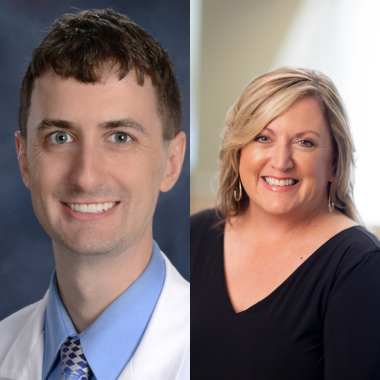
ACCCBuzz spotlights St. Luke’s University Health Network, St. Luke’s Cancer Center, one of the recipients of the 2024 ACCC Innovator Award.

LYTE is a non-profit organization that aims to meet the needs of a growing and diverse breast cancer survivor community by providing expert health and wellness coaching.
Explore findings from a multi-stakeholder collaboration aimed at exploring clinical meaningfulness in comprehensive care delivery for patients with metastatic breast cancer.

Discover the mission of Unite for HER—a national nonprofit organization dedicated to enriching the health and well-being of those affected by breast and ovarian cancers.
The imPROVE study aims to bridge the gap in patient-reported outcomes (PRO) data for Black women with breast cancer by enhancing engagement with tailored electronic PROs (ePROs) and partnering with community leaders to address barriers and ensure accessibility and relevance in community cancer care settings. In this episode, CANCER BUZZ speaks with Manraj Kaur, PhD, investigator and lead faculty for research and innovation at Patient-Reported Outcomes, Value, and Experience (PROVE) center at Mass General Brigham and Andrea Pusic, MD, chief of division of plastic and reconstructive surgery, director of PROVE center at Mass General Brigham, and professor of surgery at Harvard Medical School about the imPROVE study’s efforts to enhance Black women’s engagement in ePROs in breast cancer treatment. Dr. Kaur sheds light on strategies to improve technology accessibility for Black women in their cancer care center by providing iPads and refined usability features on the imPROVE app. Dr. Pusic highlights imPROVE implementation results at five community cancer centers, including utilizing local champions and equitable access to resources.
Tune-in as our expert discusses how and when to screen patients, and then connect them to available resources to better support patients’ financial needs.

With disparate breast cancer outcomes, lack of messages of hope, and limited available support for Black women, Rev. Tammie and her late sister were inspired to co-found Carrie’s TOUCH in 2006.

![[Abstract] Evaluating Disparities in Access to Quality Cancer Care for Black Women with Triple-Negative Breast Cancer in the US: A Provider Perspective](https://cdn.sanity.io/images/gvduir9b/production/9f03a8abe6969356ac6056e226bac4b25e18d743-500x250.jpg)
Presented at the San Antonio Breast Cancer Symposium®- December 5-9, 2023.
![[Abstract 11040] A collaborative, peer-based experience to support meaningful professional development in the evolving standards of care for HER2+ metastatic breast cancer](https://cdn.sanity.io/images/gvduir9b/production/9e04b4c8caada6ddcc3d185d952bc1385c5d784a-500x375.jpg)
Presented at the American Society of Clinical Oncology (ASCO) Annual Meeting, June 3-7, 2022.
Social determinants of health have been proven to impact access to care, but further delineation is necessary to describe their effect on treatment selection itself. To mitigate this knowledge gap, the Association of Cancer Care Centers (ACCC) sought to identify the impact that social determinants of health may have on guideline-concordant treatment selection in hormone receptor positive, HER2 negative, metastatic breast cancer and early breast cancer.

With more and more patients being diagnosed with breast cancer and an improved prognosis for those living with the disease, there’s a clear need to find ways to offset high patient volumes while maintaining high-quality care for longer-term survivors.
ACCC conducted a national, institution-directed quality improvement initiative aimed at increasing the rates of guideline-concordant genetic counseling and testing in patients with Stage 0 to III breast cancer, where results could impact care.
![[Abstract 10529] Genetic counseling and testing rates among community cancer programs for patients with breast cancer following site-directed quality improvement](https://cdn.sanity.io/images/gvduir9b/production/6f1ebcc8676eeb8c0aa6af4f0e91893988a6d7e4-468x292.png)
Presented at the 2021 ASCO Annual Meeting