ACCC association of cancer care centers
Join/Renew
Login
Join/Renew
Login
Education & Resources
ACCC eXchange LogInCorporate Member Sponsored ResourcesPresentations & AbstractsACCC Connect eLearning LogIn
Publications
Oncology IssuesPatient Assistance & Reimbursement GuideTrending Now in Cancer CareBusiness Case Studies for Hiring New Staff
Events
2026 ACCC Leadership SummitAnnual Meeting & Cancer Center Business SummitCapitol Hill DayNational Oncology ConferenceOncology Reimbursement MeetingsOncology State Society Meetings
Policy & Advocacy
ACCC 2026 Policy PrioritiesLetters & StatementsAccess, Payment & Reimbursement ReformWhite Bagging & Brown BaggingAdvocacy ResourcesCancer Moonshot
Membership
Join | RenewWho We AreMembership Types & BenefitsCorporate MembersACCC Member Portal FAQMember Directory
Partners
Oncology State SocietiesPartner OrganizationsCME
News
News ReleasesAdvocacy News ReleasesOncology News
About ACCC
Timeline / 50th Anniversary2025 Impact ReportPresident's ThemeACCC Innovator AwardsACCC FellowsBoard of TrusteesACCC Senior Staff
Breast CancerMetastatic Breast Cancer
Gastrointestinal CancerBiliary Tract CancerColorectal CancerGastric CancerLiver Cancer
Genitourinary CancerBladder CancerProstate CancerRenal Cell Carcinoma
Gynecologic CancerOvarian Cancer
Head & Neck Cancer
Hematologic MalignanciesAcute Lymphocytic Leukemia (ALL)Acute Myeloid Leukemia (AML)Chronic Lymphocytic Leukemia (CLL)Mantle Cell Lymphoma (MCL)Multiple Myeloma (MM)Myelodysplastic Syndromes (MDS)
Lung CancerNon-Small Cell Lung Cancer (NSCLC)Small Cell Lung Cancer (SCLC)
Sarcoma
Skin CancerMelanomaNon-Melanoma Skin Cancers (NMSC)
Clinical Practice & TreatmentCancer DiagnosticsCare CoordinationEHR Integration for Biomarker TestingQuality Improvement Collaboration: Integration of Precision Medicine in Community OncologyTreatment
Financial NavigationFAN Boot CampFinancial Advocacy Network (FAN) Resource LibraryPatient Assistance & Reimbursement GuidePrior Authorization
Health Equity & Access3, 2, 1, Go! Practical Solutions for Addressing Cancer Care DisparitiesAppalachian Community Cancer AllianceOncology Advanced PractitionersPersonalizing Care for Patients of All BackgroundsSocial Drivers of Health
Patient-Centered CareAddressing Care Disparities for VeteransAdolescent and Young Adult (AYA)Care Action Plans for People with CancerDermatologic ToxicitiesEmpowering CaregiversGeriatric OncologyHealth LiteracyNutritionOncology PharmacyPatient NavigationPsychosocial Care in OncologyShared Decision-MakingSupportive CareSurvivorship Care
Practice Management & OperationsCancer Program FundamentalsLeadership Sustainment and Engagement VideosOncology Practice Transformation and Integration CenterOncology Team Resiliency
ResearchACCC Community Oncology Research Institute (ACORI)
Technology & InnovationTelehealth & Digital Medicine
ACCCBuzz Blog
CANCER BUZZ Podcast
Oncology Issues
Join/Renew
Login
Breast CancerMetastatic Breast Cancer
Gastrointestinal CancerBiliary Tract CancerColorectal CancerGastric CancerLiver Cancer
Genitourinary CancerBladder CancerProstate CancerRenal Cell Carcinoma
Gynecologic CancerOvarian Cancer
Head & Neck Cancer
Hematologic MalignanciesAcute Lymphocytic Leukemia (ALL)Acute Myeloid Leukemia (AML)Chronic Lymphocytic Leukemia (CLL)Mantle Cell Lymphoma (MCL)Multiple Myeloma (MM)Myelodysplastic Syndromes (MDS)
Lung CancerNon-Small Cell Lung Cancer (NSCLC)Small Cell Lung Cancer (SCLC)
Sarcoma
Skin CancerMelanomaNon-Melanoma Skin Cancers (NMSC)
Clinical Practice & TreatmentCancer DiagnosticsCare CoordinationEHR Integration for Biomarker TestingQuality Improvement Collaboration: Integration of Precision Medicine in Community OncologyTreatment
Financial NavigationFAN Boot CampFinancial Advocacy Network (FAN) Resource LibraryPatient Assistance & Reimbursement GuidePrior Authorization
Health Equity & Access3, 2, 1, Go! Practical Solutions for Addressing Cancer Care DisparitiesAppalachian Community Cancer AllianceOncology Advanced PractitionersPersonalizing Care for Patients of All BackgroundsSocial Drivers of Health
Patient-Centered CareAddressing Care Disparities for VeteransAdolescent and Young Adult (AYA)Care Action Plans for People with CancerDermatologic ToxicitiesEmpowering CaregiversGeriatric OncologyHealth LiteracyNutritionOncology PharmacyPatient NavigationPsychosocial Care in OncologyShared Decision-MakingSupportive CareSurvivorship Care
Practice Management & OperationsCancer Program FundamentalsLeadership Sustainment and Engagement VideosOncology Practice Transformation and Integration CenterOncology Team Resiliency
ResearchACCC Community Oncology Research Institute (ACORI)
Technology & InnovationTelehealth & Digital Medicine
ACCCBuzz Blog
CANCER BUZZ Podcast
Oncology Issues
    • Education & Resources
    • Publications
    • Events
    • Policy & Advocacy
    • Membership
    • Partners
    • News
    • About ACCC
ACCC association of cancer care centers
5425 Wisconsin Ave #600, Chevy Chase, MD 20815
Tel: 301.984.9496 Email Us
Contact UsVolunteers
Advertise
Career Center
Terms and Conditions
Privacy Policy
ACCC Rebranding
Copyright © 2026 Association of Cancer Care Centers. All Rights Reserved.
HomePublicationsOncology Issues

Artistic Interventions in Cancer Care: Orlando Health Cancer Institute's Evidence-Based Arts in Medicine Program

April 13, 2026
Oncology Issues
April 2026
Volume 41
Issue 2

Author(s):

Gabrielle Stearns

Artistic Interventions in Cancer Care: Orlando Health Cancer Institute's Evidence-Based Arts in Medicine Program
Download Issue PDFDownload PDF

Integrative medicine is a holistic approach to cancer care, combining typical Western health care practices with complementary, evidence-based treatments outside the medical paradigm. Orlando Health Cancer Institute, a multisite cancer program across central and west Florida, prides itself on offering compassionate care, and fulfills that commitment in part by embracing a holistic approach through its Integrative Medicine program. Patients can opt into services like yoga, acupuncture, meditation, and more, while receiving cutting-edge treatments such as proton therapy and tumor-infiltrating lymphocyte (TIL) therapy. The goal is to treat the whole patient, including their psychosocial needs, to improve overall quality of life while undergoing cancer treatment and beyond into survivorship.

One of the most popular offerings among patients is Arts in Medicine, a program that brings creative arts to patients, survivors, and caregivers through both formal classes and informal sessions in the chemotherapy infusion suite. Practicing art during treatment is a research-backed approach to managing stress and pain,1 while also offering distraction, entertainment, and a creative outlet.

Oncology Issues spoke with Brittney Reid, MFA, artist-in-residence of Orlando Health Cancer Institute’s Arts in Medicine program, about the evidence-based benefits of art for patients with cancer and the operational success of this dedicated art program within the cancer center.

Staffing and Operating Arts in Medicine

In 2011, the cancer center received a $16,000 grant from the nonprofit Livestrong to offer a handful of art classes to patients. When the Integrative Medicine program launched a few years later in 2014, Arts in Medicine was one of the first available services. This larger department provided the capacity to expand into additional artistic mediums, including painting, sculpting, jewelry making, and more, and to reach more participants. Today, 15 years after the first art class, Arts in Medicine is funded by a collaboration with the Orlando Health Foundation and is offered free of charge to patients, caregivers, and survivors.

Reid came to Orlando Health Cancer Institute as an intern in 2022 while pursuing her graduate degree in fine arts at the University of Central Florida. She was later hired to stay as a full-time employee and now manages an intern of her own. Together they make up a small yet impactful team, spending most of their time working with individuals one-on-one in patient rooms and chemotherapy infusion suites. Art projects are tailored to each patient’s interests, needs, and abilities, including accommodations to make the experience accessible.

“You have to be flexible when working with patients who have limitations,” Reid said. For example, chemotherapy can make patients sensitive to strong smells, so watercolor paints and plasticine clay (both of which are odorless and easy to clean) are favored over more pungent oil paints and natural clays. For those with limited dexterity in their hands due to treatment-related neuropathy, Reid offers collage supplies, including scissors and glue, which can be much easier to wield than a paintbrush.

Jewelry making is another popular medium among patients, offered through small group classes. Even with small beads and specialized tools, it is important to meet patients where they are. For those in the infusion suite, prepared kits include enough material to make 1 or 2 pairs of earrings, with everything sterilized and ready for creation.

Caregivers have also reported benefits from participating in the Arts in Medicine program. While they may not be seeking physical pain relief, the emotional support still resonates.

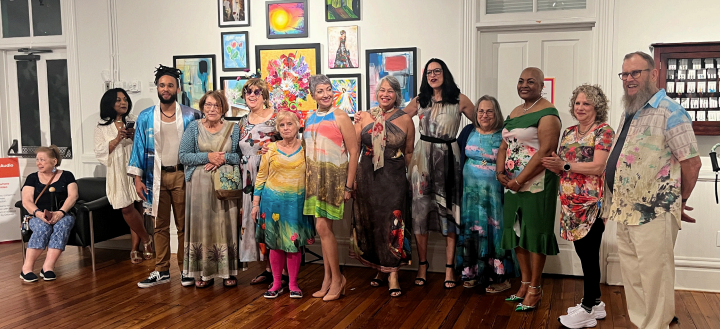
Participants in the Arts in Medicine program gathered and displayed their artwork at the annual gallery show in 2024. Some of the paintings and drawings were printed on clothing items and worn at the celebration.

Rooting Artistic Interventions in Evidence

Art therapy emerged as a clinical discipline in the 1940s, built on a long history of art as a healing modality across cultures and spanning centuries.2 The Arts in Medicine program does not adhere to the clinical techniques of art therapy, which uses an artistic practice to target specific therapeutic goals. Rather, art is offered as recreation for anyone who is interested. Patients can become fully immersed in the activity, which Reid refers to as a “flow state,” distracted from their treatment and associated mental distress. “It allows the clinical setting to be a different kind of environment and to bring comfort for the patients,” she said.

While the program does not use art therapy modalities, it is still evidence-based. Orlando Health Cancer Institute ran a clinical research study in 2025 to quantify the benefits of the Arts in Medicine program for patient well-being. Fifty-four patients took a 90-minute watercolor painting class with an artist while receiving their infusions. Pre- and post-class surveys asked them to rate their pain and stress on a scale from 1 to 10. The average scores for both metrics were reduced by the end of the session, with pain dropping by almost 2 points and stress decreasing by more than 3 points.1

The neural mechanisms responsible for this pain reduction are not fully understood, but are likely tied to psychosocial well-being. Practicing art has been found to release dopamine and engage both the medial prefrontal cortex and amygdala, all of which can reduce anxiety.3 When patients are anxious and anticipating adverse effects, physical pain often feels more intense. Reid explained that when anxiety is lessened through the distraction or joy of practicing art, the perception of pain “softens.”

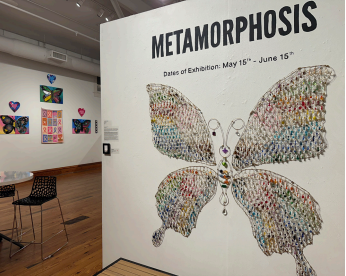
The 2025 gallery show was titled “Metamorphosis” and featured a 5-foot-tall butterfly made of beaded charms in the entryway.

Advancing Patient Well-Being Through Art

Much of the growth and success of the Arts in Medicine program has been driven by direct feedback from patients and providers. Reid shared a meaningful example in which artistic intervention supported a patient and made a significant impact on both him and his care team.

Reid worked with a patient at the cancer center who was receiving treatment for a throat tumor. The patient experienced pain while speaking, creating significant barriers in communicating with his family and care team. Over several sessions, Reid identified the patient’s preferred artistic mediums. He created book page poems, in which he circled a few words on a page torn from a novel that, when strung together, became a line of prose. The rest of the page was colored in with black marker, hiding the excess words to reveal a poem. Another of his favorite activities was Zentangle art, a style of drawing using repetitive lines and geometric shapes.

With consistent art sessions, his family noticed improvements in his pain, mental health, and quality of life. At home, this patient often wrote on paper to communicate rather than using his voice. While he was drawing, he openly chatted and laughed with Reid, seeming to forget about the pain. Practicing art gave him a new medium of expression and made speech more accessible.

This is just 1 of several stories Reid shared from patients who have appreciated and benefited from the program. Others have said they look forward to chemotherapy days as an opportunity to create art, have found unexpected gratitude in their cancer journey after discovering a new passion, and have even shared that the joy they experienced through the program saved their life.

Caregivers have also reported benefits from participating in the Arts in Medicine program. While they may not be seeking physical pain relief, the emotional support still resonates. “For a moment, they’re not a caregiver. They’re able to be an artist. They’re able to just be whatever it is that their original role was, whether it’s a spouse, a friend, a daughter, or a son,” Reid said. Those moments are important for fostering resilience in caregivers, who are at high risk of burnout.

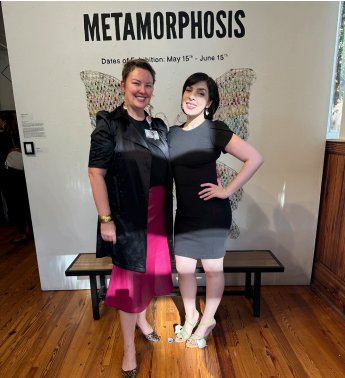
From left to right: Alyssia Crews, MBA, FACHE, vice president of Orlando Health Cancer Institute, and Brittney Reid, MFA, artist-in-residence, at the 2025 annual gallery show.

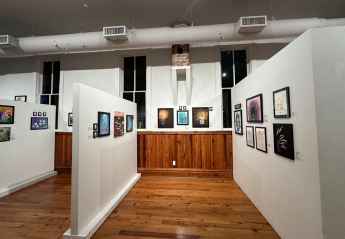
Artwork created by patients, caregivers, and survivors were displayed in the
2025 annual gallery show. Some pieces were available for purchase to benefit
the Arts in Medicine program.

Celebrating Impact Through Community Engagement

Each spring, the Arts in Medicine program culminates in a gallery show in Orlando, Florida. At the gallery’s opening night celebration, patients and their families get to interact outside the hospital, mingling with professionals in the Orlando art scene and selling their work to benefit the Arts in Medicine program. “They’re not patients anymore,” Reid said. “At that point, they’re artists.”

In 2025, the event was titled “Metamorphosis,” and guests were greeted by a 5-foot-tall butterfly mounted on the wall of the gallery. Crafted from aluminum chicken wire, the sculpture held a beaded charm in each open space, created by more than 100 patients and caregivers over the span of a year. Patients, family members, health care workers, and art patrons formed a line to take photos in front of the butterfly, each guest stepping briefly into its wings. Flanked by the work of dozens of artists was a strong community of individuals whose lives had been changed by cancer, but also by the transformative and healing impact of art.

Gabrielle Stearns is associate editor of Oncology Issues and clinical content coordinator for the Association of Cancer Care Centers in Rockville, Maryland.

References

1. Kelley VJ, Galvis HG, Proctor MD, Broome BJ. Arts in Medicine for the Reduction of Pain and Stress in Cancer Patients During Chemotherapy. J Pain Symptom Manage. 2025;69(5):546–551. doi:10.1016/j.jpainsymman.2025.01.009

2. Junge MB. History of Art Therapy. In: Gussak DE, Rosal ML, eds. The Wiley Handbook of Art Therapy. John Wiley & Sons. 2015:7–16.

3. Barnett KS, Vasiu F. How the arts heal: a review of the neural mechanisms behind the therapeutic effects of creative arts on mental and physical health. Front Behav Neurosci. 2024;18:1422361. doi:10.3389/fnbeh.2024.1422361
Articles in this issue

Honoring Progress, Inspiring What Comes Next in Oncology
Designing the Future of Oncology Care—Together
Primary Care Meets Cancer Prevention: Insights From Sanford World Clinic – Ghana
On Target: A Data-Driven Approach to Upgrading Radiotherapy Equipment
Demystifying Decentralization in Therapeutic Clinical Trials
Language as Care: Transforming Patient Experience Through Better Communication
Impact of RDN-Led Nutrition Education: A Multiyear Study
Patient-Derived Organoids Streamline Development and Testing of Drugs for Individualized Cancer Care
Artistic Interventions in Cancer Care: Orlando Health Cancer Institute's Evidence-Based Arts in Medicine Program
Fast Facts Vol. 41, No. 2
Legislative and Regulatory Updates
Due Diligence in Limiting Payer Denials
Restoring Wholeness: The Role of Paramedical Tattooing in Continuous Cancer Care
St. Luke’s Hospital,  Chesterfield, Missouri
St. Luke’s Hospital, Chesterfield, Missouri
Action: Vol. 41, No. 2

Upcoming Events

ACCC 43rd National Oncology Conference
Oncology

ACCC 43rd National Oncology Conference

In Person Conference & ConventionOctober 21, 2026 at 8:00 AM MDT450 Summer St, Boston, MA 02210Omni Boston Hotel at the Seaport, Boston
Register Now!
HSCO 2026 August Dinner Symposium
Oncology

HSCO 2026 August Dinner Symposium

In Person Conference & ConventionAugust 12, 2026 at 5:30 PM HST6600 Kalanianaʻole Highway suite 110, Honolulu, HI 96825, USARoy's Restaurants – Hawaii Kai, Honolulu
Register Now!
LOS 2026 Cancer Congress - National Oncology Updates
Oncology

LOS 2026 Cancer Congress - National Oncology Updates

In Person Conference & ConventionAugust 14, 2026 at 11:00 AM CDT859 Convention Center Blvd, New Orleans, LA, USANew Orleans Marriott Warehouse Art District, New Orleans
Register Now!
LOS Cancer Congress After-Hours: Bowling Social
Oncology

LOS Cancer Congress After-Hours: Bowling Social

In Person Conference & ConventionAugust 14, 2026 at 6:30 PM CDT600 Fulton St, New Orleans, LA 70130, USAFulton Alley, New Orleans
Register Now!
IOS Evansville Meeting
Oncology

IOS Evansville Meeting

In Person Conference & ConventionAugust 18, 2026 at 5:30 PM CDT4011 Gateway Blvd, Newburgh, IN 47630, USADeaconess Gateway Hospital , Newburgh
Register Now!
2026 Carolinas Cancer Conference
Oncology

2026 Carolinas Cancer Conference

In Person Conference & ConventionAugust 22, 2026 at 7:00 AM EDT5757 Palm Blvd, Isle of Palms, SC, USAWild Dunes, Isle of Palms
Register Now!
IOS 2026 Best of ASCO
Oncology

IOS 2026 Best of ASCO

In Person Conference & ConventionAugust 22, 2026 at 6:30 AM CDT300 East 9th Street, Coralville, IA, USAHyatt Regency Coralville Hotel & Conference Center, Coralville
Register Now!
NMSCO 2026 Fall Conference
Oncology

NMSCO 2026 Fall Conference

In Person Conference & ConventionSeptember 12, 2026 at 7:30 AM MDT2101 Louisiana Boulevard NE Albuquerque, NM, 87110Marriott Albuquerque, Albuquerque
Register Now!
Advertisement
Advertisement

Trending Now on
ACCCBuzz Blog

Designing a Safe, Fully Outpatient CAR T-Cell Program in the Community

Designing a Safe, Fully Outpatient CAR T-Cell Program in the Community

Local Staff, Lasting Impact: A New Model for Rural Cancer Prevention

Local Staff, Lasting Impact: A New Model for Rural Cancer Prevention

To better reach its patients living in rural communities throughout Georgia with targeted interventions, 2026 ACCC Innovator Award winner Winship Cancer Institute developed an Embedded Community Staff model, which leverages the experiential knowledge of local community members.

A Pharmacist-Led Strategy to Improve Care With Oncolytic Virus Treatments

A Pharmacist-Led Strategy to Improve Care With Oncolytic Virus Treatments

2026 ACCC Innovator Award Winner UNC Lineberger Comprehensive Cancer Center noticed a common pain point among patients who received oncolytic virus treatment for advanced melanoma: time spent in appointments. To minimize the need for multiple lengthy appointments, the center developed a pharmacist-led strategy that utilized virtual visits and premixing doses prior to in-person visits.

Extending Patient-Centered Cancer Care to Transgender and Nonbinary Individuals

Extending Patient-Centered Cancer Care to Transgender and Nonbinary Individuals

In a recent article from Oncology Issues, authors conducted a systematic literature review and found that two main drivers of care disparities exist for transgender and nonbinary individuals with cancer: rigid binary gender frameworks and gaps in mental health care.

View All ACCCBuzz Blogs

Recently Heard on
CANCER BUZZ Podcast

A Team Approach to ADCs in Bladder Cancer – [Video Podcast] Ep. 62

MDS: Low Risk Isn’t No Risk - [Podcast] Ep. 235

Beyond Body Art: Restoring Wholeness Through Paramedical Tattooing - [Podcast] Ep. 234

Bridging Radiation and Oncology in SCLC Care - [Podcast] Ep. 233

View All Podcasts

Latest from Oncology Issues

June 2026
June 2026
April 2026
February 2026
December 2025
October 2025
View All Oncology Issues

Join the Conversation

ACCC eXchange Digital Banner
Login