Author(s):
The University of Wisconsin (UW) Carbone Cancer Center, located in Madison, is the only National Cancer Institute-Designated Comprehensive Cancer Center in the state, a National Comprehensive Cancer Network member institution, and a member of the Big Ten Cancer Research Consortium. Patients travel from across Wisconsin and Northern Illinois not only to access cutting-edge therapies and first-in-human clinical trials, but also for deeply compassionate care.
"We have access to top-of-the-line, novel technology and clinical trials here, and the expertise is top-notch, but we also do it in a very cozy, Midwestern kind of way," said Nataliya Uboha, MD, PhD, Associate Director of Clinical Research and faculty leader for the Early Phase Oncology Therapeutics Program.
While UW Carbone Cancer Center partners with cancer programs around Wisconsin, it is one of only four options in the state for pediatric cancer care and the only option for certain complex treatments and clinical trials. As a result, patients often travel four hours or more from rural areas, requiring intentional strategies to reach isolated populations, support diverse patient groups, and maximize access to the high-quality care and research that define this cancer program.

UW Health Eastpark Medical Center is a destination medical center with multiple specialties in a single location, allowing patients to receive all their care during a single visit. From consultative and supportive services to clinical research and treatment available nowhere else, patients will receive the personalized care they expect in an environment they deserve.
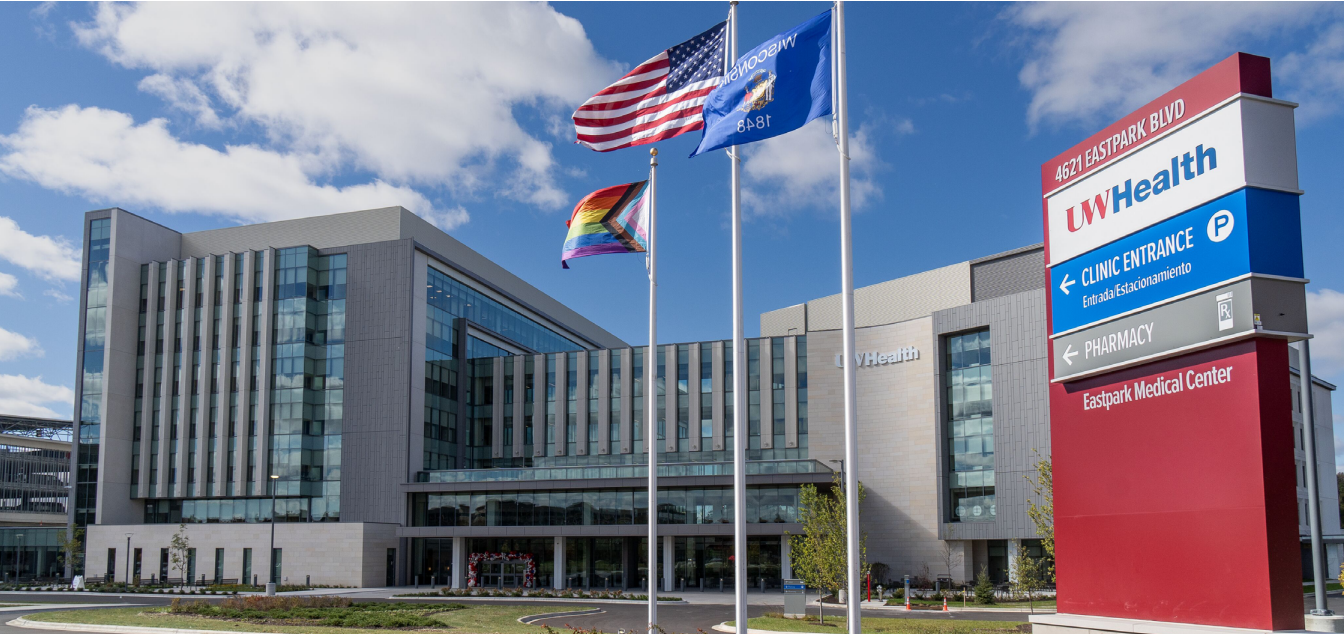

UW–Madison has been home to groundbreaking advances in cancer research for decades. UW Health is the integrated health system affiliated with the University of Wisconsin–Madison.
Supporting a Diverse and Rural Patient Population
UW Carbone Cancer Center has a dedicated Community Outreach and Engagement team to expand access to care for patients across the state and beyond. Partnerships with local providers and organizations support research, treatment, screening, and education in rural areas, with tailored and targeted approaches to reach diverse patient groups.
Wisconsin has one of the largest populations of Amish and Mennonite groups in the country. These individuals often lack health insurance, reliable transportation, and communication infrastructure to support follow-up. There are also 11 federally recognized American Indian tribal nations in the state with distinct cultures, languages, and values. For these groups, outreach programs focus on education and prevention. Resources and programming encourage routine cancer screenings and testing homes for high levels of radon, which is found in approximately 10% of homes in Wisconsin and is a leading cause of lung cancer.
During the COVID-19 pandemic, telehealth emerged as a viable strategy to reach more patients in rural populations. It is not a one-size-fits-all solution, particularly for older patients with low technical literacy or patients without reliable internet access, but many telehealth communication strategies developed during the pandemic have been sustained for long-term use. For example, the adolescent and young adult (AYA) oncology clinic is run entirely through virtual appointments, connecting patients to supportive care resources they may not have otherwise known about. This younger population tends to have the technological skills necessary to make telehealth feasible and appreciates the flexibility it offers to minimize disruptions to their daily lives while preserving a sense of normalcy.
Early Awareness of Clinical Trial Opportunities
Clinical trials are a major driver of patients traveling to UW Carbone Cancer Center. While patients can often access oncology services at community programs closer to home, trials run by UW faculty and through the cancer center's research partnerships are uniquely available in Madison.
There are more than 250 clinical trials available at any given time, and all patients are offered the opportunity to participate upon diagnosis. Dedicated research nurse navigators facilitate screening and clinical trial intake for adult patients, in conjunction with the regular patient intake process, ensuring experimental therapies are considered from the very beginning of treatment planning. Pediatric patients are evaluated separately for trials run through the Children's Oncology Group and other pediatric clinical trial consortia, which allows participation in both national and global research.
On the horizon, UW Carbone Cancer Center is exploring strategies to implement decentralized clinical trial (DCT) elements to make research participation possible beyond Madison. The research team is still early in the planning process but recognizes that geographic accessibility is vital to ensure all patients in the catchment area can enroll in clinical trials and receive experimental treatments. Dr. Uboha noted that oral medications are a particularly promising target being explored for DCT implementation.
A Unique and Accessible AYA Program
The virtual AYA oncology clinic, established in 2021 to provide specialized, accessible care to patients aged 15 to 39 years, is one of UW Carbone Cancer Center's most unique programs. Cathy Lee-Miller, MD, pediatric hematologist-oncologist and director of the clinic, explained that these patients not only have specific clinical needs, but also often feel out of place in traditional oncology settings. "They're the oldest people on the pediatric side or the youngest by far on the adult side. Often, when they look around the waiting room, nobody looks their age," she said.
AYA patients receive a tailored needs assessment during a one-hour virtual appointment designed to address gaps in care related to the unique experiences of their age group. "We emphasize that we're not there to be their oncologist," Dr. Lee-Miller said. "Instead, we talk about how other aspects of their life have been affected by their cancer diagnosis and try to explore how we can help all aspects of their quality of life through referrals and discussion of resources."
Patients attend one-on-one appointments with an AYA oncologist, and their cases are presented at a weekly interdisciplinary team meeting to discuss referrals that could benefit the patient. This might include areas such as sexual health, fertility preservation, peer support groups, genetic counseling, and psychosocial support. This model is time-efficient for specialists, who only need to commit one hour per week to evaluating the AYA patient caseload, while encouraging multidisciplinary collaboration to design tailored interventions.
Due to the unique needs and circumstances of this age group, existing tools intended for adult or pediatric oncology patients aren't always sufficient. The AYA oncology clinic has had to search for creative solutions or devise new ones. For example, Dr. Lee-Miller led a project to adapt the Needs Assessment Service Bridge tool to a Midwestern, rural, AYA population. An advisory group of AYA patients was involved from the beginning to provide feedback on the existing tool; they asked thought-provoking questions and helped evaluate the accessibility of resources and support systems. "It allowed these patients a voice in helping to make care better for future patients. It was a really gratifying experience," said Dr. Lee-Miller.
A Culture of Care and Growth
Cancer care at UW dates back almost 100 years, with a long history of both adapting to change and driving progress. Alongside continuous innovation in research and patient support, the cancer program reached an important milestone in late 2024 with the opening of UW Health's Eastpark Medical Center. Most oncology clinics were moved to this new location with room to support a larger capacity of patients.
Even through this time of rapid infrastructure change, Drs. Uboha and Lee-Miller emphasized UW Carbone Cancer Center's culture of care. They described a palpable investment in both individual patients and the entire Wisconsin community. This investment has driven the center to create and sustain an oncology program that offers innovative treatments and compassionate care in equal measure, while striving to eliminate the burden of cancer in Wisconsin and beyond.
Gabrielle Stearns is Associate Editor of Oncology Issues and Clinical Content Coordinator for the Association of Cancer Care Centers in Rockville, Maryland.




In recognition of Leukemia and Lymphoma Awareness Month, ACCC compiled a group of resources to help care teams navigate two of the most commonly diagnosed adult leukemias: acute myeloid leukemia and chronic lymphocytic leukemia.