Author(s):
Team-based health care is the provision of health services by at least 2 health providers who work collaboratively with patients and caregivers to achieve shared goals across settings, ensuring coordinated, high-quality care. As oncology treatments and patient needs grow increasingly complex, the role of cohesive, multidisciplinary teams becomes vital. A health care team brings together physicians, advanced practice providers (APPs), nurses, pharmacists, and administrative professionals to deliver patient-centered care. Yet, in community oncology settings, fragmented communication, growing workloads, and resource limitations can compromise coordination and contribute to clinician burnout. A team-based approach strengthens care coordination, enhances patient outcomes, and improves clinician satisfaction—aligning with National Cancer Institute (NCI) and American Society of Clinical Oncology (ASCO) initiatives supporting evidence-based, team-driven cancer care.1,2
A Journey Toward Team-Based Care
At Cancer Care Associates of York, York, Pennsylvania, the foundation of team-based care began more than 15 years ago with our Primary APP Model. At that time, our practice consisted of 6 physicians and 3 APPs. Each patient was aligned with both an oncologist and a dedicated APP to ensure consistency and continuity of care. This structure strengthened patient-provider relationships, improved shared decision-making, and reduced care gaps. Staff efficiency also improved—secretaries and nurses always knew the correct point of contact for each patient, streamlining communication. Patients appreciated the consistent care and familiar faces. APPs reported higher job satisfaction and a stronger sense of professional ownership. This model led to improved APP retention and, ultimately, team expansion. Tangible benefits observed included:
Extending the Care Team Model
For patients undergoing high-risk treatments—such as Venclexta-Gazyva initiation or acute myeloid leukemia therapy—we implemented structured team huddles with the physician, APP, nurse, and scheduling secretary. Held prior to treatment initiation, these care planning meetings ensured that every team member understood the patient’s treatment plan, the anticipated complications, and aligned responsibilities.
Self-administration of oral oncolytics at home can be more convenient for eligible patients. They may, however, need instruction and guidance. Therefore, we introduced an oral oncology nurse navigator, who proactively addressed the unique concerns of oral treatment by:
As the practice grew, we expanded role alignment by pairing each of our 7 physicians with a secretary, authorization specialist, and medical assistant. This consistent team structure increased accountability and communication efficiency. APPs maintained their existing patient alignments to preserve continuity of care.
How Our Teams Function
Our care teams rely on the following structured communication touchpoints to achieve shared situational awareness:

Optimizing Roles and Responsibilities
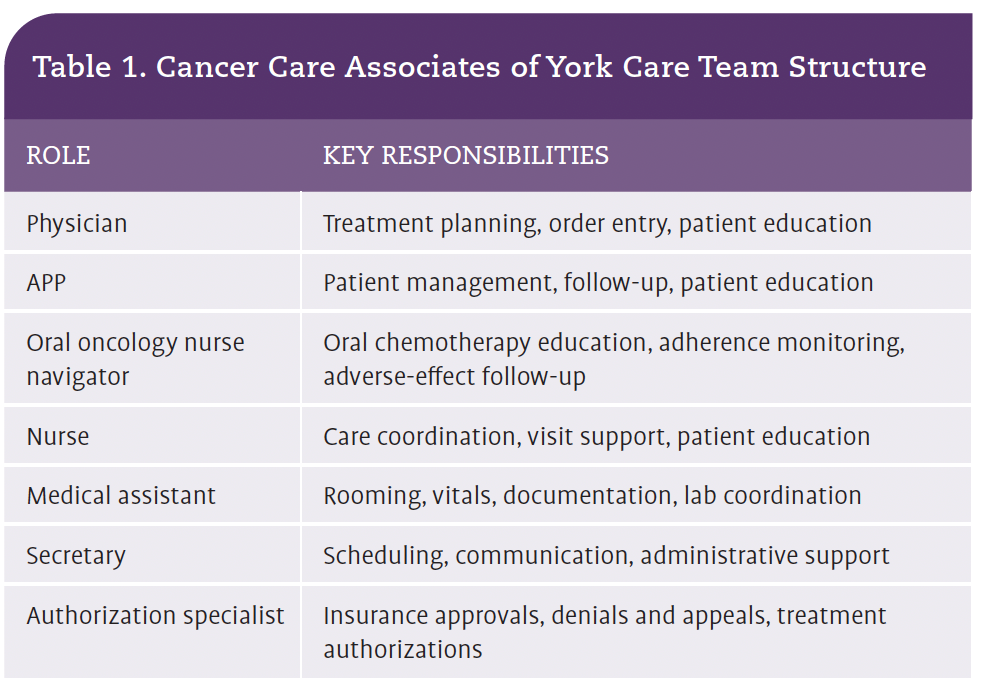
Each care team member functions within their scope of practice, supported by standardized policies and procedures. To enhance role clarity, Cancer Care Associates of York uses the RACI (Responsible, Accountable, Consulted, Informed) matrix to define expectations and communication channels. Table 1 highlights the key responsibilities of each team member. This framework eliminates ambiguity, ensures accountability, and empowers each staff member to perform at the top of their license. Built-in cross-coverage plans ensure continuity when team members are out of the office, reducing disruptions to patient care and minimizing stress for staff.
Mitigating Burnout Through Team-Based Care
Burnout—a state of emotional exhaustion, depersonalization, and reduced sense of personal accomplishment—is a growing concern in oncology. The emotional demands of cancer care, combined with administrative pressures, have made clinician well-being a central focus of workforce sustainability efforts.
For Cancer Care Associates of York, team-based care serves as a protective factor against burnout. By distributing workload, fostering mutual support, and improving communication, we reduce the sense of isolation often experienced in busy oncology practices. Staff report feeling more valued, more engaged, and better supported by their colleagues and leadership. Medical assistants and nurses serve as care team coordinators, conducting patient visits, assisting with documentation, and managing inquiries that arise between appointments.3 This model redistributes administrative and clinical tasks to highly skilled coordinators to reduce clinician workload, empower additional members of the clinical team, and increase the quality of patient care. Optimizing clinical workflows and maintaining a strong, collaborative team culture will lead to higher staff satisfaction.4
Challenges and Solutions

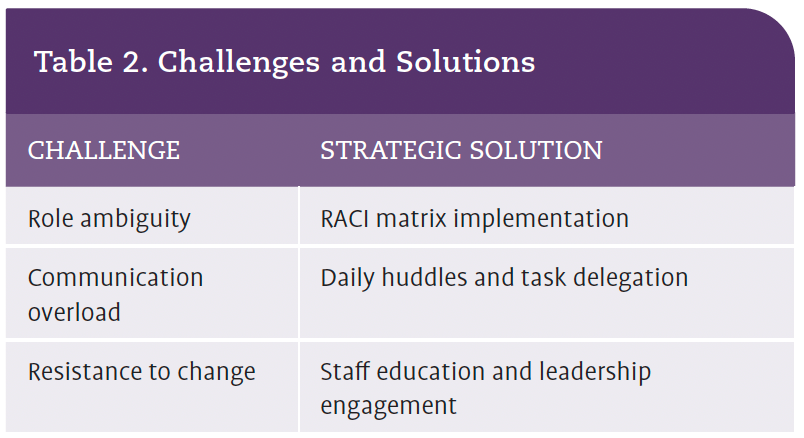
Initial barriers to implementation of this care model include institutional resistance, role ambiguity, and resource constraints. Establishing consistent workflows and adhering to well-defined policies and procedures are essential for sustaining effective care teams. Ongoing education and active team engagement help clarify roles and support shared understanding across disciplines. Including relevant team members in communications whenever appropriate can improve awareness, although communication gaps and information overload were particularly apparent during the early stages of implementation.
The increased use of electronic health records has both improved team collaboration and added additional challenges. Leveraging care team members to help manage the growing volume of patient communication has helped reduce clinician burnout. By working within their respective scopes of practice, team members can effectively support one another and help balance the workload. Table 2 highlights several challenges and the solutions developed to address them.
Concluding Thoughts
The evolution of team-based care at Cancer Care Associates of York demonstrates how intentional collaboration, defined roles, and structured communication can transform a community oncology practice. The results speak for themselves: improved patient outcomes, enhanced efficiency, and a healthier, more satisfied workforce. As oncology continues to evolve, embracing team-based care offers not only a model for high-quality care delivery, but it is also a blueprint for sustainability, compassion, and resilience in community practice.
Christina Patterson, PA-C, is a seasoned community oncology advanced practice provider with 25 years of clinical experience, serving as Lead APP at Cancer Care Associates of York in York, Pennsylvania. In July 2026, Cancer Care Associates of York and WellSpan Health entered into an integrated operating arrangement, bringing the medical oncology team at Cancer Care Associates of York into the WellSpan Cancer Institute.
References






In recognition of Leukemia and Lymphoma Awareness Month, ACCC compiled a group of resources to help care teams navigate two of the most commonly diagnosed adult leukemias: acute myeloid leukemia and chronic lymphocytic leukemia.