One of the greatest privileges of working in oncology is the opportunity to continue learning not just about science or clinical care, but about ourselves and one another.
This past month, I had the opportunity to attend the Annual Conference of the Association of Oncology Social Work (AOSW). The experiences reminded me why professional communities matter. Both AOSW and ACCC continue to push the field forward through innovation, collaboration, and practical solutions that improve cancer care delivery. At AOSW, I was reminded of the organization that shaped my own professional identity—an organization that has challenged me, mentored me, and inspired me throughout my career.
At the meeting, we heard about novel interventions that are changing how we support patients and families. We explored new models of care, creative partnerships, and innovative approaches to addressing the growing psychosocial needs of people living with cancer. We listened to keynote speakers who reminded us not only of the importance of our work, but of the humanity that lies at its center. One topic, however, lingered with me long after I returned home: awe.
Awe is more than appreciation or gratitude. It is the feeling that arises when we encounter something vast, something that expands our perspective and reminds us that we are part of something larger than ourselves. Research has shown that moments of awe can reduce stress, increase feelings of connection, foster generosity, quiet our inner critic, and even improve overall well-being. In professions like ours, where suffering is a daily companion, awe offers something powerful: a way to reconnect with meaning.
This summer's FIFA World Cup also offered a powerful reminder of awe. For a few weeks, people across continents, cultures, and languages came together to celebrate extraordinary talent, resilience, and the simple joy of a shared experience. It was a reminder that moments of wonder have the power to unite us and help us recognize that we are part of something larger than ourselves.
It is easy to assume that awe only exists in extraordinary places like a mountain summit, a breathtaking concert, or a life-changing event. But awe is often found in much smaller moments. Look around your work setting today. Do you see the patient who chooses hope despite uncertainty? The colleague who quietly stays late to help another team member? The family gathered around a bedside, sharing stories through tears and laughter? These moments ask only one thing of us: to notice.
As healthcare professionals, we spend much of our time solving problems, moving quickly, and carrying heavy emotional loads. The pace can narrow our focus until we see only the next task. Seeking moments of awe is not about ignoring hardship or pretending burnout does not exist. Rather, it is an antidote to the tunnel vision that stress can create. Awe widens our perspective. It reminds us why we entered this profession and reconnects us with the compassion and wonder that sustain us over the long term.
As you read this issue, I hope you discover ideas that inspire your practice and strengthen your commitment to those we serve. But I also hope you give yourself permission to look for awe in your work, your relationships, and your everyday life.
The remarkable thing about awe is that it is available to all of us. We simply have to be willing to look up long enough to find it.
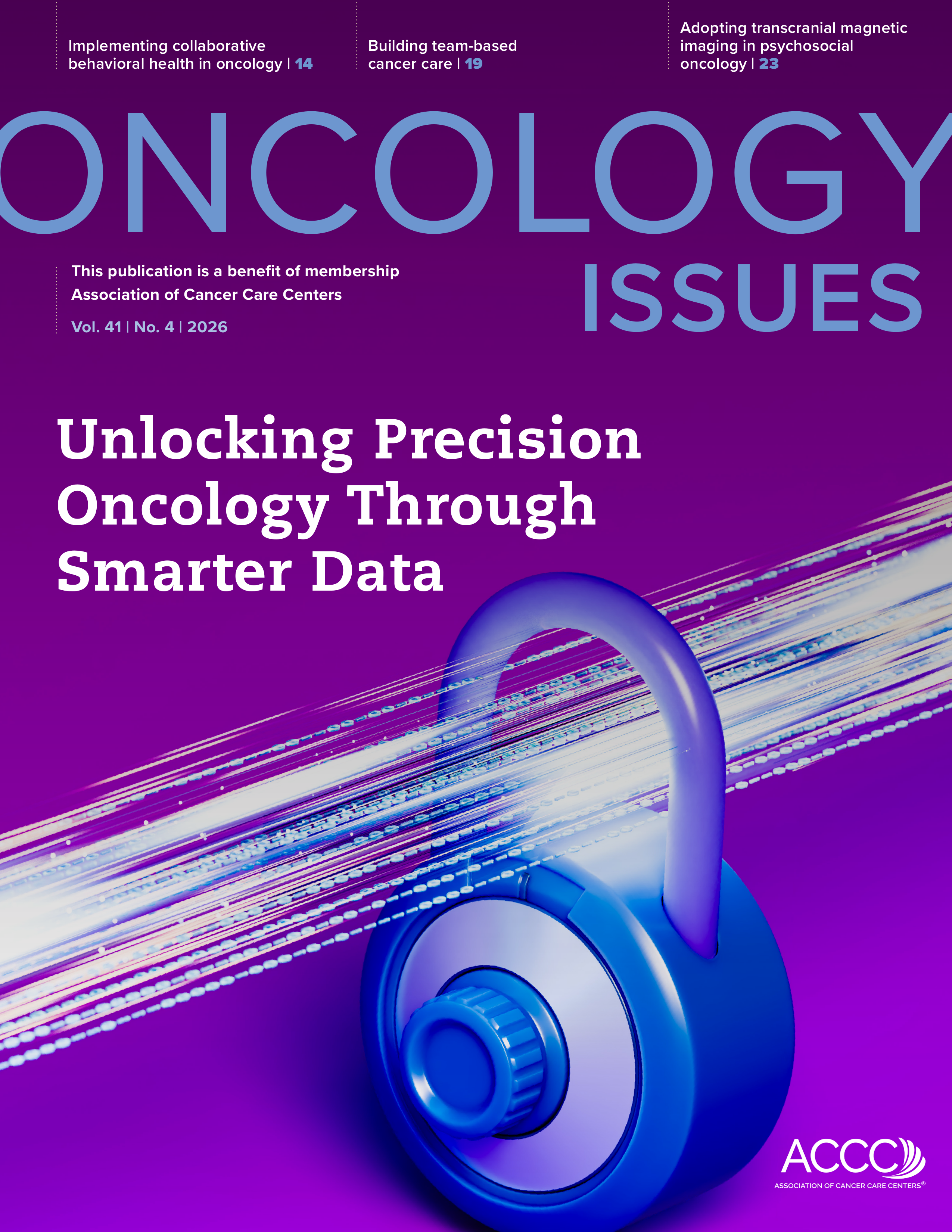




In recognition of Leukemia and Lymphoma Awareness Month, ACCC compiled a group of resources to help care teams navigate two of the most commonly diagnosed adult leukemias: acute myeloid leukemia and chronic lymphocytic leukemia.