Author(s):
In this article, we share some final takeaways and reflections from our November 2024 virtual webinar on unique palliative care considerations for patients with cancer who are from marginalized communities. One of the critical points raised during our conversation was the timing and delivery of palliative care discussions. Evidence shows that early integrated palliative care improves quality of life and symptom management; it allows patients and their families to build a trusting relationship with their care team, making difficult conversations about end-of-life care more manageable. Palliative care also helps provider teams align care with the patient’s values and preferences from the outset.
However, just as important as when the topic of palliative care is introduced is who on the care team initiates the discussion. Patients are more receptive to palliative care discussions when they come from a clinician who is familiar to them rather than a hospitalist or other provider they do not know. Familiarity—and the corresponding trust associated with it—can make a significant difference in how the message about palliative care services is received and understood.
No single clinician can address all aspects of a patient’s care, especially when it comes to spiritual needs. This is where interdisciplinary teams become invaluable. They combine diverse expertise to create a holistic care plan that includes medical, emotional, and spiritual support.
Spirituality and faith often play crucial roles in patients’ lives, especially when dealing with a serious illness or end-of-life care. Our discussion highlighted the need to address these aspects sensitively and inclusively. Dr. Johnson noted that for many Black patients, spiritual beliefs can significantly impact decision-making. These beliefs might include a greater emphasis on miracles, religious prohibitions against life-sustaining treatments, and views on suffering and pain.


Rather than viewing these beliefs as barriers, we should see them as integral parts of the patient’s identity and care needs. Supporting patients’ faith and spiritual beliefs can lead to better decision-making outcomes and greater patient satisfaction with the care they receive. This support can come from the medical team, but it is also helpful to involve the patient’s religious community when appropriate. For instance, involving a patient’s pastor or religious leaders can provide additional support and comfort. This collaboration can help bridge the gap between medical care and spiritual needs, ensuring that patients feel supported in all aspects of their lives.
No single clinician can address all aspects of a patient’s care, especially when it comes to spiritual needs. This is where interdisciplinary teams become invaluable. They combine diverse expertise to create a holistic care plan that includes medical, emotional, and spiritual support. Nurses, social workers, psychologists, and chaplains all play crucial roles in providing comprehensive care. For some patients, the spiritual dimension may be the most significant challenge they face, and having a chaplain or spiritual advisor as part of the care team can make a profound difference. This team-based approach is essential for delivering high-quality palliative care that meets each patient’s unique needs. Cultural humility is another recurring theme in the discussion of palliative care.
Cultural humility means recognizing that we, as providers, do not have all the answers; patients bring their own expertise, knowledge, and experiences to the table. Walking with patients on their journey, respecting their beliefs and preferences, and providing care that aligns with their values is essential. A commitment to practicing cultural humility involves continuous self-reflection and learning. It requires providers to be open to understanding and valuing the diverse cultural backgrounds of their patients. This approach fosters trust and improves communication, leading to better patient outcomes.
Additionally, health care organizations must prioritize palliative care and invest in the necessary resources to support interdisciplinary teams, including training in effective communication for providers as part of medical education programs to prepare future health care professionals for the complexities of palliative care. This commitment will ensure that patients receive the right care at the right time from the right clinician.
Community engagement is also vital. Educating patients and their families about palliative care and its benefits can help dispel misconceptions and encourage early acceptance of these services. Community outreach programs can provide valuable information and support, making palliative care more accessible to diverse populations.
As we continue to improve palliative care, we must prioritize effective communication, provider training, and cultural humility. We need to ensure that palliative care is presented positively and that providers are equipped to have these sensitive conversations. By addressing spirituality and faith, involving interdisciplinary teams, and supporting patients’ goals, we can provide holistic care that enhances quality of life.
Thank you again to Dr. Johnson, Dr. Rhodes, and Dr. Walsh for their valuable professional experiences and insights. By working together, health care providers, community leaders, and patients can create a supportive environment that values and respects the spiritual and cultural needs of all individuals. More than 600 people have listened to this webinar to date, with many sharing key insights of their own and posing thoughtful follow-up questions. While the team did our best to answer most of these questions, we provide additional information related to queries submitted via chat below. Those who missed the webinar can listen to the entire discussion here.
Q. How can we effectively expand access to palliative care for underserved populations?
A. Dr. Rhodes shared that providers can effectively expand access to palliative care for underserved populations in the following ways. First, establish palliative care referral pathways in public hospitals and community health centers. Second, design and implement interventions that will provide patients with information about palliative care and what it entails. In her work, Dr. Rhodes has found that many patients—once they become aware of palliative care—are more receptive to these services. She has also found that among patients who received palliative care in a local public hospital, there were no racial or ethnic differences in hospice use.1 Finally, Dr. Rhodes said that we must continue to assess the effectiveness of early integration of palliative care in the oncology space, as there is evidence that this early integration can lead to better outcomes.2,3


Q. Thank you for discussing how and when palliative care is introduced. Do you have any wording suggestion(s) to bring forth a recommendation to palliative care?
A. Dr. Rhodes has found that many patients are unaware of what palliative care entails. Once they realize that palliative care can occur in conjunction with treatment for their primary illness, they are more receptive to it. “Emphasizing that palliative care consists of an interdisciplinary team of clinicians and other health care providers is important,” shared Dr. Rhodes. “Palliative care teams can address pain and symptom management, and they also address psychosocial and spiritual needs.”4
Q. How do palliative care providers collaborate with oncology providers to align with care and yet still advocate for patients and families? How do palliative care providers not get ahead of the treatment team when having these conversations?
A. “Health care providers must emphasize the importance of early integration of palliative care with oncology care,” said Dr. Rhodes. “Ideally, this should be done at the time of cancer diagnosis, as research has shown that early integration of palliative care has a positive impact on symptom management, quality of life, and mood,” advised Dr. Rhodes. “It [early integration of palliative care] also removes the silos that clinicians often work in and allows for better communication between team members.”
Q. Because it is hard to survey family and/or care providers after their loved one has died, how do you suggest measuring quality of life at the end of life?
A. The Clinical Practice Guidelines for Quality Palliative Care provide a comprehensive framework for measuring the quality of life for patients at the end of life.5 These guidelines emphasize a holistic, patient-centered approach, ensuring that all aspects of a patient’s well-being are considered and addressed, including:5
Q. Is there any consideration of bringing back the grandfathered process of physicians becoming board-certified in palliative care to build more capacity to meet the needs of our aging population?
A. “Not that I am aware of, but there is an argument to do so,” answered Dr. Walsh. “Many of the originators of this field had ‘other lives’ before devoting themselves to [palliative care] and brought diverse perspectives and experiences that enriched the field.”
The grandfathering process for board certification in hospice and palliative medicine allowed experienced physicians to become certified without completing a fellowship. Initially, physicians with significant experience in hospice and palliative care could sit for the board certification exams based on their work experience and prior certification from the former American Board of Hospice and Palliative Medicine. However, this pathway was phased out in 2012.6 Since then, board certification requires the completion of a full-time, 1-year fellowship in an accredited hospice and palliative medicine fellowship program.


Q. As an outpatient oncology social worker, I hear from patients and families daily about the difficulty of managing the number of specialty providers involved in their care: “There are too many cooks in the kitchen already,” “Who do I call for what,” and “I feel bounced around when I express a concern.” The palliative care physician is often considered “another provider, another appointment.” Therefore, what model would be best to ensure integrated care?
A. “My personal approach is first for the patient and family to consider the palliative care physician their [football] ‘fullback.’ If they are not sure what to do, they should call us. Of course, that assumes that good communication structures and on-call policies are in place,” shared Dr. Walsh. “Second, the palliative care physician should assert their team’s role in active patient management for core palliative medicine competencies and communicate these well to referring physicians.”
Q. Please clarify the term the 4 Ms.
A. The 4 Ms (what matters, medication, mentation, and mobility) refer to a framework for assessing and addressing key aspects of a patient’s well-being. In other words, this framework calls for a focus on understanding the patient’s personal priorities, managing their medications, assessing their mental state, and supporting their ability to move around comfortably. The 4 Ms are derived from the Age-Friendly Health Systems initiative created by the John A. Hartford Foundation and the Institute for Healthcare Improvement.7 There are parallels between the care of older adults and those at the end of life that can make the 4Ms applicable to palliative care.
Q. What strategies do you use to ensure that the palliative care provided by the oncology care team is of high quality? Is there specific palliative care training you recommend for oncology teams? And what situations do you reserve for specialty palliative care?
A. The Center to Advance Palliative Care (CAPC) offers general resources that could be used to train oncology teams in palliative care. For example, CAPC’s Palliative Care in Cancer Care toolkit includes virtual courses, training, and clinical tools for oncology clinicians.8 Other evidence-based training programs available for oncology care teams include:
Q. Many decision-support tools are being used in the oncology space for treatment selection. Do you see an opportunity for these tools in palliative care and the management of these patients?
A. CAPC has developed several evidence-based decision support tools to guide the treatment decisions of palliative care providers. Here are 2 key tools:

Q. How can we effectively expand access to palliative care for underserved populations?
A One place to start is by reading the Making the Value Case toolkit.13 Developed by CAPC, this toolkit provides tools and resources to help make the case for palliative care investment with organization leaders, health plans, colleagues, and community partners. In addition to evidence-based resources to demonstrate the value of palliative care, this resource includes an interactive Hospital Palliative Care Impact Calculator to help institutions estimate the value of their palliative care programs. Downloadable presentations like “How to Show Your Administrators That Your Palliative Care Program Improves Value” and “How to Make the Pitch to Organizational Leaders for Community-Based Palliative Care” can support cancer programs seeking to expand their palliative care services.
Q. Often, the most difficult question for providers is to discuss prognosis and how much time patients have left to live. Can you offer any tips for these types of conversations?
A. “My first suggestion is to never give specific time frames, for example, telling a patient they likely have 6 months to live,” advised Dr. Walsh. “The future is uncertain, and these diseases are unpredictable.” Instead, Dr. Walsh suggests that providers admit that they do not know how long the patient has left to live and instead turn the question around and ask patients how things look to them. Often, patient responses offer important information or raise awareness of issues that providers can respond to. “Prognostications are usually overoptimistic,” said Dr. Walsh. “Patients do not need to know the longest they may live; it is the shortest time [they may live] that’s important for life planning.”
“We—physicians and providers—are often not good at prognostication outside of clinical conditions like various cancer diagnoses. A tool that may be helpful in providing education about prognosis is e-prognosis [developed by the] University of California San Francisco,” suggested Dr. Rhodes. “This tool is intended to be a rough guide to inform clinicians about possible mortality outcomes that may help them broach topics like palliative care and hospice and end-of-life care.”
Q. As an oncology pharmacist, I am curious if there is guidance to identify medications that are considered appropriate for palliative care or if this decision is patient-specific. I routinely get questions from providers like, “Is this [drug] appropriate to continue for a patient who is now [being treated with] palliative intent?” My perspective has always been that if care is aligned with the patient’s wishes—and as long as it [the medication] is not treating the cancer—it is appropriate. It was mentioned that the US [palliative care] model has barriers; is reimbursement for medications used for palliative care considered to be one of these barriers?
A In response, Dr. Walsh clarified that the discussion concerned barriers to the US hospice model, which has capped reimbursement. For example, for fiscal year 2024, the Medicare hospice aggregate cap amount was $33,494.14 This cap is updated annually by the Centers for Medicare & Medicaid Services (CMS) to control costs and ensure the sustainability of the Medicare hospice benefit. “In general, deprescribing is a good exercise for all patients the frail and elderly,” noted Dr. Walsh. “Ask yourself, does this drug align with the plan of care? Might this drug be contributing to the patient’s issues? In cancer patients, antihypertensives and diabetes medications frequently can—and should—be reduced or discontinued.”
According to the Medicare Benefit Policy Manual, hospice care includes coverage for drugs and biologicals used primarily for the relief of pain and symptom management related to the terminal illness.15 The guidance emphasizes that medications should be part of an individualized plan of care developed by the hospice interdisciplinary team, which includes the attending physician, the patient or their representative, and the primary caregiver.
Q. Does CMS mandate that palliative care and cancer rehabilitation must be provided in a hospital setting or can these services be provided in a separate, non–hospital-based facility?
A. CMS does not mandate that palliative care and cancer rehabilitation be provided in a hospital setting. These services can be offered in multiple settings, such as outpatient clinics, patients’ homes, nursing homes, and specialized palliative care facilities. The goal is to provide relief from symptoms and stress of serious illness—regardless of the care setting.
According to Dr. Walsh, ideally, palliative care should be provided in both settings. In the outpatient setting, palliative medicine should be an integrated service that is embedded in clinics with a high volume of potential palliative care referrals. “While much depends on the structures, spaces, and processes of the specific institution, the point is that palliative medicine should be at the ‘sharp end’ [of core services] and not considered a boutique service.”
Q. Did any of the telehealth rule changes that took effect in January 2025 impact the delivery and reimbursement of palliative care services?
A Physicians manage patients through evaluation and management (E/M) visits. Providers who perform telehealth visits to patients receiving palliative services must review their current payer demographics to determine if payers will accept the new AMA CPT® codes for 2025. The new codes apply to audio-video and audio-only visits with patients. Medicare has indicated it will not accept these codes and that providers are to continue to bill for telehealth services as they did in 2025, using identifying modifiers and place of service (POS) codes. On March 15, 2025, Congress passed the Full-Year Continuing Appropriations and Extensions Act 2025 (FY2025), which allowed for the continuation of several public health, Medicare, and Medicaid authorities and programs. The new law included language to extend temporary telehealth waivers through September 30, 2025. The flexibilities included the ability to perform face-to-face recertifications through telehealth. Though welcomed by many health care providers, a more permanent solution is needed to navigate future telehealth access and utilization. If a more permanent solution is not reached, after September 30, 2025, prepandemic restrictions would be back in place and oncology patients would need to travel to a rural hospital to use their technology and equipment to participate in a telehealth visit.
Q. What are the Medicare codes to bill for palliative care?
A. According to Teri Bedard, BA, RT(R)(T)(ARRT), CPC, executive director, Client & Corporate Resources at Revenue Cycle Coding Strategies, code use depends on the type of palliative care provided. For example, many patients may be treated with radiation to relieve pain from bone and/or brain metastasis. Typically, the physician will see the patient for an E/M visit; outpatient visits are billed using CPT codes 99202-99215, or the additional codes listed below. Next, the physician will document the clinical treatment plan, outlining the orders and medical necessity for each of the radiation oncology-specific services necessary to treat the patient. A setup simulation is performed to establish how the patient will be immobilized and set up for daily radiation therapy treatment. During the simulation (billed with CPT codes 77280, 77285, or 77290), there may be various immobilization devices created for the patient. The level of complexity and customization will determine the appropriate CPT code: 77332, 77333, or 77334. Next, a dosimetry treatment plan is created, using data obtained in the setup simulation to determine the dose and beam arrangement for the radiation treatment. Particular attention is made to ensure the distribution of the radiation is appropriate to the target while avoiding and/or limiting the dose to any nearby critical structures. Dosimetry planning for palliative care is most often supported by isodose planning (CPT 77306 or 77307), although some may be more complex and support 3D planning (CPT 77295). Next, the patient will return for daily treatment, generally between 5 and 10 total fractions. Most often, the treatment delivery is billed with CPT codes 77402, 77407, or 77412 in the hospital setting and G6004, G6008, or G6012. Lastly, the physician will visit with the patient once every 5 fractions of treatment to manage the patient and the effects of the radiation; the CPT code for this visit is most commonly 77427, and the work of the physicist to review the treatment record is billed as 77336, once per 5 fractions.
Outside of the palliative care offered by radiation oncology teams, the below E/M codes are commonly used to deliver palliative care services:
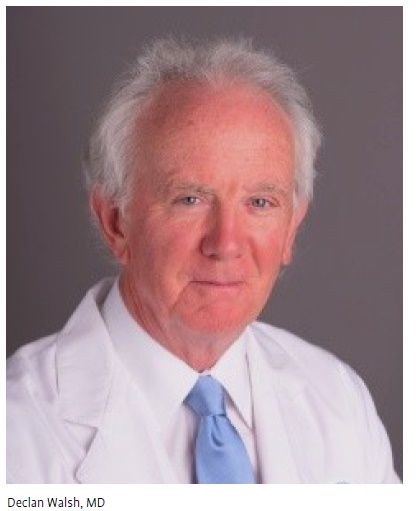
Nadine J. Barrett, PhD, MA, MS, FACCC, is immediate past president of ACCC and senior associate dean, Community Engagement and Equity in Research at Atrium Health Wake Forest Comprehensive Cancer Center in Durham, North Carolina. Kimberly Johnson, MD, MHS, is Brenda A. Armstrong MD Distinguished Professor of Medicine in the Division of Geriatrics and Palliative Care at Duke Medicine in Durham, North Carolina. Ramona Rhodes, MD, is associate professor at the University of Texas Southwestern Medical Center in Dallas, Texas. Declan Walsh, MD, is chair of the Department of Supportive Oncology at Atrium Health Levine Cancer Institute in Charlotte, North Carolina.
References