Author(s):

The art of healing and holistic care, blending physical treatment with spiritual and psychological interventions—the very definition of modern psychosocial care—dates back over 4000 years. Ancient Egyptian medicine, renowned for intertwining science and the divine powers of healing, was among the earliest forms of psychosocial care.
Imhotep—chief vizier, architect, and high priest to Egyptian pharaoh King Djoser the Great of the Third Dynasty—was also the first recorded physician in the history of the world.1 Credited as the original author of the Edwin Smith Surgical Papyrus (a detailed collection of 48 clinical cases complete with diagnosis, prognosis, and treatments) and believed to have diagnosed and treated over 200 diseases in his lifetime, Imhotep was a pioneer in the holistic practice of healing the mind, body, and soul, using a combination of physical and psychological healing methods.2
During Egypt’s Fourth Dynasty, Peseshet—known by the title imy-r swnwt, which translates to Lady Overseer of the Lady Physicians—is considered the world’s first female physician.3 Notably, her title also suggests the existence of an entire hierarchy of female physicians, hinting at a structured approach to women’s health long before the concept was formally recognized. These ancient healers offer a glimpse into the ancient medical traditions that laid the foundation for a holistic model of care that lives on today in one of Egypt’s most innovative health institutions: the Baheya Foundation.
Today, in the sprawling megalopolis of modern-day Cairo, Egypt, teeming with over 115 million people, the Baheya Foundation for Early Detection and Treatment of Breast Cancer—with 1 hospital and 1 oncology center located in the Al Haram and Sheikh Zayed districts—carries this philosophy of holistic care forward, as heirs to this legacy. Dedicated to a vision of becoming the go-to destination for women’s health and safety, Baheya’s nonprofit, nongovernmental organization (NGO) hospitals are firmly grounded in psychosocial and emotional support for women. In just 10 short years, Baheya has truly become the sanad for Egyptian women—an Arabic word that conveys a deeply rooted cultural meaning: a reliable, unwavering source of strength and support, a backbone in times of need.
At the heart of Baheya lies a powerful cornerstone: women who cannot afford services and treatment receive it free of charge; those who can afford to pay for treatment no longer have to leave their families and homes to seek treatment abroad—they can access high quality care in their own communities.
In October 2024, at the Association of Cancer Care Centers (ACCC) 41st National Oncology Conference, international leaders gathered to exchange ideas and share strategies at its first international panel on global challenges in cancer care. Baheya’s commitment to holistic care—delivered in a region grappling with systemic challenges and limited resources—took center stage at the conference. Inas Maged Moaz, MD, Epidemiology and Biostatistics research coordinator for the Baheya Research Center and lecturer of Epidemiology and Public Health at the National Liver Institute, shared profound insights on the struggles and successes of removing barriers to care and empowering women diagnosed with breast cancer, particularly from underserved communities in Egypt.
This powerful exchange of ideas led to an in-person, follow-up visit and tour of Baheya Hospital in Cairo, offering ACCC a rare glimpse into how this institution is redefining cancer care in a region fraught with challenges. Oncology Issues shares this inside look at Baheya’s pioneering model of reimagining cancer care in Egypt, seamlessly weaving advanced medical treatment with vital psychosocial support, and offers valuable lessons for cancer care programs worldwide.

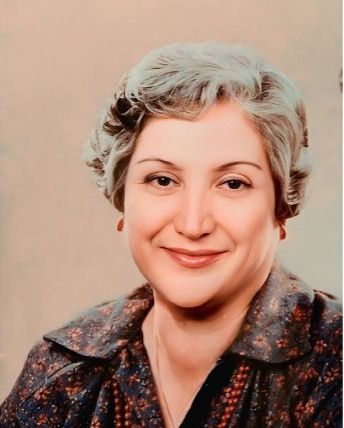
Baheya Wahbi, whose vision and legacy inspired the founding of
the Baheya Foundation.
The Baheya Foundation
Since its inception a decade ago, the Baheya Foundation has transformed its vision of support into measurable impact in the fight against breast cancer, redefining what accessible, compassionate care looks like in Egypt. Through its hospitals, Baheya has delivered more than 5 million medical procedures, 1 million outpatient services, and close to 1 million imaging studies.
Behind these numbers are powerful stories of early detection for more than 500,000 women, over 140,000 life-saving chemotherapy sessions, and 23,000 critical surgeries—each one a step closer toward survival and hope. Baheya has evaluated more than 300,000 women across the country and treated over 23,000 diagnosed with breast cancer, all in the pursuit of its mission: comprehensive, high-quality care for every woman, regardless of her background or socioeconomic circumstances.
At the heart of Baheya lies a powerful cornerstone: women who cannot afford services and treatment receive it free of charge; those who can afford to pay for treatment no longer have to leave their families and homes to seek treatment abroad—they can access high-quality care in their own communities. For hundreds of thousands of Egyptian women, the Baheya Foundation has become synonymous with free early detection screenings, mammograms, biopsies, and treatments for all women facing disparities in health care.
Yet Baheya’s mission is not only about access to care; it is about creating a space where women feel seen, heard, and respected. “One of the key successes of Baheya,” said Dr. Mohamed Emara, MBBCh, PhD, and CEO of Hospitals and Medical Projects, “is treating each person as a human—respecting her emotions, her privacy, her financial status, her language barriers, her culture, and her way of understanding.” That philosophy of compassionate, holistic care is embedded into every step of a patient’s journey.
Using a patient-centered, integrated multidisciplinary approach, Baheya features a successful, one-stop clinic service where women receive more than 10 medical services—including a thorough clinical exam, mammography, and a pathology workup—all in a single visit. Baheya is the first provider of one-stop clinic service in Egypt, dramatically reducing hospital visits and expediting diagnosis to a single day. Many women must travel great distances for care, sometimes more than 100 kilometers. For these women, knowing that they will leave with clarity, a plan, and their most pressing questions answered makes all the difference in the world.
Yet, the story of the Baheya Foundation cannot be told without returning to where it all began, to the woman whose name it bears and the legacy of compassion and determination she left behind.
The Woman Behind the Mission: Baheya Wahbi’s Story
It was the 1990s in Egypt, over a quarter century ago, at a time when advanced diagnostic imaging and oncology care in the Middle East were still in their infancy. For Baheya Wahbi, receiving a diagnosis of breast cancer was devastating—not only because of the prognosis itself, but because the advanced care she needed simply did not exist in her own country. It meant being forced to leave her family, her home, and her country to receive the necessary care abroad.
To her family, she was not just a mother but the matriarch and center of their world, and her absence left a profound void. In Egyptian culture, the mother is more than a nurturer and protector; she is often the anchor of the family, an honored role and a source of wisdom and strength not only for children but also for grandchildren, extended family, and the wider community. Wahbi, who was fortunate to come from a prominent family with the means to afford the exorbitant costs of travel and treatment, was among the few who could access care. Yet throughout her illness, she became acutely aware of the overwhelming barriers and inequities many Egyptian women faced in accessing care. This realization sparked in her a powerful desire to change the system. She vowed to secure the advanced diagnostic equipment her home country lacked—not for herself, but for every woman who would come after her.
Tragically, Wahbi did not survive to see her dream come to life. But her children honored her wishes—not only by purchasing and bringing to Egypt the advanced diagnostic imaging equipment she had long desired for her country, but by transforming the family’s home in Al Haram, where her sons and daughters had grown up, into the first Baheya Center. This Center has since evolved into the lifesaving reality that is the Baheya Foundation today.

Baheya Zayed Hospital in Sheikh Zayed City, Giza Governorate, Egypt
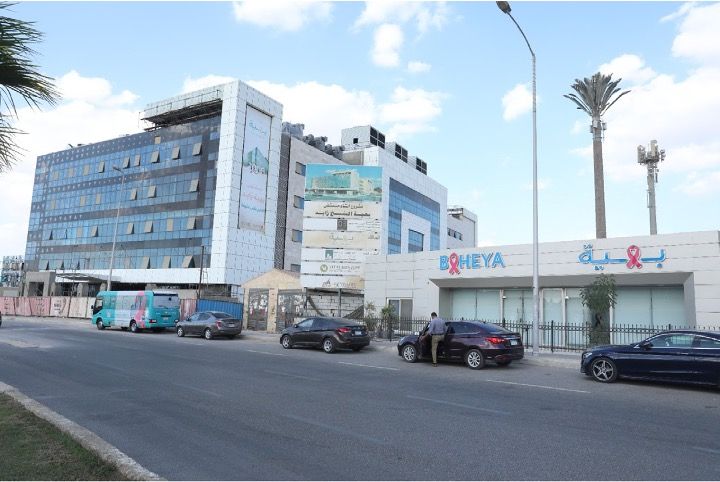
Dr. Emara recounts a moment shared by Wahbi’s granddaughter, now a board member at the hospital. “I remember my grandmother, I was here in this house. We were kids—running, laughing, playing in this house,” she told him. “Now, it’s a hospital.” That reflection, he said, speaks to the transformation not just of the building, but of its purpose—from a home to a healing space.
The challenges Baheya Wahbi once faced—limited diagnostics, fragmented systems, inaccessible care—persist for millions of Egyptian women today. To understand the power of the Baheya Foundation’s impact on breast cancer awareness, early detection, and treatment in Egypt, one must first grasp the complex health care landscape in which it operates—a terrain defined by limited resources, systemic barriers, and deep inequities in access to care.
A System Under Strain: Economic and Structural Barriers to Care
While underserved populations in Egypt share similar challenges to those experienced by marginalized groups in the United States, including financial toxicity, food insecurity, and difficulties with transportation and access to medical centers, the intensity and the outcomes are vastly different. In developed nations like the US, high breast cancer incidence rates are met with relatively low mortality rates due to widespread screening, early detection, and advanced treatment options.4 Comparatively, developing countries frequently report lower incidence but significantly higher mortality rates. In regions such as Africa and Asia, these data are largely attributed to vast underreporting, limited awareness and access to structured screening programs, and limited (or no) access to diagnostic facilities, particularly in rural areas.4
From navigating shifting priorities and building a support system to rediscovering a sense of purpose and joy in life, Baheya has created a thriving ecosystem of care and support for fighters and survivors alike.
In Egypt, these disparities are compounded by deeply rooted cultural and social norms that can deter women from seeking timely diagnosis and care, which creates additional hurdles such as the stigma surrounding a cancer diagnosis and misconceptions about the value of preventive health services.
More than a decade ago, a study conducted in Alexandria, Egypt, revealed a sobering reality: 81.8% of women would not seek medical care until they were ill or showing symptoms, and 77% were unwilling to undergo mammograms unless recommended by a physician.5 Additional barriers included a lack of privacy during screenings (71.4%), perceived lack of necessity for medical check-ups (69.2%), and concerns about affordability and care costs (64.6%).5 The study reported that Egyptian women with lower education levels, lower income, and those who were not employed were more likely to face these barriers in Egypt’s vast rural areas and villages, where two-thirds of patients with breast cancer were illiterate.5 These obstacles significantly hindered their ability to understand the importance of early detection.
Unfortunately, to this day, limited awareness and education about cancer risk factors, screening, and early detection are among the most critical barriers for Egyptian women, often leading to delayed diagnosis and late-stage treatment.6 “The biggest challenge we are facing in Egypt is that nearly half of patients come to our center in an advanced stage. According to our cancer registry statistics, around 47% of patients with breast cancer come in at stage 3 and 4,” says Dr. Moaz. A recent study investigating the reasons for delayed diagnosis showed a critical 7-month gap between the onset of symptoms and the start of treatment. According to Dr. Moaz, more than 60% of these delays can be attributed to patients themselves, often due to a lack of education and awareness.
These challenges are intensified further by the realities of Egypt’s overburdened health care system, which remains fraught with systemic, economic, and logistical obstacles. Despite more than half of Egyptians having some form of health insurance, out-of-pocket expenditures accounted for approximately 54.9% of total health spending in 2021, nearly double the global average (28.16%).7-8 In early 2024, the Egyptian pound was devalued by more than 35% against the US dollar, triggering sharp increases in the cost of imported medical supplies and pharmaceuticals. At the same time, inflation surged to nearly 40%, driving up prices for essential goods and services, including health care, and widening the already precarious gap in access. For millions of Egyptians living below or near the poverty line, these economic pressures have only deepened existing disparities.

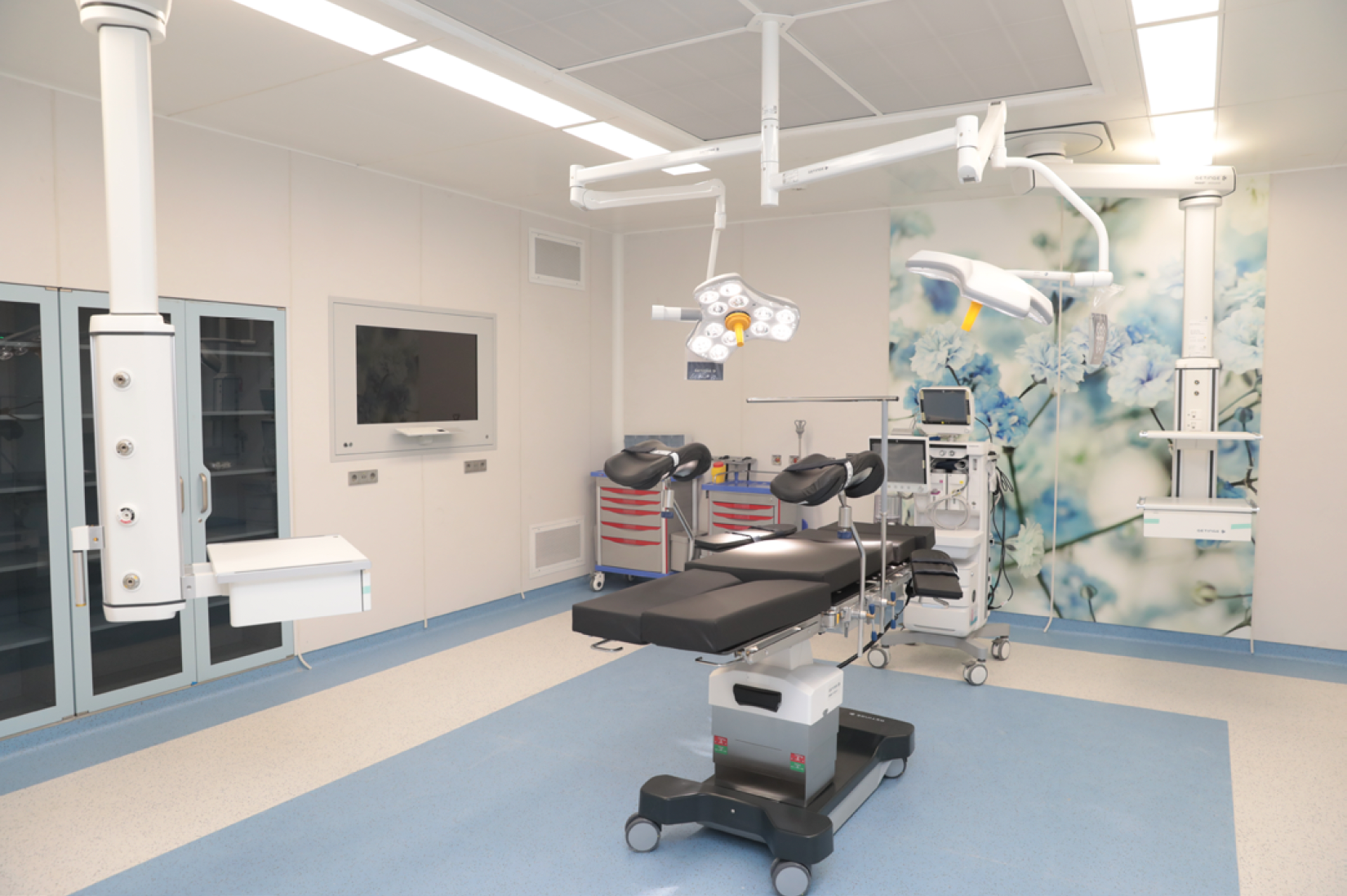
A state-of-the-art operating room at Baheya Zayed Hospital,
designed to provide advanced surgical care for women with breast cancer.
Although the Egyptian Ministry of Health has introduced policy reforms to improve health care delivery and access, the system remains highly fragmented with a mixture of public, private, and governmental health providers, leaving patients confused about where to go or how to navigate care. Structural challenges—including difficulty securing appointments, excessive wait times, long travel distances to diagnostic centers, shortages of female medical staff, and a lack of culturally-sensitive services—continue to impact women, particularly those in underserved communities. Against this backdrop of systemic and structural hardship, Baheya has carved an innovative path forward that centers on dignity, accessibility, and women’s holistic care.
The Baheya Care Model
As a fully integrated, patient-centered system, Baheya delivers the complete continuum of breast cancer services from awareness and screening to diagnostics, treatment, and survivorship support, all under one roof. With oncology, surgery, radiology, pathology, clinical pharmacy, radiotherapy, physiotherapy, and psychosocial support services available at each branch, women arriving at Baheya are stepping into a system that is specifically designed to streamline care delivery, minimize delays, and ease the overwhelming burden of navigating care alone.
“We have 3 types of navigators,” Dr. Emara explains. “Resource navigators handle communication and help prepare the patient before her visit. Inside the hospital, physical navigators guide her through each step of the visit—assessment, lab work, radiology, and beyond. And clinical navigators are there to help her understand what’s happening. If she has fears after a biopsy, the clinical navigator is there to explain, to reassure, to calm.”
These navigators are a vital part of Baheya’s patient-centered approach, offering personalized support that goes beyond logistics. For patients with limited health literacy or high anxiety, this model of compassionate, wraparound support ensures no woman faces cancer alone when she is most vulnerable.
The Baheya Foundation is driven by a core belief: that early detection and comprehensive treatment should be a right, not a privilege only for those who can afford it. As an NGO operating under a hybrid funding structure, Baheya accommodates as many patients as its financial and operational capacity can allow. Free care services are supported chiefly through widespread donor support, as well as modest revenue from general hospital services for the public at competitive rates.
In keeping with the spirit of its founder, Baheya also prioritizes access to those who need it most, including Egypt’s vast refugee population of Syrians, Palestinians, Sudanese, and others seeking care within the country’s borders.
For patients who live within a 100-kilometer radius (approximately 1-2 hours distance) of either hospital, Baheya provides free transportation, including home pickups arranged using its own fleet of vehicles. For those who come from more distant rural areas or governates beyond 100 kilometers, the foundation facilitates safe, clean accommodations and meals through trusted partner agreements, ensuring women have access to care without compromising their comfort or dignity.
Because Baheya is deeply committed to empowering women, patients are offered opportunities to expand their education and develop new skills that can support them financially, both during treatment and long after recovery.
This logistical support is just 1 layer of Baheya’s accessible, compassionate care. Baheya’s success lies not only in its systems; it is powered by a model built on awareness, community support, volunteerism, and sustainable impact that continues to evolve.
Early detection remains the cornerstone of Baheya’s mission. Through its expansive outreach and education program, Baheya has led nearly 2000 breast cancer awareness seminars across Egypt, reaching more than 75,000 women in urban and rural communities. Held everywhere from schools and workplaces to shopping centers, mosques, churches, and local health organizations, its mobile awareness team—including physicians, PR professionals, and trained volunteers—are expertly trained and tailor their message to meet the cultural and literacy context of each audience. “We have a dream team for our awareness campaign,” Dr. Emara explains. “Sometimes in Arabic, sometimes in English, we talk about the importance of screening, the symptoms, risk factors, the optimum time and age for screening, how to perform [breast] self-examinations. And it is not a matter of only Baheya—it is a matter of encouraging women to get screened for breast cancer wherever they are.”
Working hand in hand with this outreach is Baheya’s culture of volunteerism and community support, which powers every corner of Baheya’s operations. With a growing network of volunteers supporting everything from fundraising and education to psychosocial services and patient navigation, each volunteer is carefully matched and placed in a role where they can have real impact and add value to the hospital and the patients they serve.
"It is not a matter of volunteering once or twice,” Dr. Emara explains. “Maybe in the beginning it was that, but now we have a long waiting list of people eager to give their time.” Far from ad hoc, Baheya’s volunteer program is structured, intentional, and deeply integrated in the foundation’s operations. Volunteers undergo a full onboarding process with orientation sessions, specialized training, and ongoing evaluation. They are mentored, progress through levels of seniority, and are even celebrated through an annual competition that recognizes high achievers.
This spirit of community engagement is amplified further through its high-profile media and public awareness campaign that has made Baheya a household name across Egypt. With the support of celebrities, public figures, and media personalities who dedicate their time, platforms, and resources, Baheya is able to raise not just funding, but national awareness, empathy, and hope.

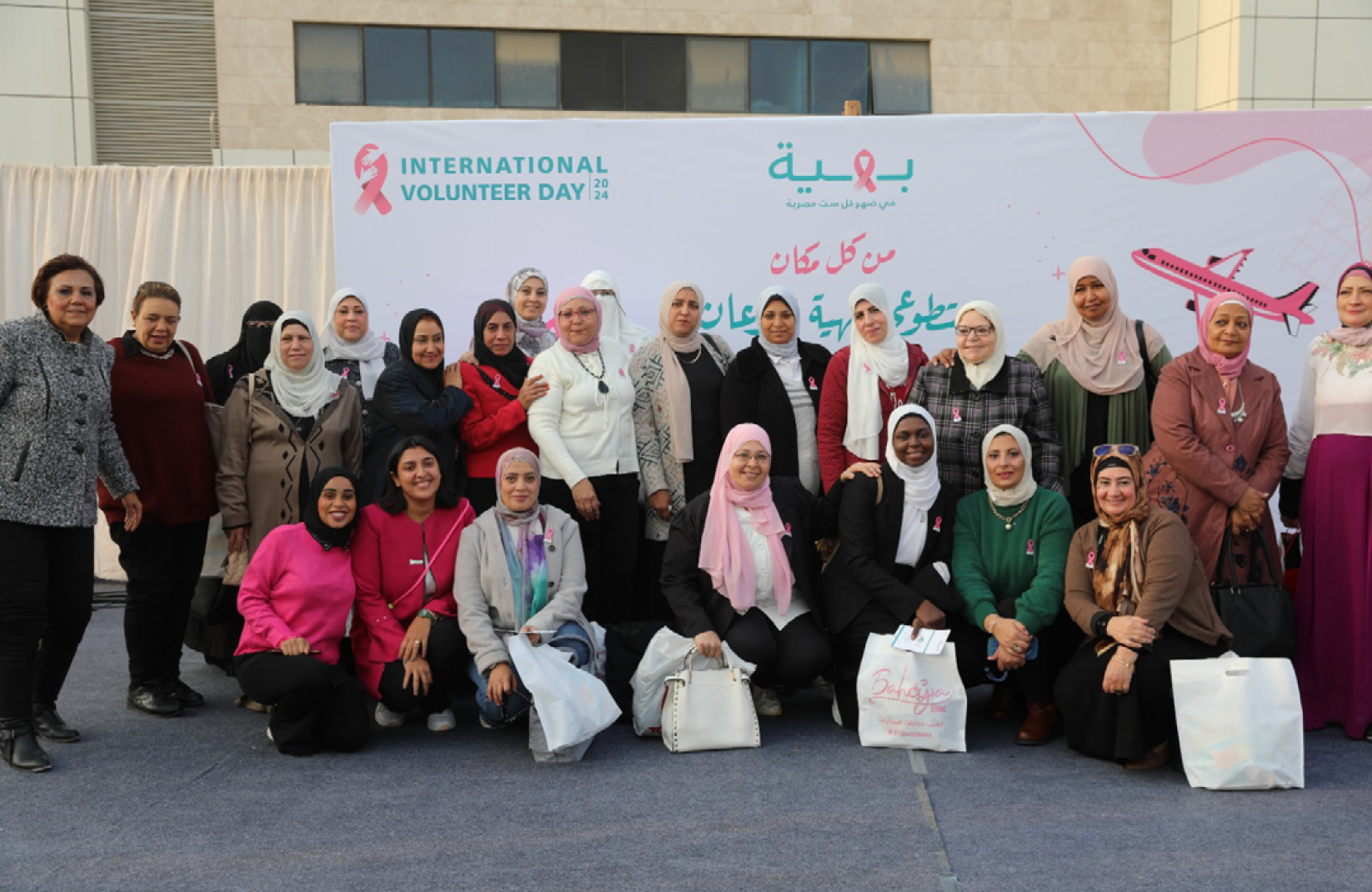
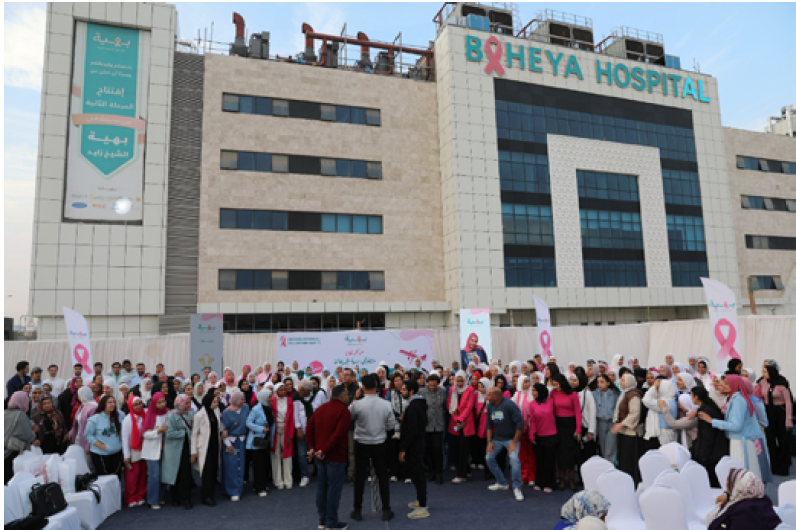
Volunteers celebrating International Volunteer Day 2024 at Baheya Hospital (above and below).
More Than Medicine: Psychosocial Support and Empowerment
At Baheya, healing goes far beyond the physical treatment of breast cancer—the emotional, psychological, socioeconomic, and spiritual well-being of women is at the heart of its robust psychosocial support model. Considering every aspect a woman with breast cancer may face during her journey, from navigating shifting priorities and building a support system to rediscovering a sense of purpose and joy in life, Baheya has created a thriving ecosystem of care and support for fighters and survivors alike, and this is where the magic happens.

Psychosocial services, including individual and family/caregiver counseling, home visits, group therapy, even recreational trips and events, are an integral part of helping women navigate the emotional rollercoaster of diagnosis and treatment. For many who do not have family to lean on, the relationships they build with other survivors, volunteers, and staff are nurtured at Baheya. Abrar Abdel-Gawad, Baheya’s PR specialist, explains. “Many of our patients got divorced after they got cancer, as their husbands [decided to] leave them and their families. That’s why it’s our part here [at Baheya] to be the backbone for them, to support them…we are trying to change the stereotype of hospitals in Egypt, to be not only a hospital for medical services; we support them [patients] psychologically…we search for their needs and fill these needs; we are one big family and that is the atmosphere we try to create here—a family and a community of support.”
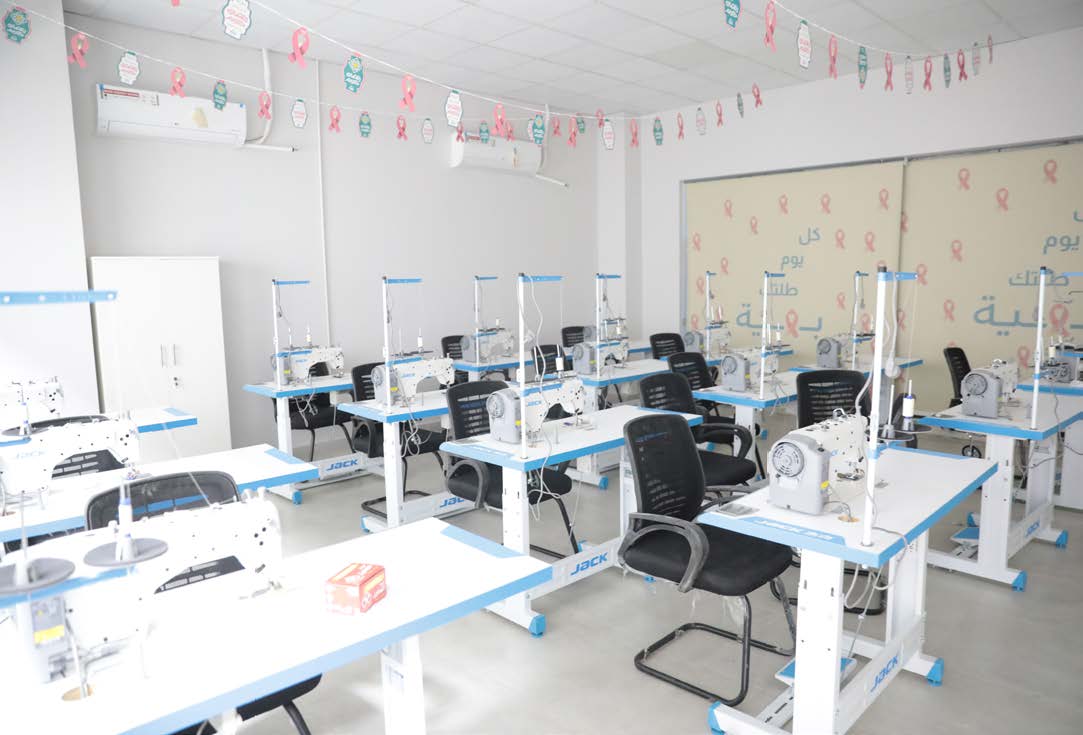
Because Baheya is deeply committed to empowering women, patients are offered opportunities to expand their education and develop new skills that can support them financially, both during treatment and long after recovery. Through Arabic literacy classes, English and French language courses, computer literacy, and math support, women are provided with essential tools to help them build confidence and enhance their independence. Vocational training workshops in sewing and fashion design, jewelry-making, painting, and other arts are offered and are designed to help women transform their talents into small, entrepreneurial ventures. Building on this success, many patients go on to sell their handmade creations at local bazaars and festivals, rewarding them both financially and emotionally with an invaluable sense of pride and accomplishment.

Creative Design and Sewing Room in the Psychosocial Care Center at Baheya Zayed Hospital
Today, Baheya maintains a structured research database as well as the Baheya Biobank, storing clinical data and tissue samples from more than 3000 patients, laying the foundation for groundbreaking insights into breast cancer.
To support their physical and emotional well-being, Baheya also offers music, performing arts, and nutrition sessions to help women find healing, balance, and creative expression throughout their journey. In fact, at the new Baheya Zayed Hospital complex, an entire wing is dedicated to psychosocial support, complete with a fully equipped sewing room, music room, game room, library, and cozy social corners. During ACCC’s tour, a live musical performance was underway, led by a young blind artist whose powerful music filled the space with a moving reminder of resilience and dignity.
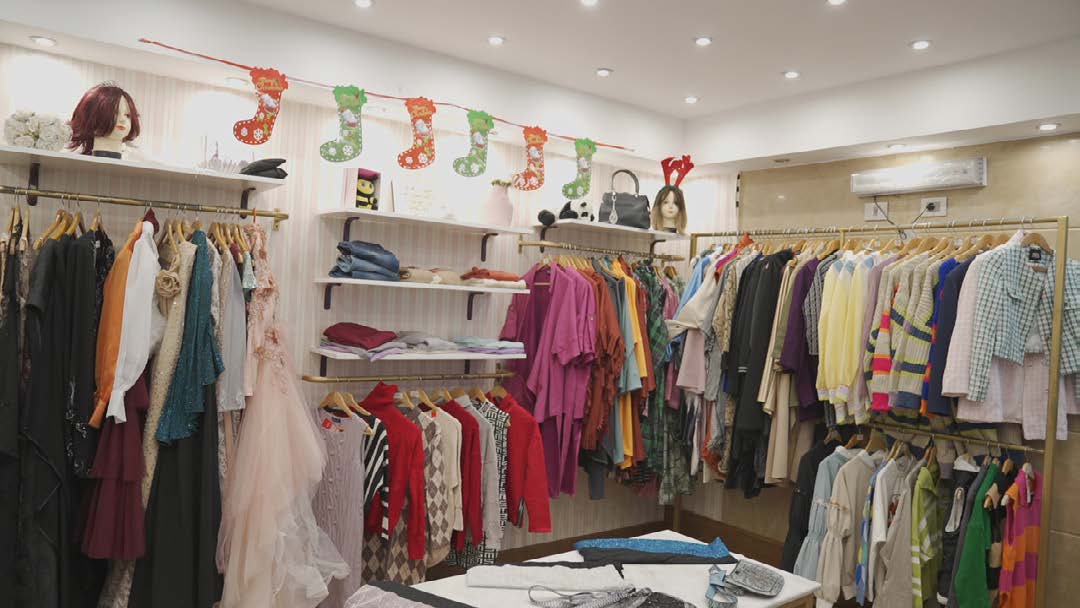
In the heart of Baheya Zayed Hospital, another unique innovation stands out: the Baheya Boutique, a thoughtfully curated space where patients can choose stylish, confidence-boosting clothing and accessories free of charge. Supported by generous community partners and fashion designers who have donated or custom-created pieces for Baheya, the boutique reflects the foundation’s belief that healing is not just medical—it is emotional, personal, and deeply human.

Baheya Boutique at Baheya Zayed Hospital
Driving Innovation, Research, and Quality
Baheya’s commitment to excellence extends far beyond patient care, encompassing research, education, and professional development. The Baheya Research Center has conducted over 250 research studies, with more than 60 published in leading international medical and scientific journals. The center also hosts regular workshops, webinars, and monthly scientific forums to foster ongoing learning and collaboration.
“For the last 2 years, we’ve been collecting data on more than 12,000 patients, including demographics, socioeconomic data, and outcomes on disease-free survival and recurrence rates,” shared Dr. Moaz. Today, Baheya maintains a structured research database as well as the Baheya Biobank, storing clinical data and tissue samples from more than 3000 patients, laying the foundation for ground-breaking insights into breast cancer. This research and data also inform Baheya’s flagship annual oncology conference, which is now in its sixth year. The meeting brings together national and global experts to share emerging innovations in breast cancer prevention, diagnosis, and treatment.
Baheya’s pursuit of excellence is also reflected in its internationally recognized standards of care. In both 2021 and 2024, Baheya’s Haram Hospital received Joint Commission International accreditation, as well as General Authority for Healthcare Accreditation and Regulation accreditation in 2024. The foundation also holds several ISO (International Organization for Standardization) certifications in quality management, environmental responsibility, and occupational safety, placing Baheya among the highest-quality hospitals in Egypt and the world.
Through its Training Academy and active partnerships with both public and private universities in Egypt, Baheya fosters a wide range of educational and professional development initiatives for future health care professionals. The foundation supports graduation projects in fields like biotechnology, pharmacy, and biomedical engineering, and offers specialized training and internship opportunities. Over the past 3 years, Baheya has become a hub for senior capstone projects, particularly those aligned with breast cancer research and treatment.
In collaboration with its academic partners, Baheya has also applied for several national and international research grants, bridging academic innovation and clinical application. Accredited by the American Association for Continuing Medical Education, Baheya’s Training Academy offers hands-on learning in breast cancer surgery, clinical pharmacy, pathology, therapeutic nutrition, hospital management, and more. In partnership with Baheya’s Research Center, the Academy also hosts bioinformatics and scientific writing workshops, underscoring Baheya’s dual role as both a care provider and a leader in medical education.
Building the Future: Baheya’s Next Chapter
As Baheya continues to expand, the opening of Baheya Zayed Hospital marks a major milestone in the foundation’s journey. Built on a 30,000-square-meter campus, the new facility represents a bold step towards the future, not only extending its reach to serve more patients from across all governorates of Egypt, but also working actively to reduce waiting lists and provide timely, life-saving treatment for women who need it most.
But the road ahead is not without its challenges. Even as Baheya has begun construction on its third location in New Cairo, Egypt’s economic landscape continues to shift dramatically. Since breaking ground, the cost of materials, equipment, and imported medical supplies has tripled, adding significant pressure to the project.
At the same time, the health care sector faces a growing human capital crisis, as qualified doctors, nurses, and technicians are increasingly leaving Egypt in search of better opportunities abroad. Recruiting and retaining highly trained, ethical, and committed professionals remains one of Baheya’s most pressing and ongoing challenges. In response, the foundation just launched a dedicated School of Nursing and has plans to expand its Training Academy to build local capacity and address this critical workforce gap.
“This is how we solve the manpower crisis—from professional training to [ensuring alignment with] shared ethics and culture,” explained Dr. Emara. “They will undergo 5 years of training right here in our hospital, supported by a German-accredited curriculum and training materials. We’ve built the entire program internally so that when these nurses graduate, they’re ready to join us from day 1.”
The need in Egypt is immense, and Baheya’s waiting list remains long. Yet Baheya’s mission is far from complete, and its vision for the future is as ambitious as it is urgent. The foundation recognizes the importance of continuing to build a sustainable model that can be replicated in other regions and countries, offering hope and healing on a broader scale.
Baheya stands behind every Egyptian woman—a simple tagline for the Baheya Foundation, yet one that carries profound meaning in Arabic. It conveys not just presence, but a powerful promise: that Baheya will always be there, as a source of protection, steadfast support, and strength for every Egyptian woman who walks through its doors.
Rania Emara is the assistant director of Editorial Content and Strategy for the Association of Cancer Care Centers in Rockville, Maryland.
References




Recognizing the critical role advanced practice providers and allied health professionals play in the care continuum, the American Oncology Network provides infrastructure, leadership, and professional growth opportunities to empower these members of the cancer care team to practice at the top of their license.