ACCC association of cancer care centers
Join/Renew
Login
Join/Renew
Login
Education & Resources
ACCC eXchange LogInCorporate Member Sponsored ResourcesPresentations & AbstractsPresident's ThemeACCC Connect eLearning LogIn
Publications
Oncology IssuesPatient Assistance & Reimbursement GuideTrending Now in Cancer Care
Events
2026 ACCC Leadership SummitAnnual Meeting & Cancer Center Business SummitCapitol Hill DayNational Oncology ConferenceOncology Reimbursement MeetingsOncology State Society Meetings
Policy & Advocacy
2024 Policy Wrap-Up and ACCC 2025 Policy PrioritiesLetters & StatementsAccess, Payment & Reimbursement ReformWhite Bagging & Brown BaggingAdvocacy ResourcesCancer Moonshot
Membership
Join | RenewWho We AreMembership Types & BenefitsCorporate MembersACCC Member Portal FAQMember Directory
Partners
Oncology State SocietiesPartner OrganizationsCME
News
News ReleasesAdvocacy News ReleasesOncology News
About ACCC
Timeline / 50th Anniversary2025 Impact ReportACCC Innovator AwardsACCC FellowsACCC Senior Staff
Breast CancerMetastatic Breast Cancer
Gastrointestinal CancerBiliary Tract CancerColorectal CancerGastric CancerLiver Cancer
Genitourinary CancerBladder CancerProstate CancerRenal Cell Carcinoma
Gynecologic CancerOvarian Cancer
Head & Neck Cancer
Hematologic MalignanciesAcute Lymphocytic Leukemia (ALL)Acute Myeloid Leukemia (AML)Chronic Lymphocytic Leukemia (CLL)Mantle Cell Lymphoma (MCL)Multiple Myeloma (MM)Myelodysplastic Syndromes (MDS)
Lung CancerNon-Small Cell Lung Cancer (NSCLC)Small Cell Lung Cancer (SCLC)
Sarcoma
Skin CancerMelanomaNon-Melanoma Skin Cancers (NMSC)
Clinical Practice & TreatmentCancer DiagnosticsCare CoordinationEHR Integration for Biomarker TestingQuality Improvement Collaboration: Integration of Precision Medicine in Community OncologyTreatment
Financial NavigationFAN Boot CampFinancial Advocacy Network (FAN) Resource LibraryPatient Assistance & Reimbursement GuidePrior Authorization
Health Equity & Access3, 2, 1, Go! Practical Solutions for Addressing Cancer Care DisparitiesAppalachian Community Cancer AllianceOncology Advanced PractitionersPersonalizing Care for Patients of All BackgroundsSocial Drivers of Health
Patient-Centered CareAddressing Care Disparities for VeteransAdolescent and Young Adult (AYA)Care Action Plans for People with CancerDermatologic ToxicitiesEmpowering CaregiversGeriatric OncologyHealth LiteracyNutritionOncology PharmacyPatient NavigationPsychosocial Care in OncologyShared Decision-MakingSupportive CareSurvivorship Care
Practice Management & OperationsCancer Program FundamentalsLeadership Sustainment and Engagement VideosOncology Practice Transformation and Integration CenterOncology Team Resiliency
ResearchACCC Community Oncology Research Institute (ACORI)
Technology & InnovationTelehealth & Digital Medicine
ACCCBuzz Blog
CANCER BUZZ Podcast
Oncology Issues
Join/Renew
Login
Breast CancerMetastatic Breast Cancer
Gastrointestinal CancerBiliary Tract CancerColorectal CancerGastric CancerLiver Cancer
Genitourinary CancerBladder CancerProstate CancerRenal Cell Carcinoma
Gynecologic CancerOvarian Cancer
Head & Neck Cancer
Hematologic MalignanciesAcute Lymphocytic Leukemia (ALL)Acute Myeloid Leukemia (AML)Chronic Lymphocytic Leukemia (CLL)Mantle Cell Lymphoma (MCL)Multiple Myeloma (MM)Myelodysplastic Syndromes (MDS)
Lung CancerNon-Small Cell Lung Cancer (NSCLC)Small Cell Lung Cancer (SCLC)
Sarcoma
Skin CancerMelanomaNon-Melanoma Skin Cancers (NMSC)
Clinical Practice & TreatmentCancer DiagnosticsCare CoordinationEHR Integration for Biomarker TestingQuality Improvement Collaboration: Integration of Precision Medicine in Community OncologyTreatment
Financial NavigationFAN Boot CampFinancial Advocacy Network (FAN) Resource LibraryPatient Assistance & Reimbursement GuidePrior Authorization
Health Equity & Access3, 2, 1, Go! Practical Solutions for Addressing Cancer Care DisparitiesAppalachian Community Cancer AllianceOncology Advanced PractitionersPersonalizing Care for Patients of All BackgroundsSocial Drivers of Health
Patient-Centered CareAddressing Care Disparities for VeteransAdolescent and Young Adult (AYA)Care Action Plans for People with CancerDermatologic ToxicitiesEmpowering CaregiversGeriatric OncologyHealth LiteracyNutritionOncology PharmacyPatient NavigationPsychosocial Care in OncologyShared Decision-MakingSupportive CareSurvivorship Care
Practice Management & OperationsCancer Program FundamentalsLeadership Sustainment and Engagement VideosOncology Practice Transformation and Integration CenterOncology Team Resiliency
ResearchACCC Community Oncology Research Institute (ACORI)
Technology & InnovationTelehealth & Digital Medicine
ACCCBuzz Blog
CANCER BUZZ Podcast
Oncology Issues
    • Education & Resources
    • Publications
    • Events
    • Policy & Advocacy
    • Membership
    • Partners
    • News
    • About ACCC
ACCC association of cancer care centers
1801 Research Boulevard, Suite 400, Rockville, MD 20850
Tel: 301.984.9496 Fax: 301.770.1949 Email Us
Contact UsVolunteers
Advertise
Career Center
Terms and Conditions
Privacy Policy
ACCC Rebranding
Copyright © 2026 Association of Cancer Care Centers. All Rights Reserved.
Advertisement

Publication

Article

Views

June 16, 2025
Oncology Issues
June 2025
Volume 40
Issue 3

Finding My Voice in Cancer Advocacy: My First Capitol Hill Day and AMCCBS Experience

Author(s):

Rynita Settle, MHA

Finding My Voice in Cancer Advocacy: My First Capitol Hill Day and AMCCBS Experience
Download Issue PDFDownload PDF

What was the most important lesson I took away? Be genuine. When you show up as your authentic self, willing to learn, share, and support others, you make the biggest impact. That’s how we make things better for the patients we serve, and that’s how we grow, together. I am already looking forward to attending next year.

When I first learned about the Association of Cancer Care Centers’ (ACCC) Capitol Hill Day and the 51st Annual Meeting & Cancer Center Business Summit (AMCCBS), it was not something I had actively sought out—it found me. My supervisor, Carol Mahoney, MBA, corporate director, Medical Group, at the Helen F. Graham Cancer Center & Research Institute at ChristianaCare, recommended that I attend, believing it would be a valuable and enriching experience. Because I am relatively new to oncology, having transitioned from a different professional background, she felt this would provide important insight into the real-world challenges that patients with cancer face. I trusted her guidance, embraced the opportunity, and am sincerely grateful that I did.

Embracing the Cancer Care Community

I approached Capitol Hill Day and AMCCBS with an open mind and a willingness to learn, ready to absorb as much information as I could. What surprised me most was the genuine warmth and sense of community I encountered. I anticipated feeling like an outsider—and in some ways, I was. However, attendees were quick to introduce themselves, share their experiences, and welcome me into the fold. It did not feel like a typical conference; it felt like a community united by purpose. One particularly impactful moment that stuck with me from Capitol Hill Day was my conversation with Congresswoman Sarah McBride (D-Delaware). Although our time was limited, her empathy and steadfast commitment to patient-centered care were unmistakable. She shared a moving personal story, having lost her husband to cancer. But even if she had not experienced that tragedy, I truly believe she would still be out here on the front lines, advocating for people. Congresswomen McBride inspired me deeply. In addition, the diverse range of speakers at AMCCBS—including a range of oncology providers and administrators—highlighted the systemic challenges faced by cancer care leaders across the country. The sessions encouraged open dialogue and fostered connections among attendees with shared experiences and goals.

Meaningful Dialogue With Policymakers

In preparation for Capitol Hill Day, I met with my site manager, Denise Greene, to better understand the day-to-day patient challenges in our practice, ChristianaCare Hematology Oncology. It was important to me that I spoke from a place of authenticity. Denise emphasized pressing concerns such as workforce shortages, burdensome prior authorizations, and financial toxicity for patients—topics that I brought into conversations with the Capitol representatives. This preparation grounded me in what matters most to our practice and provided me with examples that I could present to the legislators I met. The conversations that I had with policymakers and their staff were incredibly engaging. I was deeply impressed by their breadth of knowledge and their ability to discuss a wide range of complex issues within a single day. Their energy was inspiring, and it made me want to learn more, get more involved, and be a better advocate—not just for our patients, but for everyone impacted by cancer. Among the many issues we discussed, financial toxicity was the one that resonated most with me. While I have not had to battle cancer, people I love are in the fight right now. One of my closest friends is undergoing treatment for breast cancer, and every conversation with her includes worries about whether insurance will cover treatment or when her next appointment can even be scheduled, due to prior authorizations. The burden of $200 copays while fighting for your life is unacceptable. This is why advocacy efforts like Capitol Hill Day are critical.

Rynita Settle stands inside the US Capitol during Capitol Hill Day at AMCCBS, where she joined fellow advocates and health care leaders to champion patient-centered cancer care and connect with lawmakers.
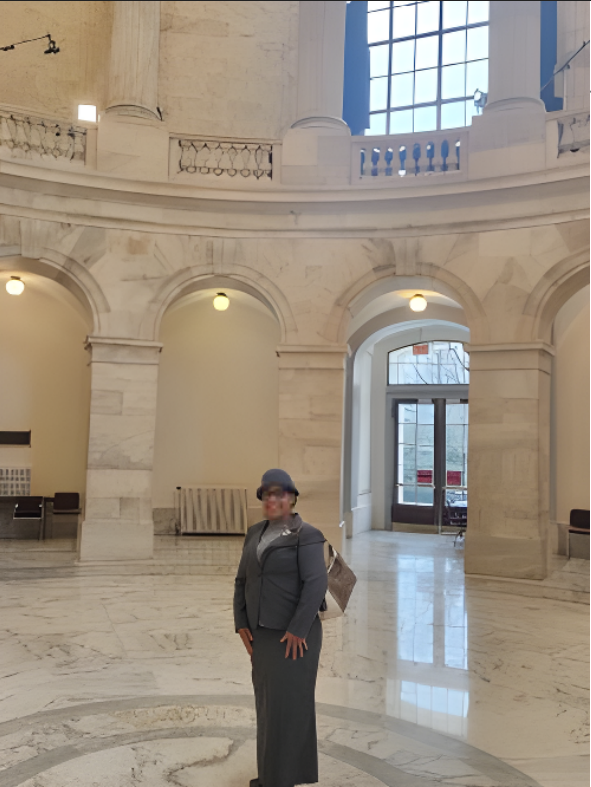
Rynita Settle stands inside the US Capitol during Capitol Hill Day at AMCCBS, where she joined fellow advocates and health care leaders to champion patient-centered cancer care and connect with lawmakers.

A Shift in Perspective

There were so many memorable sessions at AMCCBS, but one speaker stood out: keynote speaker Nick Webb. During his session, The Future of Cancer Care Delivery: 2025 and Beyond, he addressed the integration of artificial intelligence into oncology practice and spoke compellingly on practical ways to boost staff engagement and improve organizational culture. His insights on health care organizations needing to focus on quick adoption of technology, manage changes effectively, and keep the human experience on the forefront were ideas that resonated with me, as someone managing both site operations and larger practice responsibilities. It reminded me that change doesn’t always have to be big and flashy; it can be small shifts that make a huge difference.

This experience fundamentally reshaped my perspective on my role in cancer care. Previously, my focus was on creating a difference in my practice, in my own little corner of the world. Now I’m thinking bigger, and I understand that the challenges we face—staffing, patient affordability, policy gaps—are systemic and widespread. They’re shared. And if they’re shared, that means we can share solutions, too.

Encouragement for Future Attendees

For those considering participating in Capitol Hill Day or AMCCBS, I wholeheartedly encourage you to attend. You don’t need to have all the answers or be an expert. What matters most is the willingness to listen, learn, and engage. Take time to understand the mission of ACCC, but more importantly, to understand what it stands for. And come ready to be present and open. This event showed me what’s possible when you have a meeting of the minds and engage with other leaders: the opportunity to effect positive change for all patients with cancer. What was the most important lesson I took away? Be genuine. When you show up as your authentic self, willing to learn, share, and support others, you make the biggest impact. That’s how we make things better for the patients we serve, and that’s how we grow, together. I am already looking forward to attending next year.

Rynita Settle, MHA, is a practice administrator at ChristianaCare Hematology Oncology in Newark, Delaware.
Articles in this issue

Cultivating Connection and Innovation in Cancer Care
Harnessing Technology to Support Our Oncology Workforce
Lessons in Leadership: Thriving as Women at the Top
A Legacy of Healing, A Future of Hope for Egyptian Women: Spotlight on the Baheya Foundation
2025 Trending Now in Cancer Care: Part 1
Disenfranchised Grief and Countertransference: Hidden Contributors to Oncologist Compassion Fatigue and Burnout
Spirituality and Cultural Humility:  Core Components of Comprehensive Palliative Care
Spirituality and Cultural Humility: Core Components of Comprehensive Palliative Care
Advocating for AYAs With Osteosarcoma
Artificial Intelligence: The Legalities of  AI in Health Care and the Day-to-Day Use of  AI in the Clinical Setting
Artificial Intelligence: The Legalities of AI in Health Care and the Day-to-Day Use of AI in the Clinical Setting
From Readiness to Research: Building Clinical Trial Capacity at Community Cancer Centers
Fast Facts (June 2025)
Executive Order on Drug Pricing
Communication Technology-Based Services (CTBS): Not Traditional Telehealth Services
Finding My Voice in Cancer Advocacy: My First Capitol Hill Day and AMCCBS Experience
Spotlight: Patricia Lynch Cancer Center, Teaneck, New Jersey