Author(s):
Osteosarcoma, a rare type of bone cancer that primarily affects adolescents and youth adults (AYAs), is diagnosed in about 1000 people annually in the US, with most cases occurring between the ages of 10 and 30.1 The disease poses unique challenges for patients due to its complex nature, its demanding treatment protocols, and the critical need for timely diagnosis. Combining these factors with the transitional phase of AYA life—marked by educational, social, and emotional milestones—adds complexity and a distinct set of hurdles to their care journey. Despite advancements in cancer therapies, survival outcomes for AYA patients diagnosed with osteosarcoma remain a significant concern.
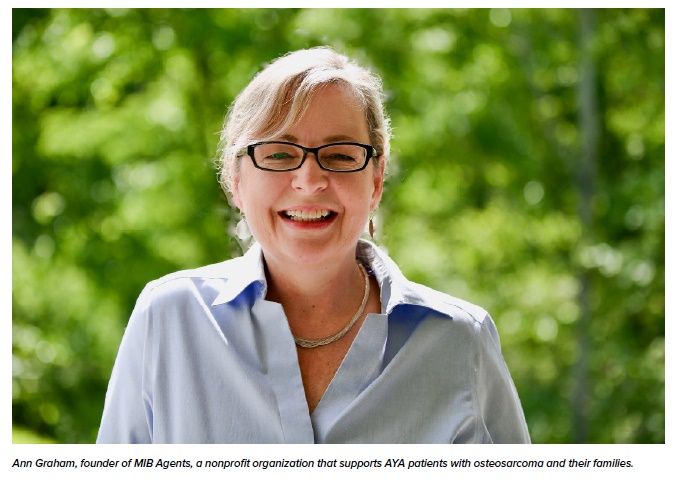
Ann Graham’s unexpected diagnosis of osteosarcoma at age 43 introduced her to the pediatric cancer world, where she formed strong connections with AYA patients. Motivated by these experiences, she founded MIB (Make It Better) Agents, a nonprofit dedicated to supporting young people with osteosarcoma and their families. Since becoming a 501(c)(3) in 2016, MIB has funded scientific research, built a robust peer support network, and launched educational programs to advance understanding of the disease. The organization also funds end-of-life experiences for young patients, beginning with its first mission in 2012.
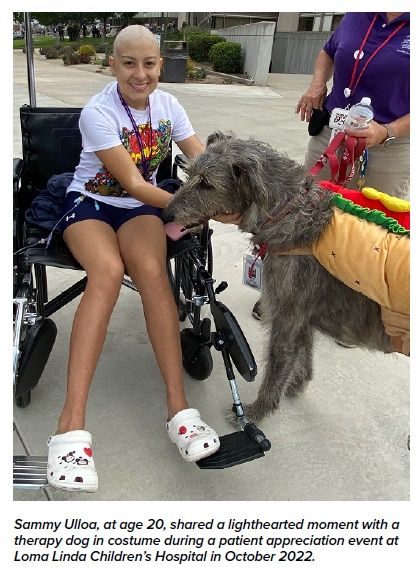
Oncology Issues recently interviewed Graham on her unique experience and spoke with MIB Agents’ 2025 Junior Advisory Board President, Sammy Ulloa, a California native who was diagnosed with osteosarcoma at the age of 19, to learn more about the purpose and mission of MIB Agents.
Graham’s journey began in 2010 when she experienced persistent leg pain while training for a marathon. “After months of consultations and eventually getting an MRI, a mass was found in my leg near the top of my tibia,” shared Graham.
The mass turned out to be aggressive osteosarcoma. Graham was treated at Memorial Sloan Kettering, where her care involved surgery, chemotherapy, and a year in a wheelchair. “Following this experience, I felt deeply connected to the children I met in treatment,” shared Graham. “This led me to start MIB Agents to support osteosarcoma patients and their families.”
The financial implications of an osteosarcoma diagnosis can be overwhelming, particularly for AYA patients and their families. The high costs for medical care, including but not limited to spanning surgeries, chemotherapy, hospital stays, and long-term care, often result in significant financial strain.
As part of its mission, MIB Agents offers several programs tailored to the unique needs of this community. The Ambassador Agents program pairs patients and caregivers with trained volunteers—often osteosarcoma survivors who have been out of treatment for at least a year—to provide one-on-one peer support throughout the cancer journey. In 2024, its junior advisory board was led by Ulloa, who stresses the importance of peer support through organizations like MIB Agents.
“I joined MIB Agents after my treatment and found immense support through their community,” said Ulloa. “If I had found a peer support group during treatment, it would have greatly improved my mental health and overall experience. Having people who truly understand what you’re going through is invaluable.”
The Current State of Osteosarcoma Treatments
Although the core chemotherapy regimens for osteosarcoma have remained largely unchanged since the 1980s, there have been notable advancements in supportive care and surgical techniques. AYA patients still rely on intensive treatments, such as high-dose chemotherapy and radiation.2 While effective in targeting cancer cells, these treatments often cause severe adverse effects, highlighting the urgent need for innovative therapies that offer better outcomes with reduced toxicity. For AYA patients whose bodies are still developing, the harsh nature of these treatments exacerbates recovery challenges and long term health risks.

Graham shared that the immediate challenge of osteosarcoma is the aggressive nature of the disease, requiring treatment to start within a week. “Families often struggle with the intensity of chemotherapy and the major decision regarding surgery—whether to opt for amputation, limb salvage, rotationplasty, or distraction osteogenesis,” Graham clarified. “Each option has lifelong implications, and navigating these choices can be overwhelming.”
Osteosarcoma treatments often result in lasting complications, including heart and lung damage, infertility, slowed growth, learning difficulties, and increased risk of secondary cancers. These adverse effects profoundly affect patients’ immediate and long-term well-being, emphasizing the importance of treatment models that address both physical and emotional recovery.
Common Adversities Faced by AYA Patients With Osteosarcoma
The financial implications of an osteosarcoma diagnosis can be overwhelming, particularly for AYA patients and their families. The high costs for medical care, including but not limited to surgeries, chemotherapy, hospital stays, and long-term care, often result in significant financial strain. In many cases, a two-income household is reduced to one, as one parent becomes a full-time caregiver. Recognizing this burden, MIB Agents ensures all of its programs and resources are offered free of charge to help alleviate the financial pressure on families.
For Ulloa, the experience opened her eyes to inequities in the health care system. “After my diagnosis, my original insurance refused to cover my treatment, leaving me scrambling for a solution. I ended up on a state plan that covered most of my costs, but not everything. I learned how hard it is for people with serious illnesses to get the care they need,” Ulloa explained. “This experience made me realize how much needs to improve in health care, especially for young adults navigating these systems for the first time.”
Many families report high rates of financial toxicity and bankruptcy due to mounting medical expenses, a burden that is especially taxing for those who lack comprehensive insurance coverage. Delayed diagnosis and treatment, frequently linked to inadequate insurance coverage or underinsurance, further exacerbate the financial and health burden. These challenges highlight the critical need for systemic changes that ensure equitable access to affordable, high-quality care for all AYA patients.

Interpersonal and Emotional Challenges
The impact of osteosarcoma goes far beyond financial health, profoundly affecting the interpersonal and emotional lives of AYA patients. Many young people experience interrupted academic and career progress, as frequent hospital visits and the physical toll of treatment make it difficult to maintain normal routines.
Before her diagnosis, Ulloa shared that she was super healthy. “My mom made sure my sister and I got regular check-ups since we were both very active. I played soccer and ran cross-country, so staying on top of physicals was essential. Even in college, my coaches and trainers had us do regular check-ups, but my tumor didn’t show up on X-rays. It wasn’t until my mom and I pushed for an MRI when I was back home from college that the tumor was finally revealed.”
Interruptions in lifestyle often lead to feelings of isolation and a sense of falling behind peers, adding to the emotional distress of navigating a cancer diagnosis as a young adult. The loss of normalcy can strain relationships with friends and family, making social and emotional support networks even more critical during this time.
“The adjustment from your normal life to your life while you’re in treatment is really, really difficult, because you lose parts of yourself that were really important prior to cancer, like the things you can no longer do. For me, that was running—it was a big part of my identity, and overnight, I kind of lost that,” shared Ulloa, who struggled with the fact that her future was not going to look that way that she thought it would. “I was unsure if I would even have that long of a future. But I think the biggest part was just grappling with mourning my past self while embracing my new self.”
The emotional burden of osteosarcoma is compounded by the existential challenges it presents to AYA patients, who are often at a stage in life where identity, independence, and future aspirations are taking shape. The diagnosis can prompt deep fears about mortality and a loss of freedom, leaving many to grapple with questions of self-worth and purpose. The mental health impacts, ranging from anxiety and depression to post-traumatic stress, are significant, requiring care models that prioritize psychological well-being.
Ulloa believes that additional education around mental health is needed. “I was offered therapy during treatment but declined because I didn’t fully understand its importance at the time,” she admitted. “Looking back, I wish there had been more in-depth conversations about mental health and how crucial it is during treatment. Mental health should be prioritized just as much as physical recovery.”
Addressing these concerns through counseling, peer support groups, and integrative care is essential to helping AYA patients process their experiences and build resilience during this time of uncertainty.
Navigating the Tedious Landscape of Health Insurance
Access to health insurance plays a pivotal role in ensuring timely and effective treatment for AYA patients with osteosarcoma. Care teams can help patients and families navigate the intricate health insurance processes by advocating for efforts to reduce uninsured rates and improve coverage, which can help address disparities that delay diagnosis and hinder access to care.

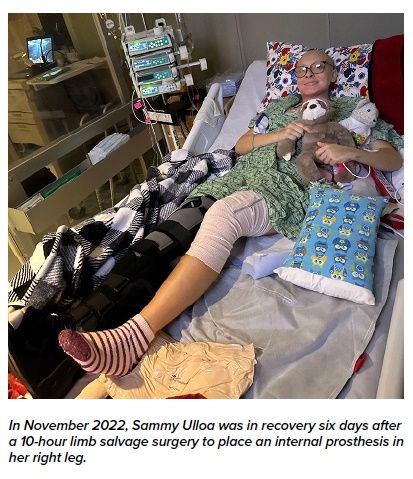
At 19, Ulloa had no idea how health care or insurance worked. “Young adults are often expected to make decisions about their care without the knowledge or experience to do so,” Ulloa explained. “It’s overwhelming to face a diagnosis while also learning how to navigate such a complex system.”
Strategies such as expanding Medicaid eligibility, offering subsidies for marketplace insurance plans, and ensuring that essential cancer treatments are covered under standard insurance policies can significantly ease the financial burden on AYA patients and their families. By creating systems that prioritize accessibility and affordability, these measures can lead to earlier interventions and improved survival outcomes for those affected by osteosarcoma.
MIB Agents’ Role in Patient Advocacy
Empowering patients, caregivers, and advocates is how MIB Agents drives change. Advocacy for improved health care access and investment in osteosarcoma research can lead to transformative care. To do so, MIB Agents provides several resources, including:

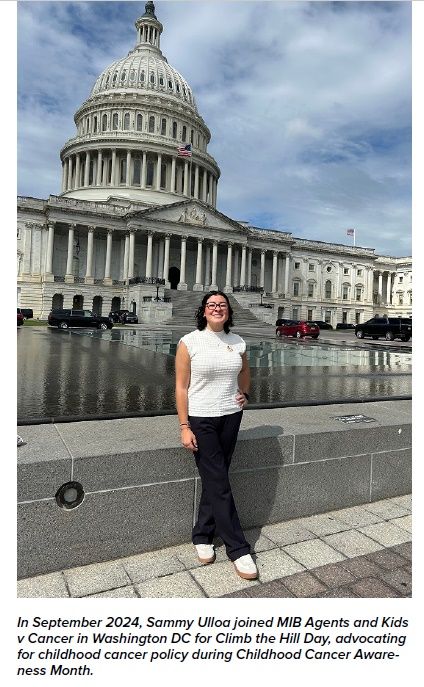
“MIB Agents focuses on creating a sense of community, promoting self-advocacy, and educating patients about their illness,” explained Ulloa. “It provides peer support and hosts events like the annual FACTOR osteosarcoma conference where patients, researchers, and doctors come together to share knowledge and experiences.”
These collective efforts facilitate a promising future where research breakthroughs and policy advancements will address disparities, enhance survival rates, and ensure AYA patients receive care tailored to their unique needs.
MIB Agents focuses heavily on education. “Through initiatives like patient-doctor panels, podcasts, and decision aids, we aim to bridge the gap between medical professionals and patients. We want to ensure that every family has access to the right resources, support, and specialists for their unique situation,” shared Graham. “Beyond that, our junior advisory board continues to be instrumental in shaping our work by offering authentic patient perspectives to clinicians and researchers.”
MIB Agents is one of many voices in 2025 dedicated to building advocacy, support, and education for providers, patients, and their families, but one of the few that serve the entire ecosystem of a disease community.. AYA patients with osteosarcoma face an uphill battle marked by outdated treatments, systemic disparities, and profound emotional challenges. Addressing these issues through research, advocacy, and comprehensive care, osteosarcoma care teams can transform outcomes and improve the quality of life for these patients. Listening to their voices, supporting their needs, and working collectively can help build a future where no AYA patient feels left behind.
Emily Wire is a former associate editor for the Association of Cancer Care Centers (ACCC) in Rockville, Maryland.
References
1. Key statistics for osteosarcoma. Cancer.org. Accessed April 22, 2025.
https://www.cancer.org/cancer/types/osteosarcoma/about/key-statistics.html
2. Isakoff MS, Bielack SS, Meltzer P, Gorlick R. Osteosarcoma: Current
treatment and a collaborative pathway to success. J Clin Oncol.
2015;33(27):3029-3035. doi:10.1200/JCO.2014.59.4895





Recognizing the critical role advanced practice providers and allied health professionals play in the care continuum, the American Oncology Network provides infrastructure, leadership, and professional growth opportunities to empower these members of the cancer care team to practice at the top of their license.