Author(s):
Monique J. Marino


As cancer programs across the country face mounting pressure from rising patient volumes and workforce strain, PeaceHealth—a not-for-profit health system serving communities in Alaska, Oregon, and Washington—has made physician and clinician well-being a priority. It began with a question that many health care systems were asking in the wake of rising burnout: How do we care for the caregivers? Through a structured, systemwide approach, PeaceHealth is building a culture of wellness via programs that develop community, personal, and professional fulfillment; leadership skills; and peer support. But first, a story of how the past can help inform the present.
A Story of 2 Physician Champions
The PeaceHealth journey began in 2017, when health care system leadership recognized a troubling pattern of clinician turnover and dissatisfaction. In response, the organization formed a well-being committee and brought in a consultant to help structure a long-term strategy. In 2019, this led to the creation of a dedicated role: system medical director for clinician well-being.
In partnership with the committee, Patricia H. Wooden, MD, a family physician who served in this role from 2019 to 2024, led the development of PeaceHealth's first major initiative—a comprehensive onboarding program that supported new clinicians from their first day through their first year. This program included individualized orientation plans, structured mentorship, and a 6-month education series focused on well-being, leadership, and clinical tools. The onboarding program became the foundation for a broader wellness strategy.
PeaceHealth's approach to transforming the onboarding experience included working across departments to build programs using existing resources. Engaging leaders, communicating incremental successes, and breaking down the complex issue of burnout into actionable steps helped PeaceHealth move from intention to implementation. PeaceHealth then launched a partnership with VITAL WorkLife to provide peer coaching and introduced small-group coaching.
The system director for clinician well-being also travels across the PeaceHealth regions to listen; educate clinicians and leaders on burnout, well-being-centered leadership, and self-care; and collaborate with other department leaders who also support the clinician experience. Both Dr. Wooden and her 2024 successor, Rachel A. Bishop, MD, championed the idea that well-being is a shared responsibility. In addition to individual support programs, key partnerships with leadership and information technology have brought AI technology, electronic health record (EHR) optimization, and dedicated support to help manage clinicians' inboxes. Taken as a whole, these efforts help to cultivate a culture where leadership, peer support, and personal and professional growth intersect.
A Strategic Start: PeaceHealth's Clinician Onboarding Program
At the heart of PeaceHealth's well-being strategy is its comprehensive clinician onboarding program, designed to support new hires from the moment they join through their first year of practice. The program remains a cornerstone of the health care system's approach to clinician support.
The onboarding program includes 4 key components. First, each clinician receives an individualized orientation plan tailored to their role and location. Second, a 365-day playbook guides managers and leaders through the clinician's first year, outlining training milestones, ramp-up schedules, and regular clarity meetings focused on well-being, job expectations, and professional fulfillment. Third, every new hire is paired with a mentor—another physician or clinician from their department—who helps them integrate into the care team and local community. Mentors and mentees meet monthly for 6 months and are compensated for their time.
Finally, the program includes a 6-month education series that meets weekly online. These sessions cover topics such as well-being, leadership, Lean training, quality and policy, EHR mindset and skills, and the human experience of health care. Managers are asked to block schedules to allow attendance, and recordings are available for those unable to join the live session. This structured, multilayered approach ensures that clinicians feel supported, connected, and equipped to succeed from day 1.
Expanding Support: The VITAL WorkLife Partnership
Following the success of its clinician onboarding program, PeaceHealth expanded its well-being strategy with its partnership with VITAL WorkLife, a national network of physician peer coaches and behavioral health consultants. This collaboration was designed to provide physicians, clinicians, and their families with access to confidential, personalized support, including peer coaching, counseling, and a work-life concierge. The benefits of the partnership have been significant. Participating clinicians report improved emotional resilience, greater career satisfaction, and enhanced work-life balance.
Evolving With Purpose: The Transformation of the PEP Program
The Practice Experience Program (PEP) stands as one of PeaceHealth's most impactful wellness initiatives, with 267 physicians and clinicians having participated since its inception. Through small-group coaching, the program helps develop skills to support daily practice with a focus on efficiency, including Lean training and EHR optimization in addition to well-being. However, it quickly became clear that clinicians were learning skills beyond efficiency training.
PEP is structured as a 28-week experience, beginning and ending with 4-hour group sessions and supported by 20 weekly, 1-hour meetings. Participants are given protected time to attend, and each session is designed to help clinicians envision their ideal practice and identify what they can control and change. For challenges that are beyond their control, the program offers strategies to reframe and address those issues with clarity and compassion. Weekly SMART (specific, measurable, achievable, relevant, and time-bound) goals and celebrations are shared on a private Teams channel, fostering accountability and community. The program supports both personal and professional development, encouraging clinicians to envision their ideal practice and take actionable steps toward it.
In parallel, the IT team continues to support practice efficiency with programs including support from inbox clinicians, AI technology for documentation, and continuous appraisal of tools that can reduce administrative burden.
Growing Leaders From Within: The GOLD Program
PeaceHealth's commitment to physician and clinician well-being extends beyond emotional support—it includes cultivating leadership from within. The Growing Our Leadership Development (GOLD) program is designed to allow clinicians to identify themselves as aspiring leaders and explore leadership. This 8-month program provides structured mentorship, leadership training, and hands-on experience through improvement projects that address real challenges within the health care system.
The curriculum blends leadership theory with practical application. Participants receive mentorship from experienced leaders, engage in lectures on leadership, and explore topics such as communication, change management, and quality improvement. Each participant also completes a capstone project focused on a topic of personal or departmental relevance, ranging from improving care delivery in remote areas to launching new staff development initiatives.
Compassion in Action: Nurture360 Supports All PeaceHealth Physicians, Clinicians, and Caregivers
Recognizing the unique emotional demands experienced by caregivers, PeaceHealth developed the Nurture360 program to provide targeted wellness support for multidisciplinary care teams. The program is committed to supporting the whole-person well-being of caregivers, physicians, and clinicians through comprehensive benefits, resources, and experiences that encourage them to thrive in every area of life. Other well-being programs physicians and clinicians have access to include PeaceHealth's Employee Assistance program (8 free therapy and 8 free coaching sessions annually) and the Well-Being Program—an interactive digital platform where caregivers can track healthy behaviors, participate in group challenges, and earn rewards and incentives.
Measuring What Matters: Tracking Impact and Driving Change
PeaceHealth's commitment to physician and clinician well-being is not only strategic—it's data-driven. To evaluate the effectiveness of its programming, the organization uses the American Medical Association's (AMA) well-being survey, which includes the validated Mini-Z burnout assessment. This tool provides a consistent framework for measuring burnout, engagement, and key performance indicators across cohorts and departments. The survey has become a cornerstone of PeaceHealth's continuous improvement efforts.
Beyond quantitative metrics, PeaceHealth places a strong emphasis on qualitative feedback. Every comment submitted through the survey is read by senior leadership. These insights inform program design, highlight emerging stressors, and reveal bright spots that can be scaled across the organization. Feedback is shared with clinicians through regional town halls and well-being committee meetings, reinforcing a culture of listening and responsiveness.
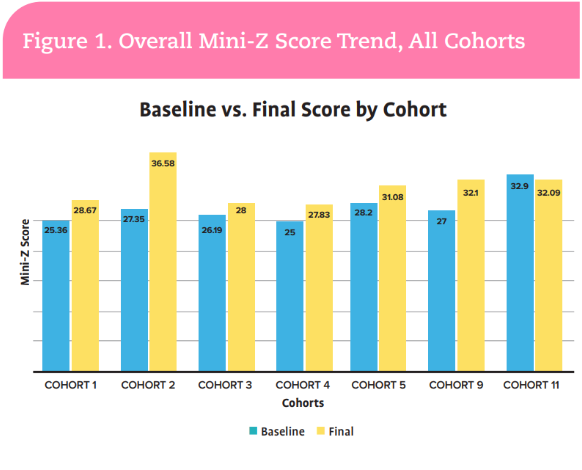
The results speak for themselves. Figure 1 illustrates the overall Mini-Z score trends across 11 PEP cohorts, showing measurable improvements in clinician well-being. In the most recent cohort, while baseline scores were already high, the burnout rate still dropped by nearly 15%. These outcomes are not just statistical—they reflect real shifts in how clinicians experience their work. Participants report renewed purpose, stronger peer connections, and greater satisfaction in their roles. Many have found new commitment, and several have stepped into leadership positions.

Lessons for the Field: Turning Inspiration Into Action
PeaceHealth's journey offers a road map for health care organizations seeking to build sustainable clinician wellness programs. At its core is a simple but transformative principle: Start small, stay focused, and build with intention. Rather than attempting to overhaul culture overnight, PeaceHealth began with 1 foundational program—the clinician onboarding initiative—and expanded from there.
One of the most critical lessons is the importance of leadership support. PeaceHealth invested in dedicated paid time positions for wellness roles, including a system medical director for clinician well-being. This structure allowed for both strategic oversight and hands-on implementation. Cancer programs looking to replicate this model should consider appointing a wellness lead—even part-time—to champion initiatives, track progress, and serve as a liaison between clinicians and leadership.
Empowering frontline staff is another key strategy. PeaceHealth recognized that those closest to challenges often hold the best solutions. Through programs like PEP and GOLD, clinicians were given space to reflect, collaborate, and lead change. Other institutions can adopt this approach by creating small-group forums, offering mentorship opportunities, and encouraging improvement projects that address local pain points.
To maintain momentum, PeaceHealth emphasized continuous feedback and iteration. Programs were refined based on participant input, and successes were shared widely. Other cancer programs can mirror this model by establishing a well-being committee, conducting regular surveys (such as the AMA Organization biopsy), and using appreciative inquiry to identify what's working and how to scale it.
By fostering a culture of compassion, growth, and collaboration, organizations can move from burnout to breakthrough—1 step, 1 conversation, and 1 empowered clinician at a time.
Monique J. Marino is senior director of Editorial Content and Strategy for the Association of Cancer Care Centers in Rockville, Maryland.
References
Clinician Burnout in the US—A National Challenge, A Shared Response
Clinician burnout remains one of the most pressing challenges in American health care. Characterized by emotional exhaustion, depersonalization, and a diminished sense of personal accomplishment, burnout affects more than 60% of physicians in some specialties, according to recent national surveys.¹ The consequences are profound: reduced quality of care, increased medical errors, higher turnover, and worsening mental health among clinicians.
Recognizing the urgency of this issue, the AMA has taken a leadership role in addressing burnout through its STEPS Forward program. This initiative offers free, evidence-based toolkits designed to help health care systems implement practical changes that improve workflow, reduce administrative burden, and foster a culture of well-being.
Complementing the AMA's efforts is the pioneering work of Tait Shanafelt, MD, one of the foremost researchers on physician well-being. Dr. Shanafelt's studies have helped shift the narrative from individual resilience to organizational responsibility. His research has shown that about 80% of the drivers of burnout are rooted in institutional—not individual—factors, including excessive workload, lack of autonomy, and misalignment between values and practice, all of which can be addressed through systemic change.²
Stanford's WellMD Center, co-founded by Dr. Shanafelt, has become a national model for integrating wellness into the fabric of academic medicine. The center promotes a 3-part framework: culture of wellness, efficiency of practice, and personal resilience. This holistic approach has inspired PeaceHealth and other health care systems across the country to rethink how they support their workforce. This work underscores a critical truth: When caregivers are cared for, everyone benefits.





Recognizing the critical role advanced practice providers and allied health professionals play in the care continuum, the American Oncology Network provides infrastructure, leadership, and professional growth opportunities to empower these members of the cancer care team to practice at the top of their license.