BY HEATHER JACKSON, PHD, APRN, FNP-BC, NEA-BC, FAANP;
The expansion and evolution of the advanced practice provider (APP) role have been impacted by global influences and crises, including wars, conflicts, population growth, urbanization, and the expansion of private and government-sponsored health care programs. Both the nurse practitioner (NP) and physician assistant (PA) roles were developed in 1965 to address a nationwide shortage of qualified health care providers in the setting of a growing United States population and the inception of Medicaid.1,2 (Editor’s Note: Today, professional organizations and training programs have shifted to the term Physician Associate to better reflect collaboration rather than “assisting” and to emphasize the profession’s advanced clinical training and autonomy.) Physician shortages are a major factor contributing to APP growth and expansion. The Association of American Medical Colleges predicts a shortage of 86,000 physicians by 2036.3 Exacerbating this shortage is the continued growth of the US population, with a disproportionate increase in the older adult population. The aging population will drive increased demand for health care providers, as older adults tend to have more health care needs compared to younger adults.3
Rising acuity of patients requiring hospital admission, increasing subspecialization of medicine, and expanding demand for outpatient care fuel the demand for APPs. As the most sought-after health care provider applicants in the US, NPs are the third fastest-growing occupation in the medical field. Projections estimate significant recruitment increases by 2031, with additional position postings of 46% for NPs and 28% for PAs, which will cumulatively expand access to health care and leverage physicians to meet complex patient needs.4 Postings for 71% of APP positions occurred in communities of 100,000 people or greater, indicating significant demand for APPs outside of rural areas where the role was initially intended to address a lack of physician providers.1,5 For health care systems, there is a significant opportunity to effectively utilize this growing workforce to provide high-quality, patient-centered care, maximizing individual skills and allowing APPs to practice at the top of their license and improving multidisciplinary collaboration.
The Critical Role of Advanced Practice in Multidisciplinary Cancer Care Teams
As APPs have become increasingly embedded within the health care system, their role as part of the multidisciplinary health care team has become essential in expanding access to care, especially in providing comprehensive cancer care. Although cancer mortality is on the decline overall, incidence is increasing for many malignancies.6 Simultaneously, the density of practicing oncologists per capita has decreased in the US over the last decade.7
As survivorship rates rise, the demand for comprehensive cancer care expands, yet many individuals remain without access to these essential services. This disparity is expected to be most notable in rural areas and counties with high cancer mortality rates.7 As a result, other avenues are being explored to address the gap in access to oncologic care.
In 2021, the Association of Cancer Care Centers (ACCC) released a statement highlighting the value of oncology APPs, noting APPs are essential for expanding access to community cancer care within the setting of a multidisciplinary team.8 When practicing at the full scope of their license, APPs play a critical role in closing this gap, and in mitigating physician burnout.9 APPs are integral providers who facilitate expanded access to comprehensive cancer care amid workforce shortages and increasing disease complexity.10
The Growing Need for Advanced Practice Leadership in Health Care
With the continued expansion of the specialty APP workforce, there is a concurrent need for robust advanced practice leadership to effectively support comprehensive oncology care. APP leaders bring valuable clinical expertise and knowledge about the scope of practice. Furthermore, APP leaders serve as professional role models and mentors. Leadership frameworks inclusive of the APP role have demonstrated numerous enhancements affecting health care delivery. Transformational APP leadership structures have increased clinician productivity, clarified APP roles and performance metrics, and improved APP job satisfaction and retention.11,12 However, there is a significant gap in information regarding the leadership structures that support APPs within oncology, and further research is vital given the expanding need for oncology services. Institutions should regularly assess APP leadership and development opportunities across all career stages to fully harness the potential of this profession (see APP Roles and Responsibilities in Oncology Care).13
Fostering Growth in the Advanced Practice Workforce
Rapid growth of the APP workforce underscores the need for well-defined organizational structures to ensure optimal utilization and long-term retention. Effective APP leadership is essential for standardizing processes, enhancing efficiency, and driving productivity in alignment with institutional goals.11 To maximize performance, APP leaders ensure providers practice to the full extent of their training and licensure. Additionally, these leaders can implement clear performance metrics and provide actionable feedback that supports realistic strategies for improvement with sustained productivity.
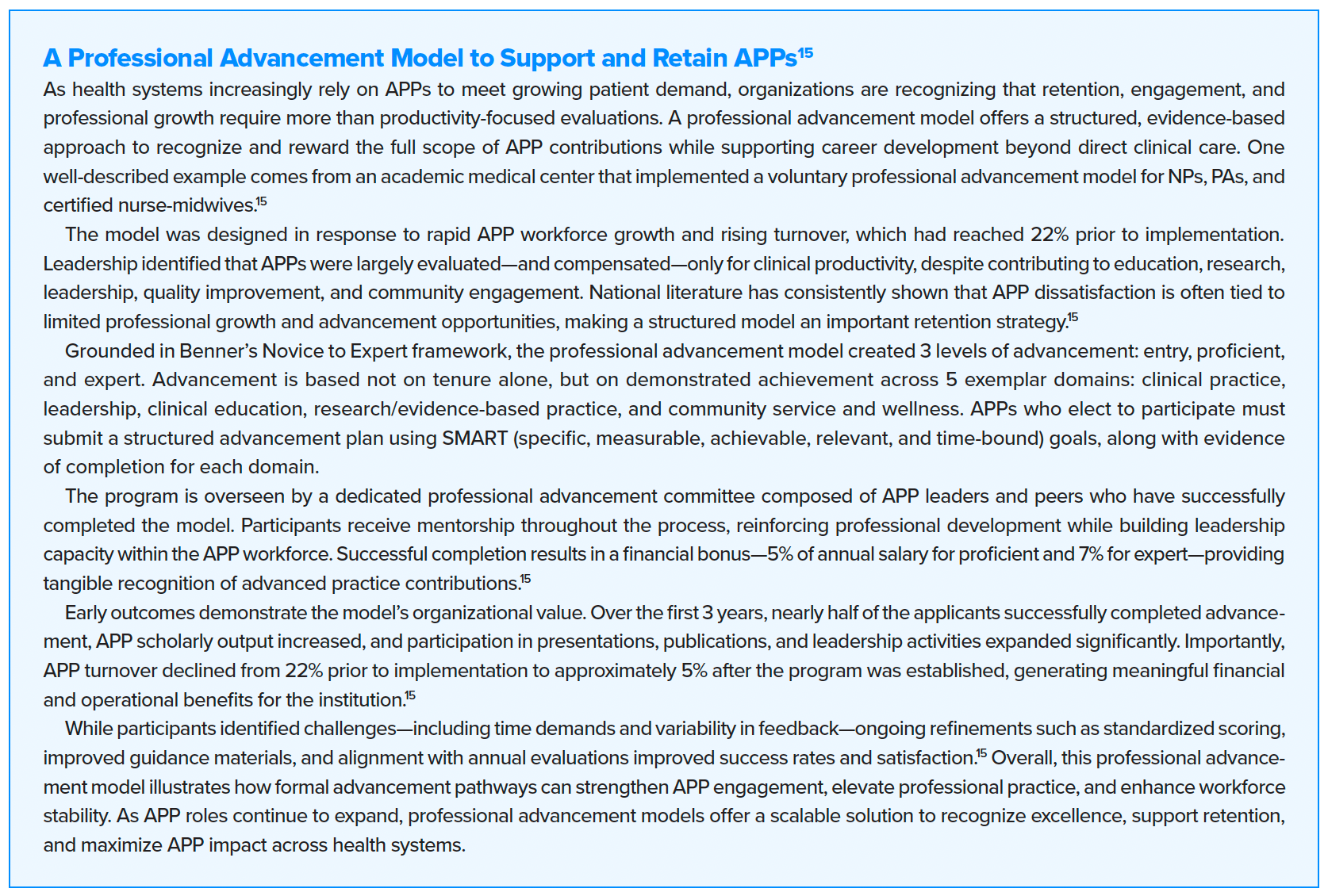
Historically, APP performance has been evaluated primarily on the ability to meet clinical demands, with limited incentives for engagement beyond direct patient care.14 Promotion tracks encourage APPs to participate in activities outside clinical duties, such as serving on institutional, local, and national committees; engaging in research; completing evidence-based quality improvement projects; publishing scholarly work; and pursuing advanced degrees or certifications (see A Professional Advancement Model to Support and Retain APPs).15 Support and promotion of these pathways enhances confidence, engagement, and job satisfaction, ultimately improving APP retention.16 Development of strategies that recognize contributions and enhance job satisfaction is crucial to sustaining and retaining a highly engaged workforce. A structured leadership framework creates clear pathways for advancement and professional growth, while fostering mentorship and succession planning for future APP leaders.
Transforming the Triad Leadership Model to a Quad Leadership Model
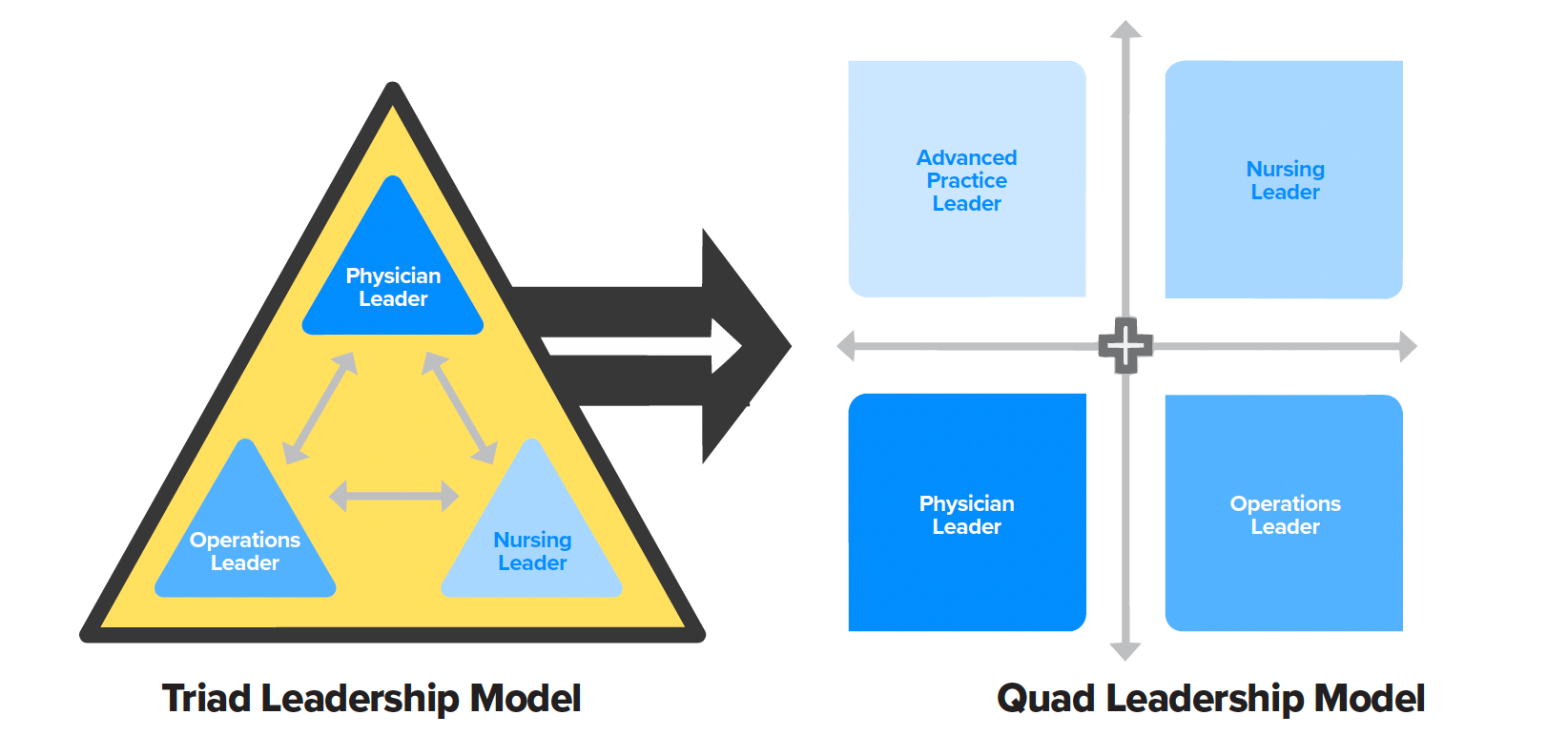
The triad health care leadership model is designed to enhance organizational effectiveness by including representation from 3 core positions: physician, nursing, and operations. Often, these roles include the chief medical officer, chief nursing officer, and chief operating officer to ensure a comprehensive strategy in managing health care organizations.17 This collaborative and interprofessional structure aims to improve patient care and direct cultural change with an emphasis on teamwork, innovation, and ongoing improvement. Outcomes highlight advancements in quality, organizational culture, and operational performance, ultimately driving transformation.18 However, as the advanced practice workforce continues to expand and develop, the need for leadership representation is frequently underestimated.19
A quad leadership model builds upon the triad by incorporating advanced practice leadership and providing APP institutional representation (Figure). With 4 distinct realms of expertise and responsibility, optimal operational efficacy is supported through interprofessional collaboration. Such leadership expansion further strengthens multidisciplinary teams, which are essential in providing comprehensive cancer care.20 The quad leadership model is particularly effective in complex health care settings, such as cancer programs in which multiple disciplines are delivering high-quality health care with intricate workflows spanning inpatient and outpatient settings.11 Enhancing collaboration and ensuring holistic decision-making not only streamlines processes and communication but also creates professional opportunities for advanced practice leaders.

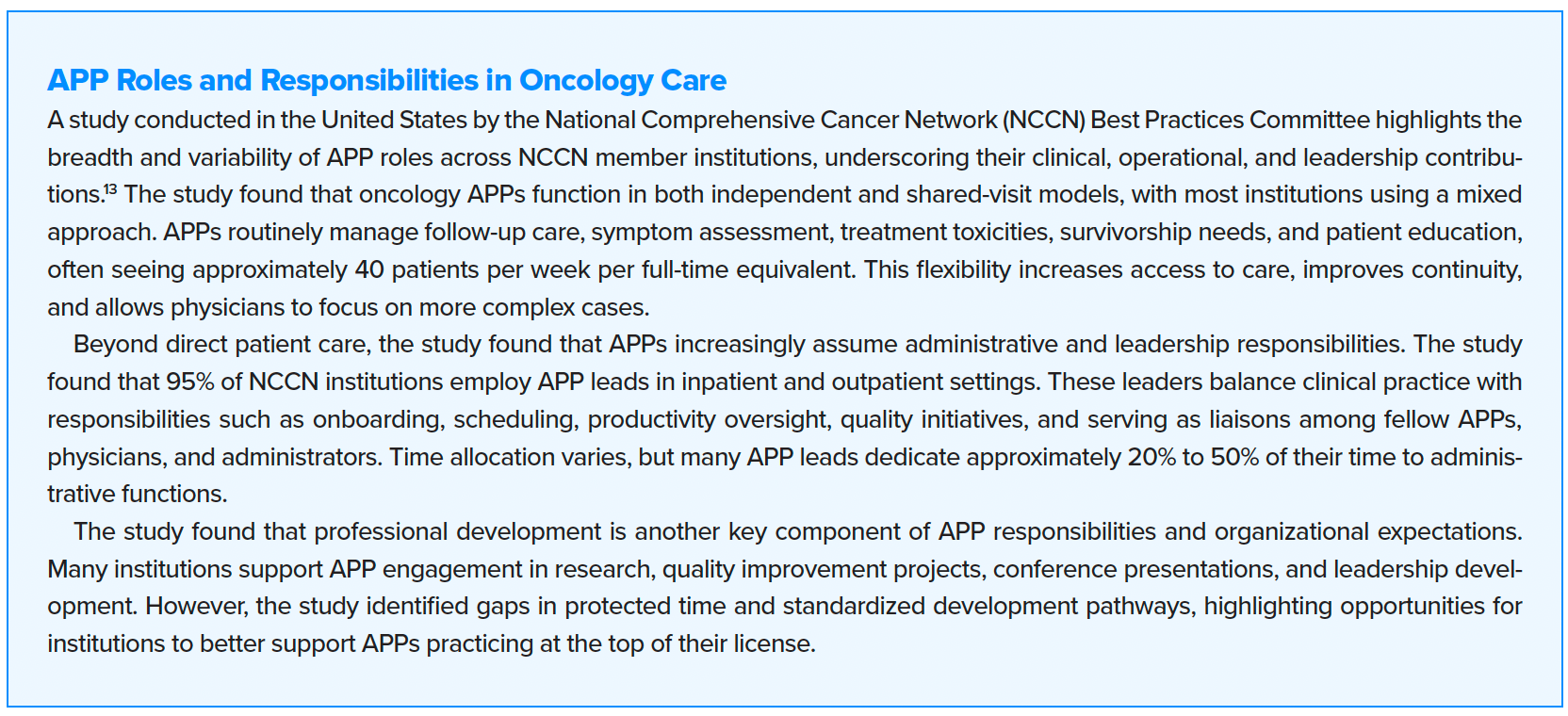

Figure. Transition From a Triad to a Quad Leadership Model

Although the APP role is newer in comparison to physicians and nurses, APPs have demonstrated tremendous value as part of a multidisciplinary health care team over the past 60 years. With the growth and evolution of the APP profession in oncology, there is a concurrent need for leadership representation to support this growing workforce. Organizational establishment of APP leadership fosters APP performance, strengthens retention, and supports resilience. Advanced practice leadership representation should be strategically prioritized to ensure optimal integration of APP roles in providing comprehensive cancer care.
Heather Jackson, PhD, APRN, FNP-BC, NEA-BC, FAANP is Administrative Director of Advanced Practice; Olivia West, MSN, APRN, AG-ACNP-BC is Inpatient APP Manager; Whitney Chase, MSN, ACNP-BC is APP Team Lead; Deborah Hawkins, MSN, ACNP is APP Team Lead; Virginia Quinn, MSN, AG-ACNP-BC is APP Team Lead; Nancy Long, MSN, APRN, AG-ACNP-BC is Stem Cell Transplant Advanced Practice Manager; and Ashley Johnson, DNP, APRN, FNP-C is Outpatient APP Manager at Vanderbilt-Ingram Cancer Center in Nashville, Tennessee.
References






Recognizing the critical role advanced practice providers and allied health professionals play in the care continuum, the American Oncology Network provides infrastructure, leadership, and professional growth opportunities to empower these members of the cancer care team to practice at the top of their license.