ACCC association of cancer care centers
Join/Renew
Login
Join/Renew
Login
Education & Resources
ACCC eXchange LogInCorporate Member Sponsored ResourcesPresentations & AbstractsPresident's ThemeACCC Connect eLearning LogIn
Publications
Oncology IssuesPatient Assistance & Reimbursement GuideTrending Now in Cancer Care
Events
2026 ACCC Leadership SummitAnnual Meeting & Cancer Center Business SummitCapitol Hill DayNational Oncology ConferenceOncology Reimbursement MeetingsOncology State Society Meetings
Policy & Advocacy
2024 Policy Wrap-Up and ACCC 2025 Policy PrioritiesLetters & StatementsAccess, Payment & Reimbursement ReformWhite Bagging & Brown BaggingAdvocacy ResourcesCancer Moonshot
Membership
Join | RenewWho We AreMembership Types & BenefitsCorporate MembersACCC Member Portal FAQMember Directory
Partners
Oncology State SocietiesPartner OrganizationsCME
News
News ReleasesAdvocacy News ReleasesOncology News
About ACCC
Timeline / 50th Anniversary2025 Impact ReportACCC Innovator AwardsACCC FellowsACCC Senior Staff
Breast CancerMetastatic Breast Cancer
Gastrointestinal CancerBiliary Tract CancerColorectal CancerGastric CancerLiver Cancer
Genitourinary CancerBladder CancerProstate CancerRenal Cell Carcinoma
Gynecologic CancerOvarian Cancer
Head & Neck Cancer
Hematologic MalignanciesAcute Lymphocytic Leukemia (ALL)Acute Myeloid Leukemia (AML)Chronic Lymphocytic Leukemia (CLL)Mantle Cell Lymphoma (MCL)Multiple Myeloma (MM)Myelodysplastic Syndromes (MDS)
Lung CancerNon-Small Cell Lung Cancer (NSCLC)Small Cell Lung Cancer (SCLC)
Sarcoma
Skin CancerMelanomaNon-Melanoma Skin Cancers (NMSC)
Clinical Practice & TreatmentCancer DiagnosticsCare CoordinationEHR Integration for Biomarker TestingQuality Improvement Collaboration: Integration of Precision Medicine in Community OncologyTreatment
Financial NavigationFAN Boot CampFinancial Advocacy Network (FAN) Resource LibraryPatient Assistance & Reimbursement GuidePrior Authorization
Health Equity & Access3, 2, 1, Go! Practical Solutions for Addressing Cancer Care DisparitiesAppalachian Community Cancer AllianceOncology Advanced PractitionersPersonalizing Care for Patients of All BackgroundsSocial Drivers of Health
Patient-Centered CareAddressing Care Disparities for VeteransAdolescent and Young Adult (AYA)Care Action Plans for People with CancerDermatologic ToxicitiesEmpowering CaregiversGeriatric OncologyHealth LiteracyNutritionOncology PharmacyPatient NavigationPsychosocial Care in OncologyShared Decision-MakingSupportive CareSurvivorship Care
Practice Management & OperationsCancer Program FundamentalsLeadership Sustainment and Engagement VideosOncology Practice Transformation and Integration CenterOncology Team Resiliency
ResearchACCC Community Oncology Research Institute (ACORI)
Technology & InnovationTelehealth & Digital Medicine
ACCCBuzz Blog
CANCER BUZZ Podcast
Oncology Issues
Join/Renew
Login
Breast CancerMetastatic Breast Cancer
Gastrointestinal CancerBiliary Tract CancerColorectal CancerGastric CancerLiver Cancer
Genitourinary CancerBladder CancerProstate CancerRenal Cell Carcinoma
Gynecologic CancerOvarian Cancer
Head & Neck Cancer
Hematologic MalignanciesAcute Lymphocytic Leukemia (ALL)Acute Myeloid Leukemia (AML)Chronic Lymphocytic Leukemia (CLL)Mantle Cell Lymphoma (MCL)Multiple Myeloma (MM)Myelodysplastic Syndromes (MDS)
Lung CancerNon-Small Cell Lung Cancer (NSCLC)Small Cell Lung Cancer (SCLC)
Sarcoma
Skin CancerMelanomaNon-Melanoma Skin Cancers (NMSC)
Clinical Practice & TreatmentCancer DiagnosticsCare CoordinationEHR Integration for Biomarker TestingQuality Improvement Collaboration: Integration of Precision Medicine in Community OncologyTreatment
Financial NavigationFAN Boot CampFinancial Advocacy Network (FAN) Resource LibraryPatient Assistance & Reimbursement GuidePrior Authorization
Health Equity & Access3, 2, 1, Go! Practical Solutions for Addressing Cancer Care DisparitiesAppalachian Community Cancer AllianceOncology Advanced PractitionersPersonalizing Care for Patients of All BackgroundsSocial Drivers of Health
Patient-Centered CareAddressing Care Disparities for VeteransAdolescent and Young Adult (AYA)Care Action Plans for People with CancerDermatologic ToxicitiesEmpowering CaregiversGeriatric OncologyHealth LiteracyNutritionOncology PharmacyPatient NavigationPsychosocial Care in OncologyShared Decision-MakingSupportive CareSurvivorship Care
Practice Management & OperationsCancer Program FundamentalsLeadership Sustainment and Engagement VideosOncology Practice Transformation and Integration CenterOncology Team Resiliency
ResearchACCC Community Oncology Research Institute (ACORI)
Technology & InnovationTelehealth & Digital Medicine
ACCCBuzz Blog
CANCER BUZZ Podcast
Oncology Issues
    • Education & Resources
    • Publications
    • Events
    • Policy & Advocacy
    • Membership
    • Partners
    • News
    • About ACCC
ACCC association of cancer care centers
1801 Research Boulevard, Suite 400, Rockville, MD 20850
Tel: 301.984.9496 Fax: 301.770.1949 Email Us
Contact UsVolunteers
Advertise
Career Center
Terms and Conditions
Privacy Policy
ACCC Rebranding
Copyright Ā© 2026 Association of Cancer Care Centers. All Rights Reserved.
Advertisement

Publication

Article

Article

October 13, 2025
Oncology Issues
October 2025
Volume 40
Issue 5

Multidisciplinary Approaches to Treating Patients With Relapsed/Refractory Follicular Lymphoma

Multidisciplinary Approaches to Treating Patients With Relapsed/Refractory Follicular Lymphoma
Download Issue PDFDownload PDF

INTRODUCTION

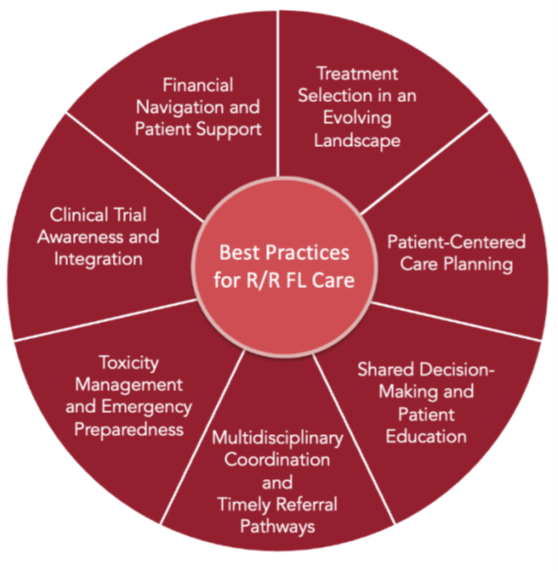
This guide is designed to support cancer programs and care teams in delivering and coordinating care for patients with relapsed or refractory (R/R) follicular lymphoma (FL). Included below are insights from a national landscape analysis, including surveys, focus groups, and interviews with multidisciplinary providers, patients, and patient advocates. The guide explores 7 key domains related to care practices and highlights the experiences shared by those consulted throughout theĀ project.

FL is a slow-growing type of B-cell non-Hodgkin lymphoma (NHL) representing approximately 20%- 25% of NHL cases in the US.1,2 While most patients initially respond well to treatment, FL typically follows a chronic, relapsing–remitting course in which periods of remission are repeatedly followed by relapse. With each subsequent line of therapy, response rates decline and diseasecontrol intervals shorten.2 Clinicians must navigate the disease’s clinical heterogeneity and weigh patient-specific factors such as age, comorbidities, and responses to previous treatments when selecting the most appropriate therapy.

The treatment landscape for R/R FL has evolved significantly in recent years with the introduction of advanced therapies, including cellular therapies and targeted agents. In the relapsed or refractory setting, second-line therapy often involves an anti-CD20 monoclonal antibody combined with chemotherapy, or lenalidomide with rituximab. Other anti-CD20–based regimens may be used in select circumstances. Although not preferred regimens, other second-line options include lenalidomide and anti-CD20 monoclonal antibody monotherapies.3

After at least 2 prior lines, advanced therapies—including chimeric antigen receptor (CAR) T-cell therapy and, more recently, bispecific antibodies (BsAbs)—are now important standards of care. Additional guideline-concordant later-line options include EZH2 inhibitors (especially for EZH2-mutated disease, with more limited benefit in wild-type), combinations of Bruton’s tyrosine kinase (BTK) inhibitors with anti-CD20 monoclonal antibodies, and investigational strategies combining anti-CD19 with anti-CD20 monoclonal antibodies.2-6 Given the rapidly evolving treatment landscape in R/R FL, this summary is not comprehensive. Patient care decisions should be informed by the most current evidence and published clinicalĀ guidelines.

TREATMENT CHALLENGES AND ACTIONABLE TIPS

The sections that follow highlight effective care practices for patients with R/R FL. Each section explores treatment challenges and presents actionable tips across 7 key areas to support high-quality, coordinated care delivery.

Treatment Selection in an Evolving Landscape

With the growing number of available therapies, selecting the right treatment after relapse has become increasingly complex. Managing new options, including new therapeutic combinations, requires providers to stay current with emerging data and evolving standards. Providers noted that treatment sequencing is highly individualized and often depends on time to relapse, prior therapies, and patient-specific factors such as comorbidities and care goals. As novel agents move into earlier lines of therapy, the need for tailored treatment planning continues to grow.

Surveyed providers described a range of current sequencing approaches, including frequent use of combination regimens in earlier lines, such as pairing anti-CD20 monoclonal antibodies with chemotherapy or with lenalidomide. In the second-line setting, these regimens remain widely used, and novel CD19- and CD20-directed combinations are emerging as important options before moving to the third line. BsAb and CAR T-cell therapies were most often used in the third line and beyond, and combinations like BsAbs plus anti-CD20 monoclonal antibodies and lenalidomide are emerging in clinical trials at academic sites. These approaches illustrate the increasing complexity of treatment selection and sequencing in everydayĀ practice.3

Providers also noted differences in how new therapies are reviewed and integrated across practice settings. At academic centers, clinicians may meet weekly to discuss individual patients, share new clinical data, and consider how emerging therapies or trials might apply based on individual treatment response and unique patient characteristics. Many community and rural practices report relying on external tumor boards or referring complex cases to specialists at larger centers for additional input and trial evaluation.

Practical Tips

Treatment After Relapse:

  • Rebiopsy at relapse to assess for histologic transformation and molecular changes that may impact treatment planning. Transformation into a more aggressive lymphoma (like diffuse large B-cell lymphoma) or the emergence of new mutations at relapse is common and significantly impacts clinical decision-making.
  • Prioritize excisional biopsy when feasible, recognizing that access may vary based on disease location and available resources.
  • Use progression of disease within 24 months (POD24) status to guide treatment decisions, including treatment intensity, after relapse.
  • Consider observation, especially in patients with late relapse who remain asymptomatic and have a low tumor burden. Close monitoring is essential.7
  • Use anti-CD20 antibodies as monotherapy or in guideline -recommended combinations (eg, with chemotherapy, lenalidomide, or an anti-CD19 antibody), when appropriate. Insurers tend to approve anti-CD20 antibodies more often, and they are well tolerated.
  • Individualize the sequencing of CAR T-cell therapy and BsAbs based on time to relapse, clinical judgment, logistical considerations, reimbursement, and institutional pathways.
  • Use EZH2 and BTK inhibitors for patients who are appropriate candidates, particularly those who may not be fit for intensive therapies, noting their convenient oral administration and generally favorable adverse effect profile.

Additional Considerations for CAR T-Cell and BsAb Therapies:

  • If you are at an academic center, provide education to community center teams about eligibility and referral pathways for CAR T-cell and BsAb therapies and clinical trial opportunities.
  • If you are at a community center, refer complex cases to specialized centers early, including at the first appointment when advanced therapies are anticipated.
  • Consider BsAb therapy in settings where CAR T-cell therapy implementation may be challenging, such as suburban or resource-limited centers.
  • Transition patients back to local care after finishing CAR T-cell therapy or initiating BsAbs, with clear communication between academic and community teams.
  • Consider transitioning BsAb maintenance dosing to local cancer centers following ramp-up dosing at an academic center.

Helpful Resources

  • NCCN Clinical Practice Guidelines in Oncology (NCCN GuidelinesĀ®)
  • ACCC: Advancing CAR T-Cell Therapy Care Continuity and Collaborative Patient Education
  • ASCO: Therapy for Patients With POD24 Follicular Lymphoma: Treatment Patterns and Outcomes From the Lymphoma Epidemiology of Outcomes (LEO) Consortium
  • ASCO Case Study: Second-Line Treatment of Early Relapsing Follicular Lymphoma
  • ACCC: A Blueprint for Successful Integration of Bispecific Antibodies

Patient-Centered Care Planning

Care planning for patients with R/R FL requires ongoing flexibility to align with changing disease status, comorbidities, and individual care needs. Providers emphasized the importance of balancing efficacy, safety, and quality of life, particularly in later lines of treatment and in frail or older patients. They also recognized that addressing emotional, logistical, and financial needs is a core component of patient-centered care.

Patients and caregivers echoed these priorities, but some reported limited access to mental health services, financial counseling, and logistical support throughout their care. Certain practices can help close these gaps, such as screening for support needs, offering referrals to counseling services, and connecting patients and caregivers with peer support networks such as The Leukemia & Lymphoma Society (LLS), now Blood Cancer United, and the Lymphoma Research Foundation (LRF).

Practical Tips Patient Preferences:

  • Assess patient goals and values before proposing treatment options, especially for older adults and frail patients who may prioritize quality of life over treatment response.
  • Schedule education visits with patients whenever a new treatment plan is initiated to support understanding, adherence, and informed decision-making.
  • Acknowledge that some patients may choose to decline further treatment after relapse and incorporate these preferences into care planning.

Patient Psychosocial Needs:

  • Screen patients for emotional and psychosocial needs regularly, with particular attention during major treatment transitions such as relapse or initiation of CAR T-cell therapy.
  • Refer patients to appropriate supportive care services (eg, social work, psycho-oncology, counseling, support groups) for mental health and psychosocial needs throughout the treatment journey. In addition, consider early referral to palliative care for symptom management, care coordination, and holistic support, as appropriate.
  • Connect patients and caregivers with peer support networks to provide shared experiences, encouragement, and emotional reassurance.
  • Offer dedicated caregiver resources, recognizing that caregivers often lack access to emotional support unless it is specifically provided.
  • Encourage patients to engage their broader support systems, including friends, family members, and community networks, to reduce isolation during treatment.

Helpful Resources

  • The Leukemia & Lymphoma Society (LLS), now Blood Cancer United | Support Groups
  • The Leukemia & Lymphoma Society (LLS), now Blood Cancer United | Resources for Blood Cancer Caregivers
  • Lymphoma Research Foundation Support Services
  • Lymphoma Research Foundation: Caring for Someone With Lymphoma
  • ACCC Personalizing Care for Patients of All Backgrounds: Insights for the Multidisciplinary Cancer Care Team

Shared Decision-Making and Patient Education

Clear communication and shared decision-making are essential to R/R FL care. Yet, many patients report difficulty accessing reliable information and feeling fully empowered during treatment planning. Some patients describe diagnostic delays, limited explanations of available options, and the need to self-advocate for advanced therapies. Providers can play a key role by proactively supporting second opinions, explaining treatment choices clearly, and connecting patients to navigators or nurses who can help them access what they need.

Effective communication includes helping patients understand what to expect, responding to concerns in plain language, and creating opportunities for open and honest dialogue. Involving caregivers and drawing on educational tools, supportive services, and the broader care team can strengthen patient understanding and reduce overwhelm.

Practical Tips Shared Decision-Making:

  • Reinforce the idea that treatment decisions are ultimately made by the patient, with providers offering recommendations while respecting individual preferences and values.
  • Include clinical trial options in treatment discussions whenever applicable, engaging research staff early.
  • Offer proactive education about aspects of care that patients may not know to ask about, including the potential role of specialists, eligibility for clinical trials, and additional supportive services.

Patient Awareness:

  • Provide educational materials highlighting all treatments under consideration to reduce patient reliance on potentially misleading internet searches and to ensure access to reliable information.
  • Use patient education pamphlets to explain treatment processes and the reasoning behind treatment choices. Review expected benefits while setting realistic expectations about toxicity risks, including the low likelihood of severe adverse events.
  • Share opportunities to engage with patient advocacy organizations to promote further learning.

Supportive Environment:

  • Communicate to patients that they do not have to make treatment decisions immediately and reinforce this by making educational resources easily accessible in the patient portal.
  • Involve caregivers in treatment discussions to strengthen understanding, reduce patient overwhelm, and support shared decision-making.
  • When referring patients for advanced therapies, explain theĀ rationale and expected benefits, and let patients know that a specialist can provide additional details about the treatment process.
  • Ensure multidisciplinary engagement in patient education, involving physicians, advanced practice providers (APPs), research staff, pharmacists, nurses, navigators, and family members to support comprehensive discussions.

Helpful Resources

  • Shared Decision-Making: Practical Implementation for the Oncology Team—Effective Practices for Optimal Patient Engagement
  • CANCER BUZZ Podcast: Shared Decision-Making
  • CANCER BUZZ Podcast: Shared Decision-Making in CLL.

Multidisciplinary Coordination and Timely Referral Pathways

Coordinated care is critical for patients with R/R FL, especially as they transition between community and tertiary care centers. However, managing complex, individualized therapies across diverse settings and care teams can be challenging. Some patients described confusion about care plans, delayed referrals, and difficulty navigating among providers and treatment sites.

Providers in the US Department of Veterans Affairs (VA) and rural programs noted additional coordination barriers, including limited access to clinical trials despite insurance coverage, lower health literacy, and difficulty arranging transportation to distant centers. To address these challenges, providers emphasized the importance of building strong referral relationships, using shared (or easily transferrable) documentation systems, and tailoring communication methods. Involving pharmacists in treatment planning and tumor board discussions can further support timely, safe, and well integratedĀ care.

Practical Tips Academic Medical Centers:

  • Strengthen multidisciplinary care by improving electronic health record (EHR) integration, expanding access to specialists, enhancing patient support services, and adopting standardized care protocols.
  • Use shared documentation platforms, such as EHR systems, to streamline care coordination between referring and treating providers.
  • Share patient updates proactively by sending lab results and clinical notes to community oncologists to keep them informed about patient progress.

Community Sites:

  • Establish referral networks for treatments, including stem cell transplant, CAR T-cell therapy, BsAbs, and clinical trials not available at your center to ensure timely patient access to advanced therapies.
  • Refer patients to tertiary care centers for second opinions and treatment recommendations when approaching third- or fourth-line therapies or when specialized care is required.
  • Inform patients early about referrals to tertiary care centers to set expectations and reinforce that the goal is to optimize their treatment plan.
  • Exchange complete documentation (eg, clinical notes, imaging, pathology reports) when making referrals. Build relationships with oncologists at referral centers to streamline communication.
  • Use phone calls to engage various providers and EHR messaging to reach nurses and APPs. Tailor outreach methods to align with team preferences.
  • Use informal methods like text messaging and relationship-building events (eg, meet-and-greet luncheons) to strengthen connections with tertiary care center providers.
  • Invite tertiary care oncologists to visit community clinics periodically to meet patients for an initial consultation to help foster familiarity before formal referrals.
  • Plan for patients to return to community care after stabilization or completion of specialized therapy, maintaining continuity of care close to home.

Pharmacist Role:

  • Collaborate with clinical pharmacists for R/R FL treatment planning, weighing efficacy and safety considerations for each patient, especially those with comorbidities or prior treatment-related toxicities.
  • Engage pharmacists when toxicities arise to help determine appropriate management and treatment modification (as needed).
  • Invite pharmacists to tumor boards when their expertise can contribute to treatment discussions, especially for complex or high-toxicity cases.

Helpful Resources

  • Video Spotlight | Precision Medicine at Saint Luke’s Cancer Institute
  • Practical Application of Geriatric Assessment: A How-To Guide for the Multidisciplinary Care Team
  • Resource Library | EHR Integrations for Biomarker Testing
  • Multidisciplinary Approaches to Caring for Older Adults With Cancer
  • Cultivating Strong Teams in Oncology Care
  • CANCER BUZZ Podcast: Fostering Cancer Care Team Resiliency & Well-Being

Toxicity Management and Emergency Preparedness

CAR T-cell therapy and BsAbs offer promising outcomes for patients with R/R FL, particularly in the third-line setting and beyond. These therapies require coordinated team readiness to manage severe, time-sensitive toxicities such as cytokine release syndrome (CRS) and neurotoxicity. Staffing levels, emergency protocols, training, and access to after-hours support may impact the ability to manage these risks, especially in settings with limited specialist availability. Beyond clinicians, pharmacists and infusion center teams play a key role in ensuring safe administration and appropriate follow-up care. Bolstering infrastructure, training, and communication across sites can help broaden access to these therapies while maintaining patient safety.

Practical Tips

Staff Training:

  • Invest in staff training and education to safely administer BsAb and CAR T-cell therapies, with a focus on early recognition and management of CRS and immune effector cell-associated neurotoxicity syndrome (ICANS).

Adverse Event Management:

  • Educate patients and caregivers about early signs and symptoms of severe adverse events, communicating clear thresholds that should prompt them to seek care immediately.
  • Develop formal emergency protocols and coverage plans for severe adverse events, including CRS and ICANS. This is especially important in community care settings where rapid specialist access may be limited.
  • Establish a 24/7 on-call service to address patient questions and urgent concerns during treatment.
  • Build relationships with APPs affiliated with tertiary care centers to streamline communication, including quick access to test results through direct messaging.
  • Use EHR alerts to flag patients receiving CAR T-cell or BsAb therapies in the emergency department, improving rapid recognition and response to treatment-related complications.

Pharmacist Support:

  • Provide CRS and ICANS guidance documents to clinical teams, outlining symptom recognition, treatment pathways, and supportive care strategies.
  • Deliver targeted education to infusion center staff, inpatient oncology teams, and nononcology providers through internal experts or medical science liaisons (MSLs), especially when onboarding new products.
  • Plan for additional coordination when prescribing EZH2 and BTK inhibitors, as they are often dispensed through specialty pharmacies and may present logistical challenges.

Helpful Resources

  • NCCN GuidelinesĀ®
  • Management of Immune-Related Adverse Events in Patients Treated With Chimeric Antigen Receptor T-Cell Therapy: ASCO Guideline

Clinical Trial Awareness and Integration

Clinical trials play a vital role in advancing care for patients with R/R FL. Some providers discuss trials early in the care process, while others wait until patients are more likely to be eligible, standard therapies have been exhausted, or trial options better align with clinical needs. Patient readiness is also a consideration, particularly at diagnosis, when individuals may feel overwhelmed. Even so, introducing the topic earlier can support informed decision-making and, in community settings, allow time for referral to academic centers when appropriate.

Clinical trial discussions and access can also be shaped by structural factors. Differences in staff capacity, clinical infrastructure, and patient support services across programs may affect how and when trials are introduced. Geography plays a significant role as well. Some providers refer to trials available within their own institutions, while others coordinate access through regional or academic partners, which may require patients to travel.

Practical Tips Access Barriers:

  • Address literacy and transportation barriers early during clinical trial discussions, especially when working with rural or underserved patients, to reduce access challenges and improve trial participation.
  • Incorporate peer support programs, clinical trial nurses, and trial coordinators to guide patients through clinical trial options and logistics. These resources can help make the process less overwhelming.

Community Sites:

  • Leverage sponsor representatives or MSLs as a source of clinical trial information in oncology settings.
  • Participate in multidisciplinary tumor boards to discuss clinical trial options alongside surgeons, radiation and medical oncologists, pathologists, and other specialists.
  • Ensure specialists lead discussions about clinical trial opportunities with patients and provide clear explanations of eligibility, risks, and benefits.

Care Coordination:

  • Ensure close collaboration between research nurses and clinical trial coordinators to streamline patient enrollment and manage trial logistics.
  • Engage pharmacists in clinical trial planning by providing them with pipeline information from the clinical research team to support medication management and patient education.

Helpful Resources

Providers learn about trials from clinical trial finder tools, scientific meetings, peer communication, and research collaboratives.

  • ClinicalTrials.gov
  • The Leukemia & Lymphoma Society (LLS), now Blood Cancer United, Clinical Trial Support Center (CTSC) Referral Process for Health Care Providers
  • Just ASKā„¢: Increasing Diversity in Cancer Clinical Research
  • CANCER BUZZ Podcast: Increasing Clinical Trial Access for Blood Cancers

Financial Navigation and Patient Support

Financial and logistical barriers can significantly limit access to advanced therapies for patients with R/R FL. Delays caused by insurance approvals, prior authorizations, and high costs are common, particularly in community and rural settings. Providers and patients noted that these challenges can delay treatment and add stress. Proactively addressing financial concerns and connecting patients with support resources can help improve access and reduce the burden of care.

Patients and providers reported success using hospital discount programs, charitable foundations, and clinical trial participation to offset financial burdens, particularly for nonmedical expenses such as transportation and lodging. Nurses, navigators, or care coordinators can discuss these resources in financial counseling sessions and consider developing a resource guide for patients on financial navigation.

Practical Tips

Insurance Considerations:

  • Prepare for insurance delays when initiating CAR T-cell therapy or BsAbs by proactively gathering documentation, including references from at least 2 primary studies, to support prior authorization and appeals.
  • Pursue the most optimal treatment plan covered by insurance. If the claim is denied, work directly with pharmaceutical companies to secure approval and minimize out-of-pocket costs.
  • Contact a local pharmaceutical representative to assist with oral agent access to help bridge the gap between the specialty pharmacy and institution.

Financial Assistance:

  • Enroll patients in financial assistance programs, when necessary, to reduce financial burden and improve access toĀ care.
  • Work with pharmaceutical company resources to provide travel and logistics support for patients receiving complexĀ therapies.

Patient Support:

  • Encourage and support patient self-advocacy to help overcome systemic barriers to care and ensure patients are informed about their rights and available resources.
  • Assist patients with navigating insurance coverage, exploring supplemental Medicare assistance programs, and enrolling in Medicaid when eligible.
  • Utilize dedicated social workers and assistance programs within authorized treatment centers (eg, for CAR T-cell therapy) and transplant programs to help patients access financial support, travel assistance, and logistical resources.
  • Refer patients to local organizations that offer transportation, housing, and food assistance to help address social needs that may impact their care.

Helpful Resources

  • ACCC Access, Payment & Reimbursement Reform
  • ACCC Making the Business Case for Hiring a Financial Navigator
  • The Leukemia & Lymphoma Society (LLS), now Blood Cancer United, Patient Financial Assistance Programs
  • Financial Advocacy Services Guidelines Assessment Tool User Guide

KEY TAKEAWAYS

Treatment for R/R FL is highly individualized and evolving, with providers balancing efficacy, safety, and patient quality of life while navigating complex sequencing decisions and emerging therapies like EZH2 and BTK inhibitors, CAR T-cell therapy, and BsAbs.

Multidisciplinary care coordination and timely referrals are critical to managing R/R FL, playing a key role in ensuring access to advanced treatments, clinical trials, and supportive care services, especially for patients in rural or community settings.

Persistent barriers—including insurance delays, limited access to clinical trials, and gaps in patient and caregiver support— highlight the need for greater emphasis on shared decision-making, proactive patient education, and structured care pathways.

References

1. Johnston K, Bennett M, Bains Chawla S, et al. Estimation of relapsed/ refractory follicular lymphoma patients on therapy in the United States. Blood. 2023;142(suppl 1):6148. doi:10.1182/blood-2023- 182030

2. Carbone A, Roulland S, Gloghini A, et al. Follicular lymphoma. Nature Reviews Disease Primers. 2019;5(1):83. doi:10.1038/s41572- 019-0132-x

3. Referenced with permission from the NCCN Clinical Practice Guidelines in Oncology (NCCN GuidelinesĀ®) for B-Cell Lymphomas. V.2.2025. Ā© National Comprehensive Cancer Network, Inc. 2025. All rights reserved. Accessed April 16, 2025. To view the most recent and complete version of the guideline, go online to NCCN.org.

4. Casulo C, Barr PM. How I treat early-relapsing follicular lymphoma. Blood. 2019;133(14):1540-1547. doi:10.1182/blood-2018-08- 822148

5. Rivas-Delgado A, Magnano L, Moreno-VelƔzquez M, et al. Response duration and survival shorten after each relapse in patients with follicular lymphoma treated in the rituximab era. Br J Haematol. 2019;184(5):753-759. doi:10.1111/bjh.15708

6. Zinzani PL, Mayer J, Flowers CR, et al. ROSEWOOD: aĀ phase II randomized study of zanubrutinib plus obinutuzumab versus obinutuzumab monotherapy in patients with relapsed or refractory follicular lymphoma. J Clin Oncol. 2023;41(33):5107-5117. doi:10.1200/JCO.23.00775

7. Binkley MS, Brady JL, Hajj C, et al. Salvage treatment and survival for relapsed follicular lymphoma following primary radiotherapy: a collaborative study on behalf of ILROG. Int J Radiat Oncol Biol Phys. 2019;104(3):522-529. doi:10.1016/j.ijrobp.2019.03.004

ACKNOWLEDGMENTS

ACCC wishes to thank the advisory committee who graciously gave their expertise and time to contribute to this resource.

Justin Arnall, PharmD, BCOP, FCCP
Clinical Pharmacist
Atrium Health Specialty Pharmacy Service
Charlotte, NC

Amy Goodrich, RN, MSN, BSN, CRNP-AC
Nurse Practitioner
Johns Hopkins Kimmel Cancer Center
Baltimore, MD

Aimee Hoch, MSW, LSW, OSW-C, FACCC
Financial Navigator
St. Luke’s Grand View Hospital
Sellersville, PA

Nakhle Saba, MD
Director of Lymphoma/CLL and CAR-T Therapy Program
Our Lady of the Lake Cancer Institute
Baton Rouge, LA

Danielle Shafer, DO
Medical Director for Malignant Hematology Clinical Research
Inova Schar Cancer Institute
Fairfax, VA

ACCC STAFF

Nicole A. Colwell, MD
Senior Editor/Medical Writer

Elana (Plotkin) Cerverizzo, CMP-HC
Senior Director, Education Programs

Kimberly Demirhan, MBA, BSN, RN
Assistant Director, Education Programs

Brittany Hansen
Director, Business Development

Michael Simpson
Marketing Manager, Education Programs

Carolyn Trachtenbroit
Program Manager, Education Programs
Articles in this issue

The Weight of Waiting: Humanizing Cancer Care in Times of Transition
Building the Future of Oncology Through Innovation and Equity
Building a Scalable Model to Train the Next Generation of Oncology Leaders
Empowering Patients to Disconnect Their Chemotherapy at Home
One Purpose, One Passion, 2 Directions:   How to Bring Together Clinical and Administrative Leaders
One Purpose, One Passion, 2 Directions: How to Bring Together Clinical and Administrative Leaders
From Fatigue to Function: Redefining Rural Cancer Care Through Exercise Oncology
COVID-19 Narratives: Stories from the Oncology Setting
Unlocking the Conversation: Navigating š˜Œš˜šš˜™1 Mutations in Metastatic Breast Cancer
Multidisciplinary Approaches to Treating Patients With Relapsed/Refractory Follicular Lymphoma
Fast Facts Vol 40, No. 5
Policy Town Hall: Advancing Care Through State-Level Advocacy
Highlights from CY 2026 MPFS and HOPPS Proposed Rules
Pocket Nodules: Encouraging Self-Efficacy Through Interactive Patient Education
Southern Cancer Center, Huntsville, Alabama
Action: Vol 40, No. 5