Since opening in 2007, Southern Cancer Center has dedicated itself to offering its patient population access to cutting-edge therapies close to home. Over the last 18 years, Southern Cancer Center has grown with purpose, expanding to 7 locations, bringing world-class cancer care closer to communities that need it most. “We went from a single specialty medical oncology practice with just a smattering of providers to now having a statewide presence,” said Lauren Pettis, RN, executive director of Southern Cancer Center. That expansion has allowed the network of cancer centers to provide care and clinical trials to both urban and rural populations around Alabama. As a member of The US Oncology Network, Southern Cancer Center remains physician owned while benefiting from the resources and support of a national organization. This allows for care and leadership to stay true to the local community while providing access to treatments and trials typically found in larger hospitals. “We’re not trying to be a hospital,” Pettis said. “But we do want to be a place that’s convenient for our patients, to be that kind of 1-stop shop where they can get everything they need from A to Z without having to go to 10 different places.”
Serving Patients Across the State
Southern Cancer Center has 1 clinic in northern Alabama, located in Huntsville. The remaining 6 facilities are located in the cities of Daphne, Foley, and Mobile, and serve as the only community oncology practices in the southern region of the state. The lack of care options in this region makes accessibility a significant challenge. Some patients in rural areas of southern Alabama travel up to 2 hours to reach a Southern Cancer Center facility. Other patients come after being turned away from competing hospitals and care centers due to lack of insurance or underinsurance. Grant funding and support from both local and national foundations are imperative to ensure these patients receive necessary care. The mix of urban and rural patients from different regions of the state and different socioeconomic backgrounds necessitates robust patient services that can address a wide variety of barriers to care. These services include financial navigators and social workers, who are equipped to assist with nontreatment needs. Their support covers everything from answering billing questions to securing childcare to providing firewood for a patient’s home. These services are free, available through self-referral, and extremely valuable to ensure patients receive the care they need.

A Comprehensive Staff and Scope of Care
There are 200 total staff members across the 7 locations; this includes 12 medical oncologists and hematologists, 2 radiation oncologists, 1 breast surgeon, 1 general surgeon, and 16 advanced practice providers. Each location offers a different suite of services, but the close-knit provider network enables patients to be referred to the clinic with the most appropriate staff and services for their care. There are also 5 new patient schedulers dedicated to coordinating appointments and intakes for first-time patients. These individuals provide their undivided attention to those beginning the treatment process, ensuring that patients experience a smooth and compassionate start to their care.
To ease the burden on patients, Southern Cancer Center offers a wide range of services within its clinics, helping minimize unnecessary travel and appointments, including laboratory testing onsite at all its clinics. Surgical and radiation oncology are also available in the southern Alabama locations. Breast and general surgery clinics provide procedures beyond oncology—including surgery for benign breast disease, hernia repairs, and appendectomies—serving the broader community as a resource for patients without cancer as well.
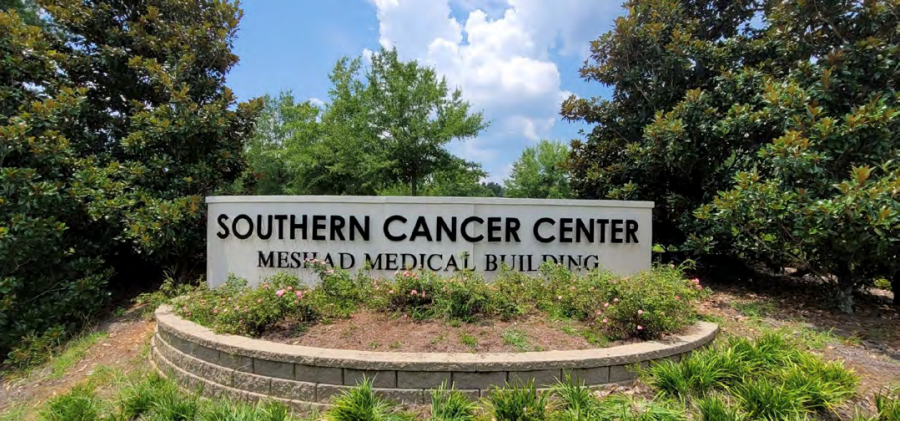
About 15 clinical trials are available at Southern Cancer Center at any given time, and all patients are screened for eligibility. These trials are mostly phase 2 and 3 and are offered through The US Oncology Network. A research program specialist, data coordinators, and clinical research coordinators (CRCs) work together to ensure trials run smoothly. The CRCs work closely with patients, assisting with monitoring and lab draws. Other clinical trial staff focus on protocol adherence, regulatory compliance, and communication with trial sponsors. Each clinic location has an infusion suite where they offer oncology, hematology, and noncancer infusions. Clinics vary in size, but the largest can accommodate more than 20 patients at a time with recliners, nutrition stations, and an onsite pharmacy. Southern Cancer Center staffs its infusion sites with registered nurses (RNs), most of whom are Oncology Certified Nurses, and encourages all onboarded RNs to achieve this certification.

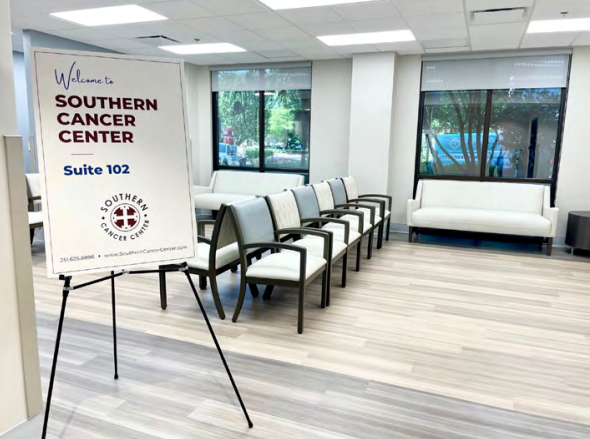
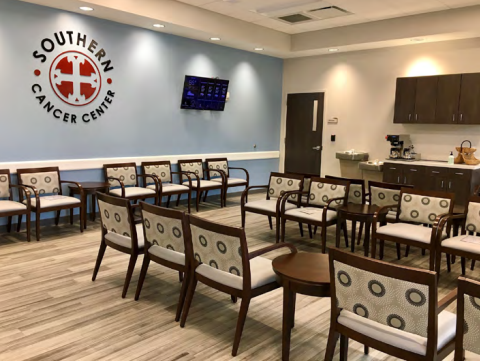
Top: Infusion room at Southern Cancer Center's Foley Cancer Center
in Foley, Alabama.
Bottom: Waiting room at Southern Cancer Center's Springhill Medical Center in Mobile, Alabama.

Pharmacy Integrated Into Treatment
Patients at Southern Cancer Center are never far from the specialty medications and treatments they need. Pharmacy technicians are present in the infusion suites to mix drugs as needed, rather than having a centralized pharmacy that delivers medications to each location around the state.
There are also 3 locations of Coastal Pharmacy, Southern Cancer Center’s retail specialty pharmacy, accredited by the Utilization Review Accreditation Commission and the Network for Collaborative Oncology Development and Advancement. These pharmacists exclusively serve Southern Cancer Center’s patients, providing oral analytics and supportive care medications while educating patients on their proper use. Not only are these pharmacy services convenient for patients, but they also facilitate close collaboration between oncologists, pharmacists, and the rest of the care team.
Community-Driven Growth
Pettis describes one of Southern Cancer Center’s greatest strengths as “being hyper aware of what patients in our community need and then rising to the occasion to provide it for them.” That awareness comes from strong community engagement that values both educating and learning from the population they serve.
Staff and leadership participate in a wide range of events each year across the state of Alabama, including a chili cook-off hosted by the American Cancer Society, a masquerade ball hosted by the Anchor Cross Cancer Foundation, and the Making Strides Against Breast Cancer Walk. Local employee health fairs and art festivals also provide opportunities to raise community awareness of their services and connect through face-to-face interactions. Providers at Southern Cancer Center are recognized as trusted knowledge sources in their communities. In addition to advertising in local newspapers, TV and radio stations, and blogs, these outlets often seek their expertise and perspectives for independent reporting. Such interactions not only raise awareness of the cancer center’s services but also provide an important platform to educate the public about cancer types and screening. In addition to providing education, Southern Cancer Center strives to listen to the community’s needs and adapt its services accordingly. For example, the cancer center moved away from telehealth services, despite broader health care trends favoring them, to better align with patient preferences. During the COVID-19 pandemic, the cancer center offered telehealth appointments and developed virtual options for some of its patient support services. However, many patients in their region did not utilize virtual meeting technologies post-pandemic and preferred to return to in-person care. “We have the mechanism to do it if anybody wants to, but it’s just not something that’s requested,” Pettis explained. Instead, Southern Cancer Center pivoted its efforts and resources to improving the face-to-face interactions and community involvement that their population prefers. This kind of community-driven growth is a cornerstone of Southern Cancer Center. While they utilize national resources, they keep their operations rooted in the needs of the communities they serve, always looking for ways to reach more patients and provide better services. Pettis, who has been with Southern Cancer Center for 17 years, has led many of their expansions and improvements and “[looks] forward to a continued upward trajectory for the practice.”

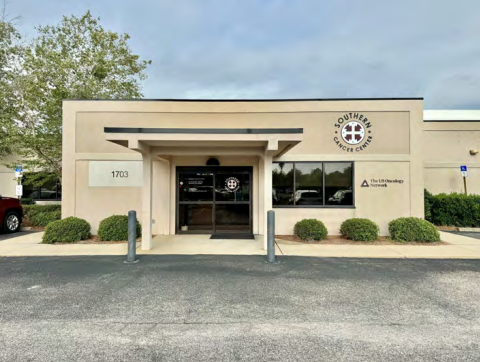
Southern Cancer Center’s Foley Cancer Center (top) and Foley Radiation Center (bottom), in Foley, Alabama.





Recognizing the critical role advanced practice providers and allied health professionals play in the care continuum, the American Oncology Network provides infrastructure, leadership, and professional growth opportunities to empower these members of the cancer care team to practice at the top of their license.