Author(s):
Supply and demand, a seemingly basic principle in high school economics, is now at the heart of a national crisis. With an aging population, rising cancer rates, and economic uncertainty, the demand for skilled oncology professionals—from frontline clinical providers to research scientists—continues to outpace supply.
The National Cancer Institute (NCI) projects a sharp rise in worldwide cancer cases through 2050.1 New cases are expected to reach 33 million per year—up from 20 million in 2022—while cancer-related deaths could nearly double, increasing from 9.7 million to 18.2 million annually.1 In the United States, the number of cancer survivors is projected to grow from 18.1 million in 2022 to an estimated 26 million by 2040.1
Meanwhile, the American Society of Clinical Oncology (ASCO) warns of impending workforce shortages across multiple oncology disciplines, and data from JCO Oncology Practice projects a shortage of more than 2250 oncologists and hematologists by 2025.2-3
In other words, a perfect storm. A critical imbalance threatening to overwhelm cancer programs of all sizes—with downstream effects on timely access to care, service quality, and the capacity for innovation.
While much of the focus has been on immediate solutions such as mitigating and reducing physician burnout, improving oncology workforce well-being, and reducing the administrative burden of clinical practice, these efforts alone are not enough to combat the impending wave of workforce shortages. For Virginia Commonwealth University (VCU) Massey Comprehensive Cancer Center in Richmond, Virginia, this crisis presented a call to innovate. By developing a comprehensive, cancer-focused research training and education continuum designed to cultivate the next generation of cancer care professionals, VCU Massey’s pathway program not only addresses the quantity of future clinicians and researchers, but also the quality: an intentional, equity-driven ecosystem of high school classrooms, research opportunities, and postdoctoral fellowships has been created to support those preparing to enter the oncology workforce.
The center’s scalable model—a vast network of 17 interlocking programs—offers a proactive response to the increasing demands of oncology care and an important lesson: effective cancer care begins long before a patient enters the clinic. It starts with education, mentorship, and equitable access to opportunities that build a dedicated oncology workforce.
Building the Pathway: Vision and Strategy
When Devanand Sarkar, MBBS, PhD, professor of Cellular, Molecular, and Genetic Medicine and associate scientific director of Cancer Therapeutics, was appointed as the inaugural associate director for education and training at VCU Massey Comprehensive Cancer Center in 2017, the pathway program was in its infancy. While individual mentorship and training activities were already underway and VCU Massey valued their importance, the cancer center had yet to launch formal plans for a cohesive, center-wide education and training program. “Historically, we have always been interested in training the next generation, because if we don’t train the next generation, when we retire, there will be a vacuum,” explained Dr. Sarkar.
Sparked by the NCI’s recognition of education and training as a formal pillar of cancer center excellence—on par with research, clinical trials, and community engagement—VCU Massey began to chart its course. With a 50-year history as a national leader in cancer research, innovation, and community engagement, VCU Massey’s mission has always centered around reducing the cancer burden through pioneering research and person-centered care, a massive undertaking in a catchment area marked by deep racial, geographic, and socioeconomic diversity and stark health disparities.
To meet that challenge, senior leadership placed education and training at the heart of its core pillars, positioning it as both a change agent and a pathway to greater equity. Central to this effort is VCU Massey’s community-centric approach. By treating the community as an equal partner in research, education, and care, the cancer center ensures that programs and policy initiatives reflect the needs of the populations it serves. This “community-to-bench” model strengthens the integration of community input across all aspects of the cancer center’s work, including its research training and education programming.
Robert Winn, MD, director of VCU Massey Comprehensive Cancer Center, Lipman Chair in Oncology, and professor of pulmonary disease and critical care medicine, who has received national recognition for his community engagement efforts, and institutional leaders understood that the future of cancer care depends on the strength and diversity of those entering the field today. To achieve this diversity, the model must be rooted in community partnerships that expand access, build trust, and create pathways for individuals from historically underrepresented backgrounds to pursue careers in cancer research and care.




Building the Pathway: Program Structure
With the vision clear, Dr. Sarkar and his team considered key questions: How do you design a program that is truly intentional? One that opens doors and expands access? One that not only starts strong, but can grow, scale, and endure? Armed with those questions, they set out to build an interconnected, multitiered pathway. Each program was developed with strategic goals centered around cultivating diversity, strengthening mentorship, and forging integral community partnerships. By 2021, VCU Massey had built 4 structured training programs, which have since evolved into 17, spanning the full spectrum of education—from high school outreach programs to postdoctoral fellowships and clinician-investigator development:
Especially noteworthy is that each program is part of an interconnected ecosystem, with clear pathways for learners to advance from one stage to the next. A high school student can enter through a summer research internship, continue as an undergraduate trainee, move into graduate or medical school research experiences, and eventually transition into faculty or clinical roles. The opportunities are limitless.
This layered approach also ensures that programs are added with purpose and vision. As Dr. Sarkar emphasized, “We knew from the beginning that this had to be intentional. We weren’t just adding programs—we were building a model.” Today, that model has attracted national attention, leading many cancer programs to consider how they might adopt similar strategies to broaden access, build training programs, and prepare the next generation of oncology leaders.

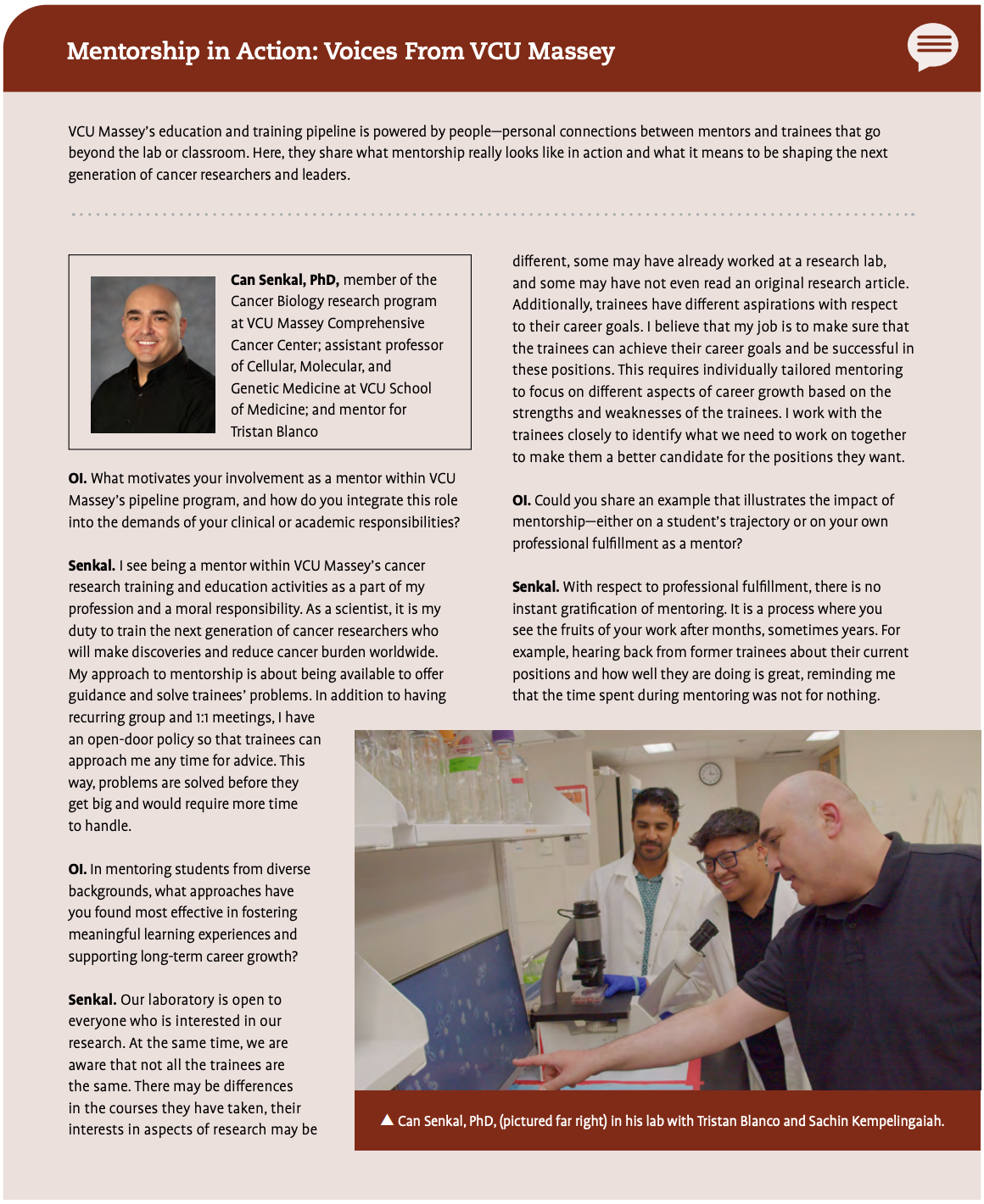
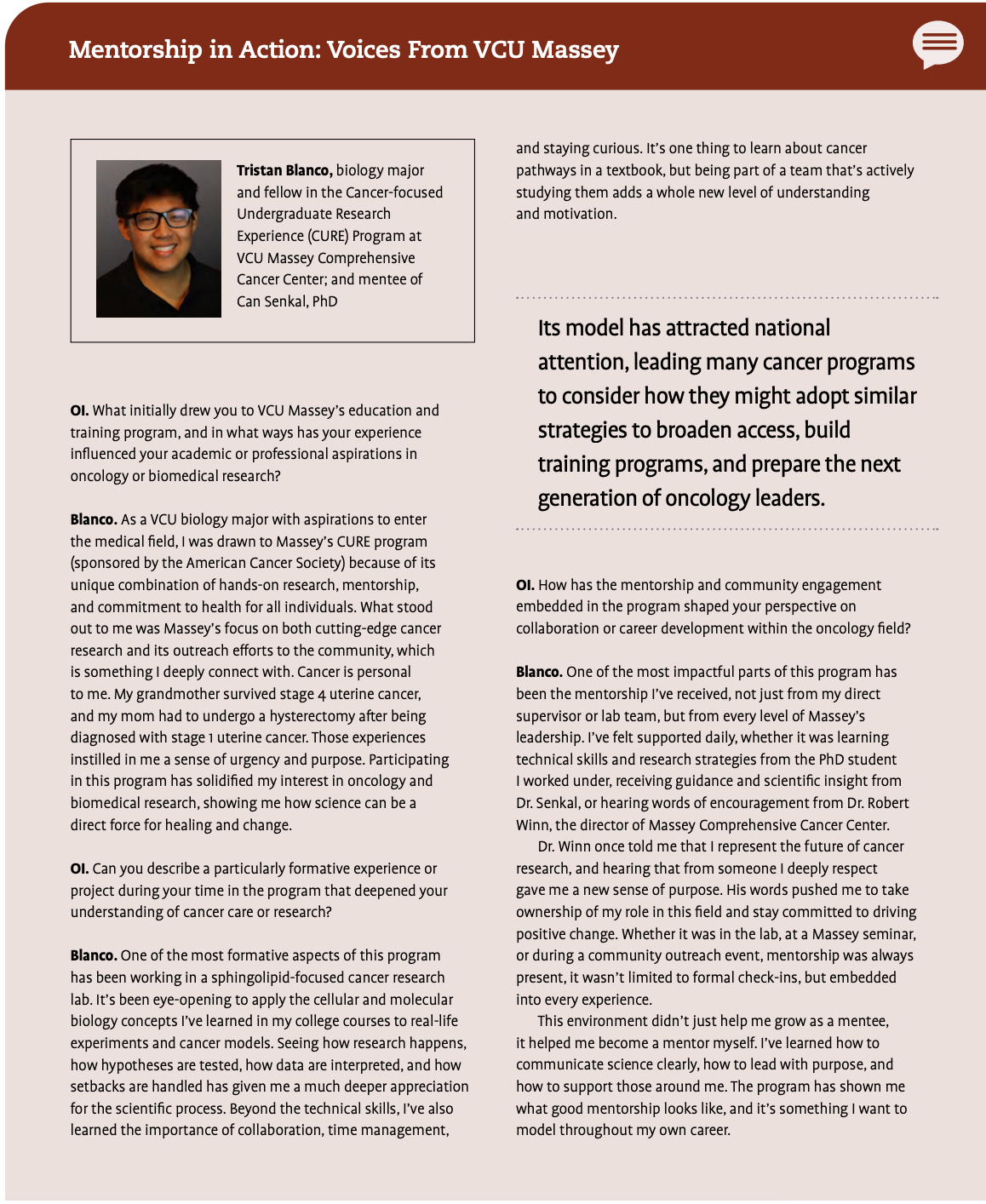
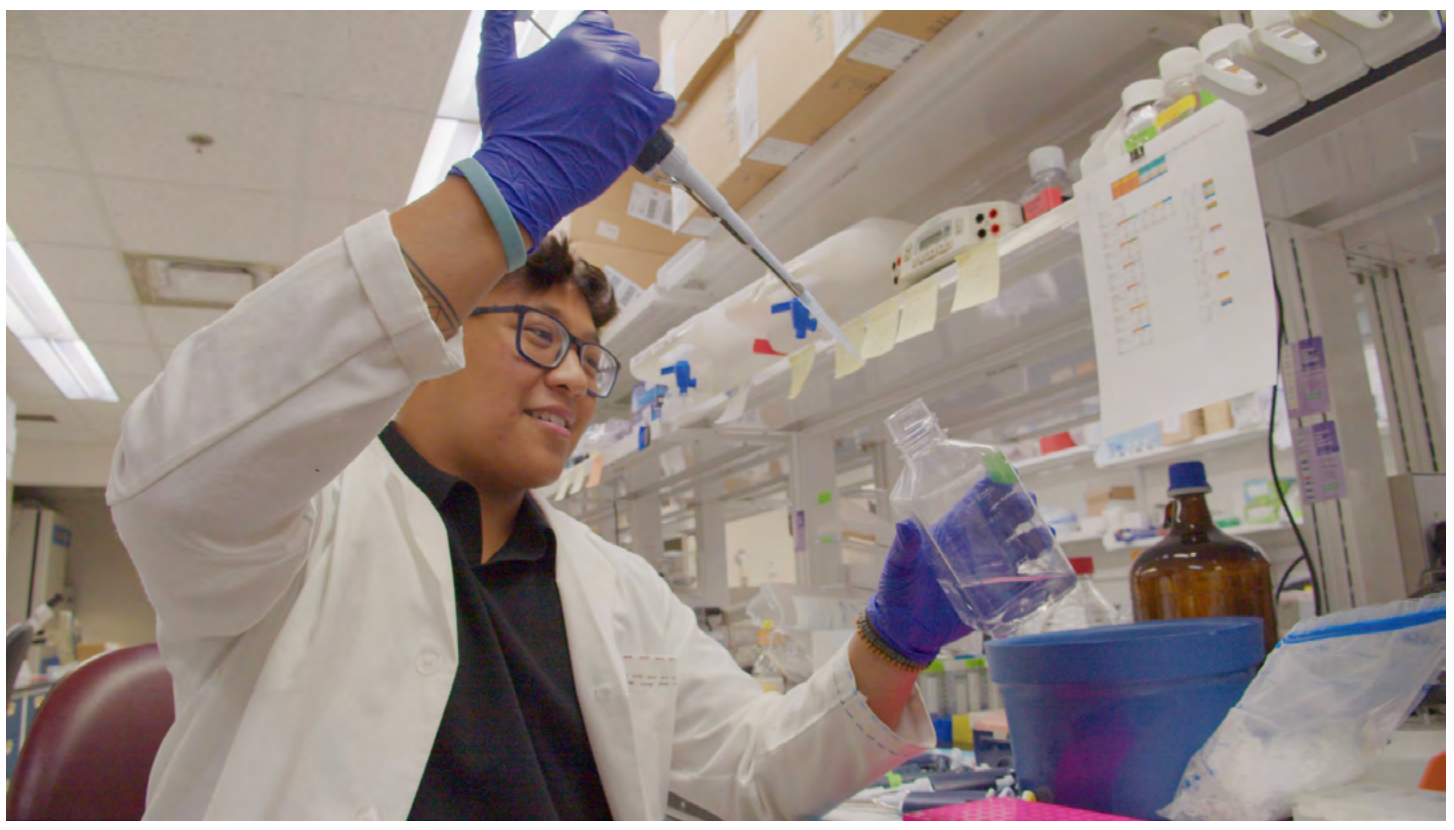
Tristan Blanco, a biology major and fellow in the Cancer-focused Undergraduate Research Experience (CURE) Program at VCU Massey Comprehensive Cancer Center. (Credit: Jordan Mulholland)
Mentorship and Multidisciplinary Collaboration
Across each tier, mentorship at VCU Massey is meticulously structured. Every mentor goes through rigorous training to ensure they are equipped to address the needs of students, with an emphasis on cultural competence and awareness, mental well-being (especially in the post-COVID era), and the sensitivities of working with minors.
As Dr. Sarkar explained, “We have guidelines, mentorship workshops, and training sessions. Most of the mentors know this [information], but it’s relearning that there are things like cultural awareness and language differences, mental welfare of students and how to approach this. These are the things that one needs to be mindful about in training and thinking about, especially after COVID.”
However, mentorship at VCU Massey goes beyond compliance or training—it is about active engagement and building meaningful relationships. Students are paired with mentors who guide them through scientific development, career planning, and professional networking, ensuring they have the much-needed support to navigate a complex and competitive field. For many mentors, the work is both a professional duty and a source of personal fulfillment, with rewards that are mutually beneficial.
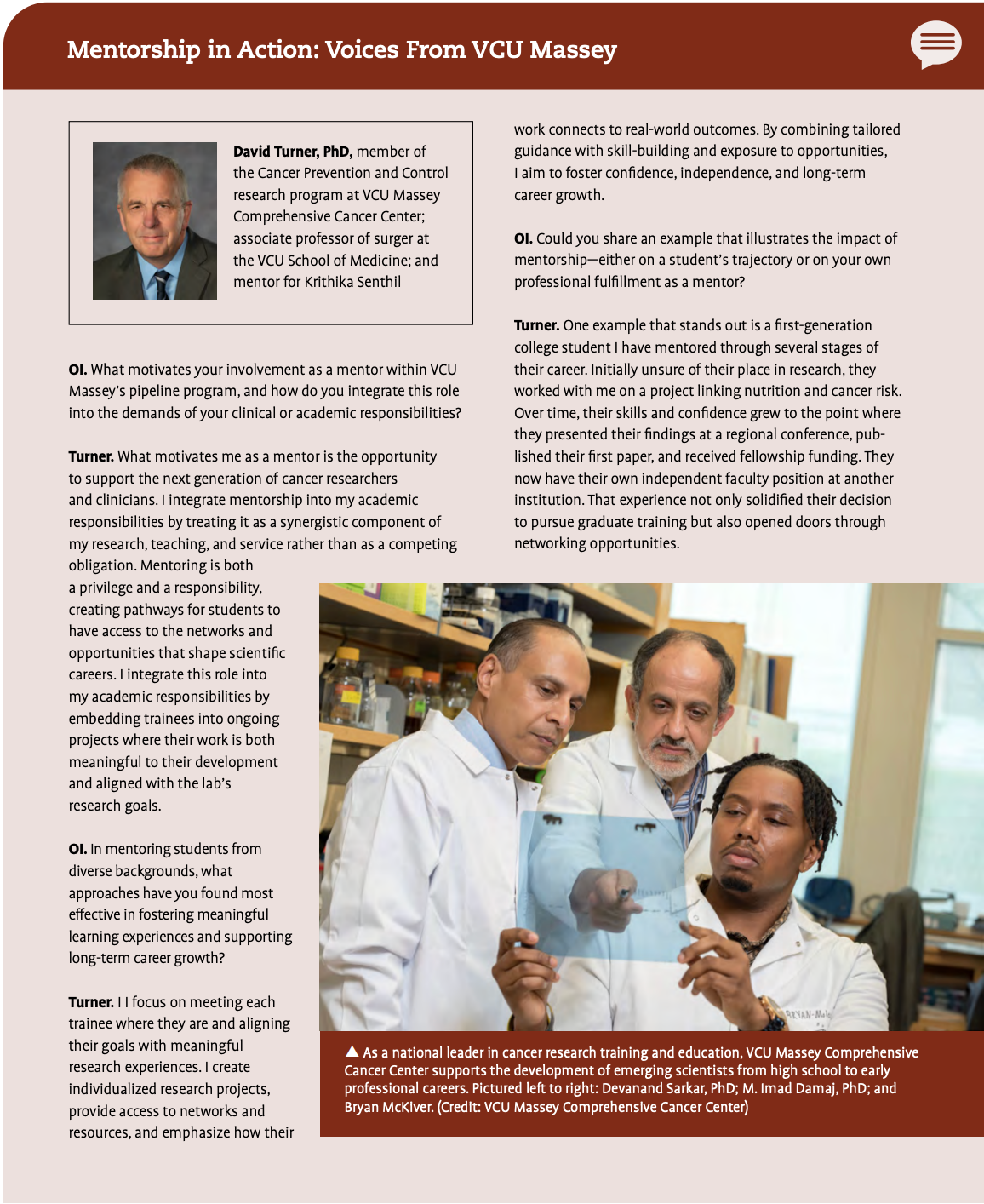
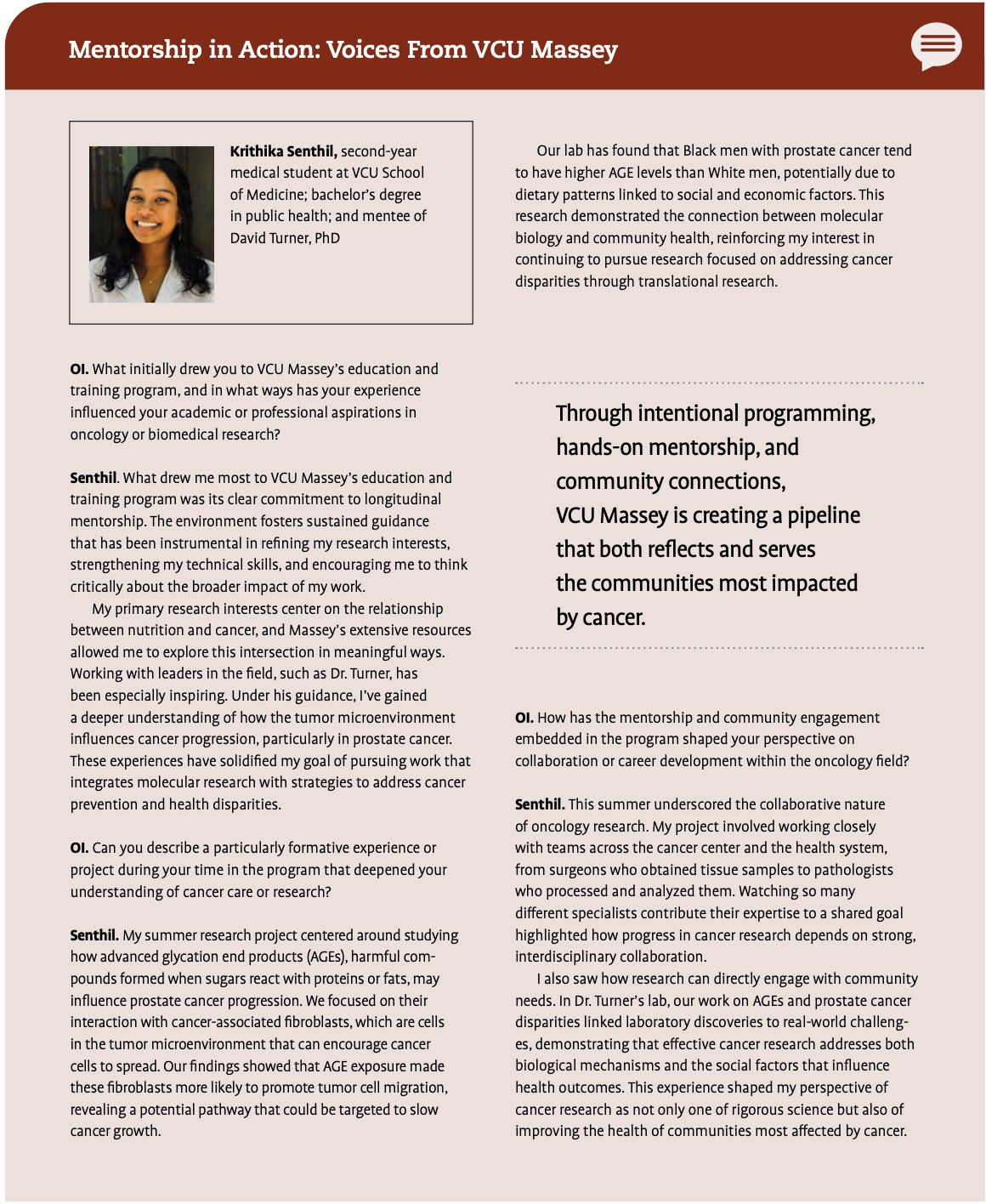
Can Senkal, PhD, member of the Cancer Biology research program at VCU Massey Comprehensive Cancer Center and assistant professor of Cellular, Molecular, and Genetic Medicine at the VCU School of Medicine, shared, “I see being a mentor within VCU Massey’s cancer research training and education activities as a part of my profession and a moral responsibility. As a scientist, it is my duty to train the next generation of cancer researchers [who] will make discoveries and reduce cancer burden worldwide.”
David Turner, PhD, member of the Cancer Prevention and Control research program at VCU Massey Comprehensive Cancer Center and associate professor of surgery at the VCU School of Medicine, added, “I integrate mentorship into my academic responsibilities by treating it as a synergistic component of my research, teaching, and service rather than as a competing obligation. Mentoring is both a privilege and a responsibility, creating pathways for students to have access to the networks and opportunities that shape scientific careers.”
For a deeper look at how mentorship shapes both mentors and students at VCU Massey, see the sidebar featuring a Q&A with Drs. Senkal and Turner and the trainees they guide.

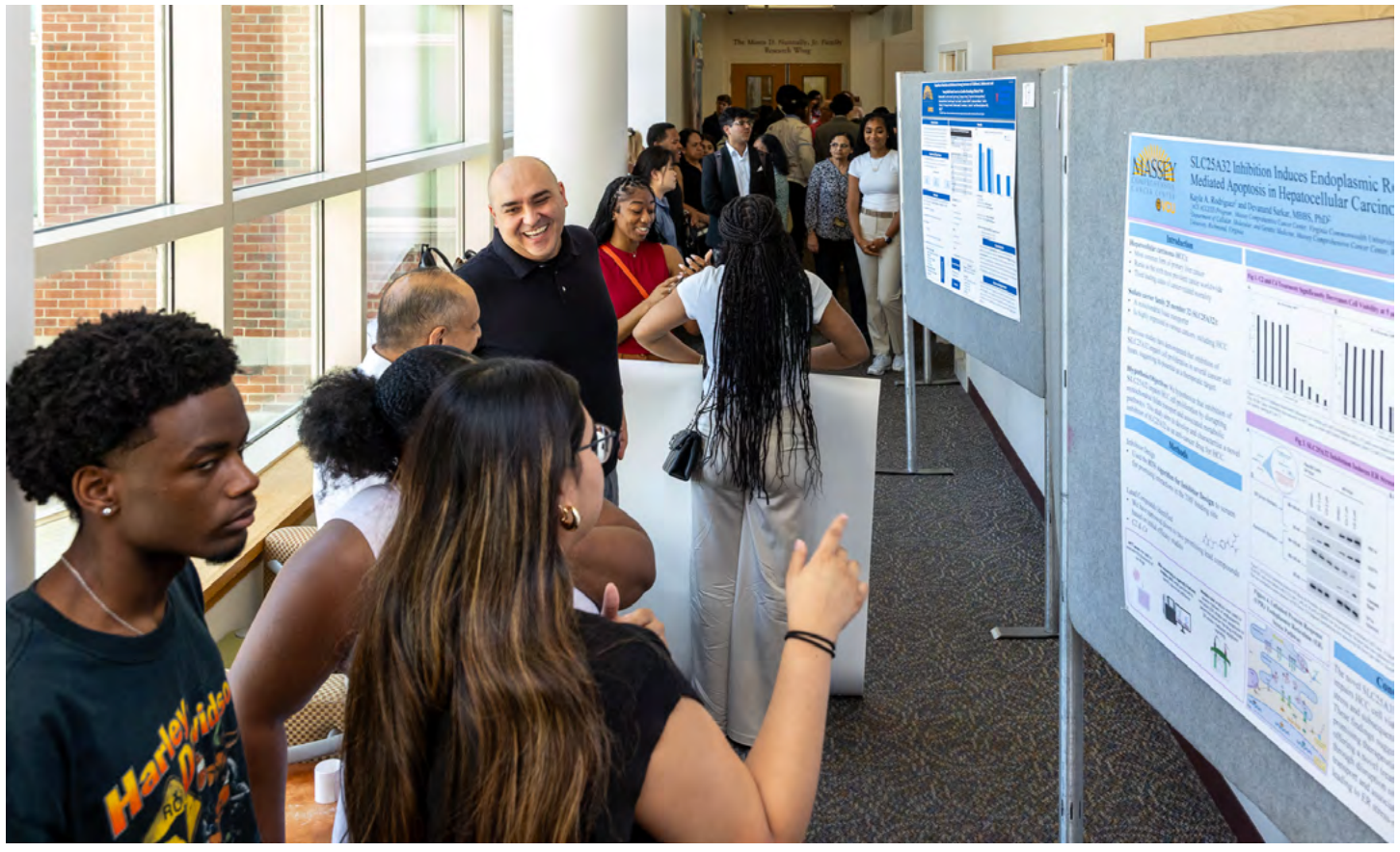
Students in VCU Massey Comprehensive Cancer Center’s 2025 Cancer Research Training and Education Coordination Career Pathway Initiative presented their research posters to faculty and members during the Summer Student Poster Research Symposium. (Credit: VCU Massey Comprehensive Cancer Center)
Clinical Trials and Research Training
One of the key aims of these student education and training programs is to prepare learners to lead and participate in clinical research. VCU Massey’s research programs—spanning more than 38 academic departments with collaboration across its Cancer Biology, Developmental Therapeutics, and Cancer Prevention and Control research programs—touch everything from basic research to translational, clinical, and population sciences.
Through VCU Massey’s Clinical Trials Office and its vast opportunities for early-stage clinical investigators through the National Institute of Health (NIH) and ACS, learners gain hands-on training in study design, regulatory processes, patient engagement, and equity—all critical areas for future careers in clinical trials.
Furthermore, as 1 of only 14 Minority/Underserved NCI Community Oncology Research Program (NCORP) sites in the US, a national effort to bring clinical trials to minority and medically underserved patients within their own communities, VCU Massey ensures that it prepares an inclusive, culturally aware next generation of researchers and clinical investigators equipped to address disparities in cancer care and research.
Measuring Impact and Alumni Outcomes
VCU Massey’s success, driven by intentional strategy and vision, has extended well beyond the initial implementation of its programs. Equally important has been its efforts to assess the effectiveness and long-term impact of these initiatives. To do this, VCU Massey developed a comprehensive tracking system that follows students and trainees throughout their academic and professional careers, using a variety of methods such as one-to-one tracking, social media, and publication records. Managed by its own dedicated staff member, the system collects data on multiple outcomes, including:
As Dr. Sarkar explained, “There are 110 postdoctoral researchers and fellows [who] have gone through our programs, and we can see where they are now—how many are in academia, how many are in industry, etc. We have a fantastic tracking system that took years to develop, but it’s really working.”
Behind this success is a robust network of support and funding: a combination of institutional resources, targeted grants, and philanthropic contributions, providing the means necessary to sustain mentorship, training, and long-term tracking of outcomes.
Ultimately, the true measure of a program’s impact lies in the success of its alumni. Graduates of VCU Massey’s training programs have reached notable milestones, including academic appointments at renowned institutions, leadership positions in pharmaceutical and biotechnology companies advancing cancer therapies, and influential roles within communities driving initiatives to reduce health disparities.
Looking Ahead
VCU Massey’s approach shows that the future of oncology does not start in the clinic or lab—it starts and ends with people. Through intentional programming, hands-on mentorship, and community connections, VCU Massey is creating a pipeline that both reflects and serves the communities most impacted by cancer.
Rania Emara is the managing editor of Oncology Issues and the assistant director of Editorial Content and Strategy for the Association of Cancer Care Centers in Rockville, Maryland.
References
1. Cancer Statistics. Cancer.gov. April 2, 2015. Updated May 7, 2025. Accessed August 4, 2025. https://www.cancer.gov/about-cancer/understanding/statistics
2. Examining the oncologist shortage. Medicushcs.com. January 16, 2025. Accessed August 6, 2025. https://medicushcs.com/resources/ examining-the-oncologist-shortage
3. Shih YCT, Kim B, Halpern MT. State of physician and pharmacist oncology workforce in the United States in 2019. JCO Oncol Pract. 2021;17(1):e1-e10. doi:10.1200/OP.20.00600





Recognizing the critical role advanced practice providers and allied health professionals play in the care continuum, the American Oncology Network provides infrastructure, leadership, and professional growth opportunities to empower these members of the cancer care team to practice at the top of their license.