In today’s health care systems, alignment and collaboration between clinicians and administrators have become increasingly important. While clinicians and administrators occupy distinct professional spheres—clinical care and organizational management, respectively—their interdependence is fundamental to achieving high-quality, cost-effective, and patient-centered outcomes. The successful intersection of these 2 vital disciplines not only ensures institutional efficiency but also improves the delivery and sustainability of care in an era marked by financial constraints, regulatory complexity, and technological advancements. Let’s face it, health care is built on relationships—those that exist between patients and caregivers, between members of the cancer care team, between the health care system and the communities it serves, and, as this article illustrates, the relationship between clinicians and administrators.
Speaking Each Other’s Language: A Dual Perspective on Collaboration
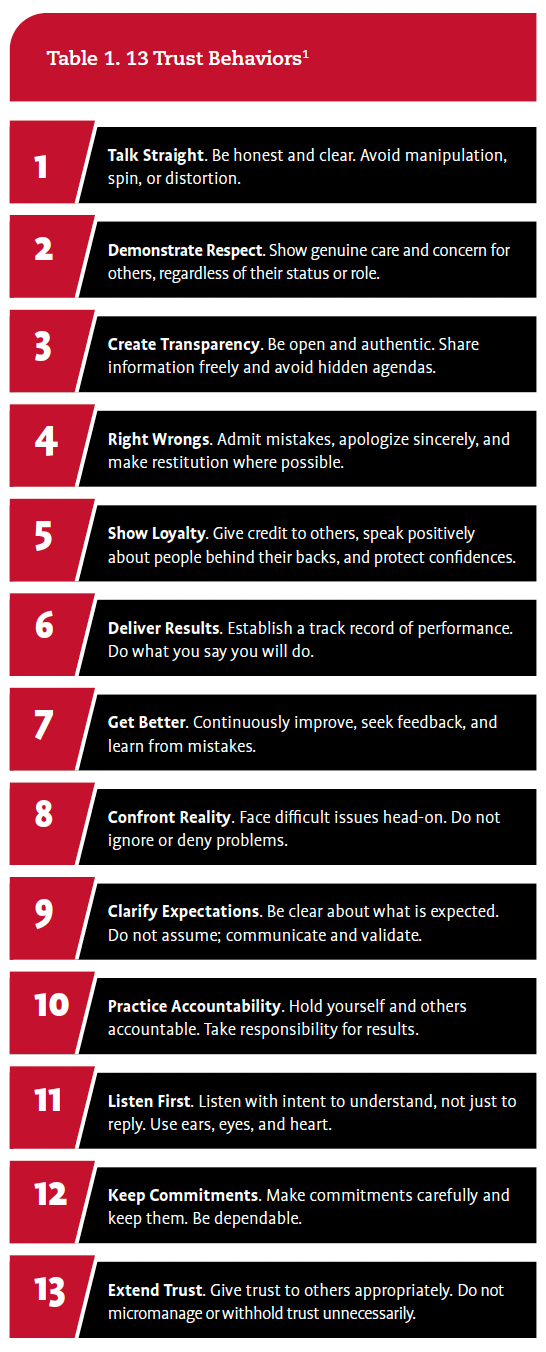
Effective communication between clinicians and administrators is the cornerstone of interdisciplinary collaboration. Scholarly research has emphasized that transparent and continuous dialogue is essential in fostering mutual respect, shared goals, and collective decision-making. When communication channels are robust and trust is established, the likelihood of conflict diminishes, and the overall organizational culture thrives. This collaborative dynamic is especially critical during periods of significant change, when the integration of diverse professional insights can lead to more resilient and adaptive health care organizations. In his book, The Speed of Trust, Stephen M. R. Covey highlights the importance of 13 trust behaviors, many of which focus on relational aspects of our interactions with one another (Table 1).1
When clinicians and administrators fail to communicate effectively, the repercussions are profound and far-reaching. Unfortunately, ineffective communication occurs frequently within health care settings, often stemming from disparate priorities, misaligned objectives, or simply a lack of structured dialogue. This disconnect can lead to fragmentation within teams, fostering a culture of misunderstanding and mistrust. Moreover, the absence of cohesive communication channels results in suboptimal decision-making processes, where crucial clinical insights may be overlooked by administrative strategies, ultimately compromising patient care. The negative impact on patient outcomes is significant; inadequate collaboration can lead to delays in treatment, errors in patient management, and overall decreased quality of care. Consequently, the organizational culture suffers, with increased burnout and diminished morale among providers, which can undermine the efficiency and sustainability of health care delivery.
All these points illustrate why it is important that administrators and clinicians understand each other better and find ways to learn each other’s languages. This article is written from both viewpoints—to provide readers with strategies on establishing trust, including case studies based on real-world experiences. The goal is that readers should come away with tools and insights to think differently about the next challenging discussion they have, entering that discussion from a place of curiosity and willingness to understand where the other person is coming from.

Why Leadership Behaviors Matter: Creating Safe, Collaborative Health Care Environments
The concept of leadership has been studied for decades, and our understanding of leadership behaviors and their importance on teams continues to become clearer in modern-day literature. We know that everyone should demonstrate leadership behavior regardless of whether they are in a formal or informal leadership role. This is particularly true for physicians whose behaviors set the tone for psychological safety.2 Foundational trust and effective communication strategies between clinicians and administrators are critical to the success of these relationships. There are several behavioral and leadership styles, for example, transformational, servant, transactional, and dysfunctional.3 Some of these approaches are known to diminish trust, while others promote trusting environments.
Transformational leadership, characterized by the ability to inspire and motivate, is crucial in fostering a culture of trust within health care organizations. Transformational leaders can create a shared vision and engage their teams in working toward common goals. While transformational leadership sounds incredible for the leader and team member, this leadership style can also have a downside. These types of leaders may be easily taken advantage of when people see their authenticity and kindness as weakness.
In contrast, transactional leadership approaches are riskier for creating strong relationships, as the structure focuses more on reward and punishment. In other words, if one does what is asked, they will be rewarded; if they do not, they are likely to be punished. Overusing this approach may lead to a lack of deeper connection and trust between clinicians and administrators. A more extreme leadership style, autocratic leadership, is a centralized decision-making approach where the leader makes decisions with little input from the team.3 While this style can be effective in situations that demand quick and decisive actions, it may also reduce morale and motivation among health care professionals.3
Extreme leadership styles often foster dysfunctional relationships, where behaviors between clinicians and administrators are characterized by a lack of support, inconsistency, and poor communication, which can erode trust and hinder effective collaboration. It is important for leaders to understand these leadership styles and to know which one(s) they gravitate toward. This self-awareness is crucial to building trusting relationships between clinicians and administrators, where each recognizes their natural leadership tendencies and exhibits self-awareness in how they interact with each other and team members.
Building Trust Through Transparency, Dialogue, and Shared Purpose
Building trust requires more than a single conversation—it depends on open communication and consistent engagement. Even simple interactions, like a physician seeking clarity on productivity metrics, can either strengthen or damage trust depending on how the administrator responds. For example, if the administrator responds vaguely, uses jargon, or fails to explain the methodology behind the metrics, the physician may feel undervalued or misrepresented, leading to frustration and mistrust. On the other hand, if the administrator takes time to walk through the data sources, explains how metrics are calculated, and invites the physician to co-review the dashboard or reports, it fosters transparency and mutual respect. In another example, if a physician comes to an administrator with a quality concern, using terminology or language that is overly clinical in nature, the administrator may be confused and not fully understand what needs to be done to help. Clinicians who take the time to thoughtfully articulate the quality concern and ensure that it is understood by their non-clinician colleague help to build trust. These types of open dialogue not only strengthens the relationship but also helps align clinical and operational goals, ultimately benefiting the entire care team and patient outcomes.
Strong leadership and trust are essential for creating a culture of mutual respect and alignment around organizational goals and patient-centered care. Research consistently shows that effective communication—both interpersonal and interprofessional—is a key driver of performance in health care settings. An organizational culture of mutual respect and transparent dialogue between clinicians and administrators is essential for fostering trust and reducing organizational silos. The American Medical Association has developed a playbook to help health care leaders build a culture of trust and eliminate the physician-administrator gulf that contributes to physician burnout.4 In addition to other resources, the playbook outlines 5 ways health care leaders can foster trust between physicians and administrators:5
Interdisciplinary quality improvement efforts can also help institutionalize collaboration and promote shared accountability.6
When clinicians and administrators model respectful, transparent dialogue, it sets the tone for the entire team; conversely, visible conflict or unsafe behavior erodes trust and undermines the clinical environment. There are circumstances that can put this trust at risk, for example, during times of significant and unforeseen organizational change. Resistance to change is often rooted in perceived threats to professional autonomy or misalignment of values. However, change is inevitable. Even if leaders do not necessarily agree on the change(s), they must adapt and perform the task(s) at hand, ensuring that they bring their teams along with them. Administrators who engage clinicians—or vice versa, clinicians who engage administrators—in decision-making processes and ensure that their perspectives are incorporated into strategic initiatives not only enhance morale but also facilitate smoother implementation of changes.7
How to Communicate and Improve Relationships
Clinicians and administrators are asked to collaborate in many key areas, including but not limited to:
Chandrashekar and Jain suggest that building effective relationships between physicians and administrators is crucial to “reduce burnout, improve outcomes, and advance value-based care.”8 Strategies to increase alignment between clinicians and administrators must center on mutual understanding and empathy, essentially teaching both parties to walk in each other’s shoes. Despite sharing common core values such as service, altruism, and proactive problem-solving, clinicians and administrators often differ in approach and knowledge base. Clinicians are trained to think patient by patient, focusing on individual care, whereas administrators are trained to create system-level change. These gaps in mutual understanding can create distrust on both sides, emphasizing the need for a cohesive communication strategy.
Health care organizations should create a patient-centered vision to bridge these divides. Improving clinician and administrator understanding of each other’s roles and increasing transparency are essential first steps. Organizations must include frontline clinicians in management decisions to enhance systemwide transparency and foster collaboration. Additionally, efforts to preserve and enhance clinician autonomy and respect are vital for maintaining trust and effective communication. By prioritizing these strategies, health care institutions can build strong relationships between clinicians and administrators, ultimately enhancing patient care and operational efficiency.
Below are real-world scenarios that illustrate the insights and scientific studies discussed above.
Case Study 1: When Physicians Forgot to Include Administrators
In this case study, a group of physicians was excited to launch new multidisciplinary clinics to better serve patients. Their goal was to bring different specialists together in 1 place so patients could receive more complete, connected care. The vision was strong; unfortunately, the planning did not involve operational leadership. As more clinics opened, problems began. Facilities were not ready, support staff were stretched thin, billing was inconsistent, and the multidisciplinary clinics began to lose money. Moreover, these clinics solved access issues for only a small subset of the patient population, while physician and support resources were often underutilized.
This misalignment caused significant uncertainty in clinic functioning, and any attempt to remediate was met with resistance. Physicians felt frustrated that their good ideas were not being supported. Administrators felt that they were constantly cleaning up after something they were not invited to help plan.
That is when an experienced physician-administrator dyad stepped in—not to shut things down, but to bring people together. These 2 individuals talked to physicians one-on-one, listened carefully, and explained the behind-the-scenes (operational) work needed to make a clinic run smoothly. Together with local physician leaders, this physician-administrator dyad helped to start an operational excellence model where all new clinics would be planned by both physicians and operations from the start. As a result, clear templates were built, goals were shared, and dashboards were created so that everyone could see how the clinic was performing. As clinics improved organizationally and financially, they were able to grow, organically improving patient access and operational sustainability.
Case Study 2: Providers Seeing Fewer Patients
In this scenario, early in the COVID-19 pandemic, providers were taking a long time with each patient—often 60 minutes or more. While the care was thoughtful, it meant that fewer patients could be seen each day, a practice that could not accommodate the change in processes and expectations required during the pandemic. Consequently, patient waitlists grew, revenue dropped, and care demands continued to rise. Administrators raised the issue and tried to encourage shorter visits, but many providers pushed back. “We can’t rush care,” they said. Change seemed unlikely.
Then an experienced physician leader got involved. He understood the pressure his colleagues were under. Instead of demanding change, he started peer-to-peer conversations and shared stories about patients who waited too long and colleagues who were exhausted. He also showed data from providers who were able to see more patients while still providing high-quality care, using tools like team-based support, visit templates, and scheduling technology. He invited several providers to try new approaches; when data showed better patient access and reduced provider stress, more providers were willing to join. Slowly, the culture shifted—from resistance to shared problem-solving.
Case Study 3: A Leadership Partnership That Saved Lives
Historically, questions of depression, anxiety, and suicide were not asked in the clinic setting. However, one health care system recognized the importance of this screening and launched a systemwide behavioral health integration effort by asking every patient to complete a mental health screening. The change did not happen overnight. It was the result of 2 leaders working side by side: 1 clinician, 1 administrator.
The clinical leader made sure providers had the right tools with evidence-based screenings, clinical pathways, and quick access to mental health support. Providers received training on how to ask difficult questions and listen without judgment. For patients who screened positive for the need for mental health care, the clinical leader spearheaded efforts to build in a warm handoff to an embedded behavioral health specialist.
The administrative leader handled the behind-the-scenes operations by embedding behavioral health staff into clinics, building best practice alerts in the electronic health record, and securing funding to sustain these screening efforts. They made sure the right care showed up at the right time, for every patient.
Since program launch, clinics across the health care system have identified hundreds of patients at risk for suicide—many of whom had never shared their thoughts. Providers feel more confident about early detection and prevention, patients feel more supported, and these efforts have helped to reduce mental health stigma across the community.
This case study illustrates that successful adoption of new initiatives rests not solely on the care model, but also on partnership and collaboration. Clinical and administrative leaders walked this road together, solving problems, listening to frontline teams, and having a shared commitment and passion for the cause.
Case Study 4: Enhancing Visibility of the Data
Early in their career, an administrator was tasked with leading a new team of providers who had deep-rooted distrust in legacy systems used to track productivity. Recognizing that solving the technical issues alone would not be enough, the administrator understood that rebuilding trust would be essential to gaining provider buy-in. They began by listening—spending hours with providers, asking clarifying questions, and allowing space for concerns and frustrations to surface.
Through these conversations, providers felt heard and respected, and the administrator gained a clear understanding of the gaps and pain points in the existing system. In response, the administrator developed an automated dashboard that provided full visibility into key metrics, such as new patient counts, total visits, and productivity. The dashboard even included average work relative value units billed per visit, helping providers identify trends and address issues proactively. Presented during monthly meetings and made available on demand, the tool became a symbol of transparency and collaboration. More importantly, it helped restore trust—not just in the data, but in the relationship between clinical and administrative leadership.
Bridging the Divide: Why Trust and Collaboration Are Health Care Imperatives
Ensuring that clinicians and administrators can speak the same language and collaborate on common goals and programs is imperative to the safety and well-being of patients, health teams, and the success of patient and organizational outcomes. Effective collaboration between clinicians and administrators is not merely a matter of operational efficiency; it is a strategic and ethical necessity to ensure the creation of safe environments for both team members and patients. While the above case studies provide some context as to when things do and do not go well, all who work in health care—including physicians, administrators, frontline clinical staff, and support staff—have their own examples of big or small initiatives that have gone either incredibly right or incredibly wrong. Regardless of the outcome, successful health care organizations trust in their clinicians and staff, foster transparent communication, and support efforts to understand and/or gain clarity around the issue(s) and what can be done to improve them. In an increasingly complex and resource-constrained environment, health care organizations must build a culture of mutual respect, shared governance, and collaborative problem-solving. By bridging the divide between clinical and administrative worlds, institutions can enhance patient care, improve system performance, and more effectively fulfill their mission to serve the health needs of their communities.
Barbara J. Schmidtman, PhD, FACCC, is vice president of cancer health operations at Corewell Health West; and Subodh Jain, MD, is vice president and department chief of Behavioral Health at Corewell Health in Michigan.
References





Recognizing the critical role advanced practice providers and allied health professionals play in the care continuum, the American Oncology Network provides infrastructure, leadership, and professional growth opportunities to empower these members of the cancer care team to practice at the top of their license.