Author(s):
April is Esophageal Cancer Awareness Month, a time for increasing public awareness about the importance of early detection and facilitating emerging therapies for patients diagnosed with esophageal cancer.
Each year approximately 20,000 individuals in the US are diagnosed with esophageal cancer. Despite its relatively low incidence, the disease has a high mortality rate, primarily because it is frequently diagnosed at advanced stages. For patients diagnosed with an advanced esophageal cancer, the 5-year survival rate is only 6%. April is Esophageal Cancer Awareness Month, a time for increasing public awareness about the importance of early detection and facilitating emerging therapies for patients diagnosed with esophageal cancer.
Increased awareness supports efforts to improve screening practices, advance therapeutic development, and ultimately enhance outcomes for patients affected by this aggressive disease. However, statistics tell only part of an evolving story. For patients like David Perron, a survivor of stage IV esophageal cancer who is in complete remission, the emerging landscape of precision medicine has proven to be lifesaving.
Perron’s case exemplifies how precision oncology is redefining cancer care. His dramatic turnaround was made possible through the application of genomically targeted therapies, an approach that lies at the core of the Saint Luke’s Hospital Center for Precision Oncology in Kansas City, Missouri. Featured in ACCC’s Cancer Program Spotlight video series, Saint Luke’s is advancing survivor outcomes through innovative biomarker testing, interdisciplinary collaboration, and a patient-centered model of care. “We participate very actively in the process, not just in providing a diagnosis, but providing guidance to help the oncologist and surgeons in taking care of patients,” said Dr. Ossama Tawfik, chair and professor of pathology at St. Luke’s.
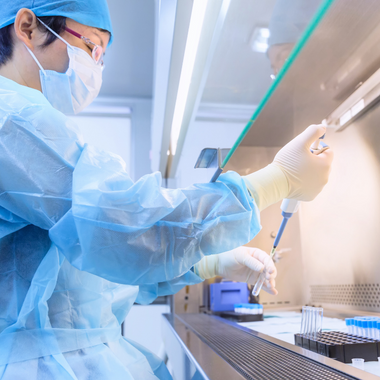
At Saint Luke’s, a multidisciplinary team leverages advanced genomic profiling to inform treatment decisions in real time. As one of only a few centers nationwide with a dedicated precision oncology pharmacy team, the institution has built a comprehensive infrastructure that includes precision pharmacists, bioinformaticians, and pathologists. Together, they analyze tumors at the molecular level and recommend highly patient-focused therapeutic strategies.
In addition to clinical innovation, Saint Luke’s places a strong emphasis on ensuring treatment accessibility. Recognizing that the cost of targeted therapies and molecular testing can be a significant barrier for many patients, the precision oncology team at Saint Luke’s actively supports reimbursement navigation, prior authorization, and access to financial assistance programs. Dedicated team members work directly with payers to secure coverage for biomarker testing and off-label treatments, when appropriate.
Furthermore, for patients who are uninsured, underinsured, or denied coverage, the team coordinates access to manufacturer-sponsored free drug programs and foundation-based assistance. This comprehensive approach to financial navigation is fully integrated into the patient care pathway, ensuring that promising therapies are not withheld due to cost constraints. Precision pharmacists and nurse navigators play a critical role in these efforts, facilitating timely access to therapy while minimizing delays in treatment initiation.
Perron’s clinical journey underscores the potential of this approach. Initially facing a terminal diagnosis, Perron began a treatment regimen tailored to the genomic characteristics of his tumor. “Dr. Bansal knew what he was doing. I started feeling better pretty quickly after I started that regimen,” Perron recalled. Being in remission highlights both the promise of precision oncology and the critical role of integrated, patient-specific care.
This outcome was not the result of chance, but of sustained research and the application of emerging clinical science. The proliferation of biomarker testing has led to the development and approval of numerous targeted therapies, many of which are designed to address specific genetic mutations. At Saint Luke’s, these advances are operationalized through a molecular tumor board process. “We do have data that shows our molecular tumor board-guided therapy has made a survival benefit compared to other physician standard-of-care or physician treatment choice,” said Blake Buzard, PharmD, BCOP, clinical oncology specialist of hematology at Saint Luke’s.
When oncologists refer patients for genomic consultation, precision pharmacists perform a comprehensive molecular assessment, evaluating genomic sequencing data, prior treatment responses, and clinical trial opportunities, to generate customized therapeutic recommendations.
These findings are then reviewed during tumor board meetings, where a cross-functional team of specialists determines the optimal treatment strategy. This evidence-informed, consensus-driven process is supported by emerging clinical data that demonstrates survival advantages over conventional care models. The success of this model is further bolstered by ACCC’s ongoing investment in provider education, interinstitutional collaboration, and sharing of precision medicine resources—efforts that are enabling cancer programs nationwide to adopt and adapt practices successfully used at institutions like Saint Luke’s.
For patients with esophageal cancer, precision oncology provides renewed hope and increasingly meaningful survival outcomes. Perron’s experience stands as a compelling example of what can be achieved through genomically informed care. His remission from stage IV esophageal cancer reflects the profound impact of clinical innovation, multidisciplinary coordination, and the implementation of precision medicine at scale.
For more information on biomarker testing and precision oncology, visit the ACCC Precision Medicine page for a curated selection of evidence-based resources.




From mental health concerns to fertility preservation, adolescents and young adults with cancer require a specialized approach to treatment and survivorship care. In honor of Childhood Cancer Awareness Month, ACCC highlights a pivotal program from the University of North Carolina Lineberger Comprehensive Cancer Center and resources that meet the critical needs of these patients.