ACCC association of cancer care centers
Join/Renew
Login
Join/Renew
Login
Education & Resources
ACCC eXchange LogInCorporate Member Sponsored ResourcesPresentations & AbstractsACCC Connect eLearning LogIn
Publications
Oncology IssuesPatient Assistance & Reimbursement GuideTrending Now in Cancer CareBusiness Case Studies for Hiring New Staff
Events
2026 ACCC Leadership SummitAnnual Meeting & Cancer Center Business SummitCapitol Hill DayNational Oncology ConferenceOncology Reimbursement MeetingsOncology State Society Meetings
Policy & Advocacy
ACCC 2026 Policy PrioritiesLetters & StatementsAccess, Payment & Reimbursement ReformWhite Bagging & Brown BaggingAdvocacy ResourcesCancer Moonshot
Membership
Join | RenewWho We AreMembership Types & BenefitsCorporate MembersACCC Member Portal FAQMember Directory
Partners
Oncology State SocietiesPartner OrganizationsCME
News
News ReleasesAdvocacy News ReleasesOncology News
About ACCC
Timeline / 50th Anniversary2025 Impact ReportPresident's ThemeACCC Innovator AwardsACCC FellowsBoard of TrusteesACCC Senior Staff
Breast CancerMetastatic Breast Cancer
Gastrointestinal CancerBiliary Tract CancerColorectal CancerGastric CancerLiver Cancer
Genitourinary CancerBladder CancerProstate CancerRenal Cell Carcinoma
Gynecologic CancerOvarian Cancer
Head & Neck Cancer
Hematologic MalignanciesAcute Lymphocytic Leukemia (ALL)Acute Myeloid Leukemia (AML)Chronic Lymphocytic Leukemia (CLL)Mantle Cell Lymphoma (MCL)Multiple Myeloma (MM)Myelodysplastic Syndromes (MDS)
Lung CancerNon-Small Cell Lung Cancer (NSCLC)Small Cell Lung Cancer (SCLC)
Sarcoma
Skin CancerMelanomaNon-Melanoma Skin Cancers (NMSC)
Clinical Practice & TreatmentCancer DiagnosticsCare CoordinationEHR Integration for Biomarker TestingQuality Improvement Collaboration: Integration of Precision Medicine in Community OncologyTreatment
Financial NavigationFAN Boot CampFinancial Advocacy Network (FAN) Resource LibraryPatient Assistance & Reimbursement GuidePrior Authorization
Health Equity & Access3, 2, 1, Go! Practical Solutions for Addressing Cancer Care DisparitiesAppalachian Community Cancer AllianceOncology Advanced PractitionersPersonalizing Care for Patients of All BackgroundsSocial Drivers of Health
Patient-Centered CareAddressing Care Disparities for VeteransAdolescent and Young Adult (AYA)Care Action Plans for People with CancerDermatologic ToxicitiesEmpowering CaregiversGeriatric OncologyHealth LiteracyNutritionOncology PharmacyPatient NavigationPsychosocial Care in OncologyShared Decision-MakingSupportive CareSurvivorship Care
Practice Management & OperationsCancer Program FundamentalsLeadership Sustainment and Engagement VideosOncology Practice Transformation and Integration CenterOncology Team Resiliency
ResearchACCC Community Oncology Research Institute (ACORI)
Technology & InnovationTelehealth & Digital Medicine
ACCCBuzz Blog
CANCER BUZZ Podcast
Oncology Issues
Join/Renew
Login
Breast CancerMetastatic Breast Cancer
Gastrointestinal CancerBiliary Tract CancerColorectal CancerGastric CancerLiver Cancer
Genitourinary CancerBladder CancerProstate CancerRenal Cell Carcinoma
Gynecologic CancerOvarian Cancer
Head & Neck Cancer
Hematologic MalignanciesAcute Lymphocytic Leukemia (ALL)Acute Myeloid Leukemia (AML)Chronic Lymphocytic Leukemia (CLL)Mantle Cell Lymphoma (MCL)Multiple Myeloma (MM)Myelodysplastic Syndromes (MDS)
Lung CancerNon-Small Cell Lung Cancer (NSCLC)Small Cell Lung Cancer (SCLC)
Sarcoma
Skin CancerMelanomaNon-Melanoma Skin Cancers (NMSC)
Clinical Practice & TreatmentCancer DiagnosticsCare CoordinationEHR Integration for Biomarker TestingQuality Improvement Collaboration: Integration of Precision Medicine in Community OncologyTreatment
Financial NavigationFAN Boot CampFinancial Advocacy Network (FAN) Resource LibraryPatient Assistance & Reimbursement GuidePrior Authorization
Health Equity & Access3, 2, 1, Go! Practical Solutions for Addressing Cancer Care DisparitiesAppalachian Community Cancer AllianceOncology Advanced PractitionersPersonalizing Care for Patients of All BackgroundsSocial Drivers of Health
Patient-Centered CareAddressing Care Disparities for VeteransAdolescent and Young Adult (AYA)Care Action Plans for People with CancerDermatologic ToxicitiesEmpowering CaregiversGeriatric OncologyHealth LiteracyNutritionOncology PharmacyPatient NavigationPsychosocial Care in OncologyShared Decision-MakingSupportive CareSurvivorship Care
Practice Management & OperationsCancer Program FundamentalsLeadership Sustainment and Engagement VideosOncology Practice Transformation and Integration CenterOncology Team Resiliency
ResearchACCC Community Oncology Research Institute (ACORI)
Technology & InnovationTelehealth & Digital Medicine
ACCCBuzz Blog
CANCER BUZZ Podcast
Oncology Issues
    • Education & Resources
    • Publications
    • Events
    • Policy & Advocacy
    • Membership
    • Partners
    • News
    • About ACCC
ACCC association of cancer care centers
5425 Wisconsin Ave #600, Chevy Chase, MD 20815
Tel: 301.984.9496 Email Us
Contact UsVolunteers
Advertise
Career Center
Terms and Conditions
Privacy Policy
ACCC Rebranding
Copyright © 2026 Association of Cancer Care Centers. All Rights Reserved.
HomeACCCBuzz Blog

Designing a Safe, Fully Outpatient CAR T-Cell Program in the Community

July 27, 2026

Author(s):

Rachel Radwan

Designing a Safe, Fully Outpatient CAR T-Cell Program in the Community

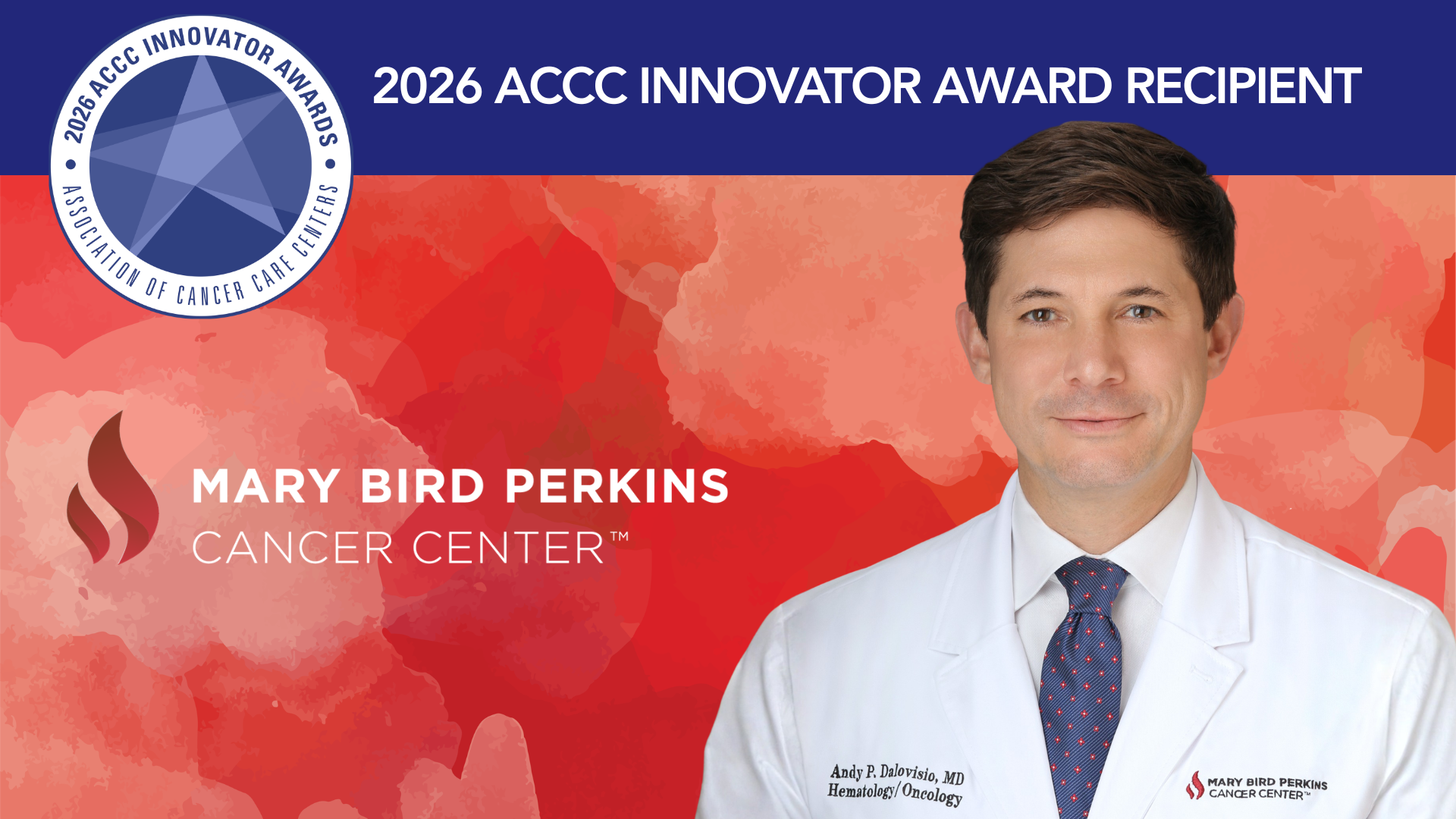
This is the fourth blog post in a 6-part series recognizing the achievements of the 2026 ACCC Innovator Award winners before their in-depth sessions at the ACCC 43rd National Oncology Conference. Learn more about the innovations being recognized this year and those who pioneered them by joining ACCC in Boston, Massachusetts, from October 21-23, 2026.

Nationally, approximately one in five patients who qualify for chimeric antigen receptor (CAR) T-cell therapy never receive it due to geographic distance, travel burden, or limited availability at specialized inpatient centers. Recognizing a critical need in its community, Mary Bird Perkins Cancer Center in Baton Rouge, Louisiana, launched the region’s first fully outpatient CAR T-cell therapy program for select blood cancers, fundamentally redefining how advanced cellular therapies can be delivered safely outside of a hospital setting and earning the program a 2026 ACCC Innovator Award.
Traditionally, CAR T-cell therapy has required inpatient admission due to the risk of acute toxicities, such as cytokine release syndrome and immune effector cell–associated neurotoxicity syndrome. As a community-based outpatient cancer center without on-site apheresis services, emergency department access, hospital medicine, or intensive care unit resources, implementing outpatient CAR T required a comprehensive redesign of clinical workflows, monitoring systems, and escalation pathways.

Measurable impact has already been achieved through this innovation, as local patients can remain near their support systems, sleep in their own homes, and avoid prolonged hospital stays while receiving advanced, evidence-based care. Furthermore, the gains made in care coordination, workforce readiness, and quality governance have proven invaluable in enabling broader access to life-changing treatments and supporting patient-centered, value-based care models.

In anticipation of the ACCC 43rd National Oncology Conference this fall, ACCCBuzz spoke with Renea Austin-Duffin, MPA, FACCC, Vice President of Cancer Support and Outreach, and Andrew Dalovisio, MD, Director of the Myeloma, Lymphoma, and Cellular Therapy Program, to learn more about this initiative.

ACCCBuzz: How long has Mary Bird Perkins been an ACCC member? 

Austin-Duffin: We’ve been a member since 1987.

ACCCBuzz: What do you enjoy most about being an ACCC member? Are there specific programs, resources, and/or tools that you use at your cancer program? 

Austin-Duffin: We greatly appreciate the organization’s multidisciplinary approach, which brings together professionals from across the cancer care continuum to share knowledge, best practices, and innovative solutions. The educational programming is invaluable, providing timely insights on clinical, operational, and strategic issues affecting oncology care. 

We also appreciate the many opportunities to collaborate and learn from peers facing similar challenges. At our cancer program, we regularly utilize ACCC resources such as educational webinars, conferences, blogs, podcasts, and the Oncology Issues journal. These platforms provide practical tools, emerging trends, and real-world examples that help inform program development, operational improvements, and patient-centered care initiatives. The ability to both share experiences and learn from others across the country is one of the most valuable benefits of ACCC membership.

ACCCBuzz: Renea, as a member of the ACCC Executive Committee, can you briefly describe your path to this leadership role?

Austin-Duffin: I have been an active ACCC member for many years and regularly attend the national meetings. I have also presented at several of these meetings, including a 2024 team-based deep dive on Mary Bird Perkins’ partnership with a local employer to bring screening services and prevention education to the work site and a companion 2025 team-based deep dive about Mary Bird Perkins’ Prevention On-the-Go mobile screening program, including an implementation playbook.

I have also written for the Association’s journal, Oncology Issues, including an article about Mary Bird Perkins’ 2016 ACCC Innovator Award for its efforts to improve early detection of cancer for the medically underserved. It felt like a natural next step to elevate that engagement to the highest levels of the Association—ensuring that the voice and real-world experience of community cancer programs are not only represented, but actively inform strategy, decision-making, and the direction of our work.

ACCCBuzz: Your 2026 ACCC Innovator Award recognizes a bold rethinking of how advanced therapies can be delivered. What problem were you most motivated to solve when you began this work? 

Dr. Dalovisio: It comes down to access. For many of these novel therapies—especially CAR T and bispecific antibody therapies—only a small percentage of the patients who meet the indication for these drugs are actually able to receive them. There are a number of factors that play into that: insurance coverage, proximity to a cancer center, and a lack of general expertise in the oncology community. Addressing those problems one by one to allow all eligible patients to receive these treatments is important, because these therapies are not just mildly effective—we’re talking about curative treatments or inducing remissions lasting years. These drugs are very important, both from a medical perspective and a quality-of-life perspective.

ACCCBuzz: What is one aspect of your approach that you believe will make others think differently about delivering complex cancer care like CAR T-cell therapy in the community setting?

Dr. Dalovisio: There’s this impression that CAR T is intimidating because of the potential complications. And while those certainly can be severe, as a field, we have adapted well to managing those complications. Of course, there are still high-grade and refractory cases, but those are the exception by far. It’s important to me to demystify a lot of the reservations about CAR T and show other community cancer centers that they can administer this therapy safely in the outpatient setting. Although it does take a certain level of resource allocation and commitment, this program can be propped up in most centers within a one- to two-year period. As these drugs become first-line therapies and standards of care, this is an adaptation that community cancer centers will have to make to stay relevant and financially secure.

ACCCBuzz: It can be challenging for administrators and C-suite members to share a common language with clinicians and others who provide direct patient care. Can you share any tips you used to obtain buy-in and support for your innovation?

Dr. Dalovisio: I was very fortunate in that my institution approached me and asked what I needed to make this program possible. Many of our C-suite members have scientific backgrounds, making it easier to communicate about highly clinical topics. But not everyone has that at their institution. I think when you break the language down into clear terms about how this initiative will benefit patients, how it is already on its way to becoming a first-line treatment for a lot of malignancies, and how adapting to incorporate this therapy will be financially beneficial, leadership is very willing to understand and work to bring the idea to fruition. When you explain the numbers, the response rates, the cure rates—those data are highly motivating, particularly when you place it in the context of what we had to offer patients before. 

ACCCBuzz: Can you share a patient story that illustrates how this innovation changed the experience or outcome for someone receiving care—and why that moment has stayed with you?

Dr. Dalovisio: Our first CAR T patient in this program was a gentleman in his mid 40s who had young children and lived close to our cancer center. Without the option to be treated at Mary Bird Perkins, he would’ve had to upend his life for a month or more to seek treatment in Houston or New Orleans. Anyone who has young kids, pets, or loved ones nearby knows how much it means to be able to go home each night and sleep in their own bed. Not only did he have a positive clinical outcome from the CAR T, but being with his community played a huge part in his healing. Being able to offer that to our catchment area means a lot to patients and to us. 

ACCCBuzz: Your model places a meaningful role on caregivers and keeping patients close to home. Why is that so important to you, and how has it shaped the patient experience in your program?

Dr. Dalovisio: The simple acts of sleeping in your own bed, being with your spouse, your partner, your support structure, and having home-cooked meals are all incredibly important in healing and persevering through a difficult process. Our patients recognize that, and I think that’s why they gravitate toward us to receive treatment rather than traveling to larger academic centers.

To learn more about Mary Bird Perkins’ community-based, fully outpatient CAR T program, join the 2026 ACCC Innovator Award winners in Boston this October for the ACCC 43rd National Oncology Conference.


Related Content

Local Staff, Lasting Impact: A New Model for Rural Cancer PreventionACCCBuzz Blog

Local Staff, Lasting Impact: A New Model for Rural Cancer Prevention

Rachel Radwan

July 16, 2026

A Pharmacist-Led Strategy to Improve Care With Oncolytic Virus TreatmentsACCCBuzz Blog

A Pharmacist-Led Strategy to Improve Care With Oncolytic Virus Treatments

Rachel Radwan

July 14, 2026

Extending Patient-Centered Cancer Care to Transgender and Nonbinary IndividualsACCCBuzz Blog

Extending Patient-Centered Cancer Care to Transgender and Nonbinary Individuals

Gabrielle Stearns

June 30, 2026

Transforming Oncology Authorization Through Clinical and Revenue Cycle CollaborationACCCBuzz Blog

Transforming Oncology Authorization Through Clinical and Revenue Cycle Collaboration

Rachel Radwan

June 29, 2026

Building a Blueprint for Precision Medicine: Lessons from TriHealthACCCBuzz Blog

Building a Blueprint for Precision Medicine: Lessons from TriHealth

June 25, 2026

Exploring a Bispecific Antibody for Relapsed or Refractory Multiple MyelomaACCCBuzz Blog

Exploring a Bispecific Antibody for Relapsed or Refractory Multiple Myeloma

June 22, 2026

15 Years Strong: The NCCN State Oncology Society Forum Annual MeetingACCCBuzz Blog

15 Years Strong: The NCCN State Oncology Society Forum Annual Meeting

Sean T. McCarson, MPA

June 16, 2026

Highlights from Volume 41, Number 3 Oncology IssuesACCCBuzz Blog

Highlights from Volume 41, Number 3 Oncology Issues

Gabrielle Stearns

June 15, 2026

Upcoming Events

ACCC 43rd National Oncology Conference
Oncology

ACCC 43rd National Oncology Conference

In Person Conference & ConventionOctober 21, 2026 at 8:00 AM MDT450 Summer St, Boston, MA 02210Omni Boston Hotel at the Seaport, Boston
Register Now!
HSCO 2026 August Dinner Symposium
Oncology

HSCO 2026 August Dinner Symposium

In Person Conference & ConventionAugust 12, 2026 at 5:30 PM HST6600 Kalanianaʻole Highway suite 110, Honolulu, HI 96825, USARoy's Restaurants – Hawaii Kai, Honolulu
Register Now!
LOS 2026 Cancer Congress - National Oncology Updates
Oncology

LOS 2026 Cancer Congress - National Oncology Updates

In Person Conference & ConventionAugust 14, 2026 at 11:00 AM CDT859 Convention Center Blvd, New Orleans, LA, USANew Orleans Marriott Warehouse Art District, New Orleans
Register Now!
IOS Evansville Meeting
Oncology

IOS Evansville Meeting

In Person Conference & ConventionAugust 18, 2026 at 5:30 PM CDT4011 Gateway Blvd, Newburgh, IN 47630, USADeaconess Gateway Hospital , Newburgh
Register Now!
2026 Carolinas Cancer Conference
Oncology

2026 Carolinas Cancer Conference

In Person Conference & ConventionAugust 22, 2026 at 7:00 AM EDT5757 Palm Blvd, Isle of Palms, SC, USAWild Dunes, Isle of Palms
Register Now!
IOS 2026 Best of ASCO
Oncology

IOS 2026 Best of ASCO

In Person Conference & ConventionAugust 22, 2026 at 6:30 AM CDT300 East 9th Street, Coralville, IA, USAHyatt Regency Coralville Hotel & Conference Center, Coralville
Register Now!
NMSCO 2026 Fall Conference
Oncology

NMSCO 2026 Fall Conference

In Person Conference & ConventionSeptember 12, 2026 at 7:30 AM MDT2101 Louisiana Boulevard NE Albuquerque, NM, 87110Marriott Albuquerque, Albuquerque
Register Now!
TxSCO 2026 Annual Conference
Oncology

TxSCO 2026 Annual Conference

In Person Conference & ConventionSeptember 18, 2026 at 6:00 PM CDT501 Gaylord Trail, Grapevine, TX, USAGaylord Texan Resort & Convention Center, Grapevine
Register Now!
Advertisement
Advertisement

Trending Now on
ACCCBuzz Blog

Designing a Safe, Fully Outpatient CAR T-Cell Program in the Community

Designing a Safe, Fully Outpatient CAR T-Cell Program in the Community

Local Staff, Lasting Impact: A New Model for Rural Cancer Prevention

Local Staff, Lasting Impact: A New Model for Rural Cancer Prevention

To better reach its patients living in rural communities throughout Georgia with targeted interventions, 2026 ACCC Innovator Award winner Winship Cancer Institute developed an Embedded Community Staff model, which leverages the experiential knowledge of local community members.

A Pharmacist-Led Strategy to Improve Care With Oncolytic Virus Treatments

A Pharmacist-Led Strategy to Improve Care With Oncolytic Virus Treatments

2026 ACCC Innovator Award Winner UNC Lineberger Comprehensive Cancer Center noticed a common pain point among patients who received oncolytic virus treatment for advanced melanoma: time spent in appointments. To minimize the need for multiple lengthy appointments, the center developed a pharmacist-led strategy that utilized virtual visits and premixing doses prior to in-person visits.

Extending Patient-Centered Cancer Care to Transgender and Nonbinary Individuals

Extending Patient-Centered Cancer Care to Transgender and Nonbinary Individuals

In a recent article from Oncology Issues, authors conducted a systematic literature review and found that two main drivers of care disparities exist for transgender and nonbinary individuals with cancer: rigid binary gender frameworks and gaps in mental health care.

View All ACCCBuzz Blogs

Recently Heard on
CANCER BUZZ Podcast

A Team Approach to ADCs in Bladder Cancer – [Video Podcast] Ep. 62

MDS: Low Risk Isn’t No Risk - [Podcast] Ep. 235

Beyond Body Art: Restoring Wholeness Through Paramedical Tattooing - [Podcast] Ep. 234

Bridging Radiation and Oncology in SCLC Care - [Podcast] Ep. 233

View All Podcasts

Latest from Oncology Issues

June 2026
June 2026
April 2026
February 2026
December 2025
October 2025
View All Oncology Issues

Join the Conversation

ACCC eXchange Digital Banner
Login