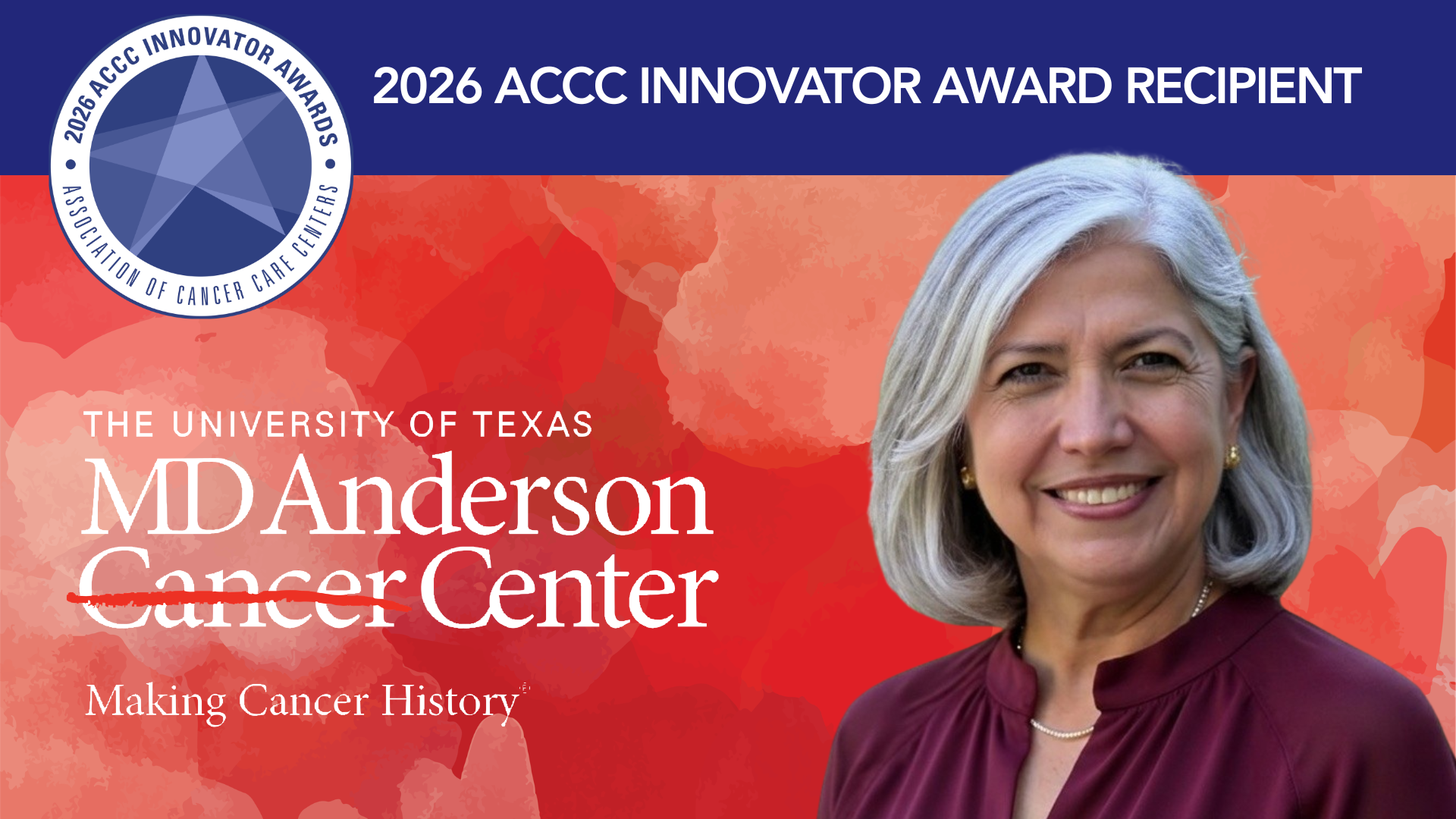
Jordan Karwedsky, financial counselor at Green Bay Oncology and chairperson of the ACCC Financial Advocacy Network, discusses her plans for the network's future.

For the average patient with cancer, cost is an integral part of their care journey. According to the American Cancer Society, 3 out of 4 patients with cancer worry about how they will pay for treatment while maintaining their daily living expenses. A 2022 study which surveyed patients being treated for colorectal cancer found that 75% of the sample experienced serious financial hardship during the first year of their diagnosis—although nearly all of them had health insurance. Alas, these financial burdens follow patients into survivorship, as cancer survivors pay higher out-of-pocket costs for future care.
This financial landscape has made the financial counseling an integral part of delivering comprehensive cancer care. A 2023 study that examined the impact of oncology financial navigation on patients with hematologic cancers and their caregivers, revealed navigation provided cost savings of nearly $2500 for each participant. Creating this kind of impact fueled the development of the Association of Cancer Care Centers (ACCC) Financial Advocacy Network, and as its new chairperson, Jordan Karwedsky, hopes to propel the network to new heights over her 2-year tenure.
“To me, financial advocacy means taking the burden off the shoulders of patients, so they do not have to worry about the financial side of cancer,” Karwedsky said. “Financial advocacy means helping patients afford their treatment, understand their insurance benefits, and so much more.” Karwedsky has spent the last 15 years helping patients do just that at Green Bay Oncology—although her start with the program was serendipitous. “I think I got lucky and fell into it,” she said. “I had not worked in health care before, but I was just applying for whatever [job] I could find that was somewhat interesting, and there was a posting at Green Bay Oncology for an insurance payment poster. I knew nothing about insurance at the time, but that’s how I got into oncology.” Six months into her role, Lori Schneider, FACCC, oncology operations manager at Green Bay Oncology, past ACCC Financial Advocacy Network chairperson and current ACCC board member, needed help in the financial counseling department. “I started helping Lori and she trained me,” Karwedsky said.
According to Karwedsky, her story epitomizes the kind of collaboration that has made the ACCC Financial Advocacy Network a force in recent years. “We have always had a great core of people who have been involved in the network, the task force, webinars, and everything else,” she said. “From participating in the coffee chats, discussion boards, and going to the ORMs [Oncology Reimbursement Meetings]—where I will be discussing patient navigation in the digital age this spring—we have brought together people that have great perspectives and ideas.” Consequently, Karwedsky is excited about the opportunity of growing the network as its leader. “A fresh set of eyes may see things you don’t, so, I think it would be great if we could get new people involved,” she said. “It gives us more opportunities to educate and learn about issues in different parts of the country.”


According to Karwedsky, growing engagement across the network is important as it allows more patients to benefit from a compendium of the resources and tools. Chief among them is the Financial Advocacy Services Guidelines. These guidelines were created using a collaborative, consensus-based process to promote and guide the implementation of critical financial advocacy services in cancer programs and practices across the nation.
The guidelines were recently adapted into an interactive assessment tool for cancer programs and practices to assess their current delivery of financial advocacy services. “It [the assessment tool] gives you a way to quantify your [navigation] program based on your patient and insurance demographic,” Karwedsky explained. “And it could also help new [cancer] programs or practices that are growing, especially when they are trying to figure out how to get additional staffing to support that growth.”
As the ACCC Financial Advocacy Network community grows, Karwedsky would like to promote peer-to-peer engagement through mentorship initiatives. “We can start small, find people who would be willing to be mentors, because there will always be someone looking for expertise on a topic,” she said. “I think that would be a great way to get people connected—we just need to figure out how to make it work.”
Karwedsky would also like to see ACCC develop a financial navigation certificate in the future. “I know there are other certifications that are out there, but nothing specific to oncology,” she explained. “Oncology is so specialized that I think it would be great to have a certification that we could hang our hat on. We could be certified advocates for the patient.”
As she looks to the future, Karwedsky is proud of the community that she’s built throughout the years. “Knowing that I have a dozen trusted people in my back pocket that I can reach out to for their opinion and advice is invaluable,” she said. “I feel like that I have made a separate lifelong friendship within the ACCC Financial Advocacy Network community, and I am excited for the next 2 years.”




In recognition of Leukemia and Lymphoma Awareness Month, ACCC compiled a group of resources to help care teams navigate two of the most commonly diagnosed adult leukemias: acute myeloid leukemia and chronic lymphocytic leukemia.