Author(s):
The University of Texas MD Anderson Cancer Center in Houston, Texas, developed a novel Pre-Intake Navigation (PIN) program, which identifies and resolves early financial and insurance barriers, enabling patients to access timely, high-quality cancer care with less anxiety and fewer delays. PIN shifts financial navigation from a late-stage, reactive task to an early, standardized, patient‑centered process embedded in the call center workflow.
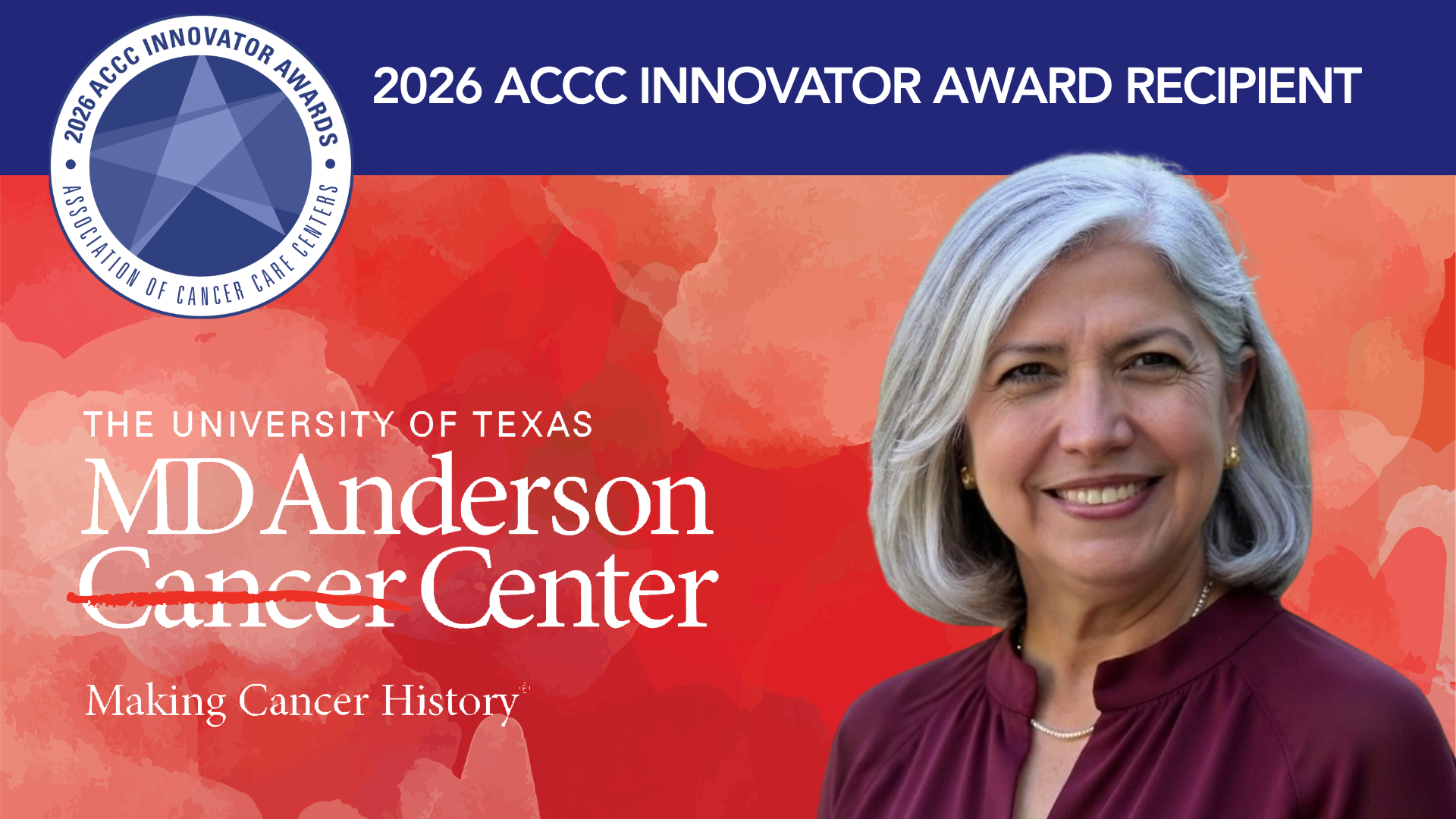
This is the sixth blog post in a 6-part series recognizing the achievements of the 2026 ACCC Innovator Award winners before their in-depth sessions at the ACCC 43rd National Oncology Conference. Learn more about the innovations being recognized this year and those who pioneered them by joining ACCC in Boston, Massachusetts, from October 21-23, 2026.
On top of coping with the anxiety of a cancer diagnosis and the physical effects of treatment, patients with cancer face the dual challenge of accessing and affording care. Many patients delay seeking care due to the perceived high cost, and others experience burdensome medical debt as a result of their care. In many cancer programs, financial navigators focus on obtaining financial clearance and assistance for eligible patients. However, this approach can fail to address patient distress stemming from the cost of care, insurance-related delays, and redundant work for cancer program staff.
To address these challenges, the University of Texas MD Anderson Cancer Center in Houston, Texas, developed its novel Pre-Intake Navigation (PIN) program, which identifies and resolves early financial and insurance barriers, enabling patients to access timely, high-quality cancer care with less anxiety and fewer delays. PIN shifts financial navigation from a late-stage, reactive task to an early, standardized, patient‑centered process embedded in the call center workflow.
Health information specialists triage and educate patients, coordinate with the Financial Clearance and Patient Access departments, and provide after‑hours and/or weekend support, typically resolving issues within 48 hours. When MD Anderson is not in‑network, patients receive education and are guided to appropriate in‑network options, ensuring continuity of care.
In its first two years alone, the PIN team has assisted 33,374 prospective patients facing insurance-related barriers to care. Of these, the vast majority were cleared for care, while 4,155 received individualized support to transition to in-network care elsewhere. By creating clarity up front, PIN reduces anxiety, shortens time to appropriate care, and prevents downstream rework.
In anticipation of the ACCC 43rd National Oncology Conference this fall, ACCCBuzz spoke with Cathleen Hernandez-Vita, BSN, RN, ONN-CG, Associate Director of askMDAnderson Navigation Services, to learn more about the program.
ACCCBuzz: How long has the University of Texas MD Anderson Cancer Center been an ACCC member?
Hernandez-Vita: We’re new members of ACCC this year.
ACCCBuzz: What do you enjoy most about being an ACCC member? Are there specific programs, resources, or tools that you use at your cancer program?
Hernandez-Vita: Just in this short amount of time, we’ve already begun to see the huge value of membership, especially with access to the Financial Advocacy Boot Camp. We leverage that resource for the onboarding and training of our team, and it has been exceptionally important in strengthening our financial navigation services and enhancing the patient experience.
ACCCBuzz: What makes your cancer center unique?
Hernandez-Vita: We’re a National Cancer Institute-designated cancer center with a strong commitment to innovation, especially in the area of patient navigation and support. A key differentiator is our investment in our PIN program, which operates as an important component of our broader institutional patient navigation program. We view navigation holistically with PIN serving as a critical entry point that helps patients access care efficiently and equitably. This program reflects a deliberate investment in addressing the needs of our community, focusing both on those who reach our doors and those who face significant barriers to care.
Importantly, our approach is grounded in a patient-centered design. During the development of the PIN program, we engaged our Patient and Family Advisory Council to ensure that this model truly reflects the lived experiences, needs, and expectations of the patients and families that we serve. This collaboration and community-informed approach is essential to our navigation efforts and our entire cancer center, which I believe makes us distinct.
ACCCBuzz: It can be challenging for administrators and C-suite members to share a common language with clinicians and others who provide direct patient care. Can you share any tips you used to obtain buy-in and support for your innovation?
Hernandez-Vita: It was important for us to gain alignment across the leadership teams and speak the language of each audience that we had to address. For example, when engaging with financial leaders, it was critical to clearly articulate both the financial impact and the return on investment, while pairing that data with a compelling narrative that demonstrates the value to the patient.
With our clinical leaders, that focus shifted more to patient outcomes, care coordination, and workflow efficiency. Equally important was ensuring that the initiative was consistently framed within the organization’s mission and tying the innovation back to our shared purpose of improving patient access, experience, and outcomes. Keeping those organizational drivers top of mind made it easier to build consensus and sustain support across the administrative, clinical, and executive teams.
ACCCBuzz: ACCC President Una Hopkins, DNP, MSN, FNP-BC, NE-BC, RN, FACCC, centered her theme on Designing Oncology Care to Meet the Needs of a Growing Patient Population. A key component of that theme is Optimized Oncology Service Line Structures, which was key to your innovation. Can you share any insights you’ve learned in this area?
Hernandez-Vita: The aim of the PIN model is to reduce the impact of early insurance-related barriers to care, prevent delays, and improve access to equitable, high-quality cancer care with the one-on-one guidance of our highly trained pre-intake specialists. Insurance requirements can be very lengthy and exhausting in and of themselves. The pre-intake team helps patients obtain primary care referrals, health plan authorization, and letters of agreement to bring all those pieces together and reach the end goal of receiving care at MD Anderson. This step-by-step approach is done in the pursuit of affording patients the support they need at one of the most stressful periods in their lives.
We also handle patients who, in spite of everything we do, are not able to access care at MD Anderson. We connect them to care in their network, so that instead of shuffling patients through the system, we’re guiding them to appropriate care as soon as possible.
In President Hopkins’s words, this model creates a seamless, equitable oncology care experience that prioritizes quality and accessibility for all patients. That’s what we’re trying to do: Ensure that no patient is lost in the system, help those who are able to come to MD Anderson, and educate and assist those who can’t so they can access care in their network as quickly as possible.
To learn more about MD Anderson Cancer Center’s pre-intake navigation program, join Cathleen Hernandez-Vita and her fellow 2026 ACCC Innovator Award winners in Boston this October for the 43rd National Oncology Conference.



Recognizing the critical role advanced practice providers and allied health professionals play in the care continuum, the American Oncology Network provides infrastructure, leadership, and professional growth opportunities to empower these members of the cancer care team to practice at the top of their license.