The risks, nature, and repercussions of burnout among members of the cancer care team have been discussed at length. But burnout does not always manifest itself in the same way from clinician to clinician and among supportive care professionals.
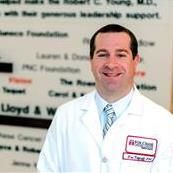
Eric D. Tetzlaff, MHS, PA-C, DFAAPA, a physician assistant at Fox Chase Cancer Center in Philadelphia, Pennsylvania, studies how workplace stress affects physician assistants (PAs) in particular. Tetzlaff recently received a grant from the Association of Physician Assistants in Oncology (APAO) to study burnout among oncology PAs during a three-year period. This longitudinal study will track PA burnout by focusing on several factors that can stem from the individual, the team they work with, and the unique characteristics of their organizations. Results will be based on participant responses and evaluated to determine the extent of burnout. Tetzlaff will explore whether PAs are at an increased risk of burnout, if that risk changes over time, and if burnout has caused some PAs to seek work in another subspecialty or to leave the field of medicine entirely.
ACCCBuzz: Are PAs more susceptible to burnout than other members of the oncology care team?
Tetzlaff: Physician assistants are not necessarily more at risk for being burned out than nurse practitioners or our physician colleagues in oncology. The rates of burnout are high for all three. There does appear to be some differences in the rate of burnout among the subspecialties within oncology, with the highest rates in PAs specializing in medical oncology, and lower rates in PAs specializing in surgical and radiation oncology.
ACCCBuzz: Do PAs exhibit any specific burnout symptoms that nurses and oncologists might not?
Tetzlaff: The symptoms of burnout are likely similar. However, we notedin our 2017 study of burnout and career satisfaction among PAs that there did seem to be a slightly lower sense of personal accomplishment for oncology PAs when compared to reported rates for medical oncologists. I think some of that may be due to the way that PAs are practicing medicine and supporting the oncology team. Oncology PAs may be spending more time on indirect patient care and less time on the more personally meaningful, direct patient-care tasks. It is possible that some of the tasks PAs are asked to complete are not satisfying and are considered below their level of training. When people enter medicine, they are looking to go into it for very altruistic reasons—to help others.
Completing Family and Medical Leave Act (FMLA) forms, return-to-work forms, prior authorization requests, or similar tasks actually take away from the time that you spend face-to-face with a patient, and it can diminish the sense of meaning and personal accomplishment that many providers desire. It’s very likely that some of those tasks are being delegated to PAs in oncology and are not being done by our physician colleagues as much. That could certainly be a part of it, as you’re looking to balance the work between the two.
ACCCBuzz: Do you have advice for other cancer programs that want to counteract burnout in PAs?
Tetzlaff: I think the most important thing to do is to first ask which groups in an organization have the highest rates of burnout—not necessarily in relation to their peers at their institution, but in relation to the reported rates for a given specialty or discipline. Make sure you have resources available to physician assistants and help them find that balance between paperwork and patient care and work/life balance. It’s also important to understand the team dynamics and clinical support available, and whether these factors change or stay the same. Do PAs have control or influence over their team or the larger institution in which they work so they feel really connected as a member of their team or institution?
ACCCBuzz: What have you noticed through your career that might not work when addressing PA burnout?
Tetzlaff: I think for a long time there was an effort to try to help the individual develop the skill set needed to combat or deal with burnout. I think in some ways it placed the blame on the individual as opposed to looking at the institution’s responsibility as well.
It’s not a single individual’s lack of resilience that leads to burnout. There are lots of different factors—some of which are institutionally based—whether it is lack of control over your work environment, lack of control over the people with whom who you work, or the development of moral distress among team members. These are more infrastructure, team-based, or organizational factors. Programs that focus on the individual alone are not nearly as successful as efforts that focus on both the individual and the organization.
Take a deeper dive into this topic. Find ACCC resources and strategies to promote resilience and well-being among cancer care team members here. Listen to this episode of CANCER BUZZ for a conversation focused on why institutional buy-in is a "must have" to address burnout in the healthcare workplace. Then, read the latest case studies from the NAM's Action Collaborative on Clinician Well-being and Resilience.
The opinions expressed in this blog post are not necessarily those of ACCC or our member organizations. We encourage you to share our blog posts. You may reproduce our posts either in part or in full, or you may link to specific posts. Images may not be used or distributed. Any reproduction must link back to the original source. Do not alter the text of our materials, and cite the source as follows: “[blog title] was first published on [date] by the Association of Cancer Care Centers.” For more information, visit our Terms of Use.


In recognition of Leukemia and Lymphoma Awareness Month, ACCC compiled a group of resources to help care teams navigate two of the most commonly diagnosed adult leukemias: acute myeloid leukemia and chronic lymphocytic leukemia.