Small Cell SMASHERS was founded in 2023 as a patient-centered advocacy and education community designed to challenge long-standing narratives about small cell lung cancer and restore a sense of voice, connection, and hope for patients and their loved ones.

Small cell lung cancer (SCLC) accounts for roughly 15% of lung cancer diagnoses, yet it remains one of the most aggressive and complex forms of the disease. Defined by rapid growth, early spread, and distinct neuroendocrine biology, SCLC behaves very differently from non–small cell lung cancer and often requires immediate intervention. For many patients, the disease is already advanced by the time it is diagnosed.
While limited-stage disease may be approached with curative intent, treatment for extensive-stage disease has historically focused on disease control and symptom management. SCLC often responds initially to chemotherapy and radiation, but relapses are common, and long-term survival has remained elusive.
Over time, these realities have shaped not only treatment pathways, but also the emotional experience of patients—marked by isolation, stigma, and a sense of inevitability tied to decades of slow therapeutic progress. Small Cell SMASHERS was founded in 2023 as a patient-centered advocacy and education community designed to challenge these long-standing narratives about SCLC and restore a sense of voice, connection, and hope for patients and their loved ones.
The mission of Small Cell SMASHERS is deeply personal to founder Misty Dawn Shields, MD, PhD, a thoracic medical oncologist and physician-scientist who lost her father to SCLC in 2000 when she was just 15 years old. A strong Marine, he faced his diagnosis largely alone—before disease-specific advocacy, before online patient communities, and during a time when meaningful therapeutic progress in SCLC felt out of reach.
That experience shaped both Dr. Shields’ career and her commitment to ensuring patients no longer navigate this disease in isolation. Small Cell SMASHERS was built to center patients and caregivers not only as recipients of care, but as advocates, learners, and a community of strength for one another.
“Creating a community and giving their voice a platform…that’s how you make real change. Giving these patients the opportunity they deserve to share their story,” explained Dr. Shields. “We saw changes because loved ones would speak out about their moms, their sisters, their loved ones. That led to more research dollars, trials, and advancements, and helping patients to live longer."
In May 2024, Small Cell SMASHERS launched as a private Facebook community for patients and caregivers. Today, the group includes nearly 1400 members worldwide, representing all stages of disease and spanning generations—patients, partners, adult children, parents, and grandparents. The culture of the group is intentional: protective, positive, uplifting, and supportive.
Members share not only information about treatments, drug approvals, and clinical trials, but also deeply personal milestones and challenges, from scan results to hair loss, fatigue, and fear. For many, the group offers something they have not found elsewhere—a place to be understood.
At the same time, Small Cell SMASHERS engages oncologists, researchers, fellows, and trainees through Twitter/X, focusing on emerging science, research dialogue, and clinical trial awareness. Together, these platforms form an ecosystem that supports patients, providers, and the research community.
Education is a foundational pillar of Small Cell SMASHERS. In partnership with the LUNGevity Foundation, the community hosts monthly Fireside Chats that connect patients and caregivers directly with leading SCLC experts. These conversations—held live and made available on demand—reinforce clinical discussions and empower patients to engage more confidently in their care.

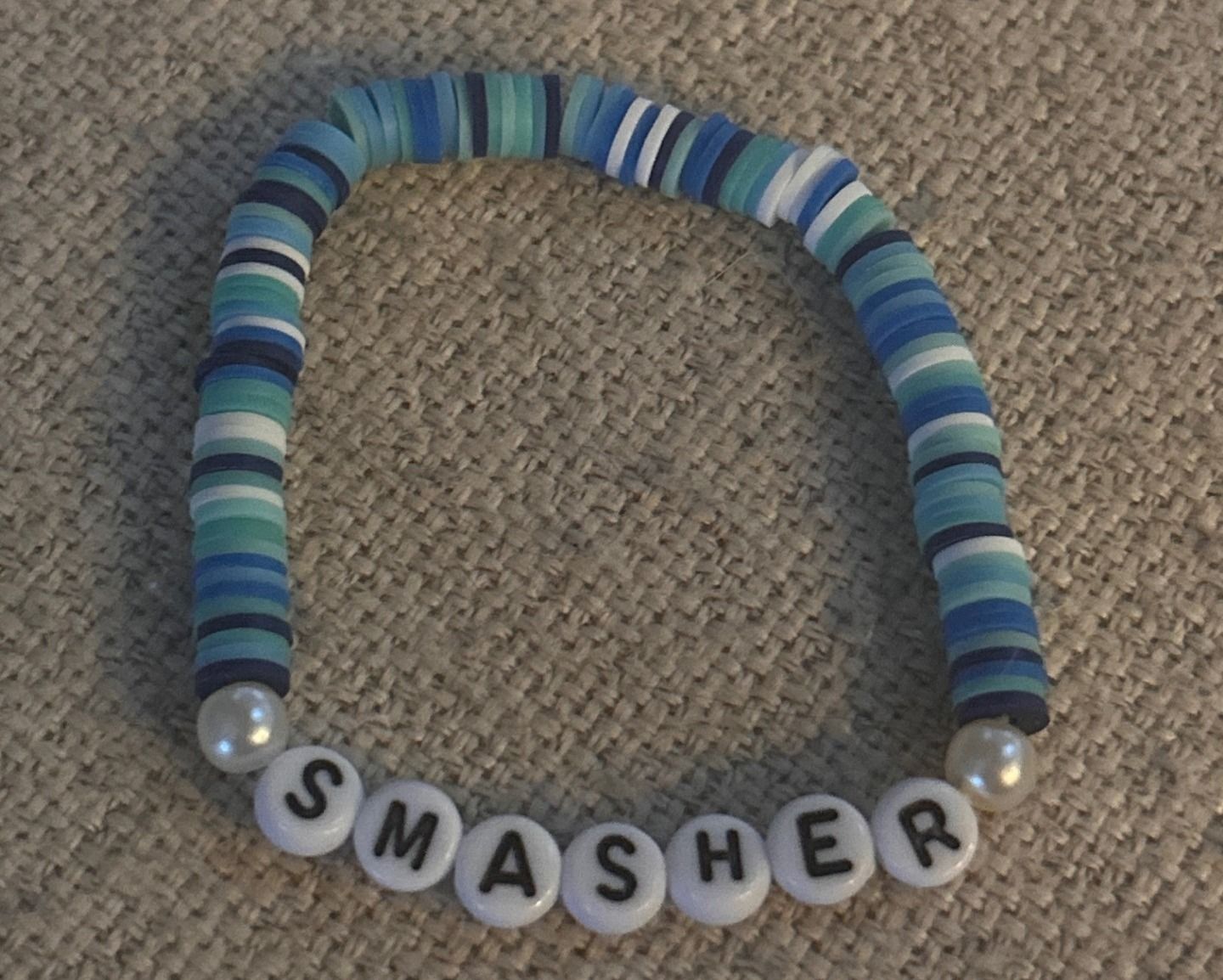
Beyond education, Small Cell SMASHERS provides something equally vital: belonging. Dr. Shields often points to the symbolic importance of the SMASHER bracelets—created by her 12-year-old niece—which are sent to members around the world. Each one is a reminder that patients are not facing this disease alone.
“If you can build a group of advocates, they’re unstoppable,” Dr. Shields says. “Giving them this platform so they would be supported, not isolated and left alone—that was the foundation of creating this group.”
The need for advocacy is inseparable from the history of SCLC care. After chemotherapy advances in the mid-1980s, the field experienced nearly 4 decades of minimal therapeutic progress. In recent years, however, research momentum has accelerated, with new therapies showing promise for subsets of patients.
One of the most notable advances is tarlatamab, a bispecific T-cell engager. “When it works for patients, it’s a miracle,” Dr. Shields explains. “I have patients who have been on it for almost 2 years, and they have no evidence of cancer—patients who might once have been in hospice are now living full lives…traveling, and visiting grandkids.”
Despite this progress, barriers remain, particularly regarding access. Restrictive clinical trial eligibility criteria continue to exclude many patients based on their medical history, additional diagnoses, or toxicities from previous treatments. Designing trials that reflect real-world SCLC populations remains a critical priority.
Community cancer centers, where most patients diagnosed with SCLC receive care, also play a role in expanding treatment access. Dr. Shields believes every patient—regardless of where they receive care—should have the opportunity to access second opinions, learn about emerging treatment options, and explore appropriate clinical trial opportunities throughout their disease journey.
As she emphasizes, “Community oncologists are the most important doctors seeing these patients. They are caring for people at their most vulnerable moments.” When community oncologists refer patients and caregivers to trusted patient communities like Small Cell SMASHERS, they help ensure patients are supported between visits, better informed about their disease and treatment options, and less isolated as they navigate a difficult diagnosis.
By partnering with patient‑centered advocacy initiatives, community oncologists play a vital role not only in delivering high‑quality clinical care, but in helping patients access the information, support, and community they deserve—amplifying both the impact of care and the hope for progress in SCLC.
For more insights on caring for this patient population, explore ACCC’s resources on Comprehensive Quality Care for Patients With Small Cell Lung Cancer.


On Day 2 of the 2026 NCCN Fall Policy Summit, speakers and panelists discussed the greatest operational hurdles preventing personalized cancer screening, offered proven best practices in five real-world case studies, and explored policy solutions to modernize screening systems.