In recognition of American Pharmacists Month, ACCCBuzz spoke to Dr. Sarah Hudson-DiSalle at The James Cancer Hospital to learn more about her role on the cancer care team.

October is American Pharmacists Month, which includes National Pharmacy Week (Oct. 16-22) and Women Pharmacist Day (Oct. 12).
The first recognized pharmaceutical text was written on clay tablets by Mesopotamians in 2100 BCE. Around 130 AD, Aelius Galenus, a roman physician, implemented compounding in healthcare—an unprecedented innovation involving mixing two or more drugs together to meet patients’ unique health-related needs. Pharmacy and medicine would not be officially separated until 1240 AD, but the patient-centered ethos that inspired Galenus’ innovation has remained in both disciplines—constituting the very foundation of the former. Sarah Hudson-DiSalle, PharmD, RPh, embodies that ethos. “Pharmacy is one of our most trusted professions in the United States, and that is something that has been true for as long as I have been a pharmacist,” said Dr. Hudson-DiSalle, pharmacy manager of Medication Assistance and Reimbursement Services at the Arthur G. James Cancer Hospital and Richard J. Solove Research Institute at The Ohio State University. “We are the drug expert.”
A 2019 national pharmacist workforce study found that pharmacy continues to be a field dominated by women, as they make up two-thirds of the workforce. This is a significant increase from 2009, when women accounted for 46.4 percent of the pharmacy workforce. Additionally, 58.8 percent of pharmacists in management positions in 2019 were female, continuing the growing trend for women in positions of leadership. “Some of the strongest leaders I have had the privilege to work with in pharmacy have been women,” Dr. Hudson-DiSalle said. “The disparity between men and women was lopsided when I graduated pharmacy school, but we are now seeing classes with more women than men.”

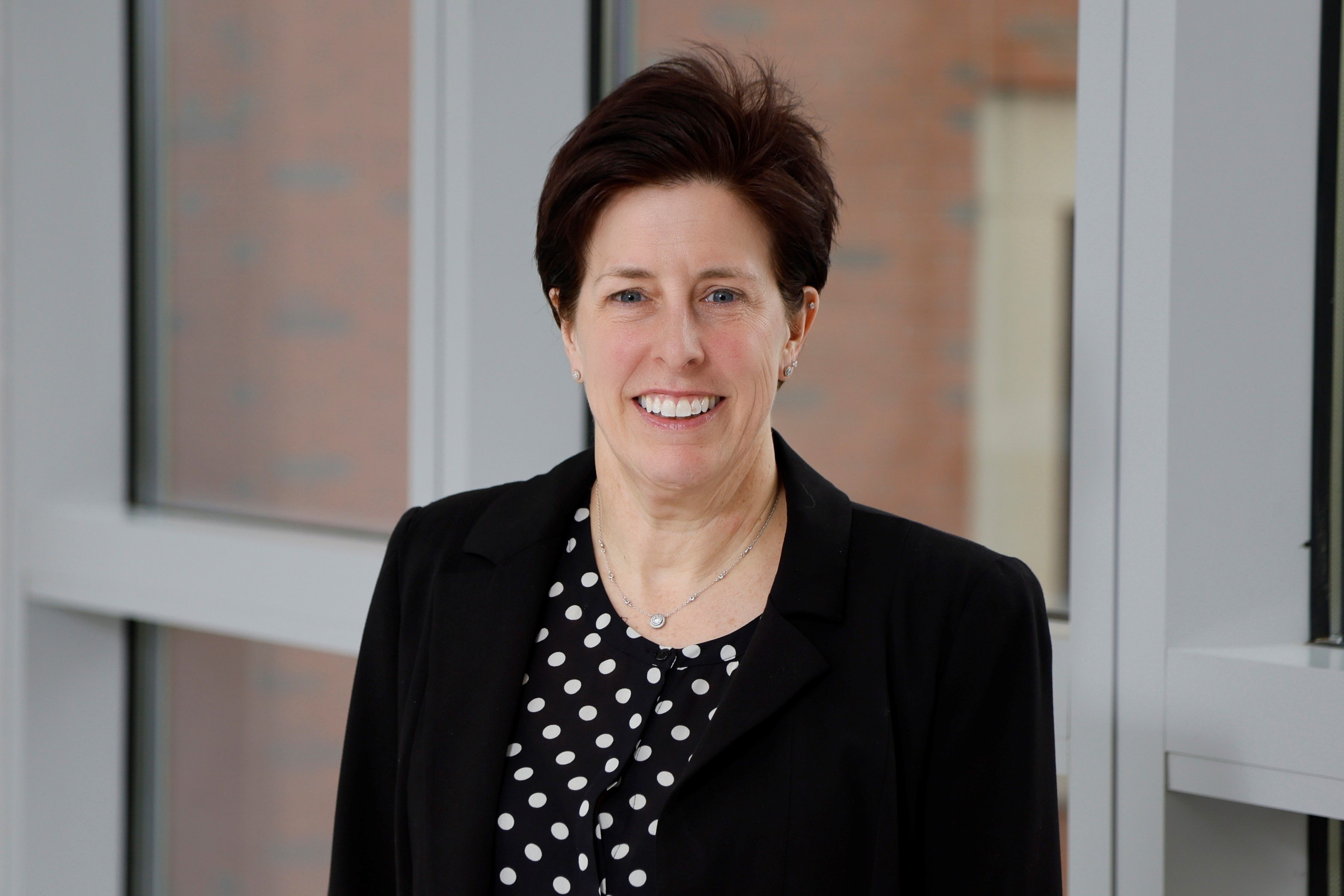
Dr. Hudson-DiSalle is in a pharmacy leadership role at The James Cancer Hospital, leading several diverse teams. “I have 4 teams and 18 people who report to me,” Dr. Hudson-DiSalle said. “The majority of whom work on insurance optimization and denial management. I also have a small team that works on medication access and a few pharmacy interns.” Dr. Hudson-DiSalle has purview over the prior authorization and denials management in the oncology department and infusion suites across The James Cancer Hospital. “Most of my work is focused on insurance optimization and dealing with frontline providers,” Dr. Hudson-DiSalle explained.
She admits that prior to being forced to work from home due to the COVID-19 pandemic, her family had a misconstrued perception of her role. During the pandemic, “they got to see what I do,” she said. “As pharmacists, we do a variety of things. We help to ensure that the right medicine safely gets to the right patient at the right time. For some pharmacists that means working side by side with providers to ensure that patients get the right therapy.”
According to Dr. Hudson-DiSalle, oncology pharmacists also play a key role in educating patients on the effective management of treatment-related side effects. “Some of the medications that we give patients are really toxic. They pack quite a big punch,” she explained. “I call some of my colleagues walking encyclopedias because they know so much about their subspecialized fields and how a drug would work best for a patient.” Dr. Hudson-DiSalle also believes that connecting patients with the medication they need is her primary responsibility as a pharmacist. This involves advocating for patients who cannot afford it.
The past decade has seen a dramatic increase in the cost of healthcare in the U.S., with the prices for oncology medications, hospitalizations, diagnostics, tests, and imaging growing. “We give these medications that are astronomically expensive from the onset,” Dr. Hudson-DiSalle said, adding that, “the structure of insurance design has not kept up with medication innovation and medication cost.” According to Dr. Hudson-DiSalle, most patients do not plan on getting cancer, and thus do not budget for it. High out-of-pocket expenses and the lack of comprehensive insurance coverage are hurdles patients often face. “Some patients are at a greater risk for financial toxicity,” Dr. Hudson-DiSalle said. “Patients that are on exchange plans, patients with only Medicare and no secondary insurance, and some Veteran Affairs patients can end up with astronomical out of pocket expenses at once.” She believes that it is of paramount importance for cancer programs and practices to educate patients on their healthcare costs and help them avoid financial toxicity.
Additionally, there are many factors that make a patient susceptible to financial toxicity. Proximity to an oncology practice is one, as patients who live in rural areas often accrue greater costs related to traveling to their medical appointments (e.g., cost for gas, time away from work, etc.). “If the intent of treatment is curative as opposed to metastatic, patients have higher costs,” Dr. Hudson-DiSalle said. “When a cancer program does not have resources for patients to be educated about the insurance market, there can be serious consequences.”
Dr. Hudson-DiSalle’s team includes two medication assistant program coordinators, who help patients find available resources for their infusion treatments. Additionally, The James Cancer Hospital employs financial counsellors, case managers, and administrative staff who assist patients with the financial component of their care. “Financial advocacy is important for the health of the facility,” Dr. Hudson-DiSalle said. “If you have insured patients that cannot afford their care, they begin to present to your facility like an underinsured or uninsured patient, which ultimately costs more.”
Dr. Hudson-DiSalle has some personal experience with the financial burden that patients may experience as they grapple with the costs of their cancer care. “My dad was a patient here at The James Cancer Hospital and when he went on one of the oral oncolytics, his co-pay was about three thousand dollars. His first thought to be able to afford his treatment was to take out a loan on his house.” Dr. Hudson-DiSalle said. “I said, ‘No, dad. This is what I do, and we have a solution for this.”
Having a financial advocate in the cancer program or practice helps take away some of the worry that patients have—allowing them to focus on their treatment. “When you get cancer, it takes a village, and the financial advocate is that village that makes sure the patient does not fall through the cracks,” Dr. Hudson-DiSalle said. “They are a hand when patients need it.”
Visit the ACCC website for more information on financial advocacy and oncology pharmacy, including tools and resources for the multidisciplinary cancer care team.



In recognition of Leukemia and Lymphoma Awareness Month, ACCC compiled a group of resources to help care teams navigate two of the most commonly diagnosed adult leukemias: acute myeloid leukemia and chronic lymphocytic leukemia.