ACCC association of cancer care centers
Join/Renew
Login
Join/Renew
Login
Education & Resources
ACCC eXchange LogInCorporate Member Sponsored ResourcesPresentations & AbstractsPresident's ThemeACCC Connect eLearning LogIn
Publications
Oncology IssuesPatient Assistance & Reimbursement GuideTrending Now in Cancer Care
Events
2026 ACCC Leadership SummitAnnual Meeting & Cancer Center Business SummitCapitol Hill DayNational Oncology ConferenceOncology Reimbursement MeetingsOncology State Society Meetings
Policy & Advocacy
2024 Policy Wrap-Up and ACCC 2025 Policy PrioritiesLetters & StatementsAccess, Payment & Reimbursement ReformWhite Bagging & Brown BaggingAdvocacy ResourcesCancer Moonshot
Membership
Join | RenewWho We AreMembership Types & BenefitsCorporate MembersACCC Member Portal FAQMember Directory
Partners
Oncology State SocietiesPartner OrganizationsCME
News
News ReleasesAdvocacy News ReleasesOncology News
About ACCC
Timeline / 50th Anniversary2025 Impact ReportACCC Innovator AwardsACCC FellowsACCC Senior Staff
Breast CancerMetastatic Breast Cancer
Gastrointestinal CancerBiliary Tract CancerColorectal CancerGastric CancerLiver Cancer
Genitourinary CancerBladder CancerProstate CancerRenal Cell Carcinoma
Gynecologic CancerOvarian Cancer
Head & Neck Cancer
Hematologic MalignanciesAcute Lymphocytic Leukemia (ALL)Acute Myeloid Leukemia (AML)Chronic Lymphocytic Leukemia (CLL)Mantle Cell Lymphoma (MCL)Multiple Myeloma (MM)Myelodysplastic Syndromes (MDS)
Lung CancerNon-Small Cell Lung Cancer (NSCLC)Small Cell Lung Cancer (SCLC)
Sarcoma
Skin CancerMelanomaNon-Melanoma Skin Cancers (NMSC)
Clinical Practice & TreatmentCancer DiagnosticsCare CoordinationEHR Integration for Biomarker TestingQuality Improvement Collaboration: Integration of Precision Medicine in Community OncologyTreatment
Financial NavigationFAN Boot CampFinancial Advocacy Network (FAN) Resource LibraryPatient Assistance & Reimbursement GuidePrior Authorization
Health Equity & Access3, 2, 1, Go! Practical Solutions for Addressing Cancer Care DisparitiesAppalachian Community Cancer AllianceOncology Advanced PractitionersPersonalizing Care for Patients of All BackgroundsSocial Drivers of Health
Patient-Centered CareAddressing Care Disparities for VeteransAdolescent and Young Adult (AYA)Care Action Plans for People with CancerDermatologic ToxicitiesEmpowering CaregiversGeriatric OncologyHealth LiteracyNutritionOncology PharmacyPatient NavigationPsychosocial Care in OncologyShared Decision-MakingSupportive CareSurvivorship Care
Practice Management & OperationsCancer Program FundamentalsLeadership Sustainment and Engagement VideosOncology Practice Transformation and Integration CenterOncology Team Resiliency
ResearchACCC Community Oncology Research Institute (ACORI)
Technology & InnovationTelehealth & Digital Medicine
ACCCBuzz Blog
CANCER BUZZ Podcast
Oncology Issues
Join/Renew
Login
Breast CancerMetastatic Breast Cancer
Gastrointestinal CancerBiliary Tract CancerColorectal CancerGastric CancerLiver Cancer
Genitourinary CancerBladder CancerProstate CancerRenal Cell Carcinoma
Gynecologic CancerOvarian Cancer
Head & Neck Cancer
Hematologic MalignanciesAcute Lymphocytic Leukemia (ALL)Acute Myeloid Leukemia (AML)Chronic Lymphocytic Leukemia (CLL)Mantle Cell Lymphoma (MCL)Multiple Myeloma (MM)Myelodysplastic Syndromes (MDS)
Lung CancerNon-Small Cell Lung Cancer (NSCLC)Small Cell Lung Cancer (SCLC)
Sarcoma
Skin CancerMelanomaNon-Melanoma Skin Cancers (NMSC)
Clinical Practice & TreatmentCancer DiagnosticsCare CoordinationEHR Integration for Biomarker TestingQuality Improvement Collaboration: Integration of Precision Medicine in Community OncologyTreatment
Financial NavigationFAN Boot CampFinancial Advocacy Network (FAN) Resource LibraryPatient Assistance & Reimbursement GuidePrior Authorization
Health Equity & Access3, 2, 1, Go! Practical Solutions for Addressing Cancer Care DisparitiesAppalachian Community Cancer AllianceOncology Advanced PractitionersPersonalizing Care for Patients of All BackgroundsSocial Drivers of Health
Patient-Centered CareAddressing Care Disparities for VeteransAdolescent and Young Adult (AYA)Care Action Plans for People with CancerDermatologic ToxicitiesEmpowering CaregiversGeriatric OncologyHealth LiteracyNutritionOncology PharmacyPatient NavigationPsychosocial Care in OncologyShared Decision-MakingSupportive CareSurvivorship Care
Practice Management & OperationsCancer Program FundamentalsLeadership Sustainment and Engagement VideosOncology Practice Transformation and Integration CenterOncology Team Resiliency
ResearchACCC Community Oncology Research Institute (ACORI)
Technology & InnovationTelehealth & Digital Medicine
ACCCBuzz Blog
CANCER BUZZ Podcast
Oncology Issues
    • Education & Resources
    • Publications
    • Events
    • Policy & Advocacy
    • Membership
    • Partners
    • News
    • About ACCC
ACCC association of cancer care centers
1801 Research Boulevard, Suite 400, Rockville, MD 20850
Tel: 301.984.9496 Fax: 301.770.1949 Email Us
Contact UsVolunteers
Advertise
Career Center
Terms and Conditions
Privacy Policy
ACCC Rebranding
Copyright © 2026 Association of Cancer Care Centers. All Rights Reserved.
Advertisement

Publication

Article

Views

August 18, 2025
Oncology Issues
August 2025
Volume 40
Issue 4

Seven Steps to Achieve a Culture of Happiness at Work

Author(s):

Nick Webb

Seven Steps to Achieve a Culture of Happiness at Work
Download Issue PDFDownload PDF

In 2021, millions of Americans quit their jobs in what is now known as the Great Resignation. The top reasons cited for leaving were low pay, no opportunities for growth, and a lack of respect from their employers.1 In other words, employees were not happy.


The health care industry in particular was hit hard by these resignations, driven further by employee burnout from the COVID-19 pandemic. The Health Resources and Services Administration projects that worker shortages will only grow in the coming years across all positions in the health care field.2 Now more than ever, it is important to focus on retaining staff for the good of the patients who depend upon them.

I have spent over 30 years consulting and advising companies on how to improve their workforce. The most important factor I have seen that makes or breaks these companies is happiness. In recent decades across industries, respect for employees as individuals has been replaced by a drive to maximize value for shareholders—but these do not have to be competing goals. When employees are happy, they work harder, stay longer, and create more profit. Prioritizing happy workers is not just good for the well-being of your employees—it is a long-term investment in your organization.

But happiness does not happen by accident. It requires intentionality and hard work from leadership to achieve this lasting company culture. If cultivating happiness seems like a daunting task, know that you are not alone in that feeling. Many organizations struggle with this endeavor, but the rewards are well worth it. Here are my best tips, developed and tested over 3 decades, for making and keeping happy employees.

1. Work + recreation + meaning = happy work.

When you put effort toward a task, that’s work. When you enjoy the work you’re doing, there’s an element of recreation. And when you feel like it improves the world or your community, you have added meaning into the equation, and the result is happy work. Your goal as a leader should be to foster a culture that balances all 3 elements of this happy work formula. For most health care employees, finding meaning is inherent in their work, and likely what drove them to this field in the first place. Leaders then are tasked with ensuring their employees are actually enjoying their day-to-day work, ensuring that they are working at the top of their license, and determining whether there is another department or branch of care they would like to explore instead.

2. Happy employees result from a top-down approach.

Company culture is established by leadership, so it is vital that CEOs, directors, managers, and other individuals in positions of authority are on board with centering employee happiness. Educate your leaders on the value happy employees add to your organization and encourage a philosophical shift that prioritizes this positive culture in long-term business plans.

3. Happy employees create more profit, but that investment does not work in reverse.

Simply paying workers more is not enough to make them happy. This represents a shift from past generations who were more likely to make employment decisions based on salary. Today, employees are looking for meaning in their work, inclusion and diversity, and respect from their employers. If your company does not provide these benefits, good employees will look elsewhere for a workplace that does.

4. Employees will feel comfortable offering constructive criticism only if there is a company culture of trust.

Surveys are a tricky tool for assessing why workers are unhappy, because most people will not give an honest response if they do not believe their opinions are trusted and valued. Many organizations see improvement initiatives as mono-directional projects planned by leadership and implemented on employees or stakeholders. Instead, leadership should create opportunities for employees to be innovative and collaborate on these initiatives. Opening this door, listening to their ideas, and using their suggestions will make employees feel heard and build their trust.

5. Happiness starts with hiring.

Given the current shortage of health care workers—in oncology especially—it may feel like you cannot be too picky while hiring. However, in the long run, you will save time and money by hiring well the first time. Unhappy employees are less productive and may negatively affect the whole company culture— not to mention the patient experience. Be intentional about finding an employee who both aligns with the organization’s needs and will be happy in the role. Some tactics to do so include using data to identify common qualities in employees who are successful in similar roles or offering new hires an incentive to quit if they are unhappy when they join the company.

Nick Webb’s book, Happy Work, offers a blueprint for building a workplace culture rooted in meaning, joy, and purpose.
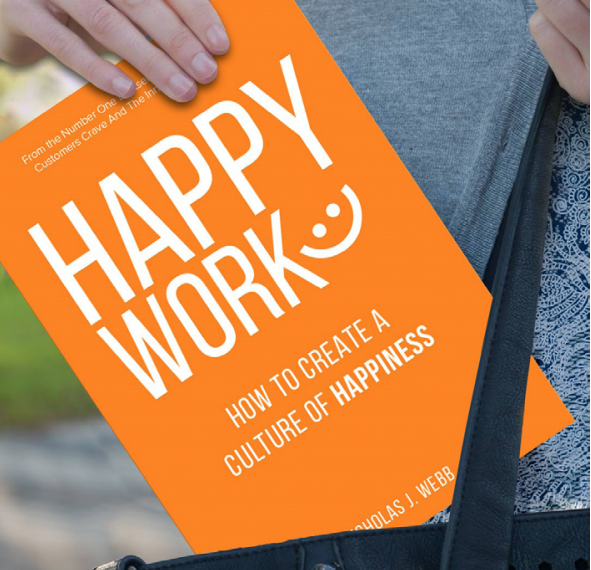
Nick Webb’s book, Happy Work, offers a blueprint for building a workplace culture rooted in meaning, joy, and purpose.

6. Strong mission statements— and employees who believe in them—are key.

No matter the size of your organization, all employees should feel connected to its purpose, direction, and goals. Having a strong guiding mission statement not only brings unity and clarification among leaders, employees, and stakeholders; it also clearly communicates the intentions and goals of the company to its customers (or, in the case of health care, its patients).

For larger organizations, it can be beneficial to create mission statements specific to each department to help employees find meaning in their day-to-day work. A vision statement, which describes the impact the organization is striving for, and a statement of values, which defines ethics and priorities, are also great tools to connect employees to their unique sense of meaning in the work they do.

7. Unhappy employees make unhappy customers, but the reverse is true as well.

If your customers are unhappy with your product or service, this sentiment affects the employee experience, because they want to believe in what their company is selling. In the case of cancer care, you can replace customers with patients. Consider their experience from the moment they walk through the door of your hospital or clinic. If you can help your patients feel comfortable and at-ease, it will translate to positive patient-provider interactions and happier employees.

In 2020, the American Medical Association conducted a survey of over 20,000 health care professionals to assess burnout related to the COVID-19 pandemic. Almost half of those surveyed reported experiencing burnout, but the odds of burnout were 40% lower in those who reported that they felt valued by their organization.3 A growing population of patients with cancer, as well as survivors, means that we need a skilled, compassionate oncology workforce now more than ever; happiness should be employers’ most-used tool to combat the current workforce shortage.

At its core, the field of medicine is about improving lives. Let this serve as a call to focus on the lives of health care employees as much as patients. Not only is their well-being tied to the success and longevity of the organization, but it is also the respect they deserve as human beings and selfless contributors to the field of medicine.

Nick Webb is a healthcare futurist, keynote speaker, and company culture expert. He is the CEO of LearnLogic(R), a company that helps organizations drive customer and employee happiness through innovative training and workforce development. He is also the author of multiple best-selling books, inlcuding Happy Work: How to Create a Culture of Happiness.

References
  1. Parker K, Horowitz JM. Majority of workers who quit a job in 2021 cite low pay, no opportunities for advancement, feeling disrespected. Pew Research Center. Published March 9, 2022. https://www.pewresearch.org/short-reads/2022/03/09/majorityof-workers-who-quit-a-job-in-2021-cite-low-payno-opportunities-for-advancement-feelingdisrespected/
  2. Health Workforce Projections. HRSA Bureau of Health Workforce. Updated November 2024. https://bhw.hrsa.gov/data-research/projecting-healthworkforce-supply-demand
  3. Berg S. Half of health workers report burnout amid COVID-19. American Medical Association. Published July 20, 2021. https://www.ama-assn.org/practicemanagement/physician-health/half-healthworkers-report-burnout-amid-covid-19
Articles in this issue

Anchored in Purpose: Navigating Oncology’s Shifting Landscape
Empowering Oncology Professionals with Holistic Support to Cultivate Compassion and Resilience
Margins in Crisis: Evaluating and Improving Your Cancer Program’s Financial Performance
Care Code® and Holistic Interventions: Addressing Compassion Fatigue and Improving Resiliency Among Staff
2025 Trending Now in Cancer Care: Part 2
Exploring Psychedelic-Assisted Therapy in Oncology
Breast Cancer Knowledge Gaps and Misconceptions Among Non-Medical Female University Students in Southwestern Nigeria
Lymphedema After Breast Cancer: Addressing Barriers and Building Strategies to Improve Long-Term Self-Management
Advancing Skin Cancer Care With a Specialized Melanoma Clinic
Integrating EHRs With Reference Labs for Biomarker Testing
Fast Facts: Vol 40, No. 4
CMS Drug Price Negotiation
The Physician Is Out: How to Bill Appropriately
Seven Steps to Achieve a Culture of Happiness at Work
Columbia Memorial Hospital-OHSU Knight Cancer Collaborative