Author(s):
The life-threatening nature of cancer—combined with the complexity of treatment and decision-making—means that oncology nurses and providers are more prone to intrinsic distress than providers in nononcologic settings. This link between cancer and death may make the care of these patients exceedingly stressful for providers.1-3 Continued exposure to patient death may cause oncology nurses a deep sense of loss that may result in burnout.4,5 Moral distress in oncology nurses is associated with burnout syndrome, compassion fatigue, and secondary traumatic stress syndrome, all of which are associated with negative consequences for patient care and safety.1-5 Moreover, moral and psychological distress may have costly repercussions for the health care system, tied to the costs of replacing staff.6
The post-COVID-19 pandemic landscape has left health care professionals deeply concerned and demanding action. Organizational and leadership acknowledgment of psychological distress, such as compassion fatigue, validates the trauma that cancer care teams may experience, shedding light on previously invisible aspects of health care.4,5 Effective and timely support and self-care strategies are critical to promoting resiliency and well-being among oncology staff, while minimizing unintended consequences of traumatic stress and moral distress.4,5 Mindfulness, self-care, and resilience-based interventions demonstrate promise in addressing these types of stress and distress, including compassion fatigue.2,3,7
For White Plains Hospital in White Plains, New York, and its Center for Cancer Care, an understanding of the needs of staff members and the vital importance of their well-being has been a driving force behind various forms of support for its interdisciplinary team since 2015. This article introduces Care Code®, an innovative support program that addresses staff and health care team needs by responding to their stress regularly and on demand as needed.
Care Code at the Center for Cancer Care
White Plains Hospital is a 292-bed tertiary hospital. Its Center for Cancer Care, next to the main hospital, is an outpatient setting where patients access services, testing, and treatment. In 2024, there were 22,739 patient visits—1750 patient visits monthly to receive treatments at the cancer center. Staff provide care for a range of patients daily. With so many patients treated—often over long periods of time—the cancer care team may develop close relationships with patients and families. Recognizing that the stress and demands of caring for this patient population can be overwhelming—and may affect staff in deeply traumatic ways—White Plains Hospital developed its Care Code program. This initiative is designed to address distress and provide support for all team members, including those in oncology. By addressing stress management and self-care, Care Code aims to promote empathy, compassion, and gratitude. Moreover, the program seeks to build a supportive organizational culture and create a healing environment for hospital and cancer center staff, as well as patients and family members.
Care Code was first initiated by Pastoral Care and Caregiver Support in the summer of 2019 in collaboration with the Nurse Experience Council; the Holistic Nursing Program joined the initiative soon after. The latter has been providing evidence-based integrative and holistic modalities to patients, their family members, and staff at the hospital and the cancer center since 2014. According to the Holistic Nurses Association,7 the core values of Holistic Nursing include self-reflection, self-development, and self-care. Modalities include:
The Care Code team has grown from 5 initial members to more than 20 staff members, including a dedicated team at the Center for Cancer Care. This team provides, manages, and supervises required and/or requested care to ensure that the Care Code program meets the staff’s needs through monthly rounds, special and/or emergency requests, and attendance and education at staff meetings.
Over the past 6 years, Care Code has become an essential resource for frontline workers; the program was widely recognized as an indispensable resource during the COVID-19 pandemic. The program may not change reality, but it enables Care Code team members to be present for other staff, sharing their pain together and uplifting those involved in patient care. Care Code acknowledges and supports diverse individual and team needs and stress in a particular time and space, helping to nurture resilience and create a supportive environment.
Care Code responds to employees’ stress and crises regularly and on demand. Care Code 1 is scheduled monthly with rounds at the cancer center; Care Code 2 answers requests from an oncology staff member or team to address urgent needs, such as sudden unexpected grief from a patient’s death, challenging circumstances resulting in an ethical dilemma, or a staff or team’s need for nourishing time for self-care and supportive team building.


Care Code Interventions Care
Code provides regular visits to each unit and department and also responds to specific crises with holistic interventions, including simple breathing exercises, short meditation or imagery, simple movement, aromatherapy, and affirmation cards (Figure 1, right). These activities are accompanied by carts with healthy snacks and water. Care Code includes all employees, even staff members passing by in a hallway before and after a visit to a designated unit. The hospital’s intranet and external-facing website feature a Care Code page where staff, as well as patients and their families or visitors, can access videos of various meditations, mindfulness practices, prayer, and other pertinent resources.
Care Code Affirmation Cards are provided with aromatherapy on 2x2 gauze to encourage staff to take a breath, open their senses, and allow for a moment of reflection and mindfulness. The cards are intended to stimulate an “a-ha moment” and help staff gain sudden insight with uplifting messages. Staff have reported that these mantras and positive phrases inspire them, bringing relief and a sense of joy to the workplace. Many staff members collect these affirmation cards, which are often displayed throughout the facility and treasured for days. Staff often state how the messages on these cards relate to them in a way most needed at the time.
Care Code also provides tailored services to the physician practices located at the Cancer Center. The office manager identifies specific needs, such as staff appreciation, team building, problem solving, how to strengthen coping skills, or just needed time to de-stress. Care Code provides the resources and opportunity for discussion, reinforces self-care, and reviews mindfulness practices and breath work, with an emphasis on support, gratitude, and joy. To meet these practice needs, Care Codes are scheduled in advance as part of a staff meeting. For example, on Oncology Nurses’ Day, the hospital’s oncology social worker, who is a member of the Care Code Team, invited practice staff to a presentation on compassion fatigue and professional burnout. With 60 nurses in attendance, this Care Code presentation sought to improve staff’s personal and professional lives by offering resources to help identify and manage varied types of distress, including compassion fatigue, vicarious trauma, stress responses, and boundary issues in the workplace, while simultaneously promoting strategies to support oneself and one’s colleagues.
Care Code Outcomes
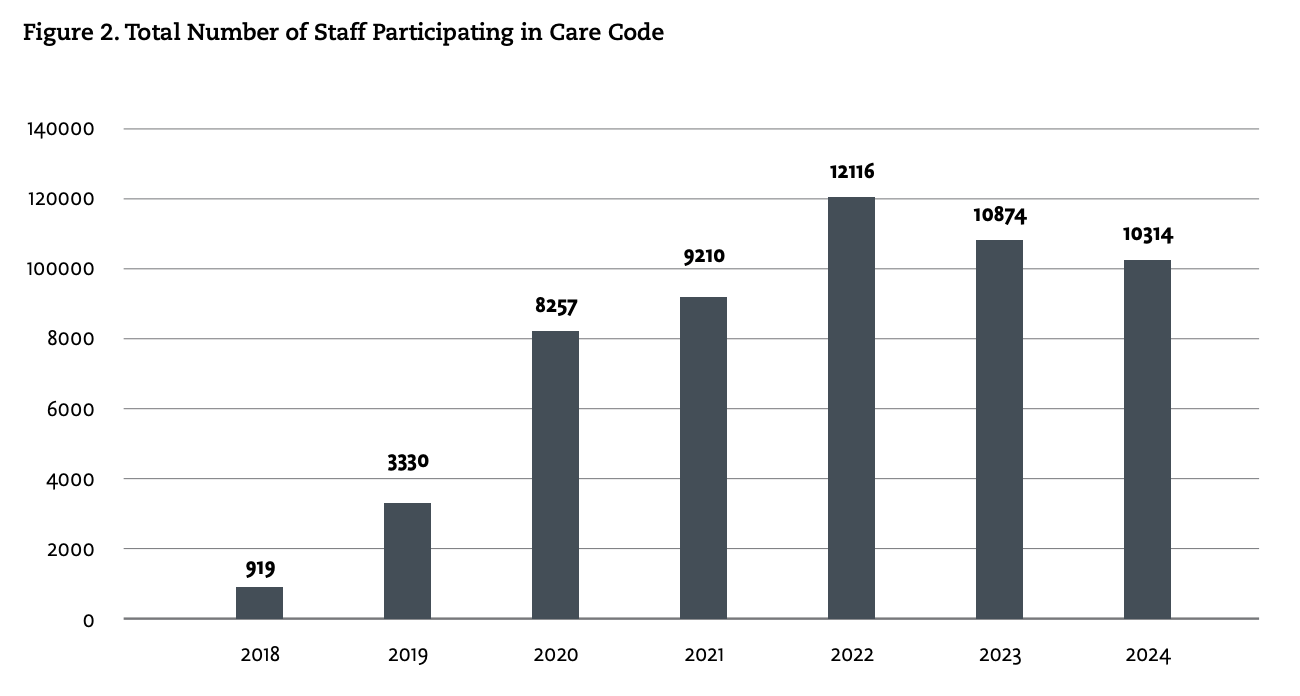
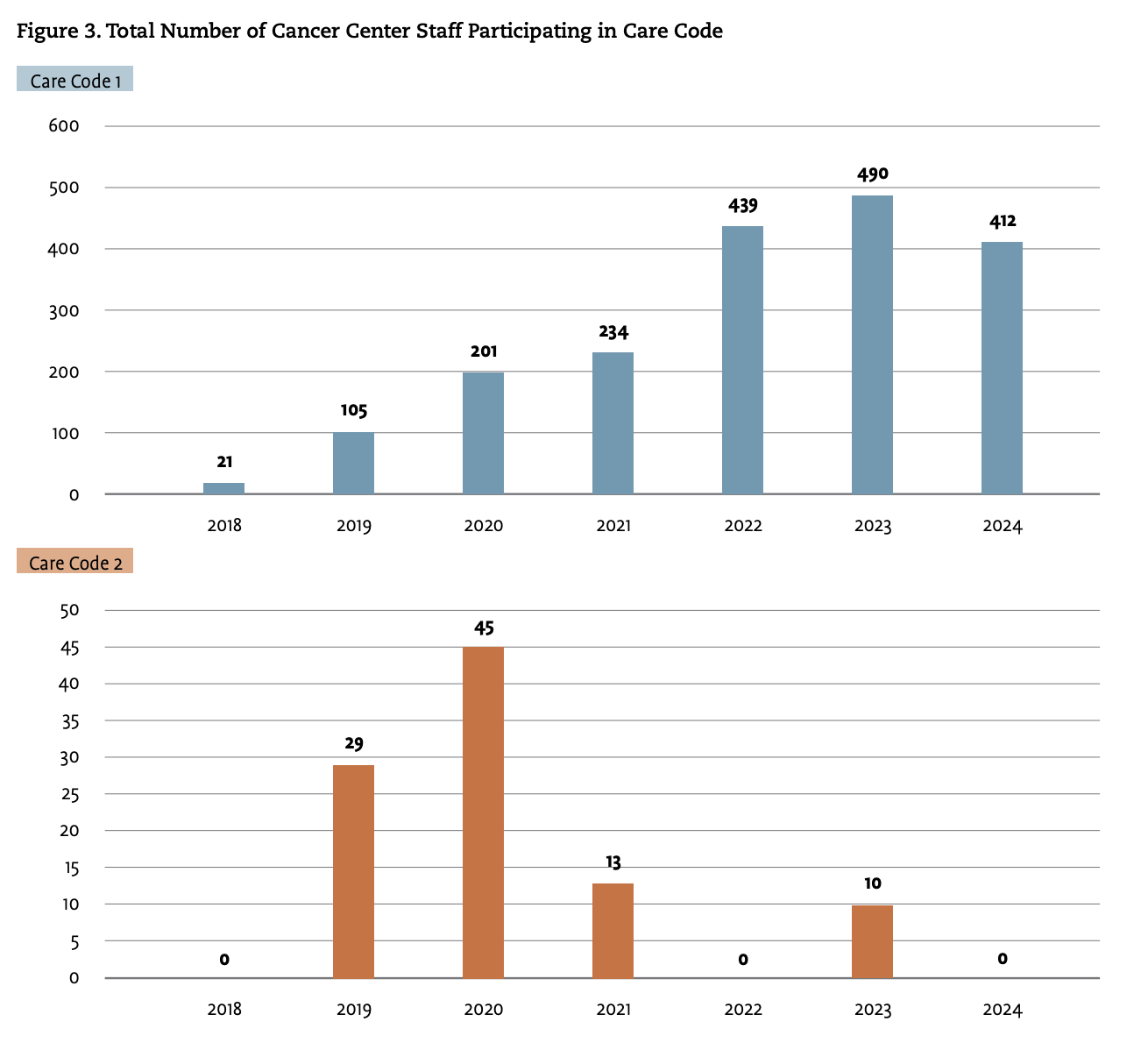
Staff and employee testimonials and surveys have expressed support and gratitude for the Care Code program. For the Care Code team, the program exemplifies how they support all staff by doing what they do best: offering compassion with the intention to heal. Since the program’s inception in 2018 through 2024, regular Level 1 participation in Care Code increased over tenfold throughout the organization (Figure 2, below); participation has increased twentyfold during the same period in the Center for Cancer Care (Figure 3). This expansion coincides with the growth in Care Code team members.
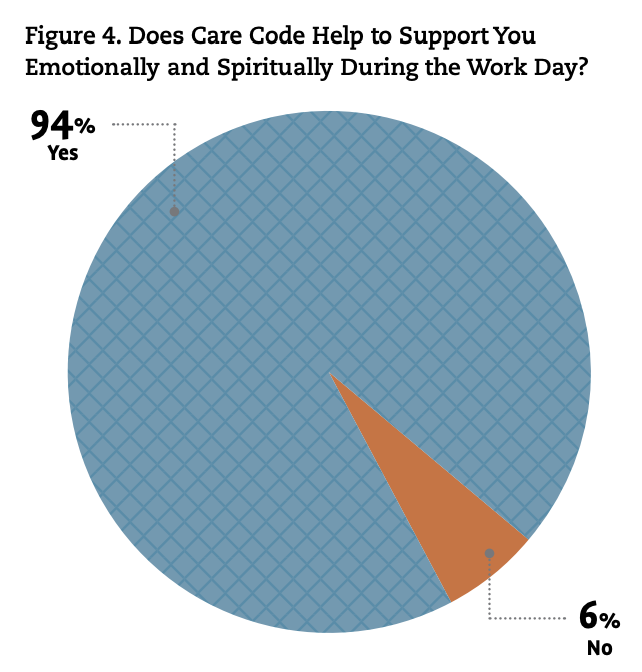
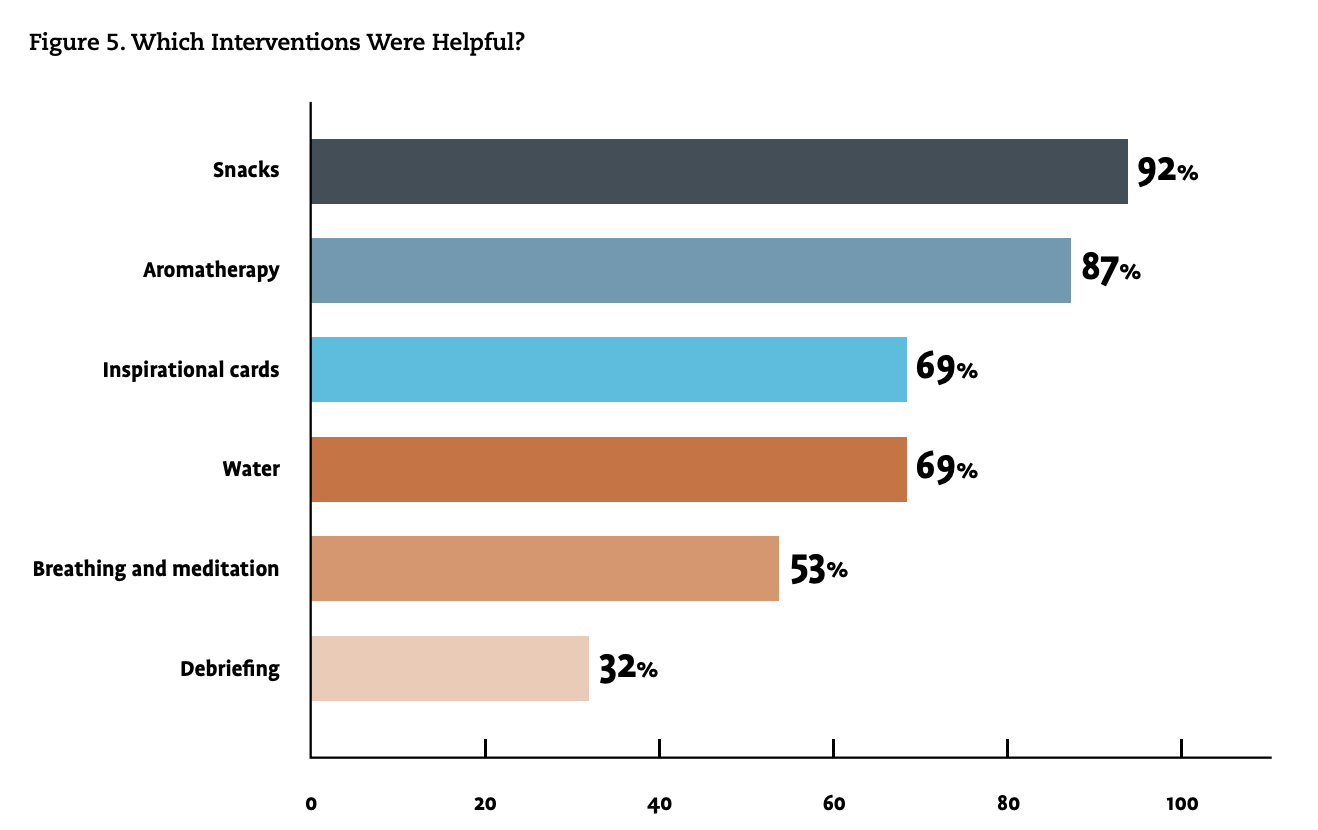
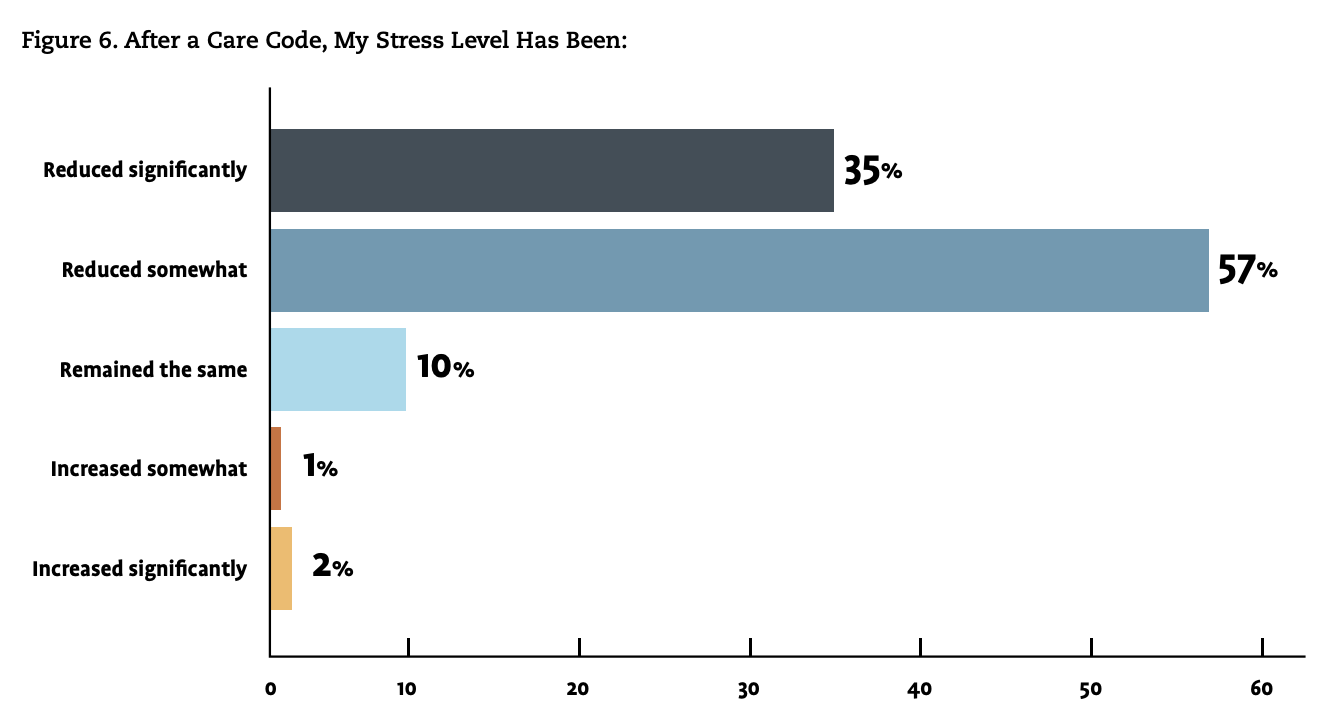
Hospital surveys administered in 2021, 2022, and 2025 show a positive response to the Care Code program. Data from the latest 2025 survey (Figures 4 to 6) showed that an overwhelming 94% responded affirmatively to the question: “Does Care Code help to support you emotionally and/or spiritually during your workday?” When asked, “Which interventions were helpful?”, 92% said they benefited from food, 87% from aromatherapy, 69% from affirmation cards, 65% from water, 53% from breathing and/or meditation, and 32% from debriefing. In addition, 83% reported that their stress level was reduced following a Care Code visit. Other survey results included:


In the 2025 survey, staff shared many positive and uplifting responses to Care Code (Figure 7), citing the “amazing team,” “the powerful messages, images, aromas, and goodies,” and the program’s “giving us permission to take a few moments to take a few breaths.” Additional comments shared how the Care Code team “comes just at the right time” or “when I needed it the most” during a tough day or week.
To further improve services, the Care Code team is looking at how to address the 6% of respondents replying “No” to the question, “Does Care Code help to support you emotionally and/or spiritually during your workday?” and the 3% who noted an increase in their stress level after a Care Code visit. These results may have been related to workload, such as high acuity and the nature of the work, or individual differences in how people access and perceive internal stress. Because the current survey lacked a comment area to list possible reasons for these responses, future surveys will be revised to include a comment section to clarify these responses and better address stress management and self-care. In addition, while the majority (81%) agreed that Care Code provides staff with coping strategies that they can use in their personal lives, these data may also help the Care Code team respond to and accommodate the 19% of respondents who disagreed with this statement.
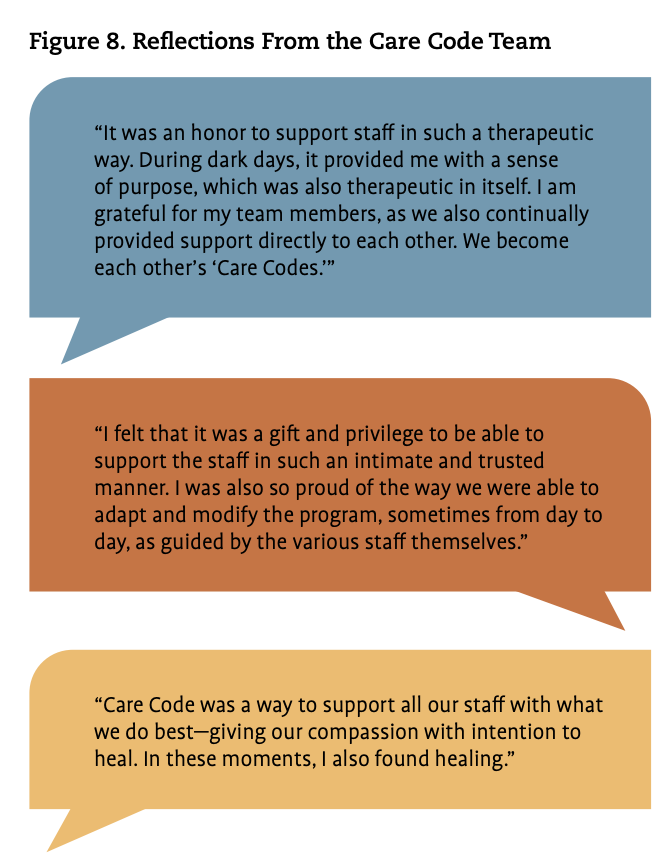
As shown in Figure 8, Care Code team members recognize the sense of meaning and purpose inherent in providing staff with this type of support. Moreover, team members felt it important to express appreciation, compassion, empathy, and deep affection for all who walk through the hospital and the cancer center doors.
Challenges and a Look to the Future
Care Code team members now represent all departments throughout the hospital. The program itself has become an indispensable part of the organization, helping to create a healing environment and build a collaborative, supportive culture for all engaged in care—with strong backing from leadership. As with any supportive programming, however, the Care Code team needs to address the ongoing sustainability of the program. For example, because the Care Code team volunteers their time for these services, team members must recognize the feasibility and/or limitations in their ability to participate without causing burnout or stress on their regular responsibilities. At the cancer center, Care Code is primarily the responsibility of the oncology social worker and the IDT (Interdisciplinary Team) operations coordinator, with additional support from the Care Code team as needed. Staff are encouraged to join the Care Code team to increase presence at the Center for Cancer Care and to provide these individuals with another level of job satisfaction. Instituting Care Code and self-care modules for employees as part of the onboarding process may also help to grow the team and to help individual staff members address, identify, and manage stress.
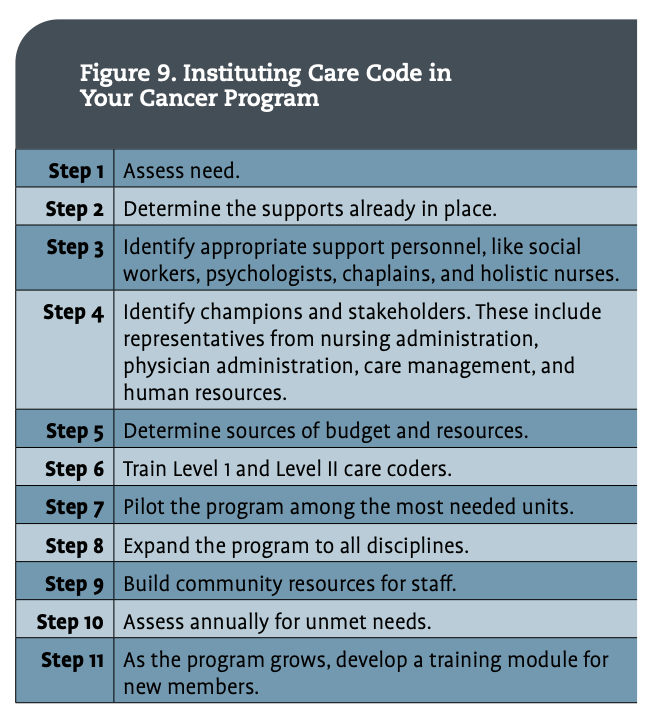
For cancer programs that may be interested in creating a support system like Care Code at their own organization, Figure 9 outlines the process employed at White Plains Hospital.






Victoria Acquafredda Assumma, LCSW-R, ACSW, is a clinical oncology social worker at White Plains Hospital Center for Cancer Care; Rabbi Fredda Cohen, MA, JD, BCC, was director of Pastoral Care and Education (2018-2024) at White Plains Hospital; Laura Himmelstein, LCSW, CHTP, BBM, TT2, is coordinator of the Caregiver Support and Healing Touch Programs at White Plains Hospital; Laura Romeo Sobel, MS, CCLS, is director of Ancillary Programs and Volunteer Services at White Plains Hospital; and Toyoko Yasui, DNP, MSN, RN, OCN, AHN-BC, HWNC-BC, CCAP, CHTP, is holistic nurse coordinator at White Plains Hospital’s Holistic Care Program in White Plains, New York.
References
1. Eche IJ, Phillips CS, Alcindor N, Mazzola E. A systematic review and meta-analytic evaluation of moral distress in oncology nursing. Cancer Nurs. 2023;46(2):128-142. doi:10.1097/NCC.0000000000001075
2. Collier J, Bergen T, Li H. An integrative review of strategies to prevent and treat compassion fatigue in oncology nurses. Can Oncol Nurs J. 2024;34(1):28-37. doi:10.5737/2368807634128
3. Saribudak TP, Üstün B. Compassion fatigue resiliency program effects on oncology-hematology nurses’ professional quality of life, stress levels, and patients’ care satisfaction: nurse, nurse manager, and patient perspectives, a mixed-methods study. Semin Oncol Nurs. 2024; 40(1):151546. doi:10.1016/j.soncn.2023.151546
4. Risk factors for stress and burnout. Centers for Disease Control and Prevention. NIOSH. Published April 23, 2024. Accessed June 24, 2025. https://www.cdc.gov/niosh/healthcare/risk-factors/stress-burnout.html
5. Addressing health worker burnout the U.S. surgeon general’s advisory on building a thriving health workforce. Health and Human Services. Published in 2022. Accessed June 24, 2025. https://www.hhs.gov/sites/default/files/ health-worker-wellbeing-advisory.pdf
6. Bae SH. Noneconomic and economic impacts of nurse turnover in hospitals: A systematic review. Int Nurs Rev. 2022;69(3), 392–404. doi:10.1111/inr.12769
7. Helming MB, Shields D, Avino K, Rosa WE. (2021). Dossey & Keegan’s Holistic Nursing: A Handbook for Practice. 8th ed. Jones & Bartlett Learning; 2020.





Recognizing the critical role advanced practice providers and allied health professionals play in the care continuum, the American Oncology Network provides infrastructure, leadership, and professional growth opportunities to empower these members of the cancer care team to practice at the top of their license.