ACCC association of cancer care centers
Join/Renew
Login
Join/Renew
Login
Education & Resources
ACCC eXchange LogInCorporate Member Sponsored ResourcesPresentations & AbstractsACCC Connect eLearning LogIn
Publications
Oncology IssuesPatient Assistance & Reimbursement GuideTrending Now in Cancer CareBusiness Case Studies for Hiring New Staff
Events
2026 ACCC Leadership SummitAnnual Meeting & Cancer Center Business SummitCapitol Hill DayNational Oncology ConferenceOncology Reimbursement MeetingsOncology State Society Meetings
Policy & Advocacy
ACCC 2026 Policy PrioritiesLetters & StatementsAccess, Payment & Reimbursement ReformWhite Bagging & Brown BaggingAdvocacy ResourcesCancer Moonshot
Membership
Join | RenewWho We AreMembership Types & BenefitsCorporate MembersACCC Member Portal FAQMember Directory
Partners
Oncology State SocietiesPartner OrganizationsCME
News
News ReleasesAdvocacy News ReleasesOncology News
About ACCC
Timeline / 50th Anniversary2025 Impact ReportPresident's ThemeACCC Innovator AwardsACCC FellowsBoard of TrusteesACCC Senior Staff
Breast CancerMetastatic Breast Cancer
Gastrointestinal CancerBiliary Tract CancerColorectal CancerGastric CancerLiver Cancer
Genitourinary CancerBladder CancerProstate CancerRenal Cell Carcinoma
Gynecologic CancerOvarian Cancer
Head & Neck Cancer
Hematologic MalignanciesAcute Lymphocytic Leukemia (ALL)Acute Myeloid Leukemia (AML)Chronic Lymphocytic Leukemia (CLL)Mantle Cell Lymphoma (MCL)Multiple Myeloma (MM)Myelodysplastic Syndromes (MDS)
Lung CancerNon-Small Cell Lung Cancer (NSCLC)Small Cell Lung Cancer (SCLC)
Sarcoma
Skin CancerMelanomaNon-Melanoma Skin Cancers (NMSC)
Clinical Practice & TreatmentCancer DiagnosticsCare CoordinationEHR Integration for Biomarker TestingQuality Improvement Collaboration: Integration of Precision Medicine in Community OncologyTreatment
Financial NavigationFAN Boot CampFinancial Advocacy Network (FAN) Resource LibraryPatient Assistance & Reimbursement GuidePrior Authorization
Health Equity & Access3, 2, 1, Go! Practical Solutions for Addressing Cancer Care DisparitiesAppalachian Community Cancer AllianceOncology Advanced PractitionersPersonalizing Care for Patients of All BackgroundsSocial Drivers of Health
Patient-Centered CareAddressing Care Disparities for VeteransAdolescent and Young Adult (AYA)Care Action Plans for People with CancerDermatologic ToxicitiesEmpowering CaregiversGeriatric OncologyHealth LiteracyNutritionOncology PharmacyPatient NavigationPsychosocial Care in OncologyShared Decision-MakingSupportive CareSurvivorship Care
Practice Management & OperationsCancer Program FundamentalsLeadership Sustainment and Engagement VideosOncology Practice Transformation and Integration CenterOncology Team Resiliency
ResearchACCC Community Oncology Research Institute (ACORI)
Technology & InnovationTelehealth & Digital Medicine
ACCCBuzz Blog
CANCER BUZZ Podcast
Oncology Issues
Join/Renew
Login
Breast CancerMetastatic Breast Cancer
Gastrointestinal CancerBiliary Tract CancerColorectal CancerGastric CancerLiver Cancer
Genitourinary CancerBladder CancerProstate CancerRenal Cell Carcinoma
Gynecologic CancerOvarian Cancer
Head & Neck Cancer
Hematologic MalignanciesAcute Lymphocytic Leukemia (ALL)Acute Myeloid Leukemia (AML)Chronic Lymphocytic Leukemia (CLL)Mantle Cell Lymphoma (MCL)Multiple Myeloma (MM)Myelodysplastic Syndromes (MDS)
Lung CancerNon-Small Cell Lung Cancer (NSCLC)Small Cell Lung Cancer (SCLC)
Sarcoma
Skin CancerMelanomaNon-Melanoma Skin Cancers (NMSC)
Clinical Practice & TreatmentCancer DiagnosticsCare CoordinationEHR Integration for Biomarker TestingQuality Improvement Collaboration: Integration of Precision Medicine in Community OncologyTreatment
Financial NavigationFAN Boot CampFinancial Advocacy Network (FAN) Resource LibraryPatient Assistance & Reimbursement GuidePrior Authorization
Health Equity & Access3, 2, 1, Go! Practical Solutions for Addressing Cancer Care DisparitiesAppalachian Community Cancer AllianceOncology Advanced PractitionersPersonalizing Care for Patients of All BackgroundsSocial Drivers of Health
Patient-Centered CareAddressing Care Disparities for VeteransAdolescent and Young Adult (AYA)Care Action Plans for People with CancerDermatologic ToxicitiesEmpowering CaregiversGeriatric OncologyHealth LiteracyNutritionOncology PharmacyPatient NavigationPsychosocial Care in OncologyShared Decision-MakingSupportive CareSurvivorship Care
Practice Management & OperationsCancer Program FundamentalsLeadership Sustainment and Engagement VideosOncology Practice Transformation and Integration CenterOncology Team Resiliency
ResearchACCC Community Oncology Research Institute (ACORI)
Technology & InnovationTelehealth & Digital Medicine
ACCCBuzz Blog
CANCER BUZZ Podcast
Oncology Issues
    • Education & Resources
    • Publications
    • Events
    • Policy & Advocacy
    • Membership
    • Partners
    • News
    • About ACCC
ACCC association of cancer care centers
1801 Research Boulevard, Suite 400, Rockville, MD 20850
Tel: 301.984.9496 Email Us
Contact UsVolunteers
Advertise
Career Center
Terms and Conditions
Privacy Policy
ACCC Rebranding
Copyright © 2026 Association of Cancer Care Centers. All Rights Reserved.
HomeACCCBuzz Blog

Implementing a Structured, Scalable Geriatric Oncology Program at Penn Medicine

May 5, 2025

Author(s):

Rachel Radwan

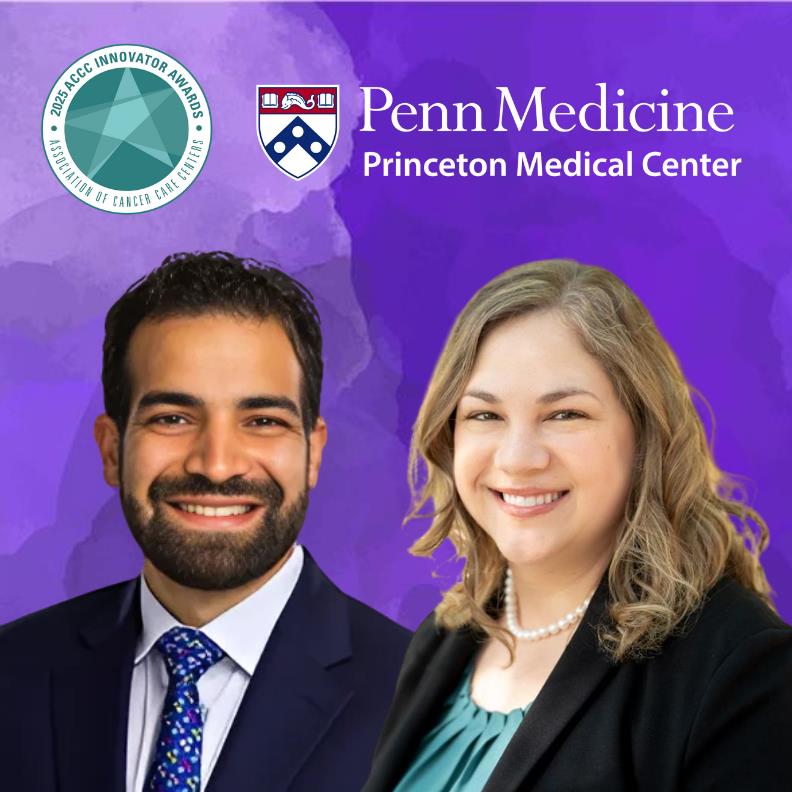
This first installment in the ACCCBuzz Blog 2025 Innovator Award Winners series highlights Penn Medicine Princeton Health, Princeton Cancer Center, and the program's strategy to implement a structured, scalable geriatric oncology program.
Implementing a Structured, Scalable Geriatric Oncology Program at Penn Medicine

This is the first blog post in a 6-part series recognizing the achievements of the 2025 ACCC Innovator Award winners before their in-depth sessions at the ACCC 42nd National Oncology Conference. Learn more about the innovations being recognized this year and those who pioneered them by joining ACCC in Denver, Colorado, from October 15-17, 2025.

With approximately 60% of cancer cases occurring in adults over age 65, advancing age is a significant risk factor for cancer. Treatment tolerance and outcomes for these patients are also often affected by comorbidities and social drivers of health that may limit access to care. To better identify impairments not typically found in routine oncology exams and facilitate patient-centered treatment decisions, national guidelines recommend that all patients older than 65 should be evaluated with a geriatric assessment—a tool used by clinicians to gather further information about health status, well-being, and social support—prior to initiating systemic therapy.

Despite strong evidence supporting the use of geriatric assessments in improving oncology care for older adults, however, their integration into routine clinical workflows remains inconsistent, as many cancer centers struggle to implement an approach that is both feasible and sustainable. To address this gap in care, Penn Medicine Princeton Health developed and implemented a structured, scalable geriatric oncology program, which earned the cancer program a 2025 Association of Cancer Care Centers (ACCC) Innovator Award. In anticipation of the ACCC 42nd National Oncology Conference this fall, ACCCBuzz spoke to Julianne Ani, MPH, manager of the geriatric oncology program; Kerri Celaya, MA, FACHE, director of cancer services; and Ramy Sedhom, MD, section chief of medical oncology, at Penn Medicine Princeton Health, to learn more about its program.

ACCCBuzz: How long has Princeton Cancer Center been an ACCC member?

Celaya: We have been a member since 2009.

ACCCBuzz: What do you enjoy most about being an ACCC member? Are there specific programs, resources, or tools that you use at your cancer program?

Celaya: I’ve been to the National Oncology Conference twice now, and both events were really excellent experiences in terms of the content and opportunities to connect with other programs. Our financial navigator has also done a lot of work with the ACCC Financial Advocacy Network and we have benefited from that immensely. But I think the most beneficial resource is the community digest email every morning that summarizes activity in the ACCCeXchange. We ask questions in there occasionally, but even just reading about the challenges other cancer centers are having helps us generate ideas. Having that forum to be able to communicate with other cancer centers—that’s my favorite part.

Dr. Sedhom: ACCC is very pragmatic in terms of care implementation. It’s very focused on community-facing clinical care teams, and there are a lot of practical, hands-on resources. When I first received notice that we had funding to start a geriatric oncology program, we heavily utilized the ACCC guidebook on geriatric assessment, which had a lot of great resources, including professionals to reach out to, examples of other programs and what they had done well, and strategies to integrate the multidisciplinary team, which was key to our program.

ACCCBuzz: What makes your cancer center unique?

Celaya: We’re part of Penn Medicine, a large academic health system, which closely aligns us with Penn Medicine’s Abramson Cancer Center, a world leader in cancer research, patient care, and education. This means that we can provide our patients with access to the latest forms of cancer prevention, diagnoses, and treatments close to home. Another unique aspect of our center is that we treat a proportionately high number of geriatric patients compared to other centers in our area, which inspired us to develop a comprehensive, innovative program to address the needs of older patients.

Dr. Sedhom: At Princeton in particular, we have the Penn Medicine affiliation that affords us the balance of cutting-edge treatments—which is what people are often looking for—while maintaining a deep human connection with our patients. This balance is emblematized by our geriatric oncology program, because it is very focused on the whole person. Older adults especially are often forgotten or face a system that’s not always best suited to their individual needs, so we think about our geriatric oncology program as the nexus point of clinical innovation in the spirit of Penn Medicine, with a population health mindset.

ACCCBuzz: It can be challenging for administrators and C-suite members to share a common language with clinicians and others who provide direct patient care. Can you share any tips you used to obtain buy-in and support for your innovation?

Celaya: Constant communication and collaboration from the beginning, both on the part of clinical and administrative staff, was crucial. Having people involved who were thinking about finances, budgets, and ROI helped us determine the type of data we needed to capture.

Dr. Sedhom: It’s important to speak the language of outcomes and operations; they go hand in hand. For programs like this to work, they have to be pragmatic and sustainable. For us, there were 3 important pillars we considered, the first being improving patient outcomes. There is a lot of data demonstrating that older adults with cancer are a vulnerable population that is both over- and undertreated, so we had a strong case for the importance of implementing a geriatric oncology program. The second pillar is improving staff satisfaction, because while this can be a satisfying patient population to treat, it’s sometimes the hardest patient population to treat. Therefore, being able to bring the right resources to these patients and properly identify the domains affecting treatment outcomes can greatly impact staff morale. Our third pillar is improving both downstream utilization—such as shortening length of stays and keeping people out of the emergency room—and revenue generation. Close to 90% of our older adult patients are receiving some sort of cancer treatment, which demonstrates the need for a dedicated geriatric oncology program.

ACCCBuzz: ACCC president Una Hopkins, DNP, MSN, FNP-BC, NE-BC, RN, FACCC, centered her theme on Designing Oncology Care to Meet the Needs of a Growing Patient Population. A key component of that theme is Optimized Oncology Service Line Structures, which was key to your innovation. Can you share any insights you’ve learned in this area?

Dr. Sedhom: Innovation must be embedded into existing workflows—this is a strong belief of ours. This program can’t be a special referral pathway; it has to be something we try to do for every single patient that walks into our clinic. It’s the only way to do this equitably. One phrase I’ve always liked about innovation is, “Practice does not make perfect. Practice makes permanent.” In that spirit, we have made it a habit to constantly refine our program intentionally based on the feedback we receive. We also reach out to clinicians when there’s a missed opportunity of a patient not receiving an assessment, and consequently having a bad, avoidable outcome. It’s also important for us to empower all members of the health care team to work top of license, such as our geriatric social workers and geriatric nurse navigators, who are able to independently do a lot for their patients.

Ani: We invested in innovative technology that would make implementation relatively easy for clinicians and that could be applied to other locations with the same EHR, but with their own infrastructure and their own workflows. We did this incrementally, fine-tuning it along the way, and we’re still refining it today because there are always improvements to be made. As we engage with forward-thinking stakeholders and personnel from many different disciplines to build and refine our innovation, we’re able to address crucial needs of older adults with cancer in a way that is both sustainable and scalable. It’s been key to have the engagement of so many different people throughout the health system, and I’m very appreciative of the support we’ve received.

Related Content

Local Staff, Lasting Impact: A New Model for Rural Cancer PreventionACCCBuzz Blog

Local Staff, Lasting Impact: A New Model for Rural Cancer Prevention

Rachel Radwan

July 16, 2026

A Pharmacist-Led Strategy to Improve Care With Oncolytic Virus TreatmentsACCCBuzz Blog

A Pharmacist-Led Strategy to Improve Care With Oncolytic Virus Treatments

Rachel Radwan

July 14, 2026

Extending Patient-Centered Cancer Care to Transgender and Nonbinary IndividualsACCCBuzz Blog

Extending Patient-Centered Cancer Care to Transgender and Nonbinary Individuals

Gabrielle Stearns

June 30, 2026

Transforming Oncology Authorization Through Clinical and Revenue Cycle CollaborationACCCBuzz Blog

Transforming Oncology Authorization Through Clinical and Revenue Cycle Collaboration

Rachel Radwan

June 29, 2026

Building a Blueprint for Precision Medicine: Lessons from TriHealthACCCBuzz Blog

Building a Blueprint for Precision Medicine: Lessons from TriHealth

June 25, 2026

Exploring a Bispecific Antibody for Relapsed or Refractory Multiple MyelomaACCCBuzz Blog

Exploring a Bispecific Antibody for Relapsed or Refractory Multiple Myeloma

June 22, 2026

15 Years Strong: The NCCN State Oncology Society Forum Annual MeetingACCCBuzz Blog

15 Years Strong: The NCCN State Oncology Society Forum Annual Meeting

Sean T. McCarson, MPA

June 16, 2026

Highlights from Volume 41, Number 3 Oncology IssuesACCCBuzz Blog

Highlights from Volume 41, Number 3 Oncology Issues

Gabrielle Stearns

June 15, 2026

Upcoming Events

ACCC 43rd National Oncology Conference
Oncology

ACCC 43rd National Oncology Conference

In Person Conference & ConventionOctober 21, 2026 at 8:00 AM MDT450 Summer St, Boston, MA 02210Omni Boston Hotel at the Seaport, Boston
Register Now!
MSCO 2026 Professional Development Workshop
Oncology

MSCO 2026 Professional Development Workshop

In Person Conference & ConventionJuly 18, 2026 at 3:30 PM CDT5005 Glumack Drive, Minneapolis, MN, USAInterContinental Hotel Minneapolis – St. Paul Airport, Minneapolis
Register Now!
WSMOS 2026 Dinner at the Seattle Best of ASCO
Oncology

WSMOS 2026 Dinner at the Seattle Best of ASCO

In Person Conference & ConventionJuly 24, 2026 at 5:30 PM PDT1415 5th Ave, Seattle, WA, USAHilton Motif Seattle, Seattle
Register Now!
NOS 2026 Dinner at the Las Vegas Best of ASCO
Oncology

NOS 2026 Dinner at the Las Vegas Best of ASCO

In Person Conference & ConventionJuly 24, 2026 at 5:30 PM PDT101 Montelago Blvd, Henderson, NV 89011, USAThe Westin Lake Las Vegas Resort & Spa , Henderson
Register Now!
KYSCO 2026 Tri-State Multi-Disciplinary Cancer Care Summit
Oncology

KYSCO 2026 Tri-State Multi-Disciplinary Cancer Care Summit

In Person Conference & ConventionJuly 25, 2026 at 7:30 AM EDT638 Madison Ave, Covington, Kentucky 41011, USAHotel Covington, Covington
Register Now!
HSCO 2026 August Dinner Symposium
Oncology

HSCO 2026 August Dinner Symposium

In Person Conference & ConventionAugust 12, 2026 at 5:30 PM HST6600 Kalanianaʻole Highway suite 110, Honolulu, HI 96825, USARoy's Restaurants – Hawaii Kai, Honolulu
Register Now!
LOS 2026 Cancer Congress - National Oncology Updates
Oncology

LOS 2026 Cancer Congress - National Oncology Updates

In Person Conference & ConventionAugust 14, 2026 at 11:00 AM CDT859 Convention Center Blvd, New Orleans, LA, USANew Orleans Marriott Warehouse Art District, New Orleans
Register Now!
IOS Evansville Meeting
Oncology

IOS Evansville Meeting

In Person Conference & ConventionAugust 18, 2026 at 5:30 PM CDT4011 Gateway Blvd, Newburgh, IN 47630, USADeaconess Gateway Hospital , Newburgh
Register Now!
Advertisement
Advertisement

Trending Now on
ACCCBuzz Blog

Local Staff, Lasting Impact: A New Model for Rural Cancer Prevention

Local Staff, Lasting Impact: A New Model for Rural Cancer Prevention

To better reach its patients living in rural communities throughout Georgia with targeted interventions, 2026 ACCC Innovator Award winner Winship Cancer Institute developed an Embedded Community Staff model, which leverages the experiential knowledge of local community members.

A Pharmacist-Led Strategy to Improve Care With Oncolytic Virus Treatments

A Pharmacist-Led Strategy to Improve Care With Oncolytic Virus Treatments

2026 ACCC Innovator Award Winner UNC Lineberger Comprehensive Cancer Center noticed a common pain point among patients who received oncolytic virus treatment for advanced melanoma: time spent in appointments. To minimize the need for multiple lengthy appointments, the center developed a pharmacist-led strategy that utilized virtual visits and premixing doses prior to in-person visits.

Extending Patient-Centered Cancer Care to Transgender and Nonbinary Individuals

Extending Patient-Centered Cancer Care to Transgender and Nonbinary Individuals

In a recent article from Oncology Issues, authors conducted a systematic literature review and found that two main drivers of care disparities exist for transgender and nonbinary individuals with cancer: rigid binary gender frameworks and gaps in mental health care.

Transforming Oncology Authorization Through Clinical and Revenue Cycle Collaboration

Transforming Oncology Authorization Through Clinical and Revenue Cycle Collaboration

2026 ACCC Innovator Award Winner St. Luke's Cancer Institute noticed a significant administrative burden being placed on providers to review medical necessity validation for complex oncology therapies. To address the resulting rise in peer-to-peer requirements, delays in care, and pre-service denials, the team designed and implemented a new Clinical Documentation Integrity Registered Nurse role.

View All ACCCBuzz Blogs

Recently Heard on
CANCER BUZZ Podcast

A Team Approach to ADCs in Bladder Cancer – [Video Podcast] Ep. 62

MDS: Low Risk Isn’t No Risk - [Podcast] Ep. 235

Beyond Body Art: Restoring Wholeness Through Paramedical Tattooing - [Podcast] Ep. 234

Bridging Radiation and Oncology in SCLC Care - [Podcast] Ep. 233

View All Podcasts

Latest from Oncology Issues

June 2026
June 2026
April 2026
February 2026
December 2025
October 2025
View All Oncology Issues

Join the Conversation

ACCC eXchange Digital Banner
Login