Author(s):
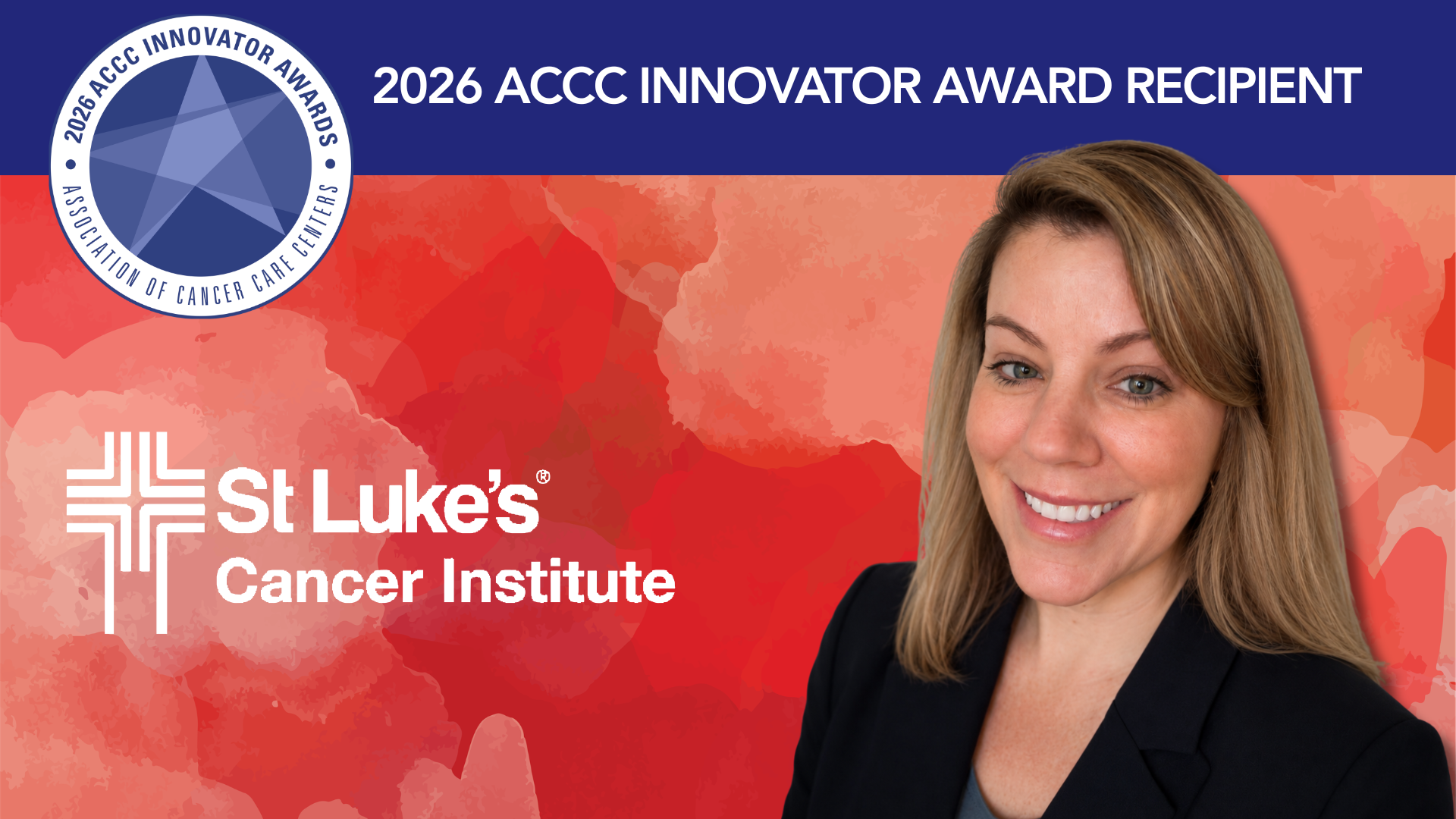
This is the first blog post in a 6-part series recognizing the achievements of the 2026 ACCC Innovator Award winners before their in-depth sessions at the ACCC 43rd National Oncology Conference. Learn more about the innovations being recognized this year and those who pioneered them by joining ACCC in Boston, Massachusetts, from October 21-23, 2026.
Revenue cycle operations teams are accountable for maintaining reimbursement integrity and regulatory compliance across a rapidly expanding oncology service line. Increasing payer scrutiny—particularly for high-cost oncology therapies—has created significant operational strain, treatment delays, and administrative burden for providers.
Historically, medical necessity validation for complex oncology therapies has relied heavily on non-clinical roles such as patient financial navigators and coders. As payer policies grow more complex—requiring interpretation of National Comprehensive Cancer Network guidelines, local and national coverage determinations, FDA indications, and off-label use criteria—clinical judgment responsibilities are frequently being placed in non-clinical workflows. For many cancer programs, this change has resulted in increased peer-to-peer requirements, rising pre-service denials, higher write-off risk, delays in delivering time-sensitive oncology care, and growing provider frustration.
To address this structural gap, St. Luke’s Cancer Institute in Boise, Idaho, designed and implemented a new Clinical Documentation Integrity (CDI) Registered Nurse (RN) role embedded within revenue cycle operations to assist with medical necessity clinical review. The CDI RN conducts clinical correlation and medical necessity validation before authorization submission and final coding. This role partners directly with St. Luke’s Cancer Institute physicians, financial navigators, clearance specialists, pharmacists, and a designated physician champion to ensure documentation accuracy, regulatory compliance, and payer defensibility while equipping patient financial navigators, specialists, and coders with a dedicated clinical resource.
To date, implementation of the CDI RN has reduced write-off reductions for pembrolizumab by nearly $100,000, medical necessity review turnaround time by 50%, and time to respond to provider clarification requests by 60%; this new staff role also resulted in St. Luke’s Cancer Institute being selected for a 2026 ACCC Innovator Award. In anticipation of the ACCC 43rd National Oncology Conference this fall, ACCCBuzz spoke with Lacy Sheets, MBA, Director of Patient Financial Navigation within St. Luke’s Revenue Cycle Operations.
ACCCBuzz: How long has St. Luke’s Cancer Institute been an ACCC member?
Sheets: St. Luke’s Cancer Institute has been a member since 1980. Back then, Boise was a very rural community with very limited cancer care options close to home. To think about those oncology founders already wanting to be a part of the Association is really incredible!
ACCCBuzz: What do you enjoy most about being an ACCC member? Are there specific programs, resources, or tools that you use at your cancer program?
Sheets: All of us at St. Luke’s Cancer Institute—revenue cycle, patient navigators, medical directors, nurses—really appreciate the collaboration that ACCC brings. Many of us regularly use the ACCCeXchange. We love that platform because it allows us to have open dialogue with other programs and learn how they’re solving similar challenges that we’re facing, and we find that other ACCC members are very responsive.
My team also works very closely with the ACCC Financial Advocacy Network, with several of them serving on committees. That participation allows them to experience more conferences and meetings related to financial toxicity and how it impacts the patient experience, and it helps us maintain connections with other financial advocates across the country.
ACCCBuzz: What makes your cancer center unique?
Sheets: We’re part of the largest health system in Idaho, which is a comprehensive community cancer center. Knowing that we’re not an academic center, I think we’ve done exceptional work to serve a truly large geographic area, which pushes into surrounding states. We have five cancer institutes across our catchment area, as well as satellite infusion sites, radiation, medical oncology, surgery, pediatric oncology, a hemophilia clinic, and a bone marrow transplant program. Expanding to include all these services makes us unique, considering our size in comparison to other health systems.
ACCCBuzz: It can be challenging for administrators and C-suite members to share a common language with clinicians and others who provide direct patient care. Can you share any tips you used to obtain buy-in and support for your innovation?
Sheets: It became obvious that we needed to address the administrative burden being placed on providers to review charts and authorization requests. With a clear problem to solve, we were lucky to have engagement from leadership up front. We created a performance review, which involved a committee, business sponsors, and a charter, which met over the course of a year to discuss what needed to happen and which resources needed to shift to support our innovation.
It was a long process, but an essential piece was having a dedicated project manager to keep us on track with one defined goal. They provided regular updates to leadership, created and shared metrics with everyone, stayed abreast of the necessary documentation, and developed a project road map.
ACCCBuzz: ACCC President Una Hopkins, DNP, MSN, FNP-BC, NE-BC, RN, FACCC, centered her theme on Designing Oncology Care to Meet the Needs of a Growing Patient Population. A key component of that theme is Optimized Oncology Service Line Structures, which was key to your innovation. Can you share any insights you have learned in this area?
Sheets: Our work volumes are constantly increasing. We’re always looking at new tools to help us get the information we need from charts to submit to payers as quickly as possible, so that we can avoid delaying patient care. But technology aside, we realized that having a non-clinical person attempt to interpret clinical documentation just wasn’t working. It takes a lot of time, and it requires somebody who is knowledgeable in those areas. Making that adjustment has empowered our non-clinical staff to focus on other things, like meeting with patients about financial toxicity.
When you’re optimizing a service line, you must remember that you can’t be an isolated cancer institute when you’re part of a larger health system. You have to engage with your partners and know who you can reach out to for help in areas that might not be your expertise. Physicians want to treat their patients. Giving them space to do this while engaging with other teams in the health system that understand denials allows a partnership to form. Cancer care is evolving, and staff need to understand how all these facets of care intersect to impact the patient experience.
To learn more about St. Luke’s Cancer Institute’s Clinical Documentation Integrity Registered Nurse role, join Lacy Sheets and her fellow 2026 ACCC Innovator Award winners in Boston this October for the 43rd National Oncology Conference.





An at-home option for cervical cancer screening breaks down barriers to care and offers the same level of precision as screening in the clinic.