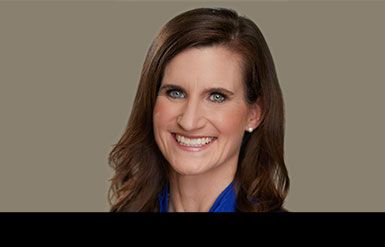
In this installment of our ongoing conversations with members of the ACCC Board and Executive Committee, we talk to ACCC Board of Trustees Member S. Michelle Shiller, DO, MSPT.
Dr. Shiller serves as the co-medical director of the Division of Molecular Medicine and Pathology at Baylor Sammons Cancer Center in Dallas, Texas. A recent addition to ACCC’s Board of Trustees, Dr. Shiller earned her medical degree from Texas College of Osteopathic Medicine. She spends her days conducting genetic testing to determine the likelihood of individuals to respond to particular therapies or have a predisposition for their cancer. She also develops testing algorithms and ensures proper test utilization.
ACCCBuzz:Why did you go into medicine?
Dr. Shiller: Honestly, I just had a burning passion to help people, and I was always inspired by genetics. When I interviewed for college admission, I was asked what I wanted to do for a career, and I told them I wanted to be a geneticist because I thought DNA held the cure to cancer. I don’t know why I said that right then, but it has turned out to hold some truth. I believed at an early age that genetics had a lot of potential in the treatment of cancer.
Wellness is another passion of mine. I love exercise. So much research supports that diet and exercise can aid in cancer prevention. I am also a physical therapist, which is what I did before attending medical school. I think there is a lot of missing information about how to eat well. It’s doesn’t mean eating expensive food; it means avoiding processed food and eating food that is less carcinogenic. Eating well can prevent many diseases from manifesting.
ACCCBuzz:How did you come to specialize in pathology?
Dr. Shiller: Part of it was due to my being a physical therapist. I love exercise and sports medicine, but it wasn’t as intellectually challenging as I wanted. I also realized that I was not the best on the front lines of medicine; I wasn’t patient enough. Pathology is very exciting, especially since the cornerstone of implementing precision medicine lies in the hands of laboratory testing.
ACCCBuzz:What does a molecular pathologist do?
Dr. Shiller: We do everything from diagnosing disease, to determining whether an individual has a higher risk of disease, to evaluating whether a person is more likely to have a serious side effect from a given treatment.
We are also advocates. There is a huge need for us to educate other doctors. Today it can take an entire team of specialists to care for one patient. Molecular pathology is so complex and advancing so quickly, doctors are not able to keep up with the latest and most promising treatments, let along the technology driving the testing. There is a gap in the education of doctors. So we are called on to bridge that gap.
ACCCBuzz:What is the current direction of pathology as a specialty, and what challenges it is facing?
Dr. Shiller: In general, pathology is growing rapidly right now. There are many challenges in the field. Today’s molecular testing is more complex, and we need to be the teachers in explaining how the testing works. We need to take ownership of that, not only from a diagnostic standpoint, but also in determining which tests are appropriate at specific time points in the patient care journey to better direct treatment decisions. Every single case is unique.
ACCCBuzz:How did you become involved with ACCC?
Dr. Shiller:ACCC held a pathology summit on July 31, 2018 and invited me to it. That’s where it all began. I left my family vacation one day early to attend. I saw some wonderful collaboration going on there. I guess I was the loudest one, because they asked me if I would be part of the non-small cell lung cancer task force. Then they were so kind as to offer me a position on the Board of Trustees, which I joined this year.
ACCCBuzz:What are some of the advantages of being part of ACCC?
Dr. Shiller:The networking is great, and ACCC is also very strong in lobbying and advocating. Financial toxicity is an especially important issue they bring attention to. It’s very difficult for a lot of people to get these expensive cancer drugs, and ACCC advocates for both providers and patients.
ACCCBuzz:What do you consider the most pressing problem in the delivery of cancer care today?
Dr. Shiller: The lack of integration and communication. EHRs cannot talk to one another now, so there is a lot of information providers are not privy to. That is the greatest limiting factor in treating patients. If we were willing to use technology to enable us to share information, we could better move things along for patients, and they could have earlier access to the treatments they need.
ACCCBuzz:What do you perceive as the most promising development in cancer care?
Dr. Shiller: Not just genetic biomarkers, but biomarkers and their relationship to treatment response. Being able to investigate and learn what one person’s cancer is doing, and using that information to choose targeted therapies, is a tremendous development.
ACCCBuzz:What specific assets do community cancer programs bring to cancer care delivery?
Dr. Shiller: They allow patients to stay closer to home. The mind is so powerful; when patients feel strongly supported, their treatment is more effective. Community cancer programs help patients remain with the people who love and care about them while in treatment. It also keeps costs down when patients don’t have to travel to receive treatment.
Access information from ACCC on the landscape of integration between pathology and oncology services, a summary of the 2018 ACCC Pathology Leadership Summit, and a gap assessment tool that cancer programs can use to identify opportunities to improve integration between these services.
The opinions expressed in this blog post are not necessarily those of ACCC or our member organizations. We encourage you to share our blog posts. You may reproduce our posts either in part or in full, or you may link to specific posts. Images may not be used or distributed. Any reproduction must link back to the original source. Do not alter the text of our materials, and cite the source as follows: “[blog title] was first published on [date] by the Association of Community Cancer Centers.” For more information, visit our Terms of Use.



In recognition of Leukemia and Lymphoma Awareness Month, ACCC compiled a group of resources to help care teams navigate two of the most commonly diagnosed adult leukemias: acute myeloid leukemia and chronic lymphocytic leukemia.