ACCC association of cancer care centers
Join/Renew
Login
Join/Renew
Login
Education & Resources
ACCC eXchange LogInCorporate Member Sponsored ResourcesPresentations & AbstractsPresident's ThemeACCC Connect eLearning LogIn
Publications
Oncology IssuesPatient Assistance & Reimbursement GuideTrending Now in Cancer Care
Events
2026 ACCC Leadership SummitAnnual Meeting & Cancer Center Business SummitCapitol Hill DayNational Oncology ConferenceOncology Reimbursement MeetingsOncology State Society Meetings
Policy & Advocacy
2024 Policy Wrap-Up and ACCC 2025 Policy PrioritiesLetters & StatementsAccess, Payment & Reimbursement ReformWhite Bagging & Brown BaggingAdvocacy ResourcesCancer Moonshot
Membership
Join | RenewWho We AreMembership Types & BenefitsCorporate MembersACCC Member Portal FAQMember Directory
Partners
Oncology State SocietiesPartner OrganizationsCME
News
News ReleasesAdvocacy News ReleasesOncology News
About ACCC
Timeline / 50th Anniversary2025 Impact ReportACCC Innovator AwardsACCC FellowsACCC Senior Staff
Breast CancerMetastatic Breast Cancer
Gastrointestinal CancerBiliary Tract CancerColorectal CancerGastric CancerLiver Cancer
Genitourinary CancerBladder CancerProstate CancerRenal Cell Carcinoma
Gynecologic CancerOvarian Cancer
Head & Neck Cancer
Hematologic MalignanciesAcute Lymphocytic Leukemia (ALL)Acute Myeloid Leukemia (AML)Chronic Lymphocytic Leukemia (CLL)Mantle Cell Lymphoma (MCL)Multiple Myeloma (MM)Myelodysplastic Syndromes (MDS)
Lung CancerNon-Small Cell Lung Cancer (NSCLC)Small Cell Lung Cancer (SCLC)
Sarcoma
Skin CancerMelanomaNon-Melanoma Skin Cancers (NMSC)
Clinical Practice & TreatmentCancer DiagnosticsCare CoordinationEHR Integration for Biomarker TestingQuality Improvement Collaboration: Integration of Precision Medicine in Community OncologyTreatment
Financial NavigationFAN Boot CampFinancial Advocacy Network (FAN) Resource LibraryPatient Assistance & Reimbursement GuidePrior Authorization
Health Equity & Access3, 2, 1, Go! Practical Solutions for Addressing Cancer Care DisparitiesAppalachian Community Cancer AllianceOncology Advanced PractitionersPersonalizing Care for Patients of All BackgroundsSocial Drivers of Health
Patient-Centered CareAddressing Care Disparities for VeteransAdolescent and Young Adult (AYA)Care Action Plans for People with CancerDermatologic ToxicitiesEmpowering CaregiversGeriatric OncologyHealth LiteracyNutritionOncology PharmacyPatient NavigationPsychosocial Care in OncologyShared Decision-MakingSupportive CareSurvivorship Care
Practice Management & OperationsCancer Program FundamentalsLeadership Sustainment and Engagement VideosOncology Practice Transformation and Integration CenterOncology Team Resiliency
ResearchACCC Community Oncology Research Institute (ACORI)
Technology & InnovationTelehealth & Digital Medicine
ACCCBuzz Blog
CANCER BUZZ Podcast
Oncology Issues
Join/Renew
Login
Breast CancerMetastatic Breast Cancer
Gastrointestinal CancerBiliary Tract CancerColorectal CancerGastric CancerLiver Cancer
Genitourinary CancerBladder CancerProstate CancerRenal Cell Carcinoma
Gynecologic CancerOvarian Cancer
Head & Neck Cancer
Hematologic MalignanciesAcute Lymphocytic Leukemia (ALL)Acute Myeloid Leukemia (AML)Chronic Lymphocytic Leukemia (CLL)Mantle Cell Lymphoma (MCL)Multiple Myeloma (MM)Myelodysplastic Syndromes (MDS)
Lung CancerNon-Small Cell Lung Cancer (NSCLC)Small Cell Lung Cancer (SCLC)
Sarcoma
Skin CancerMelanomaNon-Melanoma Skin Cancers (NMSC)
Clinical Practice & TreatmentCancer DiagnosticsCare CoordinationEHR Integration for Biomarker TestingQuality Improvement Collaboration: Integration of Precision Medicine in Community OncologyTreatment
Financial NavigationFAN Boot CampFinancial Advocacy Network (FAN) Resource LibraryPatient Assistance & Reimbursement GuidePrior Authorization
Health Equity & Access3, 2, 1, Go! Practical Solutions for Addressing Cancer Care DisparitiesAppalachian Community Cancer AllianceOncology Advanced PractitionersPersonalizing Care for Patients of All BackgroundsSocial Drivers of Health
Patient-Centered CareAddressing Care Disparities for VeteransAdolescent and Young Adult (AYA)Care Action Plans for People with CancerDermatologic ToxicitiesEmpowering CaregiversGeriatric OncologyHealth LiteracyNutritionOncology PharmacyPatient NavigationPsychosocial Care in OncologyShared Decision-MakingSupportive CareSurvivorship Care
Practice Management & OperationsCancer Program FundamentalsLeadership Sustainment and Engagement VideosOncology Practice Transformation and Integration CenterOncology Team Resiliency
ResearchACCC Community Oncology Research Institute (ACORI)
Technology & InnovationTelehealth & Digital Medicine
ACCCBuzz Blog
CANCER BUZZ Podcast
Oncology Issues
    • Education & Resources
    • Publications
    • Events
    • Policy & Advocacy
    • Membership
    • Partners
    • News
    • About ACCC
ACCC association of cancer care centers
1801 Research Boulevard, Suite 400, Rockville, MD 20850
Tel: 301.984.9496 Fax: 301.770.1949 Email Us
Contact UsVolunteers
Advertise
Career Center
Terms and Conditions
Privacy Policy
ACCC Rebranding
Copyright © 2026 Association of Cancer Care Centers. All Rights Reserved.
Advertisement

Blog

Article

May 25, 2021

ACCC Releases 2020 Trending Now in Cancer Care Report

ACCC recently released its 2020 Trending Now in Cancer Care report, an annual initiative that seeks to identify current and emerging trends in cancer practices and programs across the country.
ACCC Releases 2020 Trending Now in Cancer Care Report

The Association of Cancer Care Centers (ACCC) recently released its 2020 Trending Now in Cancer Carereport, an annual initiative that seeks to identify current and emerging trends in cancer practices and programs across the country. The detailed report presents findings from focus groups that illuminate the short- and long-term impact of COVID-19 on cancer programs and professionals.

Since 2009, ACCC has fielded an annual Trending Now in Cancer Care survey. This year, due to the demands placed on cancer care teams during the pandemic, ACCC chose instead to conduct focus groups to better capture the lived experiences of the most urgent issues affecting oncology practice and care delivery. Topics discussed included staffing and operational integrity, service line delivery and revenue optimization, telehealth, and supportive technology, clinical research, and health equity. Participants were candid in sharing how the global pandemic tested their operational, professional, and personal resilience and transformed clinical and personal communication.

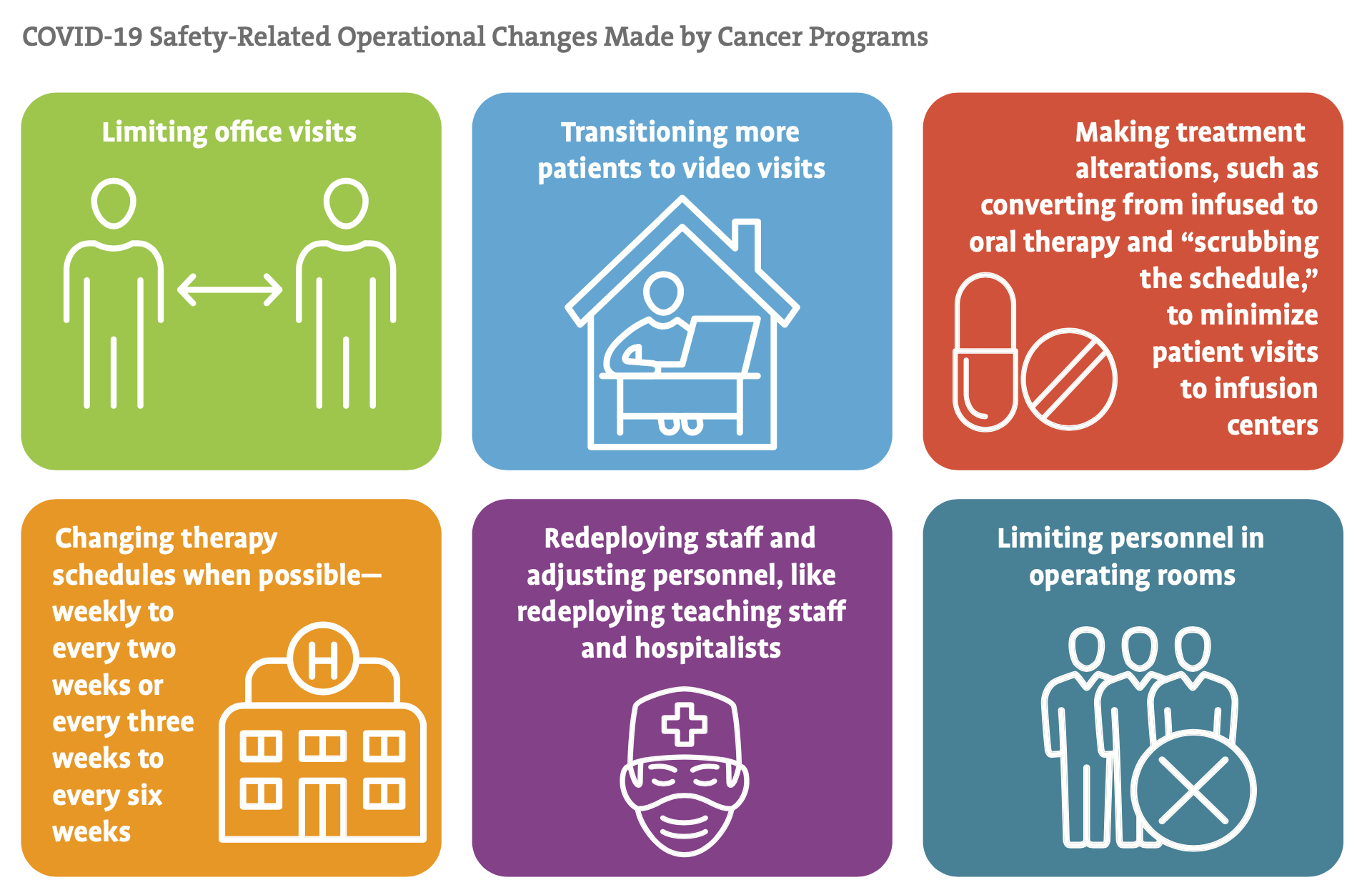
2020 Trending Now in Cancer Care Infographic 1


“This report is critically important and unlike any other, in that we are able to identify the impact of the pandemic on cancer programs and their staff and tailor our resources to incorporate the lessons learned during the past year,” said ACCC President Krista Nelson, MSW, LCSW, OSW-C, FAOSW, program manager of quality and research, Cancer Support Services & Compassion, for the Providence Cancer Institute in Portland, Oregon. “Feedback from members reaffirmed ACCC’s commitment to focus on education and resources to promote equity, diversity, and inclusion within oncology and build a culture of resilience for cancer care staff.”

Some significant insights from this year’s Trending Now in Cancer Care report include:

  • COVID-19 took a heavy toll on cancer care staff and providers. Manycontracted COVID-19 or experienced financial hardship due to furloughs and layoffs. Those working reported burnout, exhaustion, fatigue, and stress. Physical distancing contributed to social and emotional isolation for cancer care staff and patients, and providing support for staff became a full-time occupation for many managers and leaders.
  • Cancer screening dropped sharply and has yet to reach pre-pandemic levels. During the height of the pandemic, many cancer screening sitesclosed and primary care providers did not offer screening appointments. Patients canceled their regular exams and avoided the ER, reducing the potential for incidental findings of cancer. Many providers believe that the dramatic reductions in screening and preventive appointments will lead to cancers being diagnosed at later stages. ACCC focus group participants said that tumor registries will likely record more advanced cancers in 2021 and beyond.
  • The U.S. healthcare system took a financial hit. Some health systems stopped outpatient and/or scheduled appointments and suspended entire service lines. Reductions in overall patient volume and elective procedures adversely impacted revenue. Because cancer patients in active treatment kept their clinic visits, oncology programs often shored up health system revenue.
  • Cancer programs adopted telehealth virtually overnight. In spring 2020, virtual visits accounted for about 40 percent of patient volume, increasing to almost 50 percent in the fall. While telehealth has shown the potential to improve access to those in rural areas, a very real digital divide means that telehealth did not benefit all patients equally. Many patients in rural or impoverished areas still lack cell phone service, internet connectivity, and digital privacy.
  • The pandemic stimulated a nationwide discussion to address health inequities. COVID-19 exacerbated existing disparities in cancer care along socioeconomic, racial and ethnic, age, gender, and geographic divides. Cancer programs attempted to bridge these divides by scheduling flexible clinic and treatment hours for working patients; increasing transportation support for treatment visits; addressing food insecurity and childcare needs; and partnering with community organizations to reach at-risk individuals. Newly implemented flexibilities in clinical research during the pandemic may have the long-term potential to reshape the design and conduct of clinical trials to further address health inequities.

Explore the outcomes and tools resulting from 2020’s Trending Now in Cancer Care initiative:

  • Report on focus group outcomes
  • Fast Facts infographic on trends in cancer care delivery
  • Lived Experience of COVID-19 infographic
  • Mini podcast featuring Douglas B. Flora, MD, LSSBB, executive medical director of oncology services at St. Elizabeth Healthcare in Independence, Kentucky. Dr. Flora addresses the multiple impacts of COVID-19 on revenue optimization.
  • Additional resources on the 2020 Trending Now in Cancer Care web page
  • Revisit the 2019 Trending Now in Cancer Care survey