ACCC association of cancer care centers
Join/Renew
Login
Join/Renew
Login
Education & Resources
ACCC eXchange LogInCorporate Member Sponsored ResourcesPresentations & AbstractsPresident's ThemeACCC Connect eLearning LogIn
Publications
Oncology IssuesPatient Assistance & Reimbursement GuideTrending Now in Cancer Care
Events
2026 ACCC Leadership SummitAnnual Meeting & Cancer Center Business SummitCapitol Hill DayNational Oncology ConferenceOncology Reimbursement MeetingsOncology State Society Meetings
Policy & Advocacy
2024 Policy Wrap-Up and ACCC 2025 Policy PrioritiesLetters & StatementsAccess, Payment & Reimbursement ReformWhite Bagging & Brown BaggingAdvocacy ResourcesCancer Moonshot
Membership
Join | RenewWho We AreMembership Types & BenefitsCorporate MembersACCC Member Portal FAQMember Directory
Partners
Oncology State SocietiesPartner OrganizationsCME
News
News ReleasesAdvocacy News ReleasesOncology News
About ACCC
Timeline / 50th Anniversary2025 Impact ReportACCC Innovator AwardsACCC FellowsACCC Senior Staff
Breast CancerMetastatic Breast Cancer
Gastrointestinal CancerBiliary Tract CancerColorectal CancerGastric CancerLiver Cancer
Genitourinary CancerBladder CancerProstate CancerRenal Cell Carcinoma
Gynecologic CancerOvarian Cancer
Head & Neck Cancer
Hematologic MalignanciesAcute Lymphocytic Leukemia (ALL)Acute Myeloid Leukemia (AML)Chronic Lymphocytic Leukemia (CLL)Mantle Cell Lymphoma (MCL)Multiple Myeloma (MM)Myelodysplastic Syndromes (MDS)
Lung CancerNon-Small Cell Lung Cancer (NSCLC)Small Cell Lung Cancer (SCLC)
Sarcoma
Skin CancerMelanomaNon-Melanoma Skin Cancers (NMSC)
Clinical Practice & TreatmentCancer DiagnosticsCare CoordinationEHR Integration for Biomarker TestingQuality Improvement Collaboration: Integration of Precision Medicine in Community OncologyTreatment
Financial NavigationFAN Boot CampFinancial Advocacy Network (FAN) Resource LibraryPatient Assistance & Reimbursement GuidePrior Authorization
Health Equity & Access3, 2, 1, Go! Practical Solutions for Addressing Cancer Care DisparitiesAppalachian Community Cancer AllianceOncology Advanced PractitionersPersonalizing Care for Patients of All BackgroundsSocial Drivers of Health
Patient-Centered CareAddressing Care Disparities for VeteransAdolescent and Young Adult (AYA)Care Action Plans for People with CancerDermatologic ToxicitiesEmpowering CaregiversGeriatric OncologyHealth LiteracyNutritionOncology PharmacyPatient NavigationPsychosocial Care in OncologyShared Decision-MakingSupportive CareSurvivorship Care
Practice Management & OperationsCancer Program FundamentalsLeadership Sustainment and Engagement VideosOncology Practice Transformation and Integration CenterOncology Team Resiliency
ResearchACCC Community Oncology Research Institute (ACORI)
Technology & InnovationTelehealth & Digital Medicine
ACCCBuzz Blog
CANCER BUZZ Podcast
Oncology Issues
Join/Renew
Login
Breast CancerMetastatic Breast Cancer
Gastrointestinal CancerBiliary Tract CancerColorectal CancerGastric CancerLiver Cancer
Genitourinary CancerBladder CancerProstate CancerRenal Cell Carcinoma
Gynecologic CancerOvarian Cancer
Head & Neck Cancer
Hematologic MalignanciesAcute Lymphocytic Leukemia (ALL)Acute Myeloid Leukemia (AML)Chronic Lymphocytic Leukemia (CLL)Mantle Cell Lymphoma (MCL)Multiple Myeloma (MM)Myelodysplastic Syndromes (MDS)
Lung CancerNon-Small Cell Lung Cancer (NSCLC)Small Cell Lung Cancer (SCLC)
Sarcoma
Skin CancerMelanomaNon-Melanoma Skin Cancers (NMSC)
Clinical Practice & TreatmentCancer DiagnosticsCare CoordinationEHR Integration for Biomarker TestingQuality Improvement Collaboration: Integration of Precision Medicine in Community OncologyTreatment
Financial NavigationFAN Boot CampFinancial Advocacy Network (FAN) Resource LibraryPatient Assistance & Reimbursement GuidePrior Authorization
Health Equity & Access3, 2, 1, Go! Practical Solutions for Addressing Cancer Care DisparitiesAppalachian Community Cancer AllianceOncology Advanced PractitionersPersonalizing Care for Patients of All BackgroundsSocial Drivers of Health
Patient-Centered CareAddressing Care Disparities for VeteransAdolescent and Young Adult (AYA)Care Action Plans for People with CancerDermatologic ToxicitiesEmpowering CaregiversGeriatric OncologyHealth LiteracyNutritionOncology PharmacyPatient NavigationPsychosocial Care in OncologyShared Decision-MakingSupportive CareSurvivorship Care
Practice Management & OperationsCancer Program FundamentalsLeadership Sustainment and Engagement VideosOncology Practice Transformation and Integration CenterOncology Team Resiliency
ResearchACCC Community Oncology Research Institute (ACORI)
Technology & InnovationTelehealth & Digital Medicine
ACCCBuzz Blog
CANCER BUZZ Podcast
Oncology Issues
    • Education & Resources
    • Publications
    • Events
    • Policy & Advocacy
    • Membership
    • Partners
    • News
    • About ACCC
ACCC association of cancer care centers
1801 Research Boulevard, Suite 400, Rockville, MD 20850
Tel: 301.984.9496 Fax: 301.770.1949 Email Us
Contact UsVolunteers
Advertise
Career Center
Terms and Conditions
Privacy Policy
ACCC Rebranding
Copyright © 2026 Association of Cancer Care Centers. All Rights Reserved.
Advertisement

Blog

Article

November 4, 2021

ACCC Launches Precision Medicine Campaign

In launching its new campaign, Transforming Complex To Clear, ACCC brought together expert panelists to discuss effective practices and offer tips to address current barriers to biomarker testing in the community setting.
ACCC Launches Precision Medicine Campaign

Precision medicine is one of the fastest growing and most innovative recent developments in oncology. Also known as personalized medicine, precision medicine offers cancer care teams and patients a more targeted option for treatment via biomarker and molecular testing. For clinicians in thoracic oncology, comprehensive biomarker testing is imperative. Testing tumors for biomarkers not only informs oncologists which subtype of lung cancer a patient has, but also directs the treatment choice for specific tumors. Comprehensive biomarker testing enables oncologists to address the unique mutation(s) of a tumor through targeted therapies to reach the best patient outcomes.

In an effort to bring clarity to the complexities that come with implementing biomarker testing in community cancer centers, ACCC recently partnered with Amgen to host a live broadcast Biomarkers: A Roadmap for Personalized Lung Cancer Care, on Facebook and LinkedIn (now available on demand). Expert panelists representing the multidisciplinary cancer care team discussed effective practices and offered tips to address current barriers to biomarker testing in the community setting.

Addressing Barriers

In opening the session, panelists agreed that biomarker testing is not easy to implement in community-based cancer programs and practices. These organizations face unique challenges posed by their smaller size and fewer resources. Panelists identified the common barriers to implementing biomarker testing as:

  • Lack of awareness of testing guidelines
  • High cost of and poor coverage for testing
  • Long testing turnaround times
  • Inadequate tissue samples
  • Lack of established pathways for testing
  • Difficulty interpreting reports from labs/vendors
  • Lack of clear communication between members of the multidisciplinary team and patients.

“This is a fast-paced space, and no one person can keep up without help,” said Dr. Raymond Uyiosa Osarogiagbon, chief scientist and director of the Multidisciplinary Thoracic Oncology Program, and director of Thoracic Oncology Research Group at Baptist Health System/Mid-South Minority-Underserved Consortium NCORP in Memphis, Tenn. Panelists agreed that the key to offering comprehensive biomarker testing in the community is leveraging the multidisciplinary cancer care team. This team can include oncologists, pulmonologists, pathologists, nurse navigators, administration staff, and vendors (if partnering with an outside lab to complete tests), among others. To be effective, all team members must understand the role each person plays in patient care and within their practice’s established biomarker testing protocol(s). Effective communication is necessary to ensure testing is done in a timely manner so patients can begin the appropriate treatment quickly.

Implementing Best Practices

Many community cancer programs and practices lack the resources to offer their patients biomarker testing in-house. This means that staff must research and partner with a vendor that meets their needs and timelines. Pablo Gutman, MD, MBA, chair of the Pathology Department and medical director at Holy Cross Hospital Cancer Institute in Silver Springs, Md., emphasized the importance of adequate turnaround time when seeking out a new vendor. He explained during the panel broadcast that testing should be completed within 24 hours of receiving patients’ samples, and oncology staff should be aware that the timeliness of their sample submission will affect turnaround time. When working with a vendor, panelists affirmed that keeping an open dialogue is a best practice. Do not be afraid to speak up if a vendor does not adhere to its promised turnaround times, added Gerard Silvestri, MD, MS, a professor of Thoracic Oncology at the Medical University of South Carolina in Charleston, S.C.

Panelists also stressed that cancer programs and practices, regardless of whether they offer testing in-house or through a vendor, must be able to procure an adequate amount of patient tissue. They discussed the need for practices to develop procedural guidelines based on authoritative resources (e.g., NCCN) to inform best practices for biopsy services and testing. Until then, noted Dr. Silvestri, cancer programs and practices looking to implement biomarker testing should establish dynamic care pathways that staff and leadership should revisit and update as guidelines evolve.

Where to Begin?

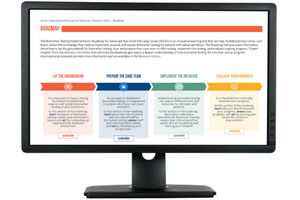
To help community-based oncology programs and practices best implement biomarker testing, ACCC developed the Biomarker Testing Implementation Roadmap for Advanced NSCLC. This roadmap addresses each step required to build a biomarker testing program, from laying the groundwork and preparing the care team to implementing testing and evaluating progress.

ACCC’s ongoing precision medicine campaign, “Transforming Complex To Clear,” will continue over the coming months as new tools become available from ACCC’s educational portfolio.

Check out ACCC’s online library of precision medicine resources for cancer programs and practices, which include on-demand webinars, podcasts, publications, a lexicon library, and digital tools.