Hear from a pharmacist and an oncology operations manager as they share how this tool can help you find resources in less time so patients can access—and better afford—their cancer treatments.




In January 2022, ACCC launched a digital version of its Patient Assistance & Reimbursement Guide, which allows oncology staff to quickly search for manufacturer-based financial assistance programs for specific medications as well as reimbursement resources to support coding and billing.
Hear directly from a pharmacist and an oncology operations manager who were involved in the design and implementation of this digital resource. They’ll share how this interactive tool can help financial advocacy and pharmacy staff find the resources they need in less time so patients can access—and better afford—their cancer treatments when they need them.


Dean Gruber, RPh
Vice President of Industry Relations, altScripts Specialty Pharmacy
Member-at-Large, Wisconsin Association of Hematology and Oncology
"When I started in oncology practice at the oral level, we probably had less than ten medications that we would consider treatments for cancer, and now they're in the hundreds...[you need] a resource that adapts and can change to the fast pace of oncology practice."

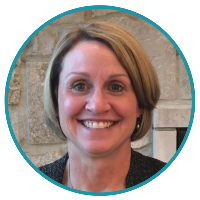
Lori Schneider
Oncology Operations Manager, Green Bay Oncology
Advisory Committee Chair, ACCC Financial Advocacy Network
“It’s really important to have a tool like this for our staff members in order to help the patients. It’s quick it’s easy; in fact, the new version that’s digital, we can go-ahead and look at whatever kind of drug or medication we want and no matter if it’s generic or brand name…[enter] that into our guide/search and look to see what resources are available.”
CANCER BUZZ: Welcome back to CANCER BUZZ TV. I'm your host Summer Johnson. This show is a resource of the Association of Cancer Care Centers to give the oncology professional, the news and latest trends in cancer care you need to know. Today a new and improved tool to help alleviate or prevent financial toxicity. In patients with cancer, ACCC has released a digital version of its popular Patient Assistance and Reimbursement Guide to help cancer program staff quickly find oncology assistance and reimbursement programs.
Our two guests are very familiar with the guide. Lori Schneider is the Operations Manager at Green Bay Oncology, and she's also the Chair of the ACCC Financial Advocacy Network. And Dean Gruber—he's the Vice President of Industry Relations at altScripts Specialty Pharmacy. Lori, let's start with you. Why is a guide like this needed for oncology staff?
Lori Schneider: Okay. I feel it's really important to have a tool like this for our staff members in order to help the patients. It's quick. It's easy. In fact, the new version that's digital, we can go ahead, we'll look at whatever kind of drug or medication we want. And no matter if it's generic or brand name, go ahead, ‘plunk’ that into our guide search, and then look to see what resources are available. We can look at by commercial, by Medicare, by uninsured. It gives us a link, right to any programs that are out there and literally click that link—and it takes us to the link. This helps with our staff members be quicker and more efficient and find exactly all of the resources that are needed to help that patient with that medication.
CANCER BUZZ: Lori—who are the staff that are using the tool? Is it necessarily programs that have dedicated Financial Advocacy staff or those that don't?
Lori Schneider: It could be a combination of both. It could be designated financial navigators or counselors, but it could also be in some organizations we see social workers, pharmacy staff use it—I’m sure like some specialty pharmacy seems that for their searches as well, and they're looking for assistance, so I think this is widely used. It's not just for internally in a clinic.
CANCER BUZZ: I mean the original guide has become one of the most favorite resources for ACCC members. How has it being used and what sort of impact has it made on the programs?
Dean Gruber, RPh: Yeah, the, the, it was a huge tool and, and it was, it was kind of one of those, like when I went through my rotations after pharmacy school, I had something where, you know, would wear white coats, which I can't stand wearing anymore, but, but we would have our Lexicom book actually in our white coat. And it was this thick, you know, and I'm sure we look like complete dorks, but, but anyway, you know—that's the same kind of Bible, that I saw with most of the social workers, you know this guide that's going to basically show you—and when you're a little bit green in, in, you know, how to source something, whether it's IV or Oral and what type of insurance, what does it mean to have commercial insurance? What does it mean to have part D what does it mean to have an ACA plan?
What does it mean versus which ones are governed by state laws, by federal laws, by all this kind of stuff? It's so important to have that baseline knowledge, because if you shoot in the wrong direction, you know, that's going to delay treatment and that's going to delay the time. And, so you need a resource out there—and so I saw that this resource was actually as valuable as Lexicom was for a pharmacist.
CANCER BUZZ: Lori, do you have any perspective on the impact of the original guide?
Lori Schneider: Okay, so the original one, I laugh back years ago when that first came out, we'll use to say, oh, our Bible has arrived because that was something we didn't have digital back then, obviously. And back when we started our program, that was quite a while ago, and we didn't have a lot of resources available. It was a lot of digging and looking for things. So we would use that and keep it right at our desks to determine like quick flipping through, to find the resources we needed until we were familiar with them. And then once we were familiar, we didn't need that right by a right-hand anymore, but it was so good because it broke down the medications and the programs. And you can look at, by either the pharma company or by the medication in order to figure out where to go, to get help.
CANCER BUZZ: Dean—for the new digital version, what are the updates that change the game?
Dean Gruber, RPh: Yeah, as far as like, the speed of how let's say, like from a guideline standpoint, NCCN and how they come up with their guidelines change and, and how important that is to, to focus on assistance or how quickly new drugs are hitting the market. You know, when, when I started in oncology practice at the oral level, and we probably had less than 10 medications that we would consider a treatment for cancer, and now they're in the hundreds.
And so, you know, having a digital version of this Financial Navigation, just purely from a science perspective and how quickly things get added in, but also you want the ability to it to be interactive. You know, you look at why you join a practice-based organization in the first place, and you're joining it for their resources and also for their connectivity. And so if you see, for example, that more and more patients need help with growth factors in biosimilars, or with, you know, stimulating their appetite or any, any little, little thing within that, that are just as important as the therapies themselves, you're going to need a resource that adapts and can change to the fast paced of oncology practice.
CANCER BUZZ: Lori, talk about the creation of the 2.0 version.
Lori Schneider: Okay, it's really a meeting of the minds. It's, it's honestly kind of fun. We can throw out different ideas, different thoughts. We can reach for the moon if we want to throw in ideas out and then just a brainstorm. So it's really a good brainstorming session to be like, what is the ideal thing? If we can close our eyes and have exactly what we want, what is it, and what would it look like? And honestly, ACCC is amazing and comes through and helps make our vision become reality. And that's what made it, what it is today and makes it so easy to search in so many different ways to find exactly what we want.
CANCER BUZZ: What do you think are the best features in the digital guide?
Lori Schneider: I think part of the digital guide that I like is, for example, I put in one medication earlier, and when you put it in, you have the ability to go ahead and click a box that says, give like medications. So we know there's so many biosimilars out there right now. So we know that it can list out all the different biosimilars, if we want to, to help us find a broader span of what is real, what is available out there. And I think if somebody's new to this role and new to learning the medications, that is going to be really big key to helping them understand and learn the resources and the medications quicker.
CANCER BUZZ: Dean, how do you think this impacts patients at the end of the day?
Dean Gruber, RPh: I think the practice of health care is just in the US definitely is way too complicated for your typical patient. And so, you know, the, the pharmacy that I work for, we have one motto and that is all of our, all of the things we do have to impact the patient and the provider in a positive way. Because if we do that, you know, I'm a pharmacist by trade, but if we do that, that's going to impact the patient journey. And this—financial assistance—is really the core behind the patient, either being able to take the therapy or not. And from the standpoint of a, of a patient's perspective, I still remember my professor from pharmacy school in this was in social and administrative pharmacy, you know, go through the transtheoretical model of change.
And if you get a patient that's ready to receive treatment, and they're in that mindset, because we know that the positive mindset is going to increase their healing. And so if you reach a patient there and then you leave them on a two month delay because of funding because of a prior authorization, because all the things that can snag a therapy from them getting active treatment, they might fall out of that portion where they're accepting of the change. And so that would be the worst thing in the world because it might take a ton of behavioral health modifications to get that patient back in that mindset where they're ready to fight the cancer. And so by having these options at the time that the patient needs it, we're actually building not only the science side, but also the psychosocial side of making sure the patient is ready for treatment.
CANCER BUZZ: Last question, Laurie, what will be the impact to you and your team with real-time updates?
Lori Schneider: I think just knowing that it's not going to send us on down a rabbit hole with the wrong information, that's key, that saves time. And honestly, these roles are all about time, saving time being as quick as efficient. It's going to bring us exactly where we need and in a more timely fashion and be updated. We are working really close with ACCC to make sure even as advocates within our organization are using it. If we see that there's an update or a change, we're making sure we're sending that off to this team to say, “Hey, here's something new that we didn't know about.” So that way we're staying on top of it. It's not just one person anymore looking and watching for updates. We have a team of people looking for updates to make sure we're getting everything in correctly.
CANCER BUZZ: Thank you, Lori and thank you, Dean. The ACCC Digital Patient Assistance and Reimbursement Guide is available for free on the ACCC website. You can access it and other Financial Advocacy resources through the link in the show notes. If you're enjoying this program, make sure to check out our audio CANCER BUZZ channel. That's updated frequently with new content that you can listen to while cooking dinner, walking the dog, or driving to work, just search your favorite podcast app for CANCER BUZZ, or ask your smart speaker to play the latest CANCER BUZZ podcast.
On behalf of all of us here at CANCER BUZZ TV, I'm Summer Johnson. Thanks for watching.
The views and opinions expressed herein are those of the author(s)/faculty member(s) and do not reflect the official policy or position of their employer(s) or the Association of Cancer Care Centers.
September 10, 2026




In recognition of Leukemia and Lymphoma Awareness Month, ACCC compiled a group of resources to help care teams navigate two of the most commonly diagnosed adult leukemias: acute myeloid leukemia and chronic lymphocytic leukemia.