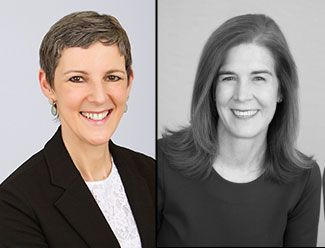
In preparation for theACCC 46th Annual Meeting & Cancer Center Business Summit in Washington, D.C. on March 4-6, we are talking with several featured speakers about the topics they plan to address at the summit. Lori Marcus—theDirect-to-Patient Workstream Lead at theKraft Precision Medicine Accelerator—and Anne Quinn Young, MPH—Chief Marketing and Development Officer at theMultiple Myeloma Research Foundation—will speak about direct-to-patient engagement in oncology care. Here they explain this novel approach toward giving more patients access to precision medicine options.
ACCCBuzz: What is the Kraft Precision Medicine Accelerator?
Lori Marcus: The Kraft Accelerator came about after Robert and Jonathan Kraft experienced challenges in leveraging the potential of precision medicine while caring for Myra Kraft, who was suffering from ovarian cancer. After Myra passed, the Krafts were frustrated that despite there being so many researchers and so much money in oncology, they ran out of time to gain access to therapies that could potentially treat Myra’s specific genomic alterations. The Krafts made a generous endowment to Harvard Business School in an attempt to get business leaders to tackle the systemic issues that are blocking progress in precision medicine. The Kraft Accelerator aims to speed the development and delivery of cancer therapies by improving the business processes that surround them.


The Accelerator’s model of collective impact engages leaders to accelerate cures in oncology and other diseases. Through this model, we have identified four workstreams to accelerate precision medicine and cures: direct-to-patient, data and analytics, clinical trials, and investment.
Within the direct-to-patient workstream, the Kraft Accelerator has teamed up with five third-party research organizations—LUNGevity, Metastatic Breast Cancer Alliance, Multiple Myeloma Research Foundation (MMRF), Pancreatic Cancer Action Network, and Prostate Cancer Foundation—to help more patients find the right treatment for themselves from the moment of diagnosis. The Accelerator is now in its fifth year.
ACCCBuzz: How is MMRF working with the Kraft Accelerator to affect the lives of people with cancer?
Anne Quinn Young: MMRF did market research with patients six to seven years ago while working on a precision medicine plan. We evaluated whether patients were making the best decisions to optimize their outcomes, and we found that some were falling short. But we also found that newly diagnosed patients who got in touch with MMRF to research their options early were more involved in their care. They were twice as likely to get a second opinion and more likely to ask for genetic testing. Joining the Kraft Accelerator is helping us engage more patients directly so they can be more involved with their care and make the right choices for themselves.
ACCCBuzz: How can the direct-to-consumer marketing approach be applied to oncology care?
Lori Marcus: If you want to make advances in precision medicine, you have to collect a lot of information from patients. And that requires skill. A fundamental tenet of the Accelerator is the belief that just because people are diagnosed with cancer doesn’t mean they suddenly have a medical degree in oncology. But when healthcare professionals talk to patients, they tend to talk to them like peers. The reality is that patients are consumers, and you need to talk to them in a simple, consumer-friendly way. Many principles in business—such as how you acquire potential customers, get them into your database, and provide value so they stick with you—are also applicable to medicine.
Anne Quinn Young: In precision medicine, everything is tailored to a patient’s unique characteristics. We should be providing our patients with personalized information about their diseases as a matter of course. Consumer marketing has become very personalized, but healthcare is far behind. Other companies are nailing it when it comes to super-customization and targeting consumers. We can learn from best practices in consumer marketing to deliver personalized content to patients looking for the best options for them.
For example, when you order from Amazon, you get continually updated personal messages about your order. You are notified when your order has shipped, when it is on its way, and when it has arrived. We are working on a patient registry at MMRF, and we are adopting some of those best practices. When patients share their health information with our registry—such as their sequencing data and tumor specifics—they not only contribute to a growing pool of data that the research community can tap into, but they also get updates about clinical trials they may qualify for that they would not otherwise hear about.
ACCCBuzz: What’s next for the Kraft Accelerator?
Lori Marcus: After four years, the Kraft Accelerator has developed a significant base of knowledge on engaging patients, aggregating data, improving clinical trials, and attracting investment. We are now working on democratizing that information by building an online repository of insights, best practices, resources, and tools. Our plan is to make those assets more broadly available to help advance cures.



From mental health concerns to fertility preservation, adolescents and young adults with cancer require a specialized approach to treatment and survivorship care. In honor of Childhood Cancer Awareness Month, ACCC highlights a pivotal program from the University of North Carolina Lineberger Comprehensive Cancer Center and resources that meet the critical needs of these patients.