ACCC association of cancer care centers
Join/Renew
Login
Join/Renew
Login
Education & Resources
ACCC eXchange LogInCorporate Member Sponsored ResourcesPresentations & AbstractsPresident's ThemeACCC Connect eLearning LogIn
Publications
Oncology IssuesPatient Assistance & Reimbursement GuideTrending Now in Cancer Care
Events
2026 ACCC Leadership SummitAnnual Meeting & Cancer Center Business SummitCapitol Hill DayNational Oncology ConferenceOncology Reimbursement MeetingsOncology State Society Meetings
Policy & Advocacy
2024 Policy Wrap-Up and ACCC 2025 Policy PrioritiesLetters & StatementsAccess, Payment & Reimbursement ReformWhite Bagging & Brown BaggingAdvocacy ResourcesCancer Moonshot
Membership
Join | RenewWho We AreMembership Types & BenefitsCorporate MembersACCC Member Portal FAQMember Directory
Partners
Oncology State SocietiesPartner OrganizationsCME
News
News ReleasesAdvocacy News ReleasesOncology News
About ACCC
Timeline / 50th Anniversary2025 Impact ReportACCC Innovator AwardsACCC FellowsACCC Senior Staff
Breast CancerMetastatic Breast Cancer
Gastrointestinal CancerBiliary Tract CancerColorectal CancerGastric CancerLiver Cancer
Genitourinary CancerBladder CancerProstate CancerRenal Cell Carcinoma
Gynecologic CancerOvarian Cancer
Head & Neck Cancer
Hematologic MalignanciesAcute Lymphocytic Leukemia (ALL)Acute Myeloid Leukemia (AML)Chronic Lymphocytic Leukemia (CLL)Mantle Cell Lymphoma (MCL)Multiple Myeloma (MM)Myelodysplastic Syndromes (MDS)
Lung CancerNon-Small Cell Lung Cancer (NSCLC)Small Cell Lung Cancer (SCLC)
Sarcoma
Skin CancerMelanomaNon-Melanoma Skin Cancers (NMSC)
Clinical Practice & TreatmentCancer DiagnosticsCare CoordinationEHR Integration for Biomarker TestingQuality Improvement Collaboration: Integration of Precision Medicine in Community OncologyTreatment
Financial NavigationFAN Boot CampFinancial Advocacy Network (FAN) Resource LibraryPatient Assistance & Reimbursement GuidePrior Authorization
Health Equity & Access3, 2, 1, Go! Practical Solutions for Addressing Cancer Care DisparitiesAppalachian Community Cancer AllianceOncology Advanced PractitionersPersonalizing Care for Patients of All BackgroundsSocial Drivers of Health
Patient-Centered CareAddressing Care Disparities for VeteransAdolescent and Young Adult (AYA)Care Action Plans for People with CancerDermatologic ToxicitiesEmpowering CaregiversGeriatric OncologyHealth LiteracyNutritionOncology PharmacyPatient NavigationPsychosocial Care in OncologyShared Decision-MakingSupportive CareSurvivorship Care
Practice Management & OperationsCancer Program FundamentalsLeadership Sustainment and Engagement VideosOncology Practice Transformation and Integration CenterOncology Team Resiliency
ResearchACCC Community Oncology Research Institute (ACORI)
Technology & InnovationTelehealth & Digital Medicine
ACCCBuzz Blog
CANCER BUZZ Podcast
Oncology Issues
Join/Renew
Login
Breast CancerMetastatic Breast Cancer
Gastrointestinal CancerBiliary Tract CancerColorectal CancerGastric CancerLiver Cancer
Genitourinary CancerBladder CancerProstate CancerRenal Cell Carcinoma
Gynecologic CancerOvarian Cancer
Head & Neck Cancer
Hematologic MalignanciesAcute Lymphocytic Leukemia (ALL)Acute Myeloid Leukemia (AML)Chronic Lymphocytic Leukemia (CLL)Mantle Cell Lymphoma (MCL)Multiple Myeloma (MM)Myelodysplastic Syndromes (MDS)
Lung CancerNon-Small Cell Lung Cancer (NSCLC)Small Cell Lung Cancer (SCLC)
Sarcoma
Skin CancerMelanomaNon-Melanoma Skin Cancers (NMSC)
Clinical Practice & TreatmentCancer DiagnosticsCare CoordinationEHR Integration for Biomarker TestingQuality Improvement Collaboration: Integration of Precision Medicine in Community OncologyTreatment
Financial NavigationFAN Boot CampFinancial Advocacy Network (FAN) Resource LibraryPatient Assistance & Reimbursement GuidePrior Authorization
Health Equity & Access3, 2, 1, Go! Practical Solutions for Addressing Cancer Care DisparitiesAppalachian Community Cancer AllianceOncology Advanced PractitionersPersonalizing Care for Patients of All BackgroundsSocial Drivers of Health
Patient-Centered CareAddressing Care Disparities for VeteransAdolescent and Young Adult (AYA)Care Action Plans for People with CancerDermatologic ToxicitiesEmpowering CaregiversGeriatric OncologyHealth LiteracyNutritionOncology PharmacyPatient NavigationPsychosocial Care in OncologyShared Decision-MakingSupportive CareSurvivorship Care
Practice Management & OperationsCancer Program FundamentalsLeadership Sustainment and Engagement VideosOncology Practice Transformation and Integration CenterOncology Team Resiliency
ResearchACCC Community Oncology Research Institute (ACORI)
Technology & InnovationTelehealth & Digital Medicine
ACCCBuzz Blog
CANCER BUZZ Podcast
Oncology Issues
    • Education & Resources
    • Publications
    • Events
    • Policy & Advocacy
    • Membership
    • Partners
    • News
    • About ACCC
ACCC association of cancer care centers
1801 Research Boulevard, Suite 400, Rockville, MD 20850
Tel: 301.984.9496 Fax: 301.770.1949 Email Us
Contact UsVolunteers
Advertise
Career Center
Terms and Conditions
Privacy Policy
ACCC Rebranding
Copyright © 2026 Association of Cancer Care Centers. All Rights Reserved.
Advertisement

Blog

Article

January 14, 2019

Speak Out—ACCC Capitol Hill Day 2019

Blair Burnett, Senior Policy Analyst, <em>ACCC</EM>

Speak Out—ACCC Capitol Hill Day 2019

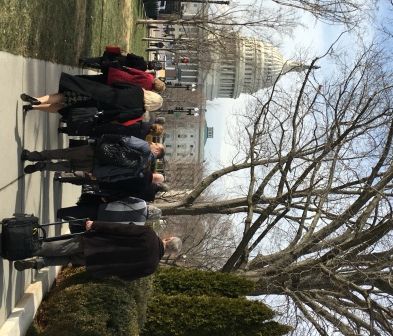
Each year, in conjunction with the ACCC Annual Meeting and Cancer Center Business Summit, ACCC members come to Washington, D.C., for our Capitol Hill Day. Across the board, these members tell us how much they’ve enjoyed this unique opportunity to meet in small groups, or even one-on-one, with their legislators and congressional staffers to talk about challenges—and successes—at their cancer programs or practices. More important, our members say how much they value these in-person meetings because they are empowered to advocate on behalf of their cancer patients, cancer services for their communities, and access to quality cancer care.

This year, participating in ACCC Capitol Hill Day on March 20, 2019, is more important than ever. As ACCC members know, over the past 18 months, this country has seen large shifts in health policy as both the Trump Administration and Congress examine the best way forward for healthcare reform. Oncology as a specialty is not immune to these major changes as we have already seen through the Administration’s drug pricing reform proposals. For example, in October the Trump Administration released a three-pronged proposal to overhaul Medicare Part B and tackle rising drug costs with the expectation that a formal proposed rule would be released in Spring 2019. ACCC has expressed overarching concerns about the impact of this proposal on the entire cancer care delivery infrastructure and, in particular, those programs and practices that see a high percentage of Medicare, Medicare only, and dual-eligible patients. If you missed our webinar on this proposal and potential implications for oncology, ACCC members can access the recording on-demand and the presentation slides here. [Login required.]

Then in November, the Centers for Medicare & Medicaid Services (CMS) announced a proposed rule to amend the Medicare Advantage program (Part C) and Prescription Drug Benefit program (Part D). Top-line takeaways from the proposed rule include:

  • Proposed reform to Medicare Part D’s “protected” therapeutic classes.
  • A new requirement in Medicare Part D to allow for increased transparency between patient and provider with provision of out-of-pocket cost obligations for prescription drugs whenever a prescription is written.
  • A continued push to allow for and implement “step therapy” in Medicare Advantage plans for Part B drugs. The proposed rule also states the potential to infuse prior authorizations within this pool as well.
  • Proposed implementation of a “statutory requirement” that would prohibit pharmacy gag clauses in Part D.

Access the full proposed rule here.

In December, ACCC issued a policy statement expressing deep concerns regarding the impact of CMS’ proposed Medicare Advantage and Part D rule on the country’s oncology care delivery infrastructure.

As you can see, healthcare delivery is at a crossroads. The voice of ACCC members must be raised at this critical time to ensure that real-world experiences of cancer care delivery are heard and to protect patients' access to quality care in their home communities.

Participants in ACCC Capitol Hill Day have scheduled face-to-face meetings with congressional offices. In 2018 ACCC members representing 26 states walked the halls of the House and Senate, participating in nearly 100 congressional meetings. They addressed legislative efforts and described the impact new mandates would have on cancer care delivery in their home communities. Due in part to ACCC member advocacy before, during, and after the 2018 ACCC Capitol Hill Day, we were proud to see the Palliative Care & Hospice Education Training Act (PCHETA) (H.R. 1676/S. 693) move to the Senate, signaling a push towards more comprehensive access to palliative care in the years to come.

In January 2019, Congress began a new legislative session with dozens of newly elected legislators with whom ACCC Hill Day advocates can speak. Finding time away from your practice or cancer program to attend is truly a scheduling feat, but know that the stories you share from the frontlines of cancer care make a difference. Legislative action and the policies that shape oncology delivery do not happen in a vacuum. Adding your voice to those of your fellow ACCC members will help leverage the daily challenges and solutions you experience in caring for patients with cancer and their families as a catalyst for positive change.

ACCC makes it easy to participate. Everyone who attends the 2019 ACCC Capitol Hill Day will receive an orientation and hands-on training. You’ll know what to expect and be well prepared for your scheduled visits with your legislators and their staff. For more information, visit the ACCC Capitol Hill Day webpage or email me at bburnett@accc-cancer.org.

We look forward to welcoming you to Washington, D.C., on Wednesday, March 20, 2019, and advocating together on behalf of all patients with cancer and their families.