Dr. Kevin Davies previews his opening keynote at the upcoming Association of Community Cancer Centers (ACCC) 49th Annual Meeting & Cancer Center Business Summit (AMCCBS).
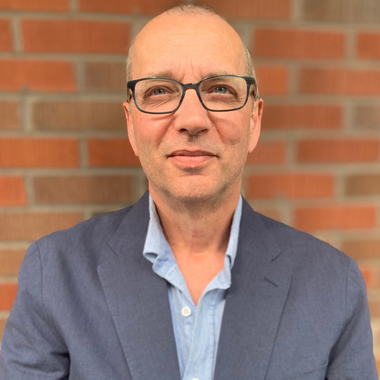
Kevin Davies, PhD, is the executive editor of The CRISPR Journal and GEN Biotechnology, as well as the author of multiple books. His most recent publication, Editing Humanity: The CRISPR Revolution and the New Era of Genome Editing, was published in 2020—detailing fascinating aspects of the CRISPR revolution. CRISPR an acronym for clustered regularly interspaced short palindromic repeats, is a technology that allows scientists to selectively modify the DNA of living organisms.
Dr. Davies will deliver the opening keynote on Thursday, March 9, at the Association of Community Cancer Centers (ACCC) 49th Annual Meeting & Cancer Center Business Summit (AMCCBS), where he intends to share his knowledge about CRISPR, including its potential impact on cancer care. The conference will be held from March 8 to 10 at the Capital Hilton in D.C., offering healthcare leaders the opportunity to explore cutting-edge solutions to persistent challenges and navigating the shifting cancer care landscape.
ACCCBuzz spoke with Dr. Davies to learn more about his upcoming AMCCBS keynote.
ACCCBuzz: How did your work with CRISPR begin?
Davies: I confess I jumped onto the CRISPR bandwagon a bit late. The key papers describing the ability to use CRISPR to edit genes, including human genes, were published in 2012 and 2013, but passed me by. A few years later, I was working on a book with Nobel Laureate Jim Watson—who, of course, co-discovered the double helix in 1953. We were updating one of his major books called DNA. Jim invited me to write a couple of new chapters and update the first edition with everything new and exciting that had happened in the life sciences over the previous decade.
As I considered what the big stories had been, suddenly, I started reading about CRISPR. Here is a technology that is often likened to a molecular scalpel or genetic scissors. It is a technology that, almost for the first time, allows scientists to literally go into the DNA of a cell, tease out a sequence that might be carrying a mutation, and fix that sequence! For a geneticist, as I once was, that really is the Holy Grail. We sequenced the human genome, we study how genes are inherited, and we identify disease genes not just for the sake of it, but with a view of diagnosing and eventually treating and curing these diseases. Now, with CRISPR, we have a gene editing tool—as I’m going to talk about in my keynote—that has already shown true success in early clinical trials, most notably in an ongoing trial for sickle cell disease.
ACCCBuzz: What kind of effect can CRISPR have on the treatment of patients with cancer?
Davies: Cancer is a little further behind because cancer is a much more complicated disease, rather than a straightforward mendelian genetic disease where you really only need to target a single gene to fix it. But in the immunotherapy, CAR [chimeric antigen receptor] T-cell therapy space, there have been a number of papers published showing great promise, where CRISPR can be used to introduce two or three simultaneous edits in different genes that help in the CAR T-cell therapy process. Some early clinical trials are underway in this space, but I think it will take a few years before we start seeing headlines on the effectiveness of CRISPR in curing certain types of cancer. But we will start to hear about anecdotal reports about individual patients.
I say that having just, in the past few weeks, read a report on a teenage patient who was treated in London and who had a form of T-cell leukemia. Physicians used a newer form of genome editing called base editing, which offers a more precise form of gene editing than CRISPR. They were able to engineer three specific genetic changes, and this patient has had a tremendous improvement in their health. That is an exciting preview of how CRISPR is eventually going to have the same sort of impact in helping patients with cancer, as it is starting to show in patients with other genetic diseases.
ACCCBuzz: That all sounds very exciting. What can AMCCBS attendees expect from your opening keynote address?
Davies: I am excited to give this keynote because what I am interested in aligns beautifully with two of the main themes of the conference: 1) the use of technology in medicine and 2) the application of technology in precision medicine. So, while I may be talking about more early-stage lab research than some attendees are perhaps used to, I hope everyone comes out of this session appreciating CRISPR, even if they are not touching it in their current professional lives. I hope to provide an informative—and, where appropriate, entertaining—overview of how CRISPR has developed, how it has revolutionized science, and how it is speeding into the clinic. I will give an update on clinical trials, and, if there's time, I’ll touch on some of the other slightly crazier applications of CRISPR.
So I really hope the audience is going to enjoy it! And it has not escaped my attention that the ACCC conference will be taking place literally days after the 70th anniversary of the double helix, so I might be reflecting on that, too.
Register to attendthe ACCC 49th Annual Meeting and Cancer Center Business Summit from March 8 to 9 in D.C. to hear more about CRISPR and its impact on oncology. Additional conference sessions will feature an update on the Cancer Moonshot, lessons learned from the oncology pharmacy through use of robotics, and many interactive and facilitated workshops covering topics across the cancer care landscape (e.g., precision medicine, patient engagement, care delivery models, artificial intelligence, and more).