Author(s):
May serves as Skin Cancer Awareness Month, a timely opportunity to highlight the importance of prevention, early detection, and treatment advances for the most common group of cancers both in the US and globally.
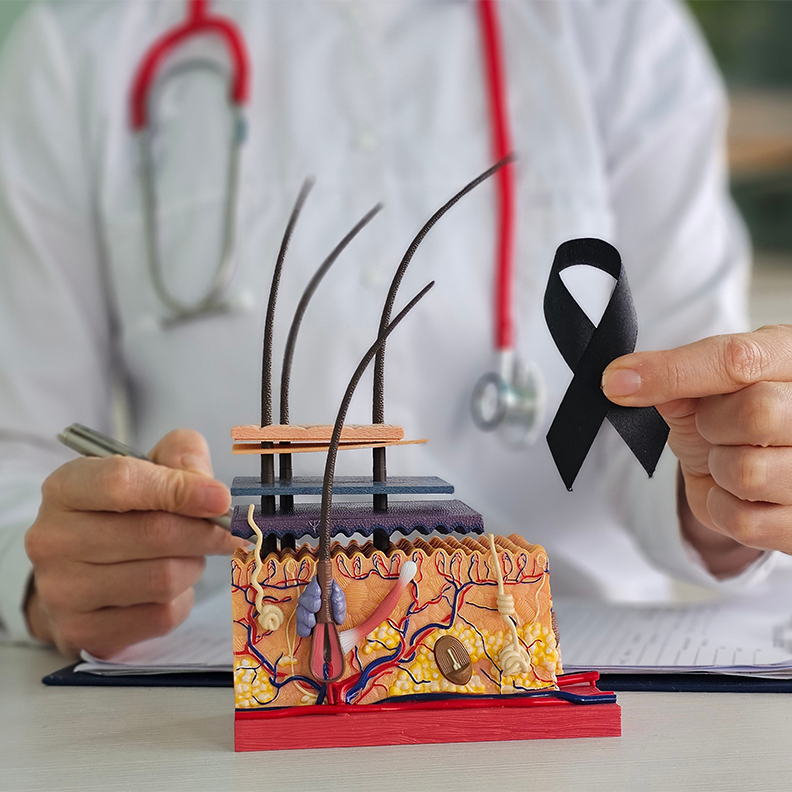
May marks the unofficial start of the summer season and serves as Skin Cancer Awareness Month, a timely opportunity to highlight the importance of prevention, early detection, and treatment advances for the most common group of cancers both in the US and globally. Approximately 1 in 5 Americans will develop a type of skin cancer by age 70. Despite the high prevalence of skin cancers, dermatology and oncology providers are well-equipped with diagnostic and therapeutic tools to manage both melanoma and nonmelanoma skin cancers alike.
Nonmelanoma skin cancers (NMSCs), primarily basal cell carcinoma (BCC) and squamous cell carcinoma (SCC), account for 8 out of 10 diagnosed skin cancers. These cancers typically grow slowly, are highly treatable, and have excellent prognoses. For example, the 5-year survival rate for SCC is 99% when detected early and regularly monitored for recurrence. While NMSCs rarely metastasize, timely recognition and intervention remain essential. Early referrals and coordinated care among dermatologists, primary care providers, and oncology teams are critical to achieving optimal patient outcomes.
In contrast, melanoma comprises only about 1% of skin cancer diagnoses but accounts for the majority of skin cancer-related deaths. Melanoma originates from melanocytes and has a higher propensity to invade nearby tissues and metastasize. Its aggressive nature underscores the necessity of early detection, prompt referral, and decisive intervention.
The first line of defense against skin cancer is prevention. Ultraviolet (UV) radiation, whether from sunlight or indoor tanning beds, remains the most modifiable risk factor for all forms of skin cancer. Preventive measures, including the regular use of broad-spectrum sunscreen, protective clothing, seeking shade, and avoiding indoor tanning devices, can all reduce this risk.
Routine skin self-examinations are a key component of early detection, particularly for melanoma. While skin cancer is most common in areas of the body that are frequently exposed to sunlight—such as the face, neck, arms, and hands—skin cancer can occur anywhere on the body. The American Academy of Dermatology Association therefore encourages everyone to perform frequent skin self-exams that include less visible areas such as the soles of the feet, in between toes, palms of hands, and nail beds. For individuals at elevated risk, regular clinical skin examinations performed by a health care provider are recommended, with biopsy performed for any suspicious lesions.
Once a diagnosis is established, effective skin cancer management relies heavily on coordinated, multidisciplinary care. Seamless communication among primary care providers, dermatologists, medical and radiation oncologists, and surgical teams is essential to ensure timely referrals and evidence-based treatment planning. Clear, collaborative care pathways and effective patient-provider communication support improved outcomes and shared decision-making.
To facilitate these aims, ACCC led an initiative highlighting successful operational practices that prioritize interdisciplinary collaboration at cancer centers treating nonmelanoma skin cancers. Site visits to 3 community cancer centers informed a best-practices guide with a focus on survivorship care, community outreach, and patient education. ACCC also hosted virtual workshops for 3 cancer centers discussing effective practices and lessons learned while treating nonmelanoma skin cancers. Read the takeaways shared by experts from Inova Schar Cancer Institute, Community Health Network MD Anderson Cancer Center, and University of Nebraska Medical Center. To increase education and awareness of skin cancer among the broader non-oncology community, ACCC developed a fact sheet summarizing the epidemiology of skin cancer, common risk factors, and the importance of team-based care.
A persistent misconception is that skin cancer only affects light-skinned individuals. While the incidence of melanoma is lower in individuals with darker skin, these populations are 4 times more likely to be diagnosed with advanced melanoma and 1.5 times more likely to die from the disease. Data from the Journal of the American Academy of Dermatology reveal that 32% of Black patients are diagnosed with melanoma at Stage III or IV, compared to just 13% of White patients. These disparities contribute to higher mortality rates and emphasize the need for culturally competent education and access to dermatologic care across all racial and ethnic groups.
Treatment plans for skin cancer vary by type and stage. Surgical resection remains the cornerstone for localized disease. Mohs micrographic surgery is often preferred for NMSCs in cosmetically or functionally sensitive areas, while wide local excision is more standard for melanoma. Topical therapies and photodynamic therapy may be utilized for early-stage NMSCs in specific anatomical areas. More advanced or recurrent disease may require systemic approaches, including chemotherapy, immunotherapy, and targeted agents. Radiation therapy is also an option, especially for patients who are not surgical candidates.
In 2024, the FDA approved tumor-infiltrating lymphocyte (TIL) therapy as a second-line treatment for metastatic melanoma. This innovative form of autologous cell therapy involves harvesting and expanding tumor-infiltrating T cells to augment the immune system’s ability to recognize and destroy tumor cells. TIL therapy offers a promising option for patients whose disease has not responded to standard therapies and represents an exciting new frontier in the treatment landscape for melanoma.
As of May 2025, ACCC is launching a new initiative to enhance patient access to TIL therapy, with a particular focus on the community setting, where the majority of US patients receive cancer care. Recognizing that timely identification and referral of eligible patients to authorized treatment centers (ATCs) are critical to the success of TIL therapy, ACCC will showcase an infographic outlining key considerations for the care coordination process. In parallel, a clinician-facing tipsheet will summarize essential criteria for patient eligibility and appropriate referral pathways. To strengthen connections between community oncology teams and ATC points of contact, ACCC will also hold peer-to-peer workshops designed to support knowledge sharing and foster professional networking among multidisciplinary professionals involved in the care of patients with melanoma.
As Skin Cancer Awareness Month comes to a close, the need for continued education, prevention, and early detection remains as important as ever. Equally vital is the role of the multidisciplinary care team in delivering timely diagnoses and evidence-based treatment. At the same time, emerging therapies like TIL offer renewed hope for patients facing aggressive disease. By promoting culturally responsive outreach, ensuring equitable access to innovation, and fostering care coordination among health care professionals, we can make meaningful strides in reducing the burden of skin cancer for all patients, in every care setting.





An at-home option for cervical cancer screening breaks down barriers to care and offers the same level of precision as screening in the clinic.