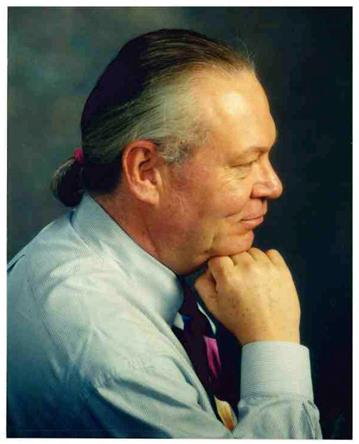
On December 3, 2018, the Association of Cancer Care Centers (ACCC) and the Oncology State Society Network (OSSN) lost a life-long friend, Lee E. Mortenson, DPA.
Lee was ACCC’s Executive Director for nearly 30 years, serving in this role until 2004. The story of his service and legacy to ACCC mirrors not only the history of the Association itself, but also the transformations in oncology and healthcare over the years—from the first days of the “War on Cancer” until today.
In an article published in 2004 marking ACCC’s 30th anniversary, Lee described those early days:
“In 1974, when we first came together, medical oncology was not yet a formalized medical specialty. Congress and President Nixon had declared a war on cancer in 1971 and provided funding for a group of university-based comprehensive cancer centers. Some graduates of those university-based programs went into research, and some went into private practice.
Many who went into private practice immediately realized that cancer care was on the verge of a radical shift, a whole new paradigm. . . .The Association’s initial purpose was to spread the gospel of multidisciplinary care and teach other hospitals how to establish an oncology unit.”
As Executive Director Lee helped ACCC maintain an unwavering commitment to the vision of its founding organizers and the mission of education and advocacy for the multidisciplinary team caring for patients with cancer in their home communities. It’s a mission as relevant today as it was more than 40 years ago.
By their very nature, Associations are communities. Even in the early years, the community created through ACCC was multidisciplinary—unique at the time for bringing together medical oncologists, radiation oncologists, surgeons, nurses, and administrators into one organization focused on addressing the most effective approaches for delivering cancer care and increasing clinical trial participation by both providers and patients.
As Executive Director Lee worked with ACCC leaders to clarify challenges and find solutions to support the Association’s goals of patient access to quality cancer care near their families and friends.
ACCC President 2013-2014 Virginia Vaitones, MSW, OSW-CE, recalls first meeting Lee in 1987 when he visited the cancer program at Mid-Maine Medical Center in Waterville, Maine, where she was working as the oncology social worker.
“Our program was incredibly honored to have him visit. I remember being very excited but nervous. Except for our Commission on Cancer (CoC) reviews, no one of any importance had come to visit our program before. It was during this visit I first learned about ACCC and Lee’s commitment to community cancer programs and the multidisciplinary team. I was impressed by his enthusiasm and his larger than life personality, as he addressed the hospital’s administration and Cancer Care Committee Members about his vision for the community hospital cancer program as a leader in cancer care. It has truly been exciting to participate in his vision and watch ACCC’s continued growth in ensuring quality cancer care close to home.”
Communities by their very nature foster connection. From the start, Lee and ACCC leadership envisioned the Association as an engine for peer-to-peer connections, communication, and education to support those on the frontlines of care delivery. Connections made through ACCC have often continued throughout careers in oncology.
“Lee was one of the first people I met as a new cancer program administrator at my first ACCC meeting in 1989,” said Diane Otte, RN, MSN, OCN. “I was overwhelmed with the number of people with years of experience I met who were willing to offer advice and share their expertise with those of us just getting started in the world of oncology. I found the organization and the leadership of the organization invaluable and was fortunate enough to be part of the ACCC Board and Committees for more than 25 years.”
A legacy of community, connection, creativity, and challenge. “I remember Lee from multiple ACCC meetings along with a cast of oncology nurses, administrators, and community physicians. I was impressed with the vision and commitment to multidisciplinary engagement, education and advocacy in supporting quality of care, patient access, and clinical trials in the community setting for the entire house of Oncology,” said ACCC Board Member radiation oncologist Laeton Pang, MD, MPH, FACR, FACRO.
“At the helm of this impressive gathering was Lee Mortenson, a brilliant man who reminded me of Merlin the wizard with salt and pepper hair in a ponytail. Although the table was not round, the meetings were conducted much like how one might imagine the Knights of the Round Table met, exchanging ideas with respect, passion, and integrity in doing the right thing. Although Lee has been gone from the organization since 2004, his vision for multidisciplinary engagement to promote quality oncology care in the community lives on in the core purpose, values, and strategic objectives of ACCC.”
Add a dash of pizzazz. ACCC President 2007-2008 Richard Reiling, MD, FACS (retired) remembers Lee’s exuberant style.
“I became enchanted with Lee and ACCC at my first meeting in Las Vegas where ‘this flamboyant executive with a grotesque tie and a ponytail’ delivered an outstanding meeting in the only hotel on the Strip which didn’t have a slot machine!”
When asked to contribute to this blog post honoring Lee E. Mortenson, many long-time ACCC members described Lee as “visionary.” Lee’s legacy of leadership is as unique as was Lee himself.
Colleague and friend. Pearl Moore, RN, FAAN, who served as the first executive director and CEO of the Oncology Nursing Society (ONS), herself an inspirational leader and mentor to nurses in oncology, remembers Lee as both colleague and friend. “We almost always sat together at ACCC meetings, and I learned so much about community cancer care, policy, and healthcare in general,” she said.
As many who were Lee’s colleagues and friends over the years, she mentions his diverse interests and sense of humor. “I once roasted him. I said, ‘I listened intently as he talked about so many things and understood almost nothing he said.’ For example, at these same meetings, he would read poems to me from Omar Khayyam. Only Lee had an appreciation of all aspects of life. He was a rare and special person. I loved him and will miss him.”
ACCC President 1997-1998 James L. Wade III, MD, FACP, FASCO, speaks for many who knew Lee both as a colleague and a friend.
“We will all miss Lee. He was visionary; not only did he always see the "big picture" of cancer treatment in America, he could see through the picture and envision the future of oncology. His greatest ability, and his gift to us, was much more personal. He could see into each of us, raise our awareness of our strengths, and help us to forgive our flaws.”




In recognition of Leukemia and Lymphoma Awareness Month, ACCC compiled a group of resources to help care teams navigate two of the most commonly diagnosed adult leukemias: acute myeloid leukemia and chronic lymphocytic leukemia.