ACCC association of cancer care centers
Join/Renew
Login
Join/Renew
Login
Education & Resources
ACCC eXchange LogInCorporate Member Sponsored ResourcesPresentations & AbstractsACCC Connect eLearning LogIn
Publications
Oncology IssuesPatient Assistance & Reimbursement GuideTrending Now in Cancer CareBusiness Case Studies for Hiring New Staff
Events
2026 ACCC Leadership SummitAnnual Meeting & Cancer Center Business SummitCapitol Hill DayNational Oncology ConferenceOncology Reimbursement MeetingsOncology State Society Meetings
Policy & Advocacy
2024 Policy Wrap-Up and ACCC 2025 Policy PrioritiesLetters & StatementsAccess, Payment & Reimbursement ReformWhite Bagging & Brown BaggingAdvocacy ResourcesCancer Moonshot
Membership
Join | RenewWho We AreMembership Types & BenefitsCorporate MembersACCC Member Portal FAQMember Directory
Partners
Oncology State SocietiesPartner OrganizationsCME
News
News ReleasesAdvocacy News ReleasesOncology News
About ACCC
Timeline / 50th Anniversary2025 Impact ReportPresident's ThemeACCC Innovator AwardsACCC FellowsBoard of TrusteesACCC Senior Staff
Breast CancerMetastatic Breast Cancer
Gastrointestinal CancerBiliary Tract CancerColorectal CancerGastric CancerLiver Cancer
Genitourinary CancerBladder CancerProstate CancerRenal Cell Carcinoma
Gynecologic CancerOvarian Cancer
Head & Neck Cancer
Hematologic MalignanciesAcute Lymphocytic Leukemia (ALL)Acute Myeloid Leukemia (AML)Chronic Lymphocytic Leukemia (CLL)Mantle Cell Lymphoma (MCL)Multiple Myeloma (MM)Myelodysplastic Syndromes (MDS)
Lung CancerNon-Small Cell Lung Cancer (NSCLC)Small Cell Lung Cancer (SCLC)
Sarcoma
Skin CancerMelanomaNon-Melanoma Skin Cancers (NMSC)
Clinical Practice & TreatmentCancer DiagnosticsCare CoordinationEHR Integration for Biomarker TestingQuality Improvement Collaboration: Integration of Precision Medicine in Community OncologyTreatment
Financial NavigationFAN Boot CampFinancial Advocacy Network (FAN) Resource LibraryPatient Assistance & Reimbursement GuidePrior Authorization
Health Equity & Access3, 2, 1, Go! Practical Solutions for Addressing Cancer Care DisparitiesAppalachian Community Cancer AllianceOncology Advanced PractitionersPersonalizing Care for Patients of All BackgroundsSocial Drivers of Health
Patient-Centered CareAddressing Care Disparities for VeteransAdolescent and Young Adult (AYA)Care Action Plans for People with CancerDermatologic ToxicitiesEmpowering CaregiversGeriatric OncologyHealth LiteracyNutritionOncology PharmacyPatient NavigationPsychosocial Care in OncologyShared Decision-MakingSupportive CareSurvivorship Care
Practice Management & OperationsCancer Program FundamentalsLeadership Sustainment and Engagement VideosOncology Practice Transformation and Integration CenterOncology Team Resiliency
ResearchACCC Community Oncology Research Institute (ACORI)
Technology & InnovationTelehealth & Digital Medicine
ACCCBuzz Blog
CANCER BUZZ Podcast
Oncology Issues
Join/Renew
Login
Breast CancerMetastatic Breast Cancer
Gastrointestinal CancerBiliary Tract CancerColorectal CancerGastric CancerLiver Cancer
Genitourinary CancerBladder CancerProstate CancerRenal Cell Carcinoma
Gynecologic CancerOvarian Cancer
Head & Neck Cancer
Hematologic MalignanciesAcute Lymphocytic Leukemia (ALL)Acute Myeloid Leukemia (AML)Chronic Lymphocytic Leukemia (CLL)Mantle Cell Lymphoma (MCL)Multiple Myeloma (MM)Myelodysplastic Syndromes (MDS)
Lung CancerNon-Small Cell Lung Cancer (NSCLC)Small Cell Lung Cancer (SCLC)
Sarcoma
Skin CancerMelanomaNon-Melanoma Skin Cancers (NMSC)
Clinical Practice & TreatmentCancer DiagnosticsCare CoordinationEHR Integration for Biomarker TestingQuality Improvement Collaboration: Integration of Precision Medicine in Community OncologyTreatment
Financial NavigationFAN Boot CampFinancial Advocacy Network (FAN) Resource LibraryPatient Assistance & Reimbursement GuidePrior Authorization
Health Equity & Access3, 2, 1, Go! Practical Solutions for Addressing Cancer Care DisparitiesAppalachian Community Cancer AllianceOncology Advanced PractitionersPersonalizing Care for Patients of All BackgroundsSocial Drivers of Health
Patient-Centered CareAddressing Care Disparities for VeteransAdolescent and Young Adult (AYA)Care Action Plans for People with CancerDermatologic ToxicitiesEmpowering CaregiversGeriatric OncologyHealth LiteracyNutritionOncology PharmacyPatient NavigationPsychosocial Care in OncologyShared Decision-MakingSupportive CareSurvivorship Care
Practice Management & OperationsCancer Program FundamentalsLeadership Sustainment and Engagement VideosOncology Practice Transformation and Integration CenterOncology Team Resiliency
ResearchACCC Community Oncology Research Institute (ACORI)
Technology & InnovationTelehealth & Digital Medicine
ACCCBuzz Blog
CANCER BUZZ Podcast
Oncology Issues
    • Education & Resources
    • Publications
    • Events
    • Policy & Advocacy
    • Membership
    • Partners
    • News
    • About ACCC
ACCC association of cancer care centers
1801 Research Boulevard, Suite 400, Rockville, MD 20850
Tel: 301.984.9496 Fax: 301.770.1949 Email Us
Contact UsVolunteers
Advertise
Career Center
Terms and Conditions
Privacy Policy
ACCC Rebranding
Copyright © 2026 Association of Cancer Care Centers. All Rights Reserved.
HomeEducation & ResourcesACCCBuzz Blogs

How Targeted Therapies are Affecting the Cancer Care Team: A Conversation With Dr. Firas El Chaer

January 21, 2020

How Targeted Therapies are Affecting the Cancer Care Team: A Conversation With Dr. Firas El Chaer

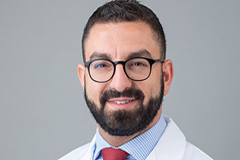
Firas El Chaer, MD, is a hematology and medical oncology specialist and an assistant professor of medicine at the University of Virginia, Emily Couric Clinical Cancer Center. In addition to specializing in infectious diseases in immunocompromised patients with cancer, Dr. El Chaer focuses on hematologic malignancies and stem cell transplantation. He has also been working on improving the outcomes for acute leukemias in adults by focusing on targeted therapies and overcoming resistance mechanisms. Dr. El Chaer currently serves on the Advisory Committee for the ACCC Multidisciplinary Acute Lymphocytic Leukemia Care education program.

Dr. El Chaer recently spoke to ACCCBuzz about his top takeaways from the December 2019 American Society of Hematology (ASH) Annual Meeting. Here he discusses what he believes to be the most important issues and trends affecting the cancer care community.


ACCCBuzz: What ongoing trends in cancer treatment were most often discussed at this ASH conference?

Dr. El Chaer: We are increasingly incorporating targeted therapies with old-school chemotherapy treatments. What stood out in this ASH was the increasing effort to move targeted treatments into the front-line setting, especially with acute lymphoblastic leukemia (ALL) and all acute leukemias. In particular, with ALL there are a lot of advances in the field of CAR-T therapy as well as in the minimum residual disease therapy guidelines.

When a new leukemia patient presents at a teaching hospital, you now send them to genomic testing, and patients are stratified into different treatment strategies based on their test results. This is particularly the case for ALL patients.

ACCCBuzz: How should the multidisciplinary cancer care team approach the side effects of precision therapies?

Dr. El Chaer: UVA has adopted standard operating procedures (SOPs)—internal guidelines on how to approach anything regarding precision therapies, from administering drugs to side effects. SOPs are usually multidisciplinary. It’s essential to have easy access to peer-reviewed, well-thought out SOPs, so you minimize the risk of mistakes as well as provide a standard of care for all members of the cancer care team.

ACCCBuzz: With the advent of effective immunotherapies such as the new checkpoint inhibitors and CAR-T therapy, is chemotherapy a thing of the past?

Dr. El Chaer: Although there is so much talk about targeted, precision therapies right now, it’s important to remember that traditional chemotherapy is not going to go away any time soon. However, with the benefit of today’s targeted therapies, we can definitely provide additional improvement to what we have accomplished in the past decades in oncology care. Traditional treatments are here to stay for most diseases, but they are being improved by using them in conjunction with targeted therapies.

ACCCBuzz: What practical implications might these emerging treatments have on the multidisciplinary cancer care team?

Dr. El Chaer: Because these therapies are not traditional chemotherapy, they come with a substantial list of side effects that the whole cancer care team should be aware of and know how to manage.

Another significant challenge is the cost of these treatments. It is particularly important that social workers and case managers know about this issue. If patients cannot access them, all of these clinical enhancements go to waste. These drugs are effective and are being approved by the FDA, but access to them is significantly hindered by high copays, or, if patients are not adequately insured, the cost of the medications themselves.

We try to get access to grants to cover the copays, either from the Leukemia and Lymphoma Society or other cancer societies that also have dedicated grants for these therapies. Or we try to obtain copay cards from pharma companies. But this is not ideal. The market prices are exorbitantly high and not sustainable regardless of how much insurance or Medicare is able to cover.

*****

Below, Dr. El Chaer shares what he believes to be some of the most important clinical developments in acute lymphoblastic leukemia presented at the 2019 ASH conference.

Long-Term Safety and Efficacy of Hyper-CVAD Plus Ponatinib As Frontline Therapy for Adults with Philadelphia Chromosome-Positive Acute Lymphoblastic Leukemia

Chemotherapy in combination with a tyrosine kinase inhibitor (TKI) is the standard of care for Philadelphia chromosome positive (Ph+) acute lymphoblastic leukemia (ALL) with a 5-year overall survival 35-50%. ABL1 mutations (i.e. T315I) are the main mechanism of relapse. Ponatinib, a third-generation TKI, is active against T315I. HyperCVAD in combination with ponatinib is associated with high response rates but long-term efficacy is unknown.

In this study, 86 patients, median age 46 years old (range 21-80) with Ph(+) ALL, received £2 courses of prior chemotherapy without clinically significant cardiovascular disease or venous thromboembolism. Ponatinib was given at 45mg during induction, then at 30mg starting at cycle 2 with further reduction to 15mg once complete molecular response was achieved.

With a median follow-up of 43 months, the 3-year continuous complete remission (CR), event-free survival (EFS) and overall survival (OS) rates were 84%, 70%, and 78%, respectively. Three patients had relapsed disease while on ponatinib and two were found to have an E255K ABL kinase domain mutation. The 3-year OS rate was 66% for patients who underwent hematopoietic stem cell transplantation (HSCT) and 90% for patients who did not undergo HSCT (p=0.07). Currently ongoing studies are evaluating ponatinib and blinatumomab +/- low-intensity chemotherapy for Ph(+) ALL.

Dasatinib-Blinatumomab Combination for the Front-Line Treatment of Adult Ph+ ALL Patients. Updated Results of the Gimema LAL2116 D-Alba Trial

This was a multicenter frontline chemo-free induction consolidation phase II trial (D-ALBA, GIMEMA LAL2116) with the combination of a second generation TKI dasatinib with blinatumomab for adult patients with Ph(+) ALL. Prior to dasatinib, patients received a 7-day steroids pre-phase and continued until D+31. Dasatinib (140mg/day) was administered for 85 consecutive days. Thereafter, patients who obtained a complete hematologic response received a post-induction consolidation with blinatumomab at a flat dose of 28 mg/day. Dasatinib was continued during treatment with blinatumomab.

Sixty-three patients were enrolled with median age 55 years old (range 24-82), and 47 have completed the 2nd cycle of blinatumomab (the primary endpoint) and 56% had a molecular response. The 12-month OS and disease-free survival (DFS) are 94.2% and 87.8%, respectively. ABL1 mutational analysis in 15 patients with evidence of a MRD increase and mutations were detected in 7 patients. All mutations but 1 occurred prior to the start of blinatumomab and all were cleared by blinatumomab.

In this first chemo-free induction-consolidation protocol for adult Ph(+) ALL patients, the rates of molecular responses and survival were highly promising.

Phase I Trial Using CD19/CD22 Bispecific CAR T Cells in Pediatric and Adult Acute Lymphoblastic Leukemia (ALL)

With a lentiviral transduction of a bivalent CAR construct incorporating the fmc63 CD19 and m971 CD22 scFvs and a 41BB costimulatory endodomain. Dose level 1 was 1x10⁶ CART cells/kg and dose level 2 was 3x10⁶ cells/kg. Primary objectives assessed the ability to successfully manufacture CD19/CD22 CART cells and safety while response at D+28 post-infusion was a secondary objective.

Nineteen patients have been enrolled (10 pediatric and 9 adults) with a median of 4 (range 2-11) prior lines of leukemia-directed therapy, with 10 patients received prior HSCT, 9 treated with prior blinatumomab, 3 with prior CD19 directed CART cells and 4 with prior Inotuzumab. Of the 14 patients who have been infused to date, 12 patients have reached D+28. 92% achieved CR, 10 of whom achieved CR at D+28. 75% experienced CRS and 17% had ICANS. Only one patient had grade 4 CRS and ICANS, both of which were reversible. To date, 3 patients had their disease relapse, all with retention of CD19 antigen. The OS for all infused patients was 92% with a median follow-up of 9.5 months.

This phase I trials of bispecific CD19/CD22 targeting CART cells in R/R ALL demonstrated safety and tolerability at two dose levels, expanded accrual at dose level 2 is ongoing.

Updated Results of a Phase II Study of Reduced-Intensity Chemotherapy with Mini-Hyper-CVD in Combination with Inotuzumab Ozogamicin, with or without Blinatumomab, in Older Adults with Newly Diagnosed Philadelphia Chromosome-Negative Acute Lymphoblastic Leukemia

The combination of inotuzumab with reduced-intensity mini-hyper-CVD chemotherapy in older adults with newly diagnosed ALL is safe and highly effective. The addition of blinatumomab to this regimen may further improve outcomes. In this trial, patients ³60 years of age with newly diagnosed Philadelphia chromosome neg pre-B-cell ALL received mini-Hyper-CVD for up to 8 cycles. After protocol amendment to decrease risk of venoocclusive disease, inotuzumab was added in fractionated doses each cycle (0.6 mg/m2 on day 2 and 0.3 mg/m2 on day 8 of cycle 1; 0.3 mg/m2 on day 2 and 8 of cycles 2-4) and 4 cycles of blinatumomab were administered following 4 cycles of hyper-CVD plus inotuzumab, followed by maintenance with 12 cycles of POMP and 4 cycles of blinatumomab (1 cycle of blinatumomab after every 3 cycles of POMP).

Median age was 68 years and 28% of patients had their disease positive for TP53 mutation. 19% were CRLF2 positive, and 27% had adverse-risk karyotype. 33/58 pts (57%) were CD20+ and received rituximab. Among 59 patients evaluable for morphologic response, 58 (98%) responded (CR, n=51; CRp, n=6; CRi, n=1). Measurable residual disease (MRD) negativity by 6-color flow cytometry was achieved in 48/62 pts (77%) after 1 cycle and 59/63 pts (94%) overall. There were no early deaths, and the 30-day and 60-day mortality rates were 0% and 3%, respectively.

The 3-year continuous remission rate was 69% and 87% for patients age 60-69 and ≥70 years, respectively (P=0.25), and the 3-year OS rate was 63% and 42%, respectively (P=0.13). The trend for worse survival in the patients ≥70 years was driven predominantly by the increased rate of death in CR/CRp in this older group.

Outcome of Patients (Pts) with Philadelphia Chromosome-Positive (Ph+) Acute Lymphoblastic Leukemia (ALL) without 3-Month Complete Molecular Response (CMR)

The achievement of CMR predicts better outcomes in Ph(+) ALL. The lack of CMR and major molecular response (MMR) at 3 months confer poor outcomes. The investigators reviewed 204 patients with newly diagnosed Ph(+) ALL treated with hyper-CVAD in combination with TKI, of whom 94 (46%) did not achieve a 3-month CMR. Overall, allogeneic stem cell transplantation (allo-HSCT) was performed in 30% of the patients. In multivariate analysis, 3-month MMR predicted longer PFS (p<0.01) and OS (p=0.01).

A 5-month landmark analysis was performed to assess the effect of allo-HSCT on survival by 3-month MMR status. In patients who achieved 3-month MMR, 5-year PFS and OS rates were 60% and 58% (p=0.64) and 64% and 64% (p=0.73) in patients with and without allo-HSCT, respectively. In contrast, among patients who did not achieve a 3-month MMR, there was a tendency for better PFS (5-PFS, 43% vs 21%; p=0.25) and OS (5-year OS, 43% vs. 26%; p=0.57) in favor of allo-HSCT.

The lack of achievement of MMR at 3 months predicted worse outcomes in Ph+ ALL. Higher survival rates were seen when allo-HSCT was performed in patients who do not achieve 3-month MMR.

Safety and Efficacy of Venetoclax in Combination with Navitoclax in Adult and Pediatric Relapsed/Refractory Acute Lymphoblastic Leukemia and Lymphoblastic Lymphoma

This is a phase I multicenter, open-label, dose escalation study with R/R ALL or lymphoblastic lymphoma (LLy) where 36 patients received daily venetoclax in addition to navitoclax (a BCL-2/BCL-XL/BCL-W inhibitor) from day 3 onward.

The overall response rate (ORR) was 56% (20/36) in the total population, with best responses of complete response (CR)/CR with incomplete marrow recovery (CRi)/CR with incomplete platelet recovery (CRp) in 18 patients. Of the 18 patients with CR/CRi/CRp, 10 (56%) had undetectable MRD. Venetoclax + navitoclax in combination with chemotherapy is well tolerated, with few discontinuations or dose reductions from adverse events in patients with R/R ALL or LLy.


Related Content

Confronting a Lethal Cancer: Duke Launches Multidisciplinary Pancreatic Cancer Center for Earlier Detection and Better OutcomesACCCBuzz Blog

Confronting a Lethal Cancer: Duke Launches Multidisciplinary Pancreatic Cancer Center for Earlier Detection and Better Outcomes

Rachel Radwan

March 25, 2026

From Hospital to Home: A Solution for Proactive Symptom Monitoring and Precise Care ACCCBuzz Blog

From Hospital to Home: A Solution for Proactive Symptom Monitoring and Precise Care

Rachel Radwan

March 23, 2026

A Candid Conversation About the Power of Early Palliative CareACCCBuzz Blog

A Candid Conversation About the Power of Early Palliative Care

Monique J. Marino

March 19, 2026

Rare but Real: Lessons From Providers Treating BPDCN and MCLACCCBuzz Blog

Rare but Real: Lessons From Providers Treating BPDCN and MCL

Rachel Radwan

February 27, 2026

Highlights From Volume 41, Number 1 Oncology IssuesACCCBuzz Blog

Highlights From Volume 41, Number 1 Oncology Issues

Gabrielle Stearns

February 18, 2026

Implementing a Structured, Scalable Geriatric Oncology ProgramOncology Issue

Implementing a Structured, Scalable Geriatric Oncology Program

Ramy Sedhom, MD; Julianna Ani, MPH

February 16, 2026

Recognizing Innovation in Cancer PreventionACCCBuzz Blog

Recognizing Innovation in Cancer Prevention

Gabrielle Stearns

February 12, 2026

3 Surprising Truths About Leading Through Change: Strategies for Oncology Leaders to Thrive in the AI EraACCCBuzz Blog

3 Surprising Truths About Leading Through Change: Strategies for Oncology Leaders to Thrive in the AI Era

Michelle Rozen, PhD

February 5, 2026

Upcoming Events

ACCC Leadership Summit
Oncology

ACCC Leadership Summit

In Person Meeting & NetworkingApril 16, 2026 at 8:00 AM EDT
Express Interest Now!
ACCC Oncology Reimbursement Meeting | Charleston
Oncology

ACCC Oncology Reimbursement Meeting | Charleston

In Person Meeting & NetworkingMay 6, 2026 at 8:00 AM EDT560 King Street, Charleston, SC, USAHyatt Place + Hyatt House Charleston - Historic District, Charleston
Register Now!
ACCC Oncology Reimbursement Meeting | St. Louis
Oncology

ACCC Oncology Reimbursement Meeting | St. Louis

In Person Meeting & NetworkingMay 13, 2026 at 8:00 AM CDT1335 South Lindbergh Boulevard, St. Louis, MO, USAHilton St. Louis Frontenac, St. Louis
Register Now!
ACCC 43rd National Oncology Conference
Oncology

ACCC 43rd National Oncology Conference

In Person Conference & ConventionOctober 21, 2026 at 8:00 AM MDT450 Summer St, Boston, MA 02210Omni Boston Hotel at the Seaport, Boston
Register Now!
HSCO 2026 March Dinner Symposium
Oncology

HSCO 2026 March Dinner Symposium

In Person Conference & ConventionMarch 25, 2026 at 5:30 PM HST3660 Waialae Ave, Honolulu, HI 96816, USA3660 On The Rise, Honolulu
Register Now!
 LOS 2026 Advocacy Summit
Oncology

LOS 2026 Advocacy Summit

In Person Conference & ConventionApril 1, 2026 at 5:00 PM CDT355 North Boulevard, Baton Rouge, Louisiana, USACity Club of Baton Rouge, Baton Rouge
Register Now!
COS 2026 Dinner Symposium - Grand Junction
Oncology

COS 2026 Dinner Symposium - Grand Junction

In Person Conference & ConventionApril 9, 2026 at 6:00 PM MDT840 Kennedy Avenue, Grand Junction, CO, USADevil's Kitchen, Grand Junction
Register Now!
TOPS 2026 Annual Conference
Oncology

TOPS 2026 Annual Conference

In Person Conference & ConventionApril 11, 2026 at 7:00 AM CDT201 8th Avenue South, Nashville, TN 37203, USAJW Marriott Nashville, Nashville
Register Now!
MSCO 2026 Spring Conference
Oncology

MSCO 2026 Spring Conference

In Person Conference & ConventionApril 15, 2026 at 5:00 PM CDTPark Pl Blvd, St. Louis Park, MN, USADoubleTree by Hilton Hotel Minneapolis - Park Place, St. Louis Park
Register Now!
KaSCO 2026 Spring Dinner Symposium
Oncology

KaSCO 2026 Spring Dinner Symposium

In Person Conference & ConventionApril 15, 2026 at 6:00 PM CDT101 W 22nd St, Kansas City, MO, USALidia's Kansas City, Kansas City
Register Now!
WVOS 2026 Spring Conference
Oncology

WVOS 2026 Spring Conference

In Person Conference & ConventionApril 16, 2026 at 8:00 AM EDT200 Lee Street East, Charleston, WV, USACharleston Marriott Town Center, Charleston
Register Now!
Advertisement
Advertisement

Trending Now on
ACCCBuzz Blog

Confronting a Lethal Cancer: Duke Launches Multidisciplinary Pancreatic Cancer Center for Earlier Detection and Better Outcomes

Confronting a Lethal Cancer: Duke Launches Multidisciplinary Pancreatic Cancer Center for Earlier Detection and Better Outcomes

In an effort to improve outcomes and deliver the highest quality of care to patients with pancreatic cancer, Duke Cancer Institute launched a multidisciplinary Pancreatic Cancer Center that prioritizes thorough surveillance of high-risk patients, stays at the forefront of clinical trials, and considers the role of comorbidities.

From Hospital to Home: A Solution for Proactive Symptom Monitoring and Precise Care

From Hospital to Home: A Solution for Proactive Symptom Monitoring and Precise Care

Electronic patient-reported outcomes (ePROs) can address limited visibility into patients' health and well-being between visits. Yet, many solutions remain generic in their workflows and mainly help capture adverse events, without helping care teams proactively manage or prevent them from worsening. Cureety offers a new kind of ePRO solution, specialized in oncology and designed to make care better quality, more efficient, and more proactive for all patients.

A Candid Conversation About the Power of Early Palliative Care

A Candid Conversation About the Power of Early Palliative Care

In the latest episode of Oncology Unscripted, hosts Deirdre Saulet and Mark Liu sit down with Andrew Ambort, DO, a palliative care consulting physician whose work in reshaping the role of palliative care across oncology helped WellSpan Health win a 2025 ACCC Innovator Award.

Rare but Real: Lessons From Providers Treating BPDCN and MCL

Rare but Real: Lessons From Providers Treating BPDCN and MCL

Patients with rare diseases and their families often feel isolated and overlooked, with many medical questions left unanswered and few people who can empathize with their condition. Rare Disease Day is observed globally each year to bring awareness for diseases and the people behind them by promoting the challenges these rare medical journeys pose for patients and caregivers.

View All ACCCBuzz Blogs

Recently Heard on
CANCER BUZZ Podcast

Transforming Palliative Care in Oncology – [Video Podcast] Ep. 227

Streamlining Access to TIL Cell Therapy for Melanoma

Policy in Practice: Change Hits the Clinic – [Podcast] Ep. 225

Addressing Psychosocial Distress With Psychedelic-Inspired Therapies – [Podcast] Ep. 224

View All Podcasts

Latest from Oncology Issues

February 2026
February 2026
December 2025
October 2025
August 2025
June 2025
View All Oncology Issues

Join the Conversation

ACCC eXchange Digital Banner
Login