Author(s):
The newest Oncology Issues is here, opening the year with a spotlight on the six 2025 ACCC Innovators: Fox Chase Cancer Center, Lifepoint Health, Penn Medicine Princeton Health, WellSpan Cancer Institute, Highlands Oncology, and Shaw Cancer Center.
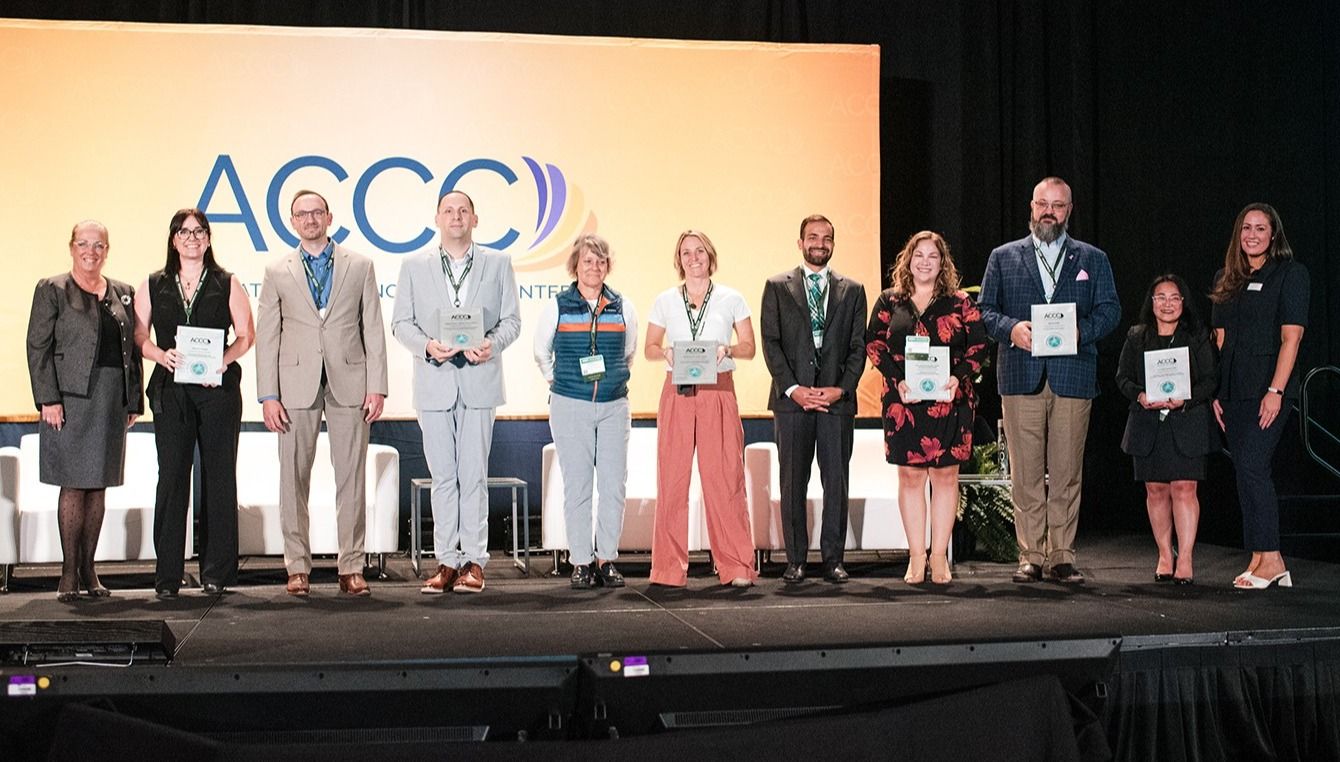
The first installment of Volume 41 of Oncology Issues is here, opening with a spotlight on the six 2025 ACCC Innovator Award winners. This award recognizes ingenuity and pioneering achievements that improve access, quality, and value in cancer care delivery. In addition to recognition across ACCC channels and at its annual National Oncology Conference, winners share their innovations in Oncology Issues, providing an opportunity for cancer centers around the country to learn from their success. Read on for a preview of the extraordinary accomplishments that earned ACCC Innovator Awards in 2025.
As patient populations grow, therapies become less toxic, and innovations allow for more treatment and monitoring outside of the inpatient setting, cancer care delivery has been shifting towards an ambulatory model. Oncology teams are now facing new challenges and complexities associated with outpatient care, including communication breakdowns between teams, inefficient processes, and missing documentation.
At Fox Chase Cancer Center, these growing gaps in care coordination and across workflows led to a reimagining of operations and the development of the Ambulatory Care Excellence (ACE) Model. Thirty team members from across the cancer center participated in discussions to identify the greatest challenges and opportunities for improvement. This article details the development of the ACE Model, pilot implementation within the breast service line, and key takeaways from the collaborative process.
Cancer screening is vital to early detection and treatment but is unequally distributed in the US. Even when patients receive timely screenings, fragmented care pathways may delay necessary follow up. Lifepoint Health, a health care system with sites across the country, created a framework to automate detection, standardize follow-up care, and make early detection available across diverse patient populations.
Lifepoint Health’s initiative recognizes a long-term commitment to increasing screening and follow-up in diverse communities. The Healthy Person Program began in 2018 with a focus on lung cancer and has since evolved to include screenings of the liver, kidney, breast, and beyond. Read the full article for more information on how Lifepoint Health scaled up their initiative and the lessons learned over the 7 years since its implementation.
Older adults with cancer face unique vulnerabilities, including comorbidities, frailty, and psychosocial stressors related to their age. Geriatric assessments help providers capture additional health and lifestyle factors that may not be included in routine oncology exams. This type of assessment also elicits values and goals that may shape the treatment plan.
The patient population of Penn Medicine, Princeton Health’s community cancer program in Plainsboro, New Jersey, is made up of approximately 70% adults aged 65 and over. To better understand this population’s needs and deliver more personalized care, Princeton Health designed and employed a Geriatric Oncology Program to optimize the use of geriatric assessments. This article describes the inception and development of a dedicated team, multidisciplinary meetings, electronic health record (EHR)-based geriatric assessment tools, and a population health dashboard.
WellSpan Cancer Institute in York, Pennsylvania, faced a familiar problem in cancer care: underuse of palliative care. Early engagement with this specialty can improve patient quality of life, strengthen communication and decision-making, and reduce the total cost of care. Yet at WellSpan, “Although clinicians understood the value of palliative care, the system’s processes did not always prompt timely discussions,” Andrew Munchel, MSN, RN, OCN, CPHQ, wrote in Oncology Issues.
Data and feedback of current referral systems were used to develop a machine-learning-informed clinical decision support alert in the EHR to prompt proactive discussions of palliative care. Since April 2023, palliative care referrals among patients with advanced disease have increased by 84% and total cost of care savings reached $1.4 million, among other benefits. Read the full article for takeaways on implementing and sustaining a similar model.
For many patients with cancer, the most difficult moments occur alone at home, when symptoms arise and they feel unsure whether to contact their care team. To address these issues early and prevent a quiet concern from turning into a crisis, Highlands Oncology partnered with Canopy to devise an AI-based electronic patient-reported outcomes program.
Patients were invited to download an app and were educated on how to use this tool to remotely report symptoms to a centralized triage team. “Technology will never replace clinical expertise. But it can help direct that expertise to the right moments,” wrote Lauren Huges, RN, director of infusion services at Highlands Oncology. Read the full article for more takeaways on the present and future of AI in patient care at this cancer program.
In 2020, Shaw Cancer Center recognized that a growing number of patients with cancer experienced significant delays—and in some cases, denials—in home care and hospice services. While the COVID-19 pandemic exacerbated the problem, it also revealed opportunities to improve access to cancer care in the rural mountain communities of Colorado.
Shaw Cancer Center built an oncology-specific home- and community-based palliative care program called Shaw at Home, employing a flexible, interdisciplinary staffing structure to provide seamless care across clinic, home, and telehealth settings. In this article, leaders from Shaw Cancer Center share their keys to success and the importance of a model rooted in community.
In addition to the ACCC Innovator Award winners, ACCC launched a quality improvement initiative to evaluate and strengthen biomarker testing workflows in gynecologic oncology with 3 geographically diverse cancer centers, representing both academic and community settings. Over the course of 6 months, this initiative yielded an assessment of feasibility, identified common barriers, and generated actionable strategies for improvement of biomarker use. Read the full article to learn how data-driven, multidisciplinary collaboration can uncover barriers and foster a culture of shared accountability in delivering patient-centered oncology care.
In addition to the achievements of the 2025 ACCC Innovator Award Winners, this issue features:
Read the full journal and share it with your colleagues to bring Oncology Issues’ insights to your multidisciplinary cancer care team.
Applications for the 2026 ACCC Innovator Awards are open through Monday, February 23. Share the successes and lessons learned at your cancer program for a chance to be recognized on a national stage at the National Oncology Conference and in Oncology Issues.




In recognition of Leukemia and Lymphoma Awareness Month, ACCC compiled a group of resources to help care teams navigate two of the most commonly diagnosed adult leukemias: acute myeloid leukemia and chronic lymphocytic leukemia.