ACCC association of cancer care centers
Join/Renew
Login
Join/Renew
Login
Education & Resources
ACCC eXchange LogInCorporate Member Sponsored ResourcesPresentations & AbstractsPresident's ThemeACCC Connect eLearning LogIn
Publications
Oncology IssuesPatient Assistance & Reimbursement GuideTrending Now in Cancer Care
Events
2026 ACCC Leadership SummitAnnual Meeting & Cancer Center Business SummitCapitol Hill DayNational Oncology ConferenceOncology Reimbursement MeetingsOncology State Society Meetings
Policy & Advocacy
2024 Policy Wrap-Up and ACCC 2025 Policy PrioritiesLetters & StatementsAccess, Payment & Reimbursement ReformWhite Bagging & Brown BaggingAdvocacy ResourcesCancer Moonshot
Membership
Join | RenewWho We AreMembership Types & BenefitsCorporate MembersACCC Member Portal FAQMember Directory
Partners
Oncology State SocietiesPartner OrganizationsCME
News
News ReleasesAdvocacy News ReleasesOncology News
About ACCC
Timeline / 50th Anniversary2025 Impact ReportACCC Innovator AwardsACCC FellowsACCC Senior Staff
Breast CancerMetastatic Breast Cancer
Gastrointestinal CancerBiliary Tract CancerColorectal CancerGastric CancerLiver Cancer
Genitourinary CancerBladder CancerProstate CancerRenal Cell Carcinoma
Gynecologic CancerOvarian Cancer
Head & Neck Cancer
Hematologic MalignanciesAcute Lymphocytic Leukemia (ALL)Acute Myeloid Leukemia (AML)Chronic Lymphocytic Leukemia (CLL)Mantle Cell Lymphoma (MCL)Multiple Myeloma (MM)Myelodysplastic Syndromes (MDS)
Lung CancerNon-Small Cell Lung Cancer (NSCLC)Small Cell Lung Cancer (SCLC)
Sarcoma
Skin CancerMelanomaNon-Melanoma Skin Cancers (NMSC)
Clinical Practice & TreatmentCancer DiagnosticsCare CoordinationEHR Integration for Biomarker TestingQuality Improvement Collaboration: Integration of Precision Medicine in Community OncologyTreatment
Financial NavigationFAN Boot CampFinancial Advocacy Network (FAN) Resource LibraryPatient Assistance & Reimbursement GuidePrior Authorization
Health Equity & Access3, 2, 1, Go! Practical Solutions for Addressing Cancer Care DisparitiesAppalachian Community Cancer AllianceOncology Advanced PractitionersPersonalizing Care for Patients of All BackgroundsSocial Drivers of Health
Patient-Centered CareAddressing Care Disparities for VeteransAdolescent and Young Adult (AYA)Care Action Plans for People with CancerDermatologic ToxicitiesEmpowering CaregiversGeriatric OncologyHealth LiteracyNutritionOncology PharmacyPatient NavigationPsychosocial Care in OncologyShared Decision-MakingSupportive CareSurvivorship Care
Practice Management & OperationsCancer Program FundamentalsLeadership Sustainment and Engagement VideosOncology Practice Transformation and Integration CenterOncology Team Resiliency
ResearchACCC Community Oncology Research Institute (ACORI)
Technology & InnovationTelehealth & Digital Medicine
ACCCBuzz Blog
CANCER BUZZ Podcast
Oncology Issues
Join/Renew
Login
Breast CancerMetastatic Breast Cancer
Gastrointestinal CancerBiliary Tract CancerColorectal CancerGastric CancerLiver Cancer
Genitourinary CancerBladder CancerProstate CancerRenal Cell Carcinoma
Gynecologic CancerOvarian Cancer
Head & Neck Cancer
Hematologic MalignanciesAcute Lymphocytic Leukemia (ALL)Acute Myeloid Leukemia (AML)Chronic Lymphocytic Leukemia (CLL)Mantle Cell Lymphoma (MCL)Multiple Myeloma (MM)Myelodysplastic Syndromes (MDS)
Lung CancerNon-Small Cell Lung Cancer (NSCLC)Small Cell Lung Cancer (SCLC)
Sarcoma
Skin CancerMelanomaNon-Melanoma Skin Cancers (NMSC)
Clinical Practice & TreatmentCancer DiagnosticsCare CoordinationEHR Integration for Biomarker TestingQuality Improvement Collaboration: Integration of Precision Medicine in Community OncologyTreatment
Financial NavigationFAN Boot CampFinancial Advocacy Network (FAN) Resource LibraryPatient Assistance & Reimbursement GuidePrior Authorization
Health Equity & Access3, 2, 1, Go! Practical Solutions for Addressing Cancer Care DisparitiesAppalachian Community Cancer AllianceOncology Advanced PractitionersPersonalizing Care for Patients of All BackgroundsSocial Drivers of Health
Patient-Centered CareAddressing Care Disparities for VeteransAdolescent and Young Adult (AYA)Care Action Plans for People with CancerDermatologic ToxicitiesEmpowering CaregiversGeriatric OncologyHealth LiteracyNutritionOncology PharmacyPatient NavigationPsychosocial Care in OncologyShared Decision-MakingSupportive CareSurvivorship Care
Practice Management & OperationsCancer Program FundamentalsLeadership Sustainment and Engagement VideosOncology Practice Transformation and Integration CenterOncology Team Resiliency
ResearchACCC Community Oncology Research Institute (ACORI)
Technology & InnovationTelehealth & Digital Medicine
ACCCBuzz Blog
CANCER BUZZ Podcast
Oncology Issues
    • Education & Resources
    • Publications
    • Events
    • Policy & Advocacy
    • Membership
    • Partners
    • News
    • About ACCC
ACCC association of cancer care centers
1801 Research Boulevard, Suite 400, Rockville, MD 20850
Tel: 301.984.9496 Fax: 301.770.1949 Email Us
Contact UsVolunteers
Advertise
Career Center
Terms and Conditions
Privacy Policy
ACCC Rebranding
Copyright © 2026 Association of Cancer Care Centers. All Rights Reserved.
Advertisement

Blog

Article

October 11, 2016

Helping AYA Patients Be Loud

By Amanda Patton, ACCC Communications

What does it mean to “be loud”? Sometimes it means just being heard. For adolescent and young adult (AYA) cancer patients, that can be a challenge.
Helping AYA Patients Be Loud

What does it mean to “be loud”? Sometimes it means just being heard.

For adolescent and young adult (AYAs) cancer patients, that can be a challenge. Two powerful sessions at last week’s ACCC 33rd National Oncology Conference focused on how to “hear” the voice of AYAs and understand what patient-centered care looks like to this under-served patient population. This two-part blog series recaps key session takeaways.

In the opening session of the conference, Lauren Lux, LCSW, UNC Lineberger Comprehensive Cancer Center, along with Niklaus and Lucy Steiner, co-founders of the Be Loud! Sophie Foundation, reminded the hundreds of conference attendees just how important it is to raise the volume about the unique and unmet needs of AYA cancer patients. In establishing the Be Loud! Sophie Foundation, the Steiners are honoring the vision of their daughter, Sophie Steiner, who passed away in 2013. The foundation’s name comes from lines of a poem Sophie wrote:

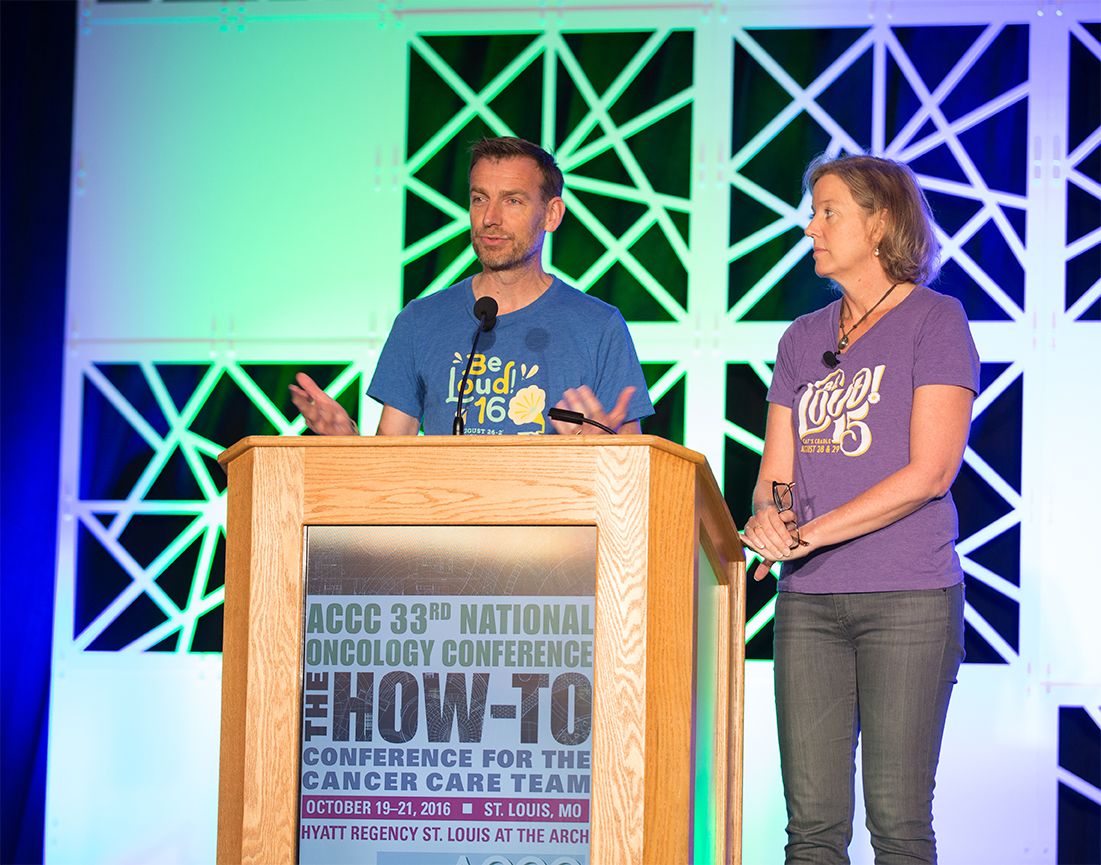
The Steiners speak at the ACCC 33rd National Oncology Conference.

. . . Be loud

And move with grace

Explode with light

Have no fear…

Sophie’s vision was to help young cancer patients stay true to themselves in the face of overwhelming illness. The foundation has helped create the Adolescent and Young Adult Program at UNC Lineberger Comprehensive Cancer Center.

Why Be Loud?

Each year nearly 70,000 AYAs (roughly between the ages of 15 and 38) are diagnosed with cancer, Lux said. This group is:

  • Severely under-represented in clinical trials
  • Less likely to access “adult” oncology support services
  • More likely to experience financial toxicity as a side effect of cancer
  • Seeing only a modest increase in cure rates over recent decades.

The bottom line: AYAs have unique and unmet needs, Lux said.

How can cancer care providers better “hear” AYAs—and help these patients’ needs be addressed? The first step is establishing effective communication. Lux, who is director of the Adolescent and Young Adult Program at the UNC Lineberger Comprehensive Cancer Center, shared practical communication tips for connecting with and empowering AYAs. “You don’t have to be cool,” she reassured attendees. What you do have to be is:

  • authentic
  • flexible
  • compassionate
  • honest
  • willing to get to know the PERSON not just the PATIENT

A second step is to recognize how important having some control over their lives is to AYAs. “I consider myself an ‘opt in’ activity for people,” said Lux. Rather than scheduled appointments, she will drop by patients’ rooms and ask if the timing is good for them. She also encourages lots of visits from friends. The Steiners, too, stressed how important it is for AYAs to have connection with the non-medical, outside world.

Have the Sex Talk

Conversations about fertility preservation and sexual activity are not one-time events for AYAs, Lux said. Fertility preservation is a huge issue for this patient population. It is expensive and is usually not covered by insurance. AYAs need information about sex before, during, and after treatment, and these conversations should also involve their partners, she emphasized. For cancer programs, it is essential to decide who on the care team “owns” having this conversation with patients and their significant others, she said. “When no one owns it, it doesn’t happen.”

With the AYA population, the caregiver role is complex and nuanced. Helping ensure that adolescent and young adult patients are empowered to voice their choices is important, Lux said, and it’s important to empower them in their conversations with their providers.

Take Action

Lux offered some no-cost steps that cancer programs can take today to improve care for their AYA patients:

  • Schedule AYA clinic days—arrange for adolescent and young adult patients to come to clinic on the same day
  • Create an AYA Advisory Council
  • Explore social media options, for example, blogs
  • Provide information on local and national AYA organizations
  • Check out online resources, such as Stupid Cancer and Stupid Cancer meet ups.

The session’s number one takeaway: Ask your AYA patients what’s important to them.

Learn more in part two: “Life, Interrupted, One AYA Patient’s Cancer Journey.”