ACCC association of cancer care centers
Join/Renew
Login
Join/Renew
Login
Education & Resources
ACCC eXchange LogInCorporate Member Sponsored ResourcesPresentations & AbstractsPresident's ThemeACCC Connect eLearning LogIn
Publications
Oncology IssuesPatient Assistance & Reimbursement GuideTrending Now in Cancer Care
Events
2026 ACCC Leadership SummitAnnual Meeting & Cancer Center Business SummitCapitol Hill DayNational Oncology ConferenceOncology Reimbursement MeetingsOncology State Society Meetings
Policy & Advocacy
2024 Policy Wrap-Up and ACCC 2025 Policy PrioritiesLetters & StatementsAccess, Payment & Reimbursement ReformWhite Bagging & Brown BaggingAdvocacy ResourcesCancer Moonshot
Membership
Join | RenewWho We AreMembership Types & BenefitsCorporate MembersACCC Member Portal FAQMember Directory
Partners
Oncology State SocietiesPartner OrganizationsCME
News
News ReleasesAdvocacy News ReleasesOncology News
About ACCC
Timeline / 50th Anniversary2025 Impact ReportACCC Innovator AwardsACCC FellowsACCC Senior Staff
Breast CancerMetastatic Breast Cancer
Gastrointestinal CancerBiliary Tract CancerColorectal CancerGastric CancerLiver Cancer
Genitourinary CancerBladder CancerProstate CancerRenal Cell Carcinoma
Gynecologic CancerOvarian Cancer
Head & Neck Cancer
Hematologic MalignanciesAcute Lymphocytic Leukemia (ALL)Acute Myeloid Leukemia (AML)Chronic Lymphocytic Leukemia (CLL)Mantle Cell Lymphoma (MCL)Multiple Myeloma (MM)Myelodysplastic Syndromes (MDS)
Lung CancerNon-Small Cell Lung Cancer (NSCLC)Small Cell Lung Cancer (SCLC)
Sarcoma
Skin CancerMelanomaNon-Melanoma Skin Cancers (NMSC)
Clinical Practice & TreatmentCancer DiagnosticsCare CoordinationEHR Integration for Biomarker TestingQuality Improvement Collaboration: Integration of Precision Medicine in Community OncologyTreatment
Financial NavigationFAN Boot CampFinancial Advocacy Network (FAN) Resource LibraryPatient Assistance & Reimbursement GuidePrior Authorization
Health Equity & Access3, 2, 1, Go! Practical Solutions for Addressing Cancer Care DisparitiesAppalachian Community Cancer AllianceOncology Advanced PractitionersPersonalizing Care for Patients of All BackgroundsSocial Drivers of Health
Patient-Centered CareAddressing Care Disparities for VeteransAdolescent and Young Adult (AYA)Care Action Plans for People with CancerDermatologic ToxicitiesEmpowering CaregiversGeriatric OncologyHealth LiteracyNutritionOncology PharmacyPatient NavigationPsychosocial Care in OncologyShared Decision-MakingSupportive CareSurvivorship Care
Practice Management & OperationsCancer Program FundamentalsLeadership Sustainment and Engagement VideosOncology Practice Transformation and Integration CenterOncology Team Resiliency
ResearchACCC Community Oncology Research Institute (ACORI)
Technology & InnovationTelehealth & Digital Medicine
ACCCBuzz Blog
CANCER BUZZ Podcast
Oncology Issues
Join/Renew
Login
Breast CancerMetastatic Breast Cancer
Gastrointestinal CancerBiliary Tract CancerColorectal CancerGastric CancerLiver Cancer
Genitourinary CancerBladder CancerProstate CancerRenal Cell Carcinoma
Gynecologic CancerOvarian Cancer
Head & Neck Cancer
Hematologic MalignanciesAcute Lymphocytic Leukemia (ALL)Acute Myeloid Leukemia (AML)Chronic Lymphocytic Leukemia (CLL)Mantle Cell Lymphoma (MCL)Multiple Myeloma (MM)Myelodysplastic Syndromes (MDS)
Lung CancerNon-Small Cell Lung Cancer (NSCLC)Small Cell Lung Cancer (SCLC)
Sarcoma
Skin CancerMelanomaNon-Melanoma Skin Cancers (NMSC)
Clinical Practice & TreatmentCancer DiagnosticsCare CoordinationEHR Integration for Biomarker TestingQuality Improvement Collaboration: Integration of Precision Medicine in Community OncologyTreatment
Financial NavigationFAN Boot CampFinancial Advocacy Network (FAN) Resource LibraryPatient Assistance & Reimbursement GuidePrior Authorization
Health Equity & Access3, 2, 1, Go! Practical Solutions for Addressing Cancer Care DisparitiesAppalachian Community Cancer AllianceOncology Advanced PractitionersPersonalizing Care for Patients of All BackgroundsSocial Drivers of Health
Patient-Centered CareAddressing Care Disparities for VeteransAdolescent and Young Adult (AYA)Care Action Plans for People with CancerDermatologic ToxicitiesEmpowering CaregiversGeriatric OncologyHealth LiteracyNutritionOncology PharmacyPatient NavigationPsychosocial Care in OncologyShared Decision-MakingSupportive CareSurvivorship Care
Practice Management & OperationsCancer Program FundamentalsLeadership Sustainment and Engagement VideosOncology Practice Transformation and Integration CenterOncology Team Resiliency
ResearchACCC Community Oncology Research Institute (ACORI)
Technology & InnovationTelehealth & Digital Medicine
ACCCBuzz Blog
CANCER BUZZ Podcast
Oncology Issues
    • Education & Resources
    • Publications
    • Events
    • Policy & Advocacy
    • Membership
    • Partners
    • News
    • About ACCC
ACCC association of cancer care centers
1801 Research Boulevard, Suite 400, Rockville, MD 20850
Tel: 301.984.9496 Fax: 301.770.1949 Email Us
Contact UsVolunteers
Advertise
Career Center
Terms and Conditions
Privacy Policy
ACCC Rebranding
Copyright © 2026 Association of Cancer Care Centers. All Rights Reserved.
Advertisement

Blog

Article

March 13, 2020

AMCCBS Addresses Federal Healthcare Policy

AMCCBS Addresses Federal Healthcare Policy

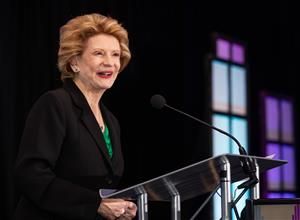
“In this town, we’ve seen healthcare become a political lightning rod,” U.S. Senator Debbie Stabenow (D-MI) told attendees on March 5 at the ACCC 46th Annual Meeting & Cancer Center Business Summit (AMCCBS) in Washington, D.C.

As our nation grapples with unprecedented challenges—both individually and collectively—posed by the world-wide novel COVID-19 outbreak, it seems as though lightning has indeed struck and clearly illuminated areas where change is critically needed.

To move forward with healthcare reform, Senator Stabenow told conference attendees, “We need to start not from a political or ideological position, but from a position of what works and how to make things better.”

She urged oncology professionals to stay engaged in policy development. “When you speak up, people listen. You can and must remain engaged and help us move forward in a positive way. I know this can be done.”

At this moment, the U.S. healthcare system is certainly in the spotlight, and this high-voltage topic continues to amp up in this election year. As the country deals with the healthcare complexities unleashed by the COVID-19 virus, awareness of the flaws and gaps in our healthcare delivery system is heightened. We are witnessing the real-world, practical necessity of leveraging technology to improve healthcare delivery, and, in particular, the critical value of integrating telehealth and telemedicine into our healthcare system. As we experience the uncertainties surrounding the COVID-19 outbreak, a comment by Senator Stabenow crystalizes our reality: “For every one of us, healthcare is not political. It's personal.”


In the midst of this turbulent landscape, with the presidential campaigns gathering momentum, conference attendees heard perspectives from policy experts Kavita Patel, MD, MS, a Non-Resident Fellow in Economic Studies at the USC-Brookings Schaeffer Initiative for Health Policy and Vice President of Johns Hopkins Medicine; and Paul Edattel, Principal of Todd Strategy, LLC. Moderating the conversation was Dennis A. Cardoza, Director of Public Affairs at Foley & Lardner LLP.

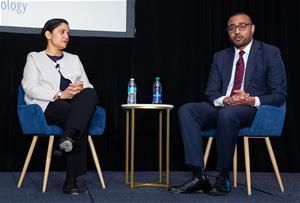
200305_101123_JWR

Before the prognosticating began, Cardoza asked attendees to weigh in on the state of healthcare in the U.S. in 2020. In live polling, here’s what they had to say (see image below):

With three-quarters of respondents perceiving our healthcare system to be resting on shaky ground, Dr. Patel and Paul Edattel shared their views on how the November elections will (or will not) impact federal healthcare policy:

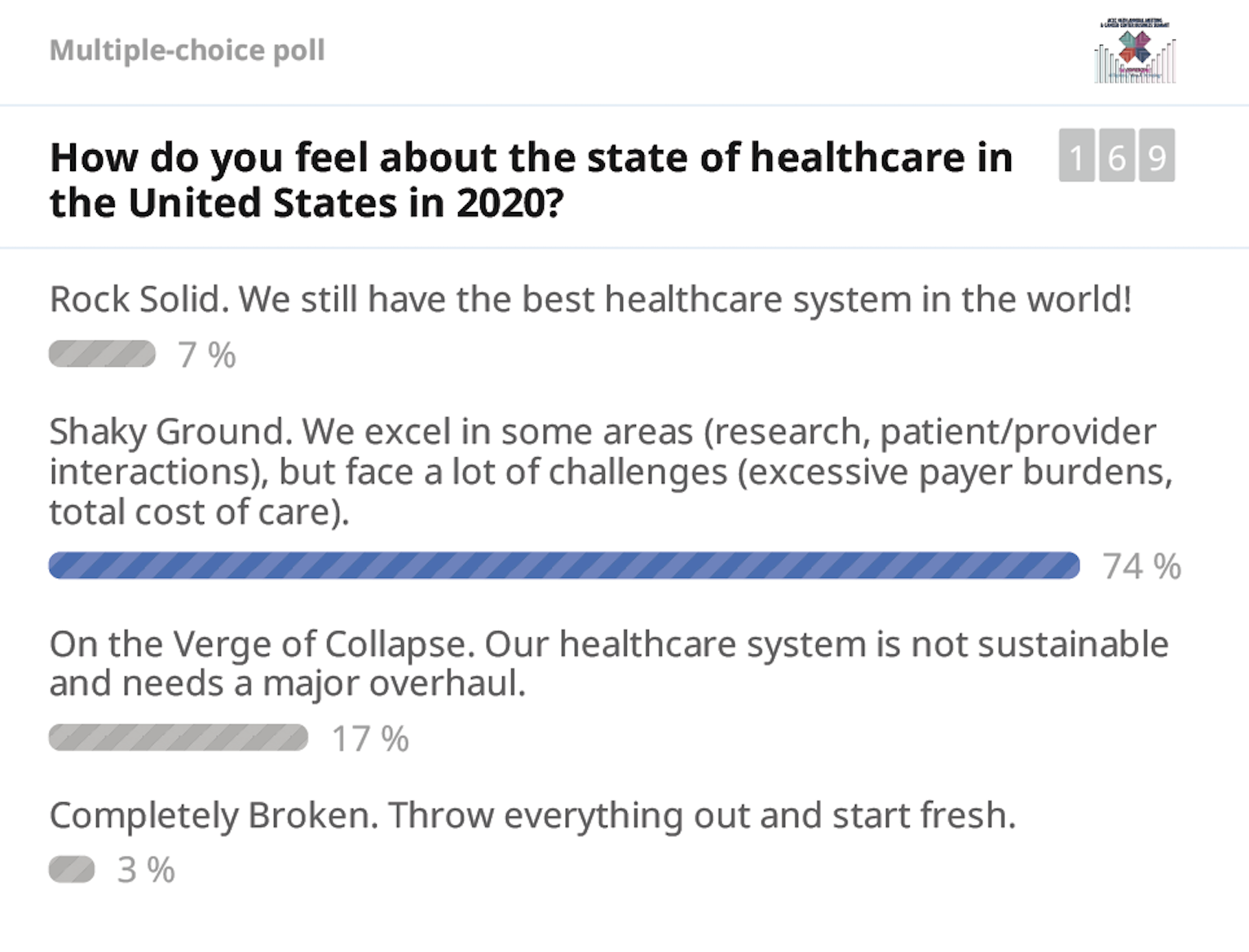
Poll Question AMCCBS
  • Value Models. These are here to stay, speakers agreed. “If you're in a value model, I think those trends continue,” said Dr. Patel. “We will see continuous downward pressure to reduce costs.”
  • Drug Pricing and International Pricing Index. While both Edattel and Dr. Patel agreed that “Nothing is going to get done on drug pricing this year,” the fact that legislation has been proposed is a signal that this issue is not going away.
  • Medicaid Block Grants: “I’m not a fan of block grants,” said Dr. Patel. She noted that when states have a fluctuation in Medicaid enrollees or changes in costs, “They will have to make some arcane policy cuts.” For patients with cancer, she added, “There could be real scenarios … that make it difficult for them to have access to care, drugs. People have to play through what that will look like when they reach their cap.”

    “People aren’t thinking about Medicaid costs in a rational way,” said Edattel. “Medicaid is about 25 percent of total state spending. That’s not sustainable. There will be a resurgence of looking at these programs … in terms of sustainability.”
  • The Supreme Court’s Pending Decision on ACA: Opinions were aligned on this as well. Both speakers believe that the Supreme Court’s decision is not likely to impact coverage provisions of the Affordable Care Act (ACA). “The individual mandate will fall,” predicted Edattel, “but the rest of the ACA will stay in place.”

    “A more important question for cancer care may be Medicare Advantage,” noted Dr. Patel. “If you’re in an area with low penetration of Medicare Advantage, that is not going to continue.”
  • Surprise Billing: “Members [of Congress] want to get something done on this issue for their constituents,” said Edattel. “It has united legislators on both sides.” Edattel further noted that support for the legislation is not dividing along party lines, but according to whether the legislator supports the provider or payer perspective on this issue. “Members of congress are having trouble understanding ramifications of surprise medical billing,” added Dr. Patel. “[The discussion is] not going to the level of understanding of what the impact is on providers.”
  • 340B Program: “I don't think the spotlight on 340B is going to go away anytime soon,” said Edattel. “I completely agree,” responded Dr. Patel. “You're going to get regulatory as well as legislative movement on this.”

As the conversation concluded, Cardoza asked for final thoughts. Edattel reminded attendees, “Pay close attention to CMMI. It has a new leader. We're likely to see some impactful models come in the next few months. CMMI is required to put the final Radiation Oncology Model out there.” Dr. Patel turned to the topic of telehealth. “We still have very little uptake of telecare,” she said. “You could offer it [now]. We don’t offer it very well. Shocking or not, people still want to see the doctor face-to-face.”

________________________________________