ACCC association of cancer care centers
Join/Renew
Login
Join/Renew
Login
Education & Resources
ACCC eXchange LogInCorporate Member Sponsored ResourcesPresentations & AbstractsACCC Connect eLearning LogIn
Publications
Oncology IssuesPatient Assistance & Reimbursement GuideTrending Now in Cancer CareBusiness Case Studies for Hiring New Staff
Events
2026 ACCC Leadership SummitAnnual Meeting & Cancer Center Business SummitCapitol Hill DayNational Oncology ConferenceOncology Reimbursement MeetingsOncology State Society Meetings
Policy & Advocacy
2024 Policy Wrap-Up and ACCC 2025 Policy PrioritiesLetters & StatementsAccess, Payment & Reimbursement ReformWhite Bagging & Brown BaggingAdvocacy ResourcesCancer Moonshot
Membership
Join | RenewWho We AreMembership Types & BenefitsCorporate MembersACCC Member Portal FAQMember Directory
Partners
Oncology State SocietiesPartner OrganizationsCME
News
News ReleasesAdvocacy News ReleasesOncology News
About ACCC
Timeline / 50th Anniversary2025 Impact ReportPresident's ThemeACCC Innovator AwardsACCC FellowsBoard of TrusteesACCC Senior Staff
Breast CancerMetastatic Breast Cancer
Gastrointestinal CancerBiliary Tract CancerColorectal CancerGastric CancerLiver Cancer
Genitourinary CancerBladder CancerProstate CancerRenal Cell Carcinoma
Gynecologic CancerOvarian Cancer
Head & Neck Cancer
Hematologic MalignanciesAcute Lymphocytic Leukemia (ALL)Acute Myeloid Leukemia (AML)Chronic Lymphocytic Leukemia (CLL)Mantle Cell Lymphoma (MCL)Multiple Myeloma (MM)Myelodysplastic Syndromes (MDS)
Lung CancerNon-Small Cell Lung Cancer (NSCLC)Small Cell Lung Cancer (SCLC)
Sarcoma
Skin CancerMelanomaNon-Melanoma Skin Cancers (NMSC)
Clinical Practice & TreatmentCancer DiagnosticsCare CoordinationEHR Integration for Biomarker TestingQuality Improvement Collaboration: Integration of Precision Medicine in Community OncologyTreatment
Financial NavigationFAN Boot CampFinancial Advocacy Network (FAN) Resource LibraryPatient Assistance & Reimbursement GuidePrior Authorization
Health Equity & Access3, 2, 1, Go! Practical Solutions for Addressing Cancer Care DisparitiesAppalachian Community Cancer AllianceOncology Advanced PractitionersPersonalizing Care for Patients of All BackgroundsSocial Drivers of Health
Patient-Centered CareAddressing Care Disparities for VeteransAdolescent and Young Adult (AYA)Care Action Plans for People with CancerDermatologic ToxicitiesEmpowering CaregiversGeriatric OncologyHealth LiteracyNutritionOncology PharmacyPatient NavigationPsychosocial Care in OncologyShared Decision-MakingSupportive CareSurvivorship Care
Practice Management & OperationsCancer Program FundamentalsLeadership Sustainment and Engagement VideosOncology Practice Transformation and Integration CenterOncology Team Resiliency
ResearchACCC Community Oncology Research Institute (ACORI)
Technology & InnovationTelehealth & Digital Medicine
ACCCBuzz Blog
CANCER BUZZ Podcast
Oncology Issues
Join/Renew
Login
Breast CancerMetastatic Breast Cancer
Gastrointestinal CancerBiliary Tract CancerColorectal CancerGastric CancerLiver Cancer
Genitourinary CancerBladder CancerProstate CancerRenal Cell Carcinoma
Gynecologic CancerOvarian Cancer
Head & Neck Cancer
Hematologic MalignanciesAcute Lymphocytic Leukemia (ALL)Acute Myeloid Leukemia (AML)Chronic Lymphocytic Leukemia (CLL)Mantle Cell Lymphoma (MCL)Multiple Myeloma (MM)Myelodysplastic Syndromes (MDS)
Lung CancerNon-Small Cell Lung Cancer (NSCLC)Small Cell Lung Cancer (SCLC)
Sarcoma
Skin CancerMelanomaNon-Melanoma Skin Cancers (NMSC)
Clinical Practice & TreatmentCancer DiagnosticsCare CoordinationEHR Integration for Biomarker TestingQuality Improvement Collaboration: Integration of Precision Medicine in Community OncologyTreatment
Financial NavigationFAN Boot CampFinancial Advocacy Network (FAN) Resource LibraryPatient Assistance & Reimbursement GuidePrior Authorization
Health Equity & Access3, 2, 1, Go! Practical Solutions for Addressing Cancer Care DisparitiesAppalachian Community Cancer AllianceOncology Advanced PractitionersPersonalizing Care for Patients of All BackgroundsSocial Drivers of Health
Patient-Centered CareAddressing Care Disparities for VeteransAdolescent and Young Adult (AYA)Care Action Plans for People with CancerDermatologic ToxicitiesEmpowering CaregiversGeriatric OncologyHealth LiteracyNutritionOncology PharmacyPatient NavigationPsychosocial Care in OncologyShared Decision-MakingSupportive CareSurvivorship Care
Practice Management & OperationsCancer Program FundamentalsLeadership Sustainment and Engagement VideosOncology Practice Transformation and Integration CenterOncology Team Resiliency
ResearchACCC Community Oncology Research Institute (ACORI)
Technology & InnovationTelehealth & Digital Medicine
ACCCBuzz Blog
CANCER BUZZ Podcast
Oncology Issues
    • Education & Resources
    • Publications
    • Events
    • Policy & Advocacy
    • Membership
    • Partners
    • News
    • About ACCC
ACCC association of cancer care centers
1801 Research Boulevard, Suite 400, Rockville, MD 20850
Tel: 301.984.9496 Fax: 301.770.1949 Email Us
Contact UsVolunteers
Advertise
Career Center
Terms and Conditions
Privacy Policy
ACCC Rebranding
Copyright © 2026 Association of Cancer Care Centers. All Rights Reserved.
HomeACCCBuzz Blog

#ACCCNOC: The Psychosocial Oncology Professionals Symposium and a Fireside Chat With ACCC’s President

October 16, 2025

Author(s):

Rachel Radwan

Day 1 of the ACCC 42nd National Oncology Conference (NOC) featured discussions of psychosocial care and a fireside chat with ACCC President, Una Hopkins, DNP, MSN, FNP-BC, NE-BC, RN, FACCC.
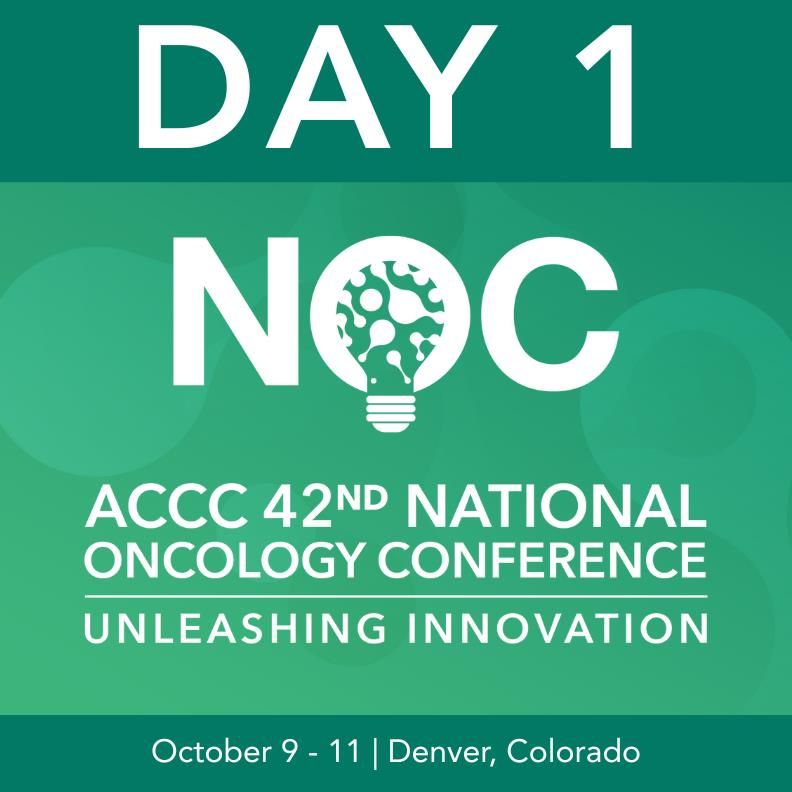
#ACCCNOC: The Psychosocial Oncology Professionals Symposium and a Fireside Chat With ACCC’s President

Each year, the Association of Cancer Care Centers (ACCC) National Oncology Conference (NOC) provides a forum for cancer program administrators, operations leaders, clinicians, and other members of the multidisciplinary care team to learn, connect, and be inspired by the innovations shaping cancer care today. This year, the 42nd NOC is taking place on October 15-17 in Denver, Colorado, and boasts a lineup of exceptional content ranging from machine learning-enabled decision support to collaborative care models that bridge oncology and primary care—and everything in between.

Transforming Cancer Care Through Psychosocial Support

Day 1 opened with the Psychosocial Oncology Professionals Symposium (POPs) pre-conference: a full-day symposium with cutting-edge insights, practical tools, and heartfelt connection at its core. Clinicians, navigators, and patient advocates converged to explore topics such as trauma-informed financial conversations, AI-enhanced psychosocial support, and the emotional complexities of chimeric antigen receptor (CAR) T-cell therapy with nationally recognized experts in the field.

Christina Bach, MBE, LCSW, OSW-C, FAOSW, educational content specialist and psychosocial content editor at Oncolink, and Aimee Hoch, LSW, OSW-C, FACCC, oncology financial navigator at St. Luke's University Health Network, took the stage first to discuss the integration of the principles of motivational interviewing with trauma-informed care practices. “Early and ongoing compassionate cost-of-care conversations are essential to addressing financial toxicity,” said Hoch. “Using a trauma-informed care lens and motivational interviewing techniques helps build trust, meet patients where they are, and provide a meaningful framework for these critical discussions.”

Jennifer Bires, MSW, LCSW, OSW-C, executive director of Life with Cancer and Patient Experience at Inova Schar Cancer Institute, examined the complex topic of AI’s role in psychosocial care. She highlighted both its potential to enhance early detection of psychological distress and expand access to interventions, as well as the important limitations and concerns surrounding the technology. Namely, depersonalizing care, issues of data privacy and algorithmic bias, and the irreplaceable value of human empathy.

“Embracing AI in psychosocial oncology presents a profound opportunity to enhance patient access and support, fostering a better quality of life,” said Bires. “It’s our ethical responsibility to ensure that these innovations are implemented safely, allowing all patients to benefit from compassionate care and understanding.”

Another session was dedicated to supporting a population that is too often neglected in cancer care: caregivers. Susan Hedlund, LCSW, FAOSW, director of Supportive Care Initiatives at the Biller Family Foundation, shed light on the psychosocial challenges commonly experienced by caregivers of individuals with prostate cancer, including psychological distress, physical health consequences, and spiritual and existential distress. “Family caregivers are the backbone of our health care systems—often providing complex care with little or no training, sacrificing their own financial future and personal health,” she said. “Despite their critical role, most caregivers feel unprepared.”

According to Hedlund, caregiver support is a largely unmet need in the US: “We are on the brink of a caregiver crisis, because we don’t have an infrastructure that supports caregivers in a comprehensive way.” To illustrate this, Hedlund pointed to the hundreds of randomized control trials that demonstrate the significant benefits of providing supportive care services for caregivers. Key targets of care include anxiety management, communication skills building, balancing caregiving with other responsibilities, and existential distress coping strategies. Other empirically supported approaches are psychoeducation, cognitive behavioral therapy, dyadic interventions, and meaning-centered psychotherapy—each addressing different psychosocial challenges caregivers often face throughout their loved one’s cancer treatment.

Above all, Hedlund emphasized the importance of delivering supportive care services for caregivers as early as possible and continually asking how caregivers are doing at every opportunity.

In the final session of the pre-conference, Belinda Paulicin, DSW, LCSW, OSW-C, vice president of Helpline, Education and Outreach at Cancer Support Community, discussed the emotional distress many patients experience during CAR T-cell therapy. CAR T-cell therapy often represents a patient’s last hope, and therefore initiates a journey that is both medically demanding and emotionally exhausting. Paulicin also acknowledged the stress experienced by caregivers, who are tasked with constant vigilance of the patient as they watch for symptoms of cytokine release syndrome or neurotoxicity.

To address these unique stressors brought on by CAR T-cell therapy, Paulicin advocated for several evidence-informed interventions, such as cognitive behavioral therapy, acceptance and commitment therapy, meaning-centered psychotherapy, and a navigator-therapist dyad model.

A Fireside Chat With the 2025-2026 ACCC President

The spotlight then shifted to the 2025 ACCC Innovators, as 6 outstanding programs were recognized for their pioneering work in cancer care. The awards presentation and celebration of innovation paved the way for the ACCC President’s Fireside Chat. Una Hopkins, DNP, MSN, FNP-BC, NE-BC, RN, FACCC, 2025-2026 ACCC President and director of Nursing Research and Evidence-Based Practice at Montefiore Einstein Comprehensive Cancer Center, led a dynamic panel discussion on her President’s Theme, Designing Oncology Care to Meet the Needs of a Growing Patient Population, joined by providers from 3 cancer programs whose innovative care models are actively addressing this challenge.

First, Karla Bowen, director of Nursing Operations at Orland Health Cancer Institute, shared her program’s AI template management tool within the electronic health record, which has improved infusion operations, increased capacity, and enhanced both patient and provider satisfaction. Previously, patient scheduling required multiple screens of information to reference patient addresses, treatment locations, and route mapping. With this innovation, the information is centralized into 1 screen, streamlining the process immensely. “It used to take about 7 days to get patients in. Now it’s within 24-48 hours,” said Bowen.

Brian Lasonde, MPAS, PA-C, advanced practice clinician manager for Medical Specialties at Sutter Health – Palo Alto Medical Foundation, has meanwhile leveraged AI at his program to develop patient education videos. “Instead of repeating the same statement over and over, we can now easily generate a script and present it as a video,” he explained. “When the patient finishes watching, we can focus on addressing their questions. It has saved us a tremendous amount of time.”

With the rise of short form video content, Lasonde acknowledged that more and more patients are turning to platforms like TikTok and YouTube for information about their health. “We need to meet patients where they are with the technology that exists,” he emphasized. “We need to beat misinformation with good information.”

Another panelist, Charles Shelton, MD, radiation oncologist and medical director at Outer Banks Health, commented that, as a provider, “I can never deliver the same information in the same way every time. So, I love the fact that [with these videos] you are giving the same information to every patient, every time.” Dr. Hopkins agreed that the implications from an equity standpoint are impressive: “Imagine when we can give the same information to every patient, every time, in every language. That is innovation.”

Finally, Dr. Shelton shared his perspective as a rural oncologist, highlighting his program’s use of virtual cancer conferences to connect with other centers. As a rural hospital in a resource-challenged region, his team recognized the need to make cancer care an essential service and piloted a virtual conference in 2014.

Initially, participants met 3 days a week to review cases collaboratively as peers before starting therapy. “We found that we weren’t doing too well in rural America. We weren’t all doing the same thing. We weren’t all following NCCN or ASCO,” Dr. Shelton explained. "We discovered that 20% of our patients needed to have their care plan changed. Some sites were as high as 48%.”

Within 5 years, that number dropped to 10%, and now, 11 years later, it’s down to just 1%. Dr. Shelton emphasized that vital information and resources reach rural areas only through intentional collaboration. “For a rural community of only 35,000, this is incredible and a model that we can magnify in other areas across the country,” he said. “Now, we meet 1 hour every day, which adds up to 350 hours a year of knowledge and collaboration from incredibly smart and experienced professionals. This has built our workforce capacity tremendously. It’s a game changer for rural America.”

Don’t miss the next blog covering the 42nd National Oncology Conference, which will feature presentations from the 6 2025 ACCC Innovators about how other cancer centers can adopt their successful models.


Related Content

Confronting a Lethal Cancer: Duke Launches Multidisciplinary Pancreatic Cancer Center for Earlier Detection and Better OutcomesACCCBuzz Blog

Confronting a Lethal Cancer: Duke Launches Multidisciplinary Pancreatic Cancer Center for Earlier Detection and Better Outcomes

Rachel Radwan

March 25, 2026

From Hospital to Home: A Solution for Proactive Symptom Monitoring and Precise Care ACCCBuzz Blog

From Hospital to Home: A Solution for Proactive Symptom Monitoring and Precise Care

Rachel Radwan

March 23, 2026

A Candid Conversation About the Power of Early Palliative CareACCCBuzz Blog

A Candid Conversation About the Power of Early Palliative Care

Monique J. Marino

March 19, 2026

Rare but Real: Lessons From Providers Treating BPDCN and MCLACCCBuzz Blog

Rare but Real: Lessons From Providers Treating BPDCN and MCL

Rachel Radwan

February 27, 2026

Highlights From Volume 41, Number 1 Oncology IssuesACCCBuzz Blog

Highlights From Volume 41, Number 1 Oncology Issues

Gabrielle Stearns

February 18, 2026

Implementing a Structured, Scalable Geriatric Oncology ProgramOncology Issue

Implementing a Structured, Scalable Geriatric Oncology Program

Ramy Sedhom, MD; Julianna Ani, MPH

February 16, 2026

Recognizing Innovation in Cancer PreventionACCCBuzz Blog

Recognizing Innovation in Cancer Prevention

Gabrielle Stearns

February 12, 2026

3 Surprising Truths About Leading Through Change: Strategies for Oncology Leaders to Thrive in the AI EraACCCBuzz Blog

3 Surprising Truths About Leading Through Change: Strategies for Oncology Leaders to Thrive in the AI Era

Michelle Rozen, PhD

February 5, 2026

Upcoming Events

ACCC Leadership Summit
Oncology

ACCC Leadership Summit

In Person Meeting & NetworkingApril 16, 2026 at 8:00 AM EDT
Express Interest Now!
ACCC Oncology Reimbursement Meeting | Charleston
Oncology

ACCC Oncology Reimbursement Meeting | Charleston

In Person Meeting & NetworkingMay 6, 2026 at 8:00 AM EDT560 King Street, Charleston, SC, USAHyatt Place + Hyatt House Charleston - Historic District, Charleston
Register Now!
ACCC Oncology Reimbursement Meeting | St. Louis
Oncology

ACCC Oncology Reimbursement Meeting | St. Louis

In Person Meeting & NetworkingMay 13, 2026 at 8:00 AM CDT1335 South Lindbergh Boulevard, St. Louis, MO, USAHilton St. Louis Frontenac, St. Louis
Register Now!
ACCC 43rd National Oncology Conference
Oncology

ACCC 43rd National Oncology Conference

In Person Conference & ConventionOctober 21, 2026 at 8:00 AM MDT450 Summer St, Boston, MA 02210Omni Boston Hotel at the Seaport, Boston
Register Now!
 LOS 2026 Advocacy Summit
Oncology

LOS 2026 Advocacy Summit

In Person Conference & ConventionApril 1, 2026 at 5:00 PM CDT355 North Boulevard, Baton Rouge, Louisiana, USACity Club of Baton Rouge, Baton Rouge
Register Now!
COS 2026 Dinner Symposium - Grand Junction
Oncology

COS 2026 Dinner Symposium - Grand Junction

In Person Conference & ConventionApril 9, 2026 at 6:00 PM MDT840 Kennedy Avenue, Grand Junction, CO, USADevil's Kitchen, Grand Junction
Register Now!
TOPS 2026 Annual Conference
Oncology

TOPS 2026 Annual Conference

In Person Conference & ConventionApril 11, 2026 at 7:00 AM CDT201 8th Avenue South, Nashville, TN 37203, USAJW Marriott Nashville, Nashville
Register Now!
MSCO 2026 Spring Conference
Oncology

MSCO 2026 Spring Conference

In Person Conference & ConventionApril 15, 2026 at 5:00 PM CDTPark Pl Blvd, St. Louis Park, MN, USADoubleTree by Hilton Hotel Minneapolis - Park Place, St. Louis Park
Register Now!
KaSCO 2026 Spring Dinner Symposium
Oncology

KaSCO 2026 Spring Dinner Symposium

In Person Conference & ConventionApril 15, 2026 at 6:00 PM CDT101 W 22nd St, Kansas City, MO, USALidia's Kansas City, Kansas City
Register Now!
WVOS 2026 Spring Conference
Oncology

WVOS 2026 Spring Conference

In Person Conference & ConventionApril 16, 2026 at 8:00 AM EDT200 Lee Street East, Charleston, WV, USACharleston Marriott Town Center, Charleston
Register Now!
DOS 2026 Spring Conference
Oncology

DOS 2026 Spring Conference

In Person Conference & ConventionApril 16, 2026 at 5:30 PM CDT215 Broadway North, Fargo, ND 58102, USAJasper Hotel, Fargo
Register Now!
Advertisement
Advertisement

Trending Now on
ACCCBuzz Blog

Confronting a Lethal Cancer: Duke Launches Multidisciplinary Pancreatic Cancer Center for Earlier Detection and Better Outcomes

Confronting a Lethal Cancer: Duke Launches Multidisciplinary Pancreatic Cancer Center for Earlier Detection and Better Outcomes

In an effort to improve outcomes and deliver the highest quality of care to patients with pancreatic cancer, Duke Cancer Institute launched a multidisciplinary Pancreatic Cancer Center that prioritizes thorough surveillance of high-risk patients, stays at the forefront of clinical trials, and considers the role of comorbidities.

From Hospital to Home: A Solution for Proactive Symptom Monitoring and Precise Care

From Hospital to Home: A Solution for Proactive Symptom Monitoring and Precise Care

Electronic patient-reported outcomes (ePROs) can address limited visibility into patients' health and well-being between visits. Yet, many solutions remain generic in their workflows and mainly help capture adverse events, without helping care teams proactively manage or prevent them from worsening. Cureety offers a new kind of ePRO solution, specialized in oncology and designed to make care better quality, more efficient, and more proactive for all patients.

A Candid Conversation About the Power of Early Palliative Care

A Candid Conversation About the Power of Early Palliative Care

In the latest episode of Oncology Unscripted, hosts Deirdre Saulet and Mark Liu sit down with Andrew Ambort, DO, a palliative care consulting physician whose work in reshaping the role of palliative care across oncology helped WellSpan Health win a 2025 ACCC Innovator Award.

Rare but Real: Lessons From Providers Treating BPDCN and MCL

Rare but Real: Lessons From Providers Treating BPDCN and MCL

Patients with rare diseases and their families often feel isolated and overlooked, with many medical questions left unanswered and few people who can empathize with their condition. Rare Disease Day is observed globally each year to bring awareness for diseases and the people behind them by promoting the challenges these rare medical journeys pose for patients and caregivers.

View All ACCCBuzz Blogs

Recently Heard on
CANCER BUZZ Podcast

Transforming Palliative Care in Oncology – [Video Podcast] Ep. 227

Streamlining Access to TIL Cell Therapy for Melanoma

Policy in Practice: Change Hits the Clinic – [Podcast] Ep. 225

Addressing Psychosocial Distress With Psychedelic-Inspired Therapies – [Podcast] Ep. 224

View All Podcasts

Latest from Oncology Issues

February 2026
February 2026
December 2025
October 2025
August 2025
June 2025
View All Oncology Issues

Join the Conversation

ACCC eXchange Digital Banner
Login