Highlights from the third and final day of #ACCCNOC.
The third and final day of the Association of Community Cancer Centers (ACCC) 40th National Oncology Conference began with a spellbinding panel discussion on women oncology leaders. The panelists discussed the challenges they had experienced as women leaders in a stratosphere largely inhabited and dictated by men. “As a woman of color in a leadership role, one of my biggest challenges has been, being the only one at the table,” said Renea Duffin, MPA, vice president, Cancer Support and Outreach, Mary Bird Perkins Cancer Center. “But I’ve learned to be confident in myself.” Debra Patt, MD, PhD, MBA, executive vice president, Texas Oncology echoed Duffin’s perspective. “So many of us [women] face imposter syndrome and gender discrimination,” Dr. Patt said. “Many women also feel a struggle between our personal and professional obligations... I was finally able to resolve it to myself as by understanding that my family is my priority, but I also need to find joy in my life, and I find joy in work and in what I do.”
Panelists went on to share their experiences facing gender bias in the workplace. Emily Touloukian, DO, president, Coastal Cancer Center recalled an occurrence during a panel session she was participated on where the male physicians were referred to as, “doctor,” and the female physicians were called by their first names. Reiterating the effects of gender bias in the workplace, Kathryn E. Hudson, MD, director of Survivorship, Texas Oncology said, “Dominant characteristics are considered a positive attribute for a man but considered negative for women. Things like passion and ambition.” Duffin echoed this sentiment, stating, It’s ok for men to show their passion, but for women we are expected to coddle, but I’m a get it done girl. So, I have had to tone down my passion just to be respected, and not feed into the angry black woman stereotype. Building on those comments, Krista Nelson, LCSW OSW-C FAOSW FAPOS FACCC, senior oncology social worker and program manager, Cancer Support Services & Compassion at Providence Health & Services and past ACCC president, said she uses the term, “he-peating,” to describe the credence given to a woman’s words when repeated by her male counterpart.
In delivering their closing remarks, each panelist emphasized the importance of mentorship for women who hope to hold leadership positions in oncology. “Seek out mentors,” Dr. Hudson said. Nelson recapitulated this sentiment while urging oncology leaders to foster ambition among their staff members. “When I reflect on what type of leader I am, I think of how many people I have helped do what they want to do,” she concluded.
The session was followed by a timely discussion on the importance of mentorship by Lailea Noel, PhD, MSW, assistant professor, Steve Hicks School of Social Work, Affiliate Faculty, Dell Medical School, The University of Texas at Austin, her mentee, Alexa Cumming, undergraduate student, Neuroscience and Prehealth, Diversity in Cancer Research Program Intern, The University of Texas at Austin, and Kristen E. Wynn, program manager, Livestrong Cancer Institutes, Dell Medical School, The University of Texas at Austin. During the session, Cummings shared the value Dr. Noel continues to provide her as a mentor and a strong representation of female leadership in the medical setting. Wynn believes this relationship epitomizes the effect mentorship programs can have in developing the next generation of oncology leaders.
A series of concurrent sessions followed to round out the morning’s agenda. Margaret Liang MD, MSHPM, gynecologic oncologist and health services researcher program director for the Gynecologic Oncology Fellowship Program Cedars-Sinai Medical Center, Cedars-Sinai Cancer Center, discussed the impact of financial and time toxicity (the indirect time costs of treatment) on patients with cancer. Dr. Liang also discussed how ACCC’s Financial Advocacy Services Guidelines can be used in the implementation of business-focused but patient-centered financial advocacy programs.
Tia Foster, project director, Northwestern Medicine, shared strategies for strengthening the employee-manager relationship. According to Foster, organizations should embrace the concept of “stay interviews” over “exit interviews.” “During your stay interviews, ask open-ended questions like: Does your role match what was described in your job description or interview process? If not, what is different? Do you feel included in decisions that affect your work? How are your relationships with other team members? Find out if there is anything you can improve on,” Foster said.
Patrick Dineen, MD, MBA, program manager, Cancer Prevention and Screening, Office of Community Outreach and Engagement, Stony Brook Cancer Center, detailed how his cancer program used an accessible mobile mammography van to increase breast cancer screening rates for its Latina community from 9% at its breast center to 69% via the mobile unit.
Karline Peal, MBA, associate operating officer, Vanderbilt University Medical Center, Vanderbilt Ingram Cancer Center, described how technology will support, not replace the healthcare workforce. “In the past, the check-in kiosks were hardly ever used, older patients didn’t want to use them and preferred interacting with front desk staff. Today, post-pandemic, we now have a virtual front desk, online scheduling, and Epic MyChart,” Peal said. “Technology allows our staff to do what they do best—care for patients.”
Heidi Ko, DO, breast medical oncologist and medical director at Lab Corp Oncology, led Mohamad K. Khasawneh, MD, staff hematologist and oncologist, Pikeville Medical Leonard Lawson Cancer Center, in a discussion on how patients can be identified for tailored therapy through biomarker testing and how this testing can impact treatment decisions.
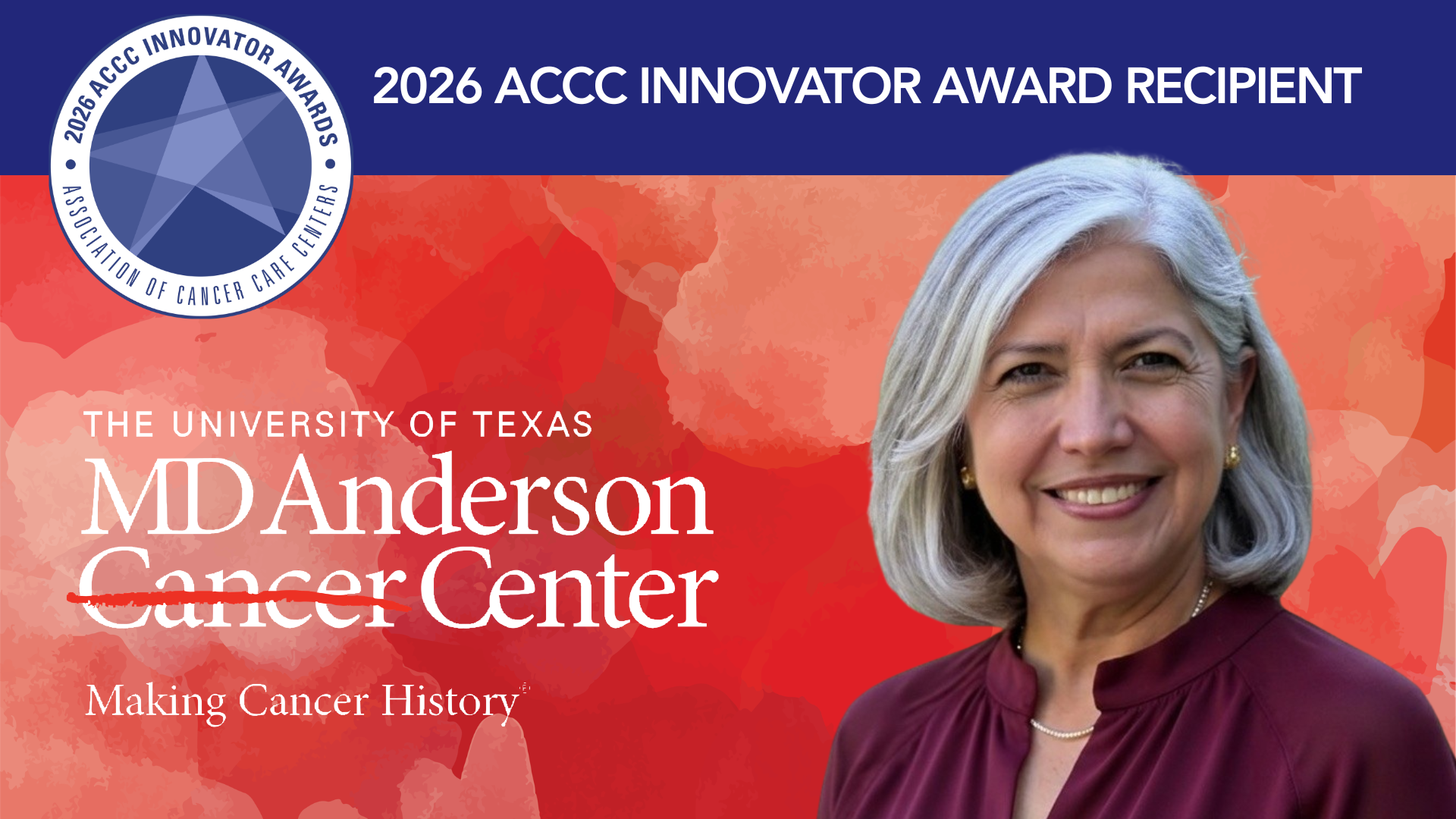
The final session of the day highlighted Active Living After Cancer, a community-based program designed to increase physical activity, improve physical function, and quality of life in cancer survivors and their caregivers. “We have had patients that started 2-minute walks in the first week, and by week 6, they are doing 5k walks,” said Scherezade K. Mama, DrPh, assistant professor, Department of Health Disparities Research, Division of Cancer Prevention and Population Services, The University of Texas MD Anderson Cancer Center. According to Dr. Scherezade, physical exercise has many benefits for patients with cancer, before, during, and after treatment. As a result, her team is looking for partners in piloting this program around the country. “We have been testing this in the community for a while, but we are eager to expand to the clinical setting,” Dr. Scherezade said. Fostering this spirit of collaboration is why ACCC invited members of the multidisciplinary cancer care team to Austin, Texas for the NOC. It is the reason ACCC is dedicated to providing the broader cancer care community with the right resources, information, and platform to deliver innovative, comprehensive cancer care services. The image below illustrates this vision:

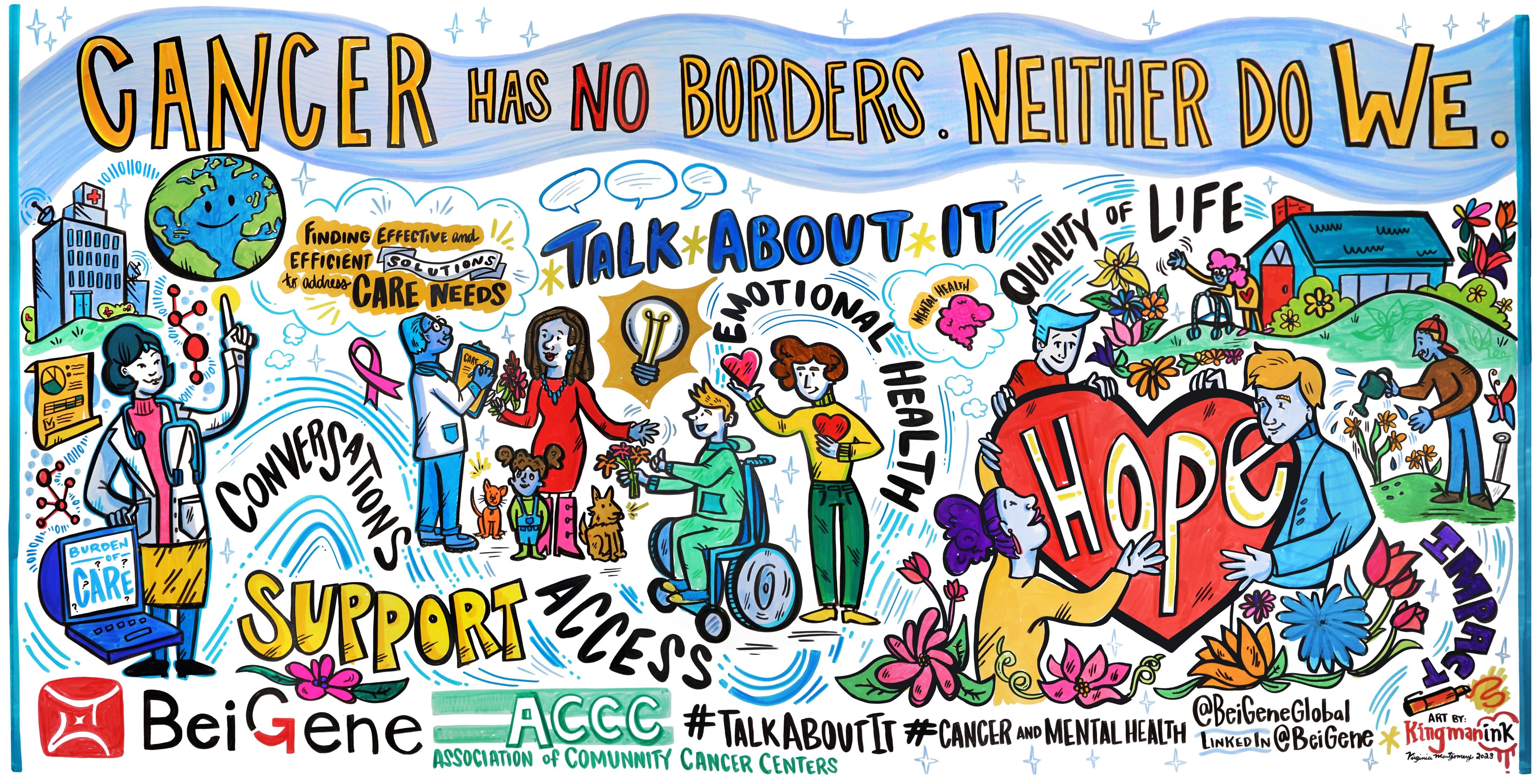
This image was created by attendees at the #ACCCNOC as part of the ACCC Psychosocial Care in Oncology Summit education program which is supported by BeiGene.



In recognition of Leukemia and Lymphoma Awareness Month, ACCC compiled a group of resources to help care teams navigate two of the most commonly diagnosed adult leukemias: acute myeloid leukemia and chronic lymphocytic leukemia.