ACCCBuzz sat down with ASCO's Dr. Richard L. Schilsky to look back on his career and look forward to the future breakthroughs in this era and beyond.
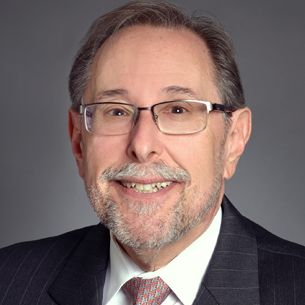
Richard L. Schilsky, MD, FACP, FSCT, FASCO, chief medical officer and executive vice president of the American Society of Clinical Oncology (ASCO), is retiring next month after a distinguished career in cancer care and research that has spanned more than 40 years. An expert in gastrointestinal cancers and new drug development, Dr. Schilsky’s career has bridged oncology’s early wave of progressive treatments to today’s era of precision medicine. Dr. Schilsky came to ASCO as chief medical officer in 2013, after spending nearly 30 years at the University of Chicago Medicine, where he served as the chief of hematology/oncology in the Department of Medicine and the deputy director of the University of Chicago Comprehensive Cancer Center. For 15 years, Dr. Schilsky also led the Cancer and Leukemia Group B (CALGB), an NCI-funded cancer cooperative group.
ACCCBuzz sat down with Dr. Schilsky to look back on his career and look forward to the future breakthroughs in this era of COVID-19 and beyond.
ACCCBuzz: What are you most proud of when you look back at your career?
Dr. Schilsky: That’s a tough question for someone with a 40+ year career. I am most proud of creating opportunities for other people to flourish in clinical research. I spent nearly 30 years on the faculty of the University of Chicago, where I taught scores of oncology fellows, many of whom have emerged as leaders in their fields. I take pride in their accomplishments and the contributions I have made to their successes.
Throughout my career, I’ve been able to create mechanisms that have enabled other people to collaboratively pursue research opportunities. I spent another decade at the University of Chicago as the associate dean for clinical research. During that time, I was able to develop programs and infrastructure that provided the support faculty needed to carry out their work.
I also spent 15 years leading the Cancer and Leukemia Group B—a national cooperative group that is now part of The Alliance for Clinical Trials in Oncology—which brought together investigators from hundreds of institutions across the country. I was able to identify and bring together top researchers to work with one another in committees and programs that enabled them to bring their ideas to fruition. From that effort, we completed many clinical trials that have fundamentally changed cancer care by bringing new drugs to market and developing new treatment paradigms.
ACCCBuzz: Has the experience of the pandemic opened your eyes to any aspects of cancer care that you think need more attention?
Dr. Schilsky: ASCO has looked into this quite a bit with our recently published report, Road to Recovery. In this report, we make recommendations about the future of cancer care and research beyond the pandemic. Through the work that went into developing this report, we made a number of recommendations about how some of the changes that were necessary in the wake of the pandemic could be carried forward to make cancer care more efficient and accessible. In clinical medicine and research, a lot of the things we’ve done by tradition do not have to be done that way. We’ve been forced to make changes as a result of the pandemic, many of which can be retained going forward.
For example, we can design clinical trials that are simpler and easier on patients. We recognize trials can be conducted in combination with a patient’s routine care, so many patients do not need to travel to a research site to participate. This can make clinical trials more available to more people.
The biggest immediate impact of COVID-19 on clinical care has been the shift to telemedicine services. This brought some vulnerable patient populations into contact with the healthcare system out of necessity. Many people feel that telemedicine is here to stay. If that’s true, we need to determine where its limitations exist. You can’t fully examine someone through a video call—you can miss subtle things that way. Doctors can detect important clues as to how a patient is doing by glancing at that patient’s posture, demeanor, and expression.
But there are some real advantages to telemedicine. It has the ability to bring more family members into a patient’s treatment. There are lots of other people who may be interested in how a patient is doing, but it has not been practical to bring all of those people physically together. It’s also easier to bring in translators for non-English speakers, since family members who speak English can be on the call to translate.
Many cancer patients receive long-term care to follow up on treatments they have finished. For many of them, it is not necessary to be seen in person, so telemedicine might work perfectly well. The pandemic has been very disruptive, and we still have much to learn about how that disruption will impact patient treatment and outcomes.
Last year, Dr. Schilsky led the creation of the ASCO Survey on COVID-19 and Oncology Registry (ASCO Registry), which aims to help the cancer care community learn more about the patterns of symptoms and the severity of COVID-19 among patients with cancer. The ASCO Registry is designed to collect both baseline and follow-up data on how the virus impacts cancer care and cancer patient outcomes during the COVID-19 pandemic. The registry data is updated weekly to help inform treatment approaches for patients with cancer who have a confirmed COVID-19 infection.
ACCCBuzz: What is the status of the cancer registry that ASCO launched last summer?
Dr. Schilsky: More than 1,600 patients have been enrolled in the ASCO Survey on COVID-19 in Oncology Registry thus far, and ACCC has been a fantastic partner in recruiting practices to participate. The information is already allowing us to follow the care of patients with cancer whose treatment has been disrupted or otherwise affected by the pandemic. If a patient’s treatment regimen has been postponed, will that affect outcomes? If treatments are modified in response to limitations brought on by the pandemic, are there long-term implications? Like all great crises, the pandemic has created many changes and opportunities. How we carry forward changes that we find to be positive will make a difference in cancer care.
Providers are continuing to enroll their patients into the database, and we intend to keep it open indefinitely. Our immediate goal was to identify the patients who were having their care disrupted by COVID-19. We are able to track those patients longitudinally, and we will follow patients as they are vaccinated and track their long-term symptoms.
Thus far, we’ve been able to make some preliminary observations about these patients as a group. The majority of the patients in the registry—72 percent—are overweight or obese. There is an over-representation in these patients of B-cell malignancies—such as multiple myeloma, non-Hodgkin’s lymphoma, and chronic lymphocytic leukemia—which are not as common as other cancers but represent a high proportion of patients with COVID-19 and a cancer diagnosis. These patients are very susceptible to COVID infection, and they have the highest mortality rates. In looking at the symptoms of COVID-19 these patients present with, we’ve found that 9 percent report a loss of taste or smell.
We are currently collecting these observations and compiling a formal manuscript for publication. I strongly encourage ACCC members who are not yet participating in this registry to enroll their patients. There are no costs associated with it for participating providers. Registering patients is a simple process.
ACCCBuzz: In July 2020, ASCO and ACCC announced another joint initiative designed to identify and implement novel strategies and practical solutions to increase the clinical trial participation of racial and ethnic minority populations that continue to be under-represented in cancer research. What is it about this specific effort that you believe can address this ongoing problem?
Dr. Schilsky: We have really committed leadership to this project with ASCO’s President, Dr. Lori Pierce, and ACCC’s president, Dr. Randall Oyer. Both ASCO and ACCC are fully behind this, and we have staff working hard to make this project successful. We have appointed a steering committee composed of leaders who have tackled this problem successfully before.
We have an opportunity through this partnership with ACCC to make a difference. We understand that it is crucial for all cancer patients to have access to trials. To the extent to which we do not have adequate representation of all people in clinical research, we are limited in how much we can apply the results of our trials to the people who need treatment. This is going to be a long haul; you don’t solve a problem like this quickly. But I think that the experts we have assembled with these particular leaders, supported by the dedicated staff of ASCO and ACCC, have as good a chance as anyone to take on this challenge and make meaningful improvements in enrollment of minority populations.
ASCO Survey on COVID-19 In Oncology (ASCO) Registry
ASCO & ACCC Join Forces to Increase Participation of Racial and Ethnic Minority Populations in Cancer Treatment Trials
Cancer Center Brings Clinical Trials to Diverse Populations
Another Health Disparity: Clinical Trials



From mental health concerns to fertility preservation, adolescents and young adults with cancer require a specialized approach to treatment and survivorship care. In honor of Childhood Cancer Awareness Month, ACCC highlights a pivotal program from the University of North Carolina Lineberger Comprehensive Cancer Center and resources that meet the critical needs of these patients.