ACCC association of cancer care centers
Join/Renew
Login
Join/Renew
Login
Education & Resources
ACCC eXchange LogInCorporate Member Sponsored ResourcesPresentations & AbstractsACCC Connect eLearning LogIn
Publications
Oncology IssuesPatient Assistance & Reimbursement GuideTrending Now in Cancer CareBusiness Case Studies for Hiring New Staff
Events
2026 ACCC Leadership SummitAnnual Meeting & Cancer Center Business SummitCapitol Hill DayNational Oncology ConferenceOncology Reimbursement MeetingsOncology State Society Meetings
Policy & Advocacy
ACCC 2026 Policy PrioritiesLetters & StatementsAccess, Payment & Reimbursement ReformWhite Bagging & Brown BaggingAdvocacy ResourcesCancer Moonshot
Membership
Join | RenewWho We AreMembership Types & BenefitsCorporate MembersACCC Member Portal FAQMember Directory
Partners
Oncology State SocietiesPartner OrganizationsCME
News
News ReleasesAdvocacy News ReleasesOncology News
About ACCC
Timeline / 50th Anniversary2025 Impact ReportPresident's ThemeACCC Innovator AwardsACCC FellowsBoard of TrusteesACCC Senior Staff
Breast CancerMetastatic Breast Cancer
Gastrointestinal CancerBiliary Tract CancerColorectal CancerGastric CancerLiver Cancer
Genitourinary CancerBladder CancerProstate CancerRenal Cell Carcinoma
Gynecologic CancerOvarian Cancer
Head & Neck Cancer
Hematologic MalignanciesAcute Lymphocytic Leukemia (ALL)Acute Myeloid Leukemia (AML)Chronic Lymphocytic Leukemia (CLL)Mantle Cell Lymphoma (MCL)Multiple Myeloma (MM)Myelodysplastic Syndromes (MDS)
Lung CancerNon-Small Cell Lung Cancer (NSCLC)Small Cell Lung Cancer (SCLC)
Sarcoma
Skin CancerMelanomaNon-Melanoma Skin Cancers (NMSC)
Clinical Practice & TreatmentCancer DiagnosticsCare CoordinationEHR Integration for Biomarker TestingQuality Improvement Collaboration: Integration of Precision Medicine in Community OncologyTreatment
Financial NavigationFAN Boot CampFinancial Advocacy Network (FAN) Resource LibraryPatient Assistance & Reimbursement GuidePrior Authorization
Health Equity & Access3, 2, 1, Go! Practical Solutions for Addressing Cancer Care DisparitiesAppalachian Community Cancer AllianceOncology Advanced PractitionersPersonalizing Care for Patients of All BackgroundsSocial Drivers of Health
Patient-Centered CareAddressing Care Disparities for VeteransAdolescent and Young Adult (AYA)Care Action Plans for People with CancerDermatologic ToxicitiesEmpowering CaregiversGeriatric OncologyHealth LiteracyNutritionOncology PharmacyPatient NavigationPsychosocial Care in OncologyShared Decision-MakingSupportive CareSurvivorship Care
Practice Management & OperationsCancer Program FundamentalsLeadership Sustainment and Engagement VideosOncology Practice Transformation and Integration CenterOncology Team Resiliency
ResearchACCC Community Oncology Research Institute (ACORI)
Technology & InnovationTelehealth & Digital Medicine
ACCCBuzz Blog
CANCER BUZZ Podcast
Oncology Issues
Join/Renew
Login
Breast CancerMetastatic Breast Cancer
Gastrointestinal CancerBiliary Tract CancerColorectal CancerGastric CancerLiver Cancer
Genitourinary CancerBladder CancerProstate CancerRenal Cell Carcinoma
Gynecologic CancerOvarian Cancer
Head & Neck Cancer
Hematologic MalignanciesAcute Lymphocytic Leukemia (ALL)Acute Myeloid Leukemia (AML)Chronic Lymphocytic Leukemia (CLL)Mantle Cell Lymphoma (MCL)Multiple Myeloma (MM)Myelodysplastic Syndromes (MDS)
Lung CancerNon-Small Cell Lung Cancer (NSCLC)Small Cell Lung Cancer (SCLC)
Sarcoma
Skin CancerMelanomaNon-Melanoma Skin Cancers (NMSC)
Clinical Practice & TreatmentCancer DiagnosticsCare CoordinationEHR Integration for Biomarker TestingQuality Improvement Collaboration: Integration of Precision Medicine in Community OncologyTreatment
Financial NavigationFAN Boot CampFinancial Advocacy Network (FAN) Resource LibraryPatient Assistance & Reimbursement GuidePrior Authorization
Health Equity & Access3, 2, 1, Go! Practical Solutions for Addressing Cancer Care DisparitiesAppalachian Community Cancer AllianceOncology Advanced PractitionersPersonalizing Care for Patients of All BackgroundsSocial Drivers of Health
Patient-Centered CareAddressing Care Disparities for VeteransAdolescent and Young Adult (AYA)Care Action Plans for People with CancerDermatologic ToxicitiesEmpowering CaregiversGeriatric OncologyHealth LiteracyNutritionOncology PharmacyPatient NavigationPsychosocial Care in OncologyShared Decision-MakingSupportive CareSurvivorship Care
Practice Management & OperationsCancer Program FundamentalsLeadership Sustainment and Engagement VideosOncology Practice Transformation and Integration CenterOncology Team Resiliency
ResearchACCC Community Oncology Research Institute (ACORI)
Technology & InnovationTelehealth & Digital Medicine
ACCCBuzz Blog
CANCER BUZZ Podcast
Oncology Issues
    • Education & Resources
    • Publications
    • Events
    • Policy & Advocacy
    • Membership
    • Partners
    • News
    • About ACCC
ACCC association of cancer care centers
1801 Research Boulevard, Suite 400, Rockville, MD 20850
Tel: 301.984.9496 Email Us
Contact UsVolunteers
Advertise
Career Center
Terms and Conditions
Privacy Policy
ACCC Rebranding
Copyright © 2026 Association of Cancer Care Centers. All Rights Reserved.
HomeACCCBuzz Blog

Quality Improvement in Stages III & IV Non-Small Cell Lung Cancer Care

September 23, 2022

Care optimization is everything in today’s rapidly changing healthcare landscape. Learn how ACCC's nationwide quality improvement (QI) initiative helped Southern Ohio Medical Center Cancer Center develop and implement plans to support the optimization of care for patients diagnosed with Stages III and IV non-small cell lung cancer (NSCLC).
Quality Improvement in Stages III & IV Non-Small Cell Lung Cancer Care

Care optimization is everything in today’s rapidly changing healthcare landscape. While cancer programs and practices are seeking new ways to step up care delivery and in recognition of this demand, the Association of Community Cancer Centers (ACCC) launched a nationwide quality improvement (QI) initiative to develop and implement plans to support the optimization of care for patients diagnosed with Stages III and IV non-small cell lung cancer (NSCLC). Six cancer programs varying in location and size across the United States were selected to participate in this initiative over a six-month period, including:

  • FirstHealth of the Carolinas, Moore Regional Hospital (Pinehurst, N.C.)
  • O’Neal Comprehensive Cancer Center at the University of Alabama (Birmingham, Ala.)
  • Saint Francis Cancer Center (Tulsa, Okla.)
  • Southern Ohio Medical Center, Southern Ohio Medical Center Cancer Center (Portsmouth, Ohio)
  • Sutter Cancer Center (Sacramento, Calif.)
  • Tennessee Oncology (Nashville, Tenn.).

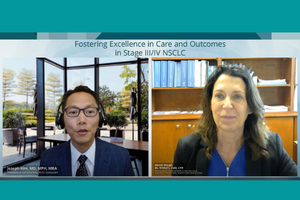
During a recent LinkedIn Live event hosted by ACCC, moderators, including Wendi Waugh, BS, RT(R)(T), CMD, CTR, administrative director of Southern Ohio Medical Center Cancer Care Services and Ambulatory Infusion at Southern Ohio Medical Center Cancer Center, and Joseph Kim, MD, MPH, MBA, ACCC consultant and president at Xaf Solutions, highlighted lessons learned from this initiative and the effects this project had Southern Ohio Medical Center Cancer Center.

“The goal of this multiphase initiative was to optimize care for patients with advanced non-small cell lung cancer,” Dr. Kim said. “This included improving the coordination as well as communication within the multidisciplinary cancer care team and refining the processes of care along the journey.”

Biomarker Testing

Seeking to improve biomarker testing in patients with NSCLC, enhanced integration of clinicians and pathologists was identified as a major vehicle for achieving this goal. “Biomarker testing is new for us all,” Waugh said. “In the last five years, we have all had to try to figure out how we are going to get these reports in front of our physicians so that we can make a real difference in the patient’s care.”

At Southern Ohio Medical Center Cancer Center, physicians were ordering biomarker tests but were not always able to get patients’ results on time. Upon enrollment in ACCC’s QI initiative, the cancer center conducted an analysis of how much time elapsed between the process of ordering biomarker tests to the patient receiving their results—as well as a review of any applicable changes in the patient’s treatment plan based on those results. “What we found is that we had a lot of work to do,” Waugh said. “The way that we fixed it was to assign responsibility to our lung health navigator.”

Waugh describes the process of hiring a lung health navigator as difficult. Because the cancer center did not have lung health navigators or a nodule program in place already, staff began with their lung cancer screening program. “We got our screening up and running first, and I made the case,” Waugh said. Southern Ohio Medical Center Cancer Center sought the aid of the GO2 Foundation (which has since merged with LUNGevity), who provided a complete business plan regarding how to make the case for hiring a lung health navigator, outlining the benefits of having these dedicated navigators, including downstream revenue, patient satisfaction, and improved turnaround times from diagnosis to treatment.

Next came the establishment of an electronic portal to transmit biomarker test results to providers via the lung health navigators. “We made sure that the lung health navigator and a backup got an email saying that there was a result available,” Waugh shared. Once results are available, lung health navigators are responsible for downloading the report and reviewing it before sending it to the ordering physician. The navigator would also check for the patient’s next appointment and check if the appointment could be moved up,” Waugh said. “We were focused on what we could do to reduce the days in not only just the order, [but also considering] the order result, what does the result mean, and the patient appointment,” Waugh explained.

Once this navigation was established, the cancer center identified an external testing company that would handle their biomarker tests. “We are a rural community cancer center, so we were not doing the testing ourselves,” Waugh said. The team conducted these tests using tissue samples, with Waugh describing it as the gold standard. “We were only reflexing to blood if there was not significant tissue to get the result,” she said. This decision reduced variability in the method and type of tests that are ordered (e.g., tissue testing, use of next-generation sequencing, or liquid biopsy).

A Constant Evolution

Waugh wagers that with new information, the protocols around biomarker testing are bound to evolve. “I think we are going to have to evaluate this every one to two years, and maybe sooner, depending on how quickly this landscape continues to change,” Waugh said. Dr. Kim echoed this sentiment, while also highlighting the difficulties some clinicians may face when trying to keep up with the science. “When it comes to biomarker testing, there are so many things happening in the landscape,” he said. “While we are all expected to keep up with the latest science and guidelines, busy clinical settings can make that challenging.”

Improvements with Identifying and Managing IrAEs

The conversation around quality improvement also included discussion on the identification and management of immune-related adverse events (irAEs) for patients with cancer receiving immunotherapy. Waugh described an innovation designed to keep these patients out of the emergency department (ED). Working with EDs in the area and the information technology staff at her cancer center, Waugh was able to gather information about which patients with lung cancer were presenting to the ED, including how often they were presenting. “This gave me a springboard to start looking at who the patients were and why they were going to the ED. And what could we do about it,” Waugh explained.

In a bid to reduce and prevent some of those admissions, Southern Ohio Medical Center Cancer Center launched an initiative that required advanced practice providers (APPs) to conduct new medication teaching sessions with every new patient diagnosed with lung cancer. “We really wanted them [APPs] to talk to those patients about their potential for visiting the emergency department,” Waugh explained. “We wanted our APPs to lay down a foundation that said, ‘I’m here for you. We want to do acute care for you. We want you to call us first, and we will triage whether or not you need to go to the emergency room.’”

Patients are also given a card to carry on their person that they can share with their ED provider to inform them that the patient is undergoing active anti-cancer treatment. This card also lists the medication(s) patients are receiving. “We want to avoid unnecessary CT [computed tomography] scans and work that the patient might do,” Waugh said. “We also spoke with the ED providers and asked them to call us if anything happened.”

Learn More

To discover more about how ACCC facilitated a full range of quality improvements through this initiative, watch the recording of the LinkedIn Live event: “Fostering Excellence in Care and Outcomes in Stage III IV NSCLC.”

This initiative is part of the Fostering Excellence in Care and Outcomes in Patients with Stage III and IV NSCLC initiative, and it is made possible in partnership with the American College of Chest Physicians, International Association for the Study of Lung Cancer, and LUNGevity, as well as support from AstraZeneca.



Related Content

Building a Blueprint for Precision Medicine: Lessons from TriHealthACCCBuzz Blog

Building a Blueprint for Precision Medicine: Lessons from TriHealth

June 25, 2026

Exploring a Bispecific Antibody for Relapsed or Refractory Multiple MyelomaACCCBuzz Blog

Exploring a Bispecific Antibody for Relapsed or Refractory Multiple Myeloma

June 22, 2026

15 Years Strong: The NCCN State Oncology Society Forum Annual MeetingACCCBuzz Blog

15 Years Strong: The NCCN State Oncology Society Forum Annual Meeting

Sean T. McCarson, MPA

June 16, 2026

Highlights from Volume 41, Number 3 Oncology IssuesACCCBuzz Blog

Highlights from Volume 41, Number 3 Oncology Issues

Gabrielle Stearns

June 15, 2026

ACCC Roundtable Series to Build a CAR T Multiple Myeloma Referral FrameworkACCCBuzz Blog

ACCC Roundtable Series to Build a CAR T Multiple Myeloma Referral Framework

Gabrielle Stearns

June 11, 2026

Precision Medicine Stewardship: Turning Complexity Into Coordinated Cancer CareACCCBuzz Blog

Precision Medicine Stewardship: Turning Complexity Into Coordinated Cancer Care

June 9, 2026

A Leadership Playbook for Responsible AI AdoptionACCCBuzz Blog

A Leadership Playbook for Responsible AI Adoption

June 4, 2026

Health Literacy in the Digital Age: An NCCN Policy SummitACCCBuzz Blog

Health Literacy in the Digital Age: An NCCN Policy Summit

Gabrielle Stearns

June 2, 2026

Upcoming Events

ACCC 43rd National Oncology Conference
Oncology

ACCC 43rd National Oncology Conference

In Person Conference & ConventionOctober 21, 2026 at 8:00 AM MDT450 Summer St, Boston, MA 02210Omni Boston Hotel at the Seaport, Boston
Register Now!
KaSCO 2026 Fellows Dinner
Oncology

KaSCO 2026 Fellows Dinner

In Person Conference & ConventionJuly 16, 2026 at 6:00 PM CDT101 West 22nd Street, Kansas City, MO, USALidia's Kansas City, Kansas City
Register Now!
MSCO 2026 Professional Development Workshop
Oncology

MSCO 2026 Professional Development Workshop

In Person Conference & ConventionJuly 18, 2026 at 3:30 PM CDT5005 Glumack Drive, Minneapolis, MN, USAInterContinental Hotel Minneapolis – St. Paul Airport, Minneapolis
Register Now!
WSMOS 2026 Dinner at the Seattle Best of ASCO
Oncology

WSMOS 2026 Dinner at the Seattle Best of ASCO

In Person Conference & ConventionJuly 24, 2026 at 5:30 PM PDT1415 5th Ave, Seattle, WA, USAHilton Motif Seattle, Seattle
Register Now!
NOS 2026 Dinner at the Las Vegas Best of ASCO
Oncology

NOS 2026 Dinner at the Las Vegas Best of ASCO

In Person Conference & ConventionJuly 24, 2026 at 5:30 PM PDT101 Montelago Blvd, Henderson, NV 89011, USAThe Westin Lake Las Vegas Resort & Spa , Henderson
Register Now!
KYSCO 2026 Tri-State Multi-Disciplinary Cancer Care Summit
Oncology

KYSCO 2026 Tri-State Multi-Disciplinary Cancer Care Summit

In Person Conference & ConventionJuly 25, 2026 at 7:30 AM EDT638 Madison Ave, Covington, Kentucky 41011, USAHotel Covington, Covington
Register Now!
HSCO 2026 August Dinner Symposium
Oncology

HSCO 2026 August Dinner Symposium

In Person Conference & ConventionAugust 12, 2026 at 5:30 PM HST6600 Kalanianaʻole Highway suite 110, Honolulu, HI 96825, USARoy's Restaurants – Hawaii Kai, Honolulu
Register Now!
LOS 2026 Cancer Congress - National Oncology Updates
Oncology

LOS 2026 Cancer Congress - National Oncology Updates

In Person Conference & ConventionAugust 14, 2026 at 11:00 AM CDT859 Convention Center Blvd, New Orleans, LA, USANew Orleans Marriott Warehouse Art District, New Orleans
Register Now!
Advertisement
Advertisement

Trending Now on
ACCCBuzz Blog

Building a Blueprint for Precision Medicine: Lessons from TriHealth

Building a Blueprint for Precision Medicine: Lessons from TriHealth

ACCC launched its Precision Medicine Stewardship Program to highlight institutions that have successfully built the infrastructure, workflows, and leadership models needed to deliver precision medicine at scale. TriHealth Cancer and Blood Institute in Cincinnati, Ohio, offers a compelling example of what it takes to move from aspiration to execution.

Exploring a Bispecific Antibody for Relapsed or Refractory Multiple Myeloma

Exploring a Bispecific Antibody for Relapsed or Refractory Multiple Myeloma

Although patients with relapsed or refractory multiple myeloma now have more treatment options than ever, their journeys are often complex. As clinicians consider when to introduce newer therapies such as bispecific antibodies, they must account for prior treatments, treatment-related toxicities, and comorbidities that may impact treatment decisions.

15 Years Strong: The NCCN State Oncology Society Forum Annual Meeting

15 Years Strong: The NCCN State Oncology Society Forum Annual Meeting

Each year, the NCCN State Oncology Society Forum is thoughtfully organized to foster meaningful collaboration and forge common bonds to advance dignity and fair access to cancer care. In this blog, Sean T. McCarson shares key insights from stakeholders across the oncology policy landscape at this year's meeting.

Highlights from Volume 41, Number 3 Oncology Issues

Highlights from Volume 41, Number 3 Oncology Issues

The latest issue of Oncology Issues features key insights from the inaugural ACCC Leadership Summit, strategies to adjust to rising patient volumes and workforce strain, advanced practice leadership models, and more.

View All ACCCBuzz Blogs

Recently Heard on
CANCER BUZZ Podcast

Beyond Body Art: Restoring Wholeness Through Paramedical Tattooing - [Podcast] Ep. 238

Bridging Radiation and Oncology in SCLC Care - [Podcast] Ep. 237

Championing Bispecific Antibodies in the VA - [Podcast] Ep. 236

Data-Driven Toxicity Management for ADCs – [Video Podcast] Ep. 235

View All Podcasts

Latest from Oncology Issues

June 2026
June 2026
April 2026
February 2026
December 2025
October 2025
View All Oncology Issues

Join the Conversation

ACCC eXchange Digital Banner
Login