ACCC association of cancer care centers
Join/Renew
Login
Join/Renew
Login
Education & Resources
ACCC eXchange LogInSponsored Education from ACCC Corporate PartnersACCC eLearning LogInPresentations & Abstracts
Publications
Oncology IssuesPatient Assistance & Reimbursement GuideTrending Now in Cancer CareBusiness Case Studies for Hiring New Staff
Events
2026 ACCC Leadership SummitAnnual Meeting & Cancer Center Business SummitCapitol Hill DayNational Oncology ConferenceOncology Reimbursement MeetingsOncology State Society Meetings
Policy & Advocacy
ACCC 2026 Policy PrioritiesLetters & StatementsAccess, Payment & Reimbursement ReformWhite Bagging & Brown BaggingAdvocacy ResourcesCancer Moonshot
Membership
Join | RenewWho We AreMembership Types & BenefitsCorporate MembersACCC Member Portal FAQMember Directory
Partners
Oncology State SocietiesPartner OrganizationsCME
News
News ReleasesAdvocacy News ReleasesOncology News
About ACCC
Timeline / 50th Anniversary2025 Impact ReportPresident's ThemeACCC Innovator AwardsACCC FellowsBoard of TrusteesACCC Senior Staff
Breast CancerMetastatic Breast Cancer
Gastrointestinal CancerBiliary Tract CancerColorectal CancerGastric CancerLiver Cancer
Genitourinary CancerBladder CancerProstate CancerRenal Cell Carcinoma
Gynecologic Cancer
Head & Neck Cancer
Hematologic MalignanciesAcute Lymphocytic Leukemia (ALL)Acute Myeloid Leukemia (AML)Chronic Lymphocytic Leukemia (CLL)Mantle Cell Lymphoma (MCL)Multiple Myeloma (MM)Myelodysplastic Syndromes (MDS)
Lung CancerNon-Small Cell Lung Cancer (NSCLC)Small Cell Lung Cancer (SCLC)
Sarcoma
Skin CancerMelanomaNon-Melanoma Skin Cancers (NMSC)
Clinical Practice & TreatmentCancer DiagnosticsCare CoordinationEHR Integration for Biomarker TestingQuality Improvement Collaboration: Integration of Precision Medicine in Community OncologyTreatment
Financial NavigationFAN Boot CampFinancial Advocacy Network (FAN) Resource LibraryPatient Assistance & Reimbursement GuidePrior Authorization
Health Equity & Access3, 2, 1, Go! Practical Solutions for Addressing Cancer Care DisparitiesAppalachian Community Cancer AllianceOncology Advanced PractitionersPersonalizing Care for Patients of All BackgroundsSocial Drivers of Health
Patient-Centered CareAddressing Care Disparities for VeteransAdolescent and Young Adult (AYA)Care Action Plans for People with CancerDermatologic ToxicitiesEmpowering CaregiversGeriatric OncologyHealth LiteracyNutritionOncology PharmacyPatient NavigationPsychosocial Care in OncologyShared Decision-MakingSupportive CareSurvivorship Care
Practice Management & OperationsCancer Program FundamentalsLeadership Sustainment and Engagement VideosOncology Practice Transformation and Integration CenterOncology Team Resiliency
ResearchACCC Community Oncology Research Institute (ACORI)
Technology & InnovationTelehealth & Digital Medicine
ACCCBuzz Blog
CANCER BUZZ Podcast
Oncology Issues
Join/Renew
Login
Breast CancerMetastatic Breast Cancer
Gastrointestinal CancerBiliary Tract CancerColorectal CancerGastric CancerLiver Cancer
Genitourinary CancerBladder CancerProstate CancerRenal Cell Carcinoma
Gynecologic Cancer
Head & Neck Cancer
Hematologic MalignanciesAcute Lymphocytic Leukemia (ALL)Acute Myeloid Leukemia (AML)Chronic Lymphocytic Leukemia (CLL)Mantle Cell Lymphoma (MCL)Multiple Myeloma (MM)Myelodysplastic Syndromes (MDS)
Lung CancerNon-Small Cell Lung Cancer (NSCLC)Small Cell Lung Cancer (SCLC)
Sarcoma
Skin CancerMelanomaNon-Melanoma Skin Cancers (NMSC)
Clinical Practice & TreatmentCancer DiagnosticsCare CoordinationEHR Integration for Biomarker TestingQuality Improvement Collaboration: Integration of Precision Medicine in Community OncologyTreatment
Financial NavigationFAN Boot CampFinancial Advocacy Network (FAN) Resource LibraryPatient Assistance & Reimbursement GuidePrior Authorization
Health Equity & Access3, 2, 1, Go! Practical Solutions for Addressing Cancer Care DisparitiesAppalachian Community Cancer AllianceOncology Advanced PractitionersPersonalizing Care for Patients of All BackgroundsSocial Drivers of Health
Patient-Centered CareAddressing Care Disparities for VeteransAdolescent and Young Adult (AYA)Care Action Plans for People with CancerDermatologic ToxicitiesEmpowering CaregiversGeriatric OncologyHealth LiteracyNutritionOncology PharmacyPatient NavigationPsychosocial Care in OncologyShared Decision-MakingSupportive CareSurvivorship Care
Practice Management & OperationsCancer Program FundamentalsLeadership Sustainment and Engagement VideosOncology Practice Transformation and Integration CenterOncology Team Resiliency
ResearchACCC Community Oncology Research Institute (ACORI)
Technology & InnovationTelehealth & Digital Medicine
ACCCBuzz Blog
CANCER BUZZ Podcast
Oncology Issues
    • Education & Resources
    • Publications
    • Events
    • Policy & Advocacy
    • Membership
    • Partners
    • News
    • About ACCC
ACCC association of cancer care centers
5425 Wisconsin Ave #600, Chevy Chase, MD 20815
Tel: 301.984.9496 Email Us
Contact UsVolunteers
Advertise
Career Center
Terms and Conditions
Privacy Policy
ACCC Rebranding
Copyright © 2026 Association of Cancer Care Centers. All Rights Reserved.
HomeACCCBuzz Blog

The Digital Health Revolution

March 22, 2019

The Digital Health Revolution

John Halamka, MD, MS, is an interesting man. He is the second human to have his genome sequenced, courtesy of the Human Genome Project; he runs a 70-acre organic farm and animal sanctuary, home to “Dudley,” a huge Scottish Highland Bull; he served in the George W. Bush and Barack Obama administrations, guiding America’s healthcare IT strategy; he travels hundreds of thousands of miles each year to study and advise on trends in global digital health; and he is a practicing emergency medicine physician.

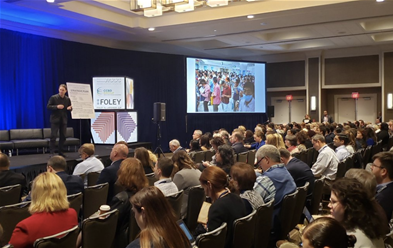
In his capacities as Chief Intelligence Officer (CIO) of the Beth Israel Deaconess System and Chairman of the New England Healthcare Exchange Network, Dr. Halamka is shaping the use of digitized information to improve healthcare delivery. In his March 22 address to the ACCC 45th Annual Meeting & Cancer Center Business Summit, Dr. Halamka shared stories of how both advanced and developing countries are using digital technologies—in ways that are both brilliant and uninformed—to improve the health of their citizens.

Dr. Halamka stressed the urgency of putting digital technology to work in healthcare. Countries across the world have aging populations, low birth rates, unsustainable healthcare costs, and clinician shortages. In this “perfect storm,” said Dr. Halamka, digital technologies can leverage scarce resources to provide more care to more people.

There are bright spots and stumbling blocks on this path. The good news, says Dr. Halamka, is that the consumer technology we need to enable appropriate, efficient access to healthcare information across platforms is already here. What’s missing is the integration that can make ease of use possible. For this to happen, a multitude of security and privacy concerns will need to be addressed, flawed data will need to be corrected, social biases will need to be recognized, and patients and caregivers will need to be comfortable with receiving care in different ways.

A subsequent session on the intersection of digital health, technology, and value featured speakers who explored the ramifications of new technologies on cancer care:


  • Adam Dicker, MD, PhD, FASTRO, FASCO, Senior Vice President and Chair of Enterprise Radiation Oncology, and Director of the Jefferson Institute for Digital Health at the Sidney Kimmel Medical College & Cancer Center at Thomas Jefferson University, said that today’s reactive approach to healthcare must be replaced with proactive care, where patient data is collected and harvested to formulate personalized preventive care. By leveraging patient data, said Dr. Dicker, the traditionally linear nature of today’s cancer treatments will give way to a more nuanced approach enabled by data-informed personalized treatment protocols.
  • Doris Howell, RN, PhD, Senior Scientist at the Princess Margaret Cancer Centre at the University of Toronto, said there is good evidence for the effectiveness of remote patient monitoring and symptom management; however, patients lack the tools and education they need for these strategies to be effective. “Digital technologies are the Holy Grail solution to achieving the goals of the Triple Aim,” said Dr. Howell, “but adoption in the real world is still a problem to be solved.” To address this problem, she added, technologies must be workable in the everyday lives of patients, which requires a commitment to giving patients digital literacy and actionable information.
  • Alexandra Quinn, MA, CEO of Health Leads, addressed the essential role social determinants of health play in wellness and patient care. “We need to get at the root of the inequities that drive disease,” said Quinn. “Tools have been designed for health systems, not communities.” To address these issues, it is important to recognize the unintended institutional inequities that affect patient health. “What can you do,” she asked the audience, “to use technology in a way that puts communities and caregivers at the center?”
  • James Hamrick, MD, MPH, Senior Medical Director of Flatiron Health, said that a lot of the solutions that drive healthcare advancements will come from the private sector. He discussed the important role that portals will play in giving patients access to their health records and care teams. “We need to meet patients where they are,” affirmed Dr. Hamrick.

Related Content

Decentralized Clinical Trials in Community Oncology: Advancing Access Requires More Than TechnologyACCCBuzz Blog

Decentralized Clinical Trials in Community Oncology: Advancing Access Requires More Than Technology

September 10, 2026

Highlights From Volume 41, Number 4 Oncology IssuesACCCBuzz Blog

Highlights From Volume 41, Number 4 Oncology Issues

Gabrielle Stearns

August 20, 2026

Transforming Access to Care Through Pre-Intake Navigation

Upcoming Events

ACCC 43rd National Oncology Conference

ACCC 43rd National Oncology Conference

In Person October 21, 2026 at 8:00 AM EDT450 Summer St, Boston, MA 02210, USAOmni Boston Hotel at the Seaport, Boston
Register Now!
ACCC Oncology Reimbursement Meeting | Reno

ACCC Oncology Reimbursement Meeting | Reno

In Person November 4, 2026 at 8:00 AM EST255 North Virginia Street, Reno, NV, USAWhitney Peak Hotel Reno, Tapestry Collection by Hilton,
Register Now!
ACCC Oncology Reimbursement Meeting | Providence

ACCC Oncology Reimbursement Meeting | Providence

In Person November 10, 2026 at 8:00 AM EST5 Avenue of the Arts, Providence, RI, USARenaissance Providence Downtown Hotel,
Register Now!
TxSCO 2026 Annual Conference
Oncology

TxSCO 2026 Annual Conference

In Person Conference & ConventionSeptember 18, 2026 at 6:00 PM CDT501 Gaylord Trail, Grapevine, TX, USAGaylord Texan Resort & Convention Center, Grapevine
Register Now!
KYSCO 2026 Fall Oncology Review
Oncology

KYSCO 2026 Fall Oncology Review

In Person Conference & ConventionSeptember 19, 2026 at 7:00 AM EDT500 S 4th St, Louisville, KY, USAThe Seelbach Hilton Louisville, Louisville
Register Now!
ESHOS Horizons 2026
Oncology

ESHOS Horizons 2026

In Person Conference & ConventionSeptember 19, 2026 at 7:30 AM EDT1 Liberty Street, New York, NY, USAConvene at One Liberty Plaza, New York
Register Now!
MSOS 2026 Bozeman Meeting
Oncology

MSOS 2026 Bozeman Meeting

In Person Meeting & NetworkingSeptember 22, 2026 at 5:30 PM EDT5 W Mendenhall St suite 102, Bozeman, MT 59715, USA Urban Kitchen, Bozeman
Register Now!
MSCO 2026 Fall Conference
Oncology

MSCO 2026 Fall Conference

In Person Conference & ConventionSeptember 22, 2026 at 5:00 PM CDT1500 Park Pl Blvd, Minneapolis, MN, USADoubleTree by Hilton Hotel Minneapolis - Park Place, Minneapolis
Register Now!
HSCO 2026 September Dinner Symposium
Oncology

HSCO 2026 September Dinner Symposium

In Person Conference & ConventionSeptember 23, 2026 at 5:30 PM HST3660 Waialae Ave, Honolulu, HI, USA3660 On The Rise, Honolulu
Register Now!
RIOS Fall Meeting
Oncology

RIOS Fall Meeting

In Person Conference & ConventionSeptember 25, 2026 at 5:30 PM EDT139 Mathewson Street, Providence, RI, USAHotel Providence, Providence
Register Now!
Advertisement
Advertisement

Trending Now on
ACCCBuzz Blog

Decentralized Clinical Trials in Community Oncology: Advancing Access Requires More Than Technology

Decentralized Clinical Trials in Community Oncology: Advancing Access Requires More Than Technology

Decentralized clinical trial approaches, including remote consent, telehealth, local laboratory and imaging services, and more, can help reduce some of the many barriers that prevent eligible patients from participating in trials. But as the participants in ACCC’s Advancing Decentralized Clinical Trials in the Community Setting Roundtable Series emphasized, implementing DCT elements is not simply a matter of adopting new technology. Doing so successfully requires thoughtful workflows and oversight structures that consider equity, scalability, and sustainability.

Highlights From Volume 41, Number 4 Oncology Issues

Highlights From Volume 41, Number 4 Oncology Issues

From precision medicine to psychosocial care to navigation for a diverse population, the latest issue Oncology Issues brings insights into not just institutional and administrative barriers to treatment, but areas of care that directly impact the lived experience of those navigating the cancer care continuum.

ACCCBuzz Blog

Transforming Access to Care Through Pre-Intake Navigation

Rachel Radwan

August 6, 2026

An APP-Led Outpatient Bispecific Antibody ClinicACCCBuzz Blog

An APP-Led Outpatient Bispecific Antibody Clinic

Rachel Radwan

August 4, 2026

Advancing Critical Priorities at the State Level: Louisiana, Iowa, and Washington Awarded for Their Efforts at 2026 ASCO Annual MeetingACCCBuzz Blog

Advancing Critical Priorities at the State Level: Louisiana, Iowa, and Washington Awarded for Their Efforts at 2026 ASCO Annual Meeting

Rachel Radwan

July 29, 2026

Designing a Safe, Fully Outpatient CAR T-Cell Program in the CommunityACCCBuzz Blog

Designing a Safe, Fully Outpatient CAR T-Cell Program in the Community

Rachel Radwan

July 27, 2026

Local Staff, Lasting Impact: A New Model for Rural Cancer PreventionACCCBuzz Blog

Local Staff, Lasting Impact: A New Model for Rural Cancer Prevention

Rachel Radwan

July 16, 2026

A Pharmacist-Led Strategy to Improve Care With Oncolytic Virus TreatmentsACCCBuzz Blog

A Pharmacist-Led Strategy to Improve Care With Oncolytic Virus Treatments

Rachel Radwan

July 14, 2026

Transforming Access to Care Through Pre-Intake Navigation

Transforming Access to Care Through Pre-Intake Navigation

The University of Texas MD Anderson Cancer Center in Houston, Texas, developed a novel Pre-Intake Navigation (PIN) program, which identifies and resolves early financial and insurance barriers, enabling patients to access timely, high-quality cancer care with less anxiety and fewer delays. PIN shifts financial navigation from a late-stage, reactive task to an early, standardized, patient‑centered process embedded in the call center workflow.

An APP-Led Outpatient Bispecific Antibody Clinic

An APP-Led Outpatient Bispecific Antibody Clinic

Understanding both the benefits to be had from offering BsAb therapy to its community and the scope of this undertaking, Vanderbilt-Ingram Cancer Center took a novel approach with its APP-led BsAb step-up dosing clinic, which won the program a 2026 ACCC Innovator Award.

View All ACCCBuzz Blogs

Recently Heard on
CANCER BUZZ Podcast

From Reactive to Proactive: Improving Access to Cancer Care Through Pre-Intake Navigation - [Podcast] Ep. 240

Real-World Oncology Decentralized Trials - [Video Podcast] Ep. 66

The Real Cost of Cancer: Financial Toxicity, Transportation Challenges, and Access Gaps – [Video Podcast] Ep. 65

Closing the Gap in Medical Necessity Review With a Clinical Documentation Integrity Registered Nurse - [Mini Podcast] Ep. 239

View All Podcasts

Latest from Oncology Issues

August 2026
August 2026
June 2026
April 2026
February 2026
December 2025
View All Oncology Issues

Join the Conversation

ACCC eXchange Digital Banner
Login