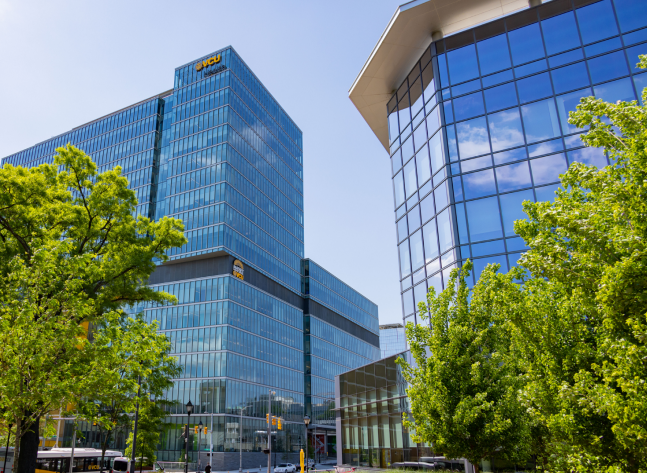
Virginia Commonwealth University Massey Comprehensive Cancer Center (VCU Massey) in Richmond, Virginia, stands as a leader in innovation in cancer care treatment in its region. VCU Massey fosters a space where science and research converge, grounded in a deep commitment to equitable care and community outreach. At VCU Massey, the mission goes beyond medical treatment; it is about reshaping the landscape of cancer care by making it more accessible and representative of everyone it serves.
VCU Massey serves a diverse population across 66 localities, including urban, suburban, and rural communities. The center’s forward-thinking strategies and community engagement initiatives highlight its dedication to improving patient outcomes and shaping the future of cancer treatment.
Leading Through Innovation and Accreditations
VCU Massey is one of the earliest National Cancer Institute (NCI)–designated cancer centers, and 1 of 57 cancer centers to hold the NCI’s comprehensive designation, reflecting 5 decades of commitment to the highest levels of treatment, prevention, research, and control. VCU Massey is accredited by the American College of Surgeons Commission on Cancer and is 1 of only 14 sites nationwide that offer research access through the Minority and Underserved NCI Community Oncology Research Program, further underscoring its role as a leader in equitable cancer care.
VCU Massey is highly ranked in U.S. News & World Report, and its recognition as a magnet institution by the American Nurses Credentialing Center demonstrates its unwavering commitment to quality. The radiology department’s designation by the American College of Radiology as a Diagnostic Imaging Center of Excellence, as well as the accreditation of its cellular therapy program by the Foundation for the Accreditation of Cellular Therapy, solidify VCU Massey’s position as a premier institution for cancer treatment and research. In addition, its National Marrow Donor Program–designated collection and transplant center ensures that patients receive the highest caliber of treatment.
Creating Better Outcomes Through Clinical Research
Associate Director of Clinical Research at VCU Massey, Andrew Poklepovic, MD, is a medical oncologist specializing in skin cancers, sarcomas, and rare diseases. With over a decade of experience managing cancer programs, Dr. Poklepovic aims to discover better cancer treatments through innovative research and patient-centered care. In addition to his clinical work, Dr. Poklepovic is actively involved in VCU Massey’s academic mission; he is training the next generation of oncologists through its fellowship programs, which reach students from high school through postdoctoral studies.
His role in clinical research involves overseeing the strategic direction of clinical trials, ensuring that VCU Massey continues to lead in groundbreaking cancer research. Clinical trials are the foundation of progress in cancer treatment, as they offer patients access to cutting-edge therapies that may not be widely available. With over 170 therapeutic trials, VCU Massey ensures that patients from all backgrounds have the opportunity to participate in pioneering research.
Dr. Poklepovic is passionate about the transformative power of clinical trials. He emphasizes that today’s trials pave the way for tomorrow’s higher standard-of-care treatments, improving survival rates and enhancing quality of life for patients with cancer. “Clinical trials are important because we are in the era of advances in the treatment of cancer. Patients have treatments today that they didn’t have years ago,” he commented. “More patients are surviving and living longer through a variety of means. Early detection, better tolerability of treatments, more effective treatments—all of those are attributed to the advances that come from clinical trials.”
Clinical trials are not just about testing new drugs; they involve a broad spectrum of research, from improving cancer outcomes and minimizing long-term adverse effects to developing novel therapies for rare and aggressive cancers. The research conducted at VCU Massey is instrumental in the continued decline of cancer mortality rates.
Breaking Down Barriers to Clinical Trials
Despite the potential of clinical trials, many patients face obstacles that prevent access. VCU Massey is actively working to remove these barriers, particularly for underserved populations. One of the most significant hurdles is the misconception surrounding clinical research. “The science is advanced in so many diseases that when a drug is being brought forward in a specific disease, it is backed by strong evidence that this may make outcomes better than the current standard,” explained Dr. Poklepovic. Some patients may fear being treated as “test subjects,” but VCU Massey’s team makes a point to educate patients on the rigorous science behind each trial and the strict safety measures in place.
Logistics, such as transportation and financial concerns, also play a role in limiting patients’ access to clinical trials. To combat these issues, VCU Massey provides transportation support and works closely with patients to ensure they can attend necessary appointments. VCU Massey also collaborates with affiliate sites and regional providers, bringing clinical trials closer to patients and reducing the need for long-distance travel for routine care.

A Multidisciplinary Approach to Cancer Care
Comprehensive cancer treatment requires a coordinated approach. The VCU Massey team works together to tailor treatment plans to each patient’s unique needs. “Multidisciplinary care and tumor board discussions are key,” noted Dr. Poklepovic, “They typically involve 5 disciplines: the radiologist, the pathologist, the medical oncologist, the radiation oncologist, and the surgeon, each of whom has expertise in an organ or region of the body.” Tumor boards play a crucial role in this approach, allowing specialists to review complex cases and determine the best course of action.
Whether through surgical interventions, radiation therapy, or the latest immunotherapy treatments, VCU Massey’s collaborative model ensures that patients receive the highest quality care. Additionally, integrating subspecialized oncologists allows for a more focused approach to disease management. For example, rather than a general oncologist treating a broad range of cancers, VCU Massey’s model ensures that a patient with sarcoma is treated by a sarcoma-specific oncologist, enhancing the precision of care.
Community Engagement: Extending the Reach of Cancer Care
VCU Massey is dedicated to raising awareness about the importance of cancer screenings and early detection, especially in communities with historically low screening rates. By collaborating with local organizations, faith-based groups, and patient advocates, VCU Massey ensures that lifesaving information reaches those who need it most. The clinical trials office partners closely with the community outreach and engagement team to identify barriers to cancer care, provide support for patients, and educate the communities served by VCU Massey.
One community outreach program that VCU Massey promotes is We Can Quit, which tackles cancer prevention by educating its population about the risks of smoking. Virginia’s historical ties to the tobacco industry have contributed to higher incidences of lung cancer in the region, making VCU Massey’s targeted prevention efforts critical in combating tobacco-related diseases. Another influential program is the Massey on the Move van, which brings cancer screenings and educational resources directly to the communities it serves, making prevention and early detection more accessible.
Understanding the unique health challenges faced by its population allows VCU Massey to tailor its outreach efforts to address disparities in cancer outcomes. “We want to improve the health of the population that exists in our catchment area. We want to improve cancer screening. We want to make people more aware of their health and the importance of preventive care. That is the goal with our community events,” Dr. Poklepovic affirmed.
Changing the Cancer Care Landscape
The future of cancer treatment depends on continued innovation, and VCU Massey is at the forefront of this effort. With the launch of its Molecules to Medicine (M2M) initiative, VCU Massey is taking clinical research from the laboratory to the patient’s bedside. M2M supports scientists in developing new cancer therapies and bringing promising treatments to clinical trials more quickly. VCU Massey also explores new ways to enhance the patient’s experience and improve outcomes by leveraging technology, such as telemedicine and artificial intelligence in diagnostics. Dr. Poklepovic and the VCU Massey team are proud of their commitment to ensuring that every Virginian has access to the best cancer care available, and they are dedicated to promoting inclusion, cutting-edge research, and eliminating barriers to care. For the thousands of patients they serve, VCU Massey represents not just hope, but the tangible reality of better outcomes and a brighter future.





Recognizing the critical role advanced practice providers and allied health professionals play in the care continuum, the American Oncology Network provides infrastructure, leadership, and professional growth opportunities to empower these members of the cancer care team to practice at the top of their license.