Author(s):
Despite advancements in cancer treatment, disparities in access to timely, high-quality care persist, particularly in underserved communities. Often facing multiple barriers to care, individuals in these communities experience poor health outcomes as a result, thus widening the gap in care quality among different populations. For every 100000 Black Americans diagnosed with cancer, 450 die, compared with less than 200 deaths for White patients. This difference can be partially attributed to the fact that Black patients experience more barriers to care.
One of the greatest barriers to high-quality cancer care for Black Americans is a persistent lack of trust in the health care system. When viewed through the lens of historical events, it’s not hard to see why. The Tuskegee experiment failed to offer informed consent to the Black men participating in the study and withheld the life-saving cure of penicillin to study the effects of untreated syphilis. Before succumbing to cervical cancer, Henrietta Lacks’ cells were taken without her knowledge or consent, leading to advancements in blood cancer research and massive profits for pharmaceutical companies. With these events—and others like them throughout history—in mind, providers must make a concerted effort to build trust and connections with community members.
Another immediate concern is simply gaining access to care. Residents of inner cities, in particular, often have difficulty getting to a medical facility in their vicinity. Medical offices tend to be established in affluent neighborhoods to make it easier for patients who have money to access high-quality care when in reality, it needs to be the other way around.

Meeting the Needs of the Community
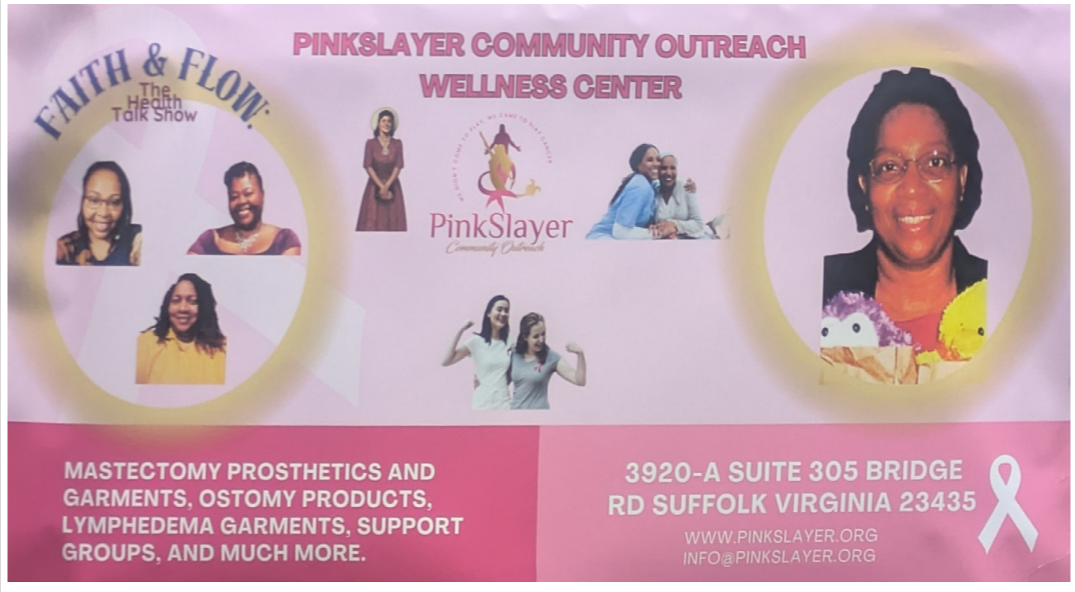
These prevalent disparities in access to care, along with my own experience as a survivor of cancer 2 times over, moved me to found PinkSlayer Community Outreach, a cancer advocacy organization that provides patient navigation services, educational programs, prosthetics, garments, medical supplies, and virtual and in-person support groups.
PinkSlayer is built on encouraging self-advocacy and strategies for effective communication with health care professionals, as many patients with cancer have difficulty understanding the information provided to them by their medical team. To build these skills in patients, their families, and caregivers, our dedicated volunteers offer training through webinars, support groups, and community events, so that these individuals feel empowered to take control of their own health.
PinkSlayer’s comprehensive community engagement model includes 4 key components: patient navigation, posttreatment support, community outreach, and education and communication techniques.
Removing Barriers to Care Through Patient Navigation
Over several decades, patient navigators have slowly come to be recognized as essential personnel in the cancer care continuum. By guiding patients through the complex health care system and providing personalized support, our trained navigators assist patients in overcoming barriers to care such as transportation, insurance issues, and language differences.
At PinkSlayer, navigators are patients’ first point of contact when they come into our office. After patients fill out an intake form to help us determine their needs, navigators walk patients through each appointment and test throughout their treatment journey to ensure that no one falls through the cracks. In our care model, navigators make sure that patients receive the resources and care they need at every stage of their treatment, which reduces delays in treatment and improves overall health outcomes. In fact, patients at PinkSlayer consistently report feeling more supported and better equipped to navigate the health care system, resulting in fewer missed appointments and more timely access to care.
Providing Posttreatment Support
After patients conclude their cancer treatment and are released from their medical oncology team, they often find themselves out in the world not knowing what to do and how best to care for themselves at this stage. Patients may have new long-term adverse effects as a result of their treatment, and they don’t know who to turn to.
Posttreatment care is, therefore, vital in helping survivors transition from active treatment to long-term health and wellbeing. At this stage, each PinkSlayer client receives a survivorship care plan that includes follow-up care, mental health resources, and lifestyle management. Our clients don’t leave us when their treatment ends; they stay with us for a lifetime—or however long they need—because life as a cancer survivor is very different from anything they have had to deal with before. By providing continuous support, we help survivors manage the physical and emotional challenges that often arise after treatment ends.
Engaging With the Community
Coming up with fun, innovative ways to bring community members together is easily my favorite part of my job. With the goal of cultivating engagement between underserved populations and medical professionals, it’s all about building relationships and bridging gaps. One event we are currently working on is Family Field Day, which is meant to get families active through games and competitions while allowing them to interact with providers.
The first step to earning the trust of underserved populations is to break down communication barriers. We want individuals to view their doctor not as a stranger who gives them a shot and some bad news, but as a member of their community. When these relationships have a chance to grow, individuals are more likely to take preventive measures for their health and see their providers before receiving a serious diagnosis. Engaging the community is essential for increasing both awareness and access to cancer care, and brings potentially life-saving resources to underserved populations that need them most.


Education and Communication Techniques
Effective communication is key to empowering patients and improving health outcomes. To build this skill, our staff members train patients how to effectively advocate for themselves and communicate with medical professionals. It’s easy for providers to slip into medical jargon because that’s what they spend years learning. But a patient with less education is not necessarily going to understand the difficult terminology. Not only does this breakdown of communication do nothing to build patient trust, it can also result in patients not following medical advice because it wasn’t presented to them in a way they could understand; they may even avoid returning to their doctor for fear of being perceived as ignorant.
PinkSlayer’s model includes hands-on educational sessions through which patients and caregivers engage in simulation-based training and interactive workshops alongside health care professionals. Participants practice skills including administering self-care, recognizing symptoms, and understanding treatment protocols. These sessions serve to enhance patients’ understanding of their care and their confidence in managing their health. The result is a stronger patient-provider relationship that benefits everyone involved.
While it is important for patients to feel empowered and confident in their own knowledge, we must not blame patients if they don’t understand the information presented to them by their provider. Instead, we need to reframe patient education as the responsibility of the health care professional. If a patient doesn’t understand what has been relayed, the provider must explain it another way.
Since founding PinkSlayer in 2016, my mission has always been to meet the unique needs of underserved communities by providing essential care and resources. Through personalized support, education, and access to key services, we will continue to serve the most vulnerable populations and empower them to take control of their health.
Kristie Fields, MHS, is the founder and CEO of PinkSlayer Community Outreach Wellness Center.





Recognizing the critical role advanced practice providers and allied health professionals play in the care continuum, the American Oncology Network provides infrastructure, leadership, and professional growth opportunities to empower these members of the cancer care team to practice at the top of their license.