ACCC association of cancer care centers
Join/Renew
Login
Join/Renew
Login
Education & Resources
ACCC eXchange LogInCorporate Member Sponsored ResourcesPresentations & AbstractsPresident's ThemeACCC Connect eLearning LogIn
Publications
Oncology IssuesPatient Assistance & Reimbursement GuideTrending Now in Cancer Care
Events
2026 ACCC Leadership SummitAnnual Meeting & Cancer Center Business SummitCapitol Hill DayNational Oncology ConferenceOncology Reimbursement MeetingsOncology State Society Meetings
Policy & Advocacy
2024 Policy Wrap-Up and ACCC 2025 Policy PrioritiesLetters & StatementsAccess, Payment & Reimbursement ReformWhite Bagging & Brown BaggingAdvocacy ResourcesCancer Moonshot
Membership
Join | RenewWho We AreMembership Types & BenefitsCorporate MembersACCC Member Portal FAQMember Directory
Partners
Oncology State SocietiesPartner OrganizationsCME
News
News ReleasesAdvocacy News ReleasesOncology News
About ACCC
Timeline / 50th Anniversary2025 Impact ReportACCC Innovator AwardsACCC FellowsACCC Senior Staff
Breast CancerMetastatic Breast Cancer
Gastrointestinal CancerBiliary Tract CancerColorectal CancerGastric CancerLiver Cancer
Genitourinary CancerBladder CancerProstate CancerRenal Cell Carcinoma
Gynecologic CancerOvarian Cancer
Head & Neck Cancer
Hematologic MalignanciesAcute Lymphocytic Leukemia (ALL)Acute Myeloid Leukemia (AML)Chronic Lymphocytic Leukemia (CLL)Mantle Cell Lymphoma (MCL)Multiple Myeloma (MM)Myelodysplastic Syndromes (MDS)
Lung CancerNon-Small Cell Lung Cancer (NSCLC)Small Cell Lung Cancer (SCLC)
Sarcoma
Skin CancerMelanomaNon-Melanoma Skin Cancers (NMSC)
Clinical Practice & TreatmentCancer DiagnosticsCare CoordinationEHR Integration for Biomarker TestingQuality Improvement Collaboration: Integration of Precision Medicine in Community OncologyTreatment
Financial NavigationFAN Boot CampFinancial Advocacy Network (FAN) Resource LibraryPatient Assistance & Reimbursement GuidePrior Authorization
Health Equity & Access3, 2, 1, Go! Practical Solutions for Addressing Cancer Care DisparitiesAppalachian Community Cancer AllianceOncology Advanced PractitionersPersonalizing Care for Patients of All BackgroundsSocial Drivers of Health
Patient-Centered CareAddressing Care Disparities for VeteransAdolescent and Young Adult (AYA)Care Action Plans for People with CancerDermatologic ToxicitiesEmpowering CaregiversGeriatric OncologyHealth LiteracyNutritionOncology PharmacyPatient NavigationPsychosocial Care in OncologyShared Decision-MakingSupportive CareSurvivorship Care
Practice Management & OperationsCancer Program FundamentalsLeadership Sustainment and Engagement VideosOncology Practice Transformation and Integration CenterOncology Team Resiliency
ResearchACCC Community Oncology Research Institute (ACORI)
Technology & InnovationTelehealth & Digital Medicine
ACCCBuzz Blog
CANCER BUZZ Podcast
Oncology Issues
Join/Renew
Login
Breast CancerMetastatic Breast Cancer
Gastrointestinal CancerBiliary Tract CancerColorectal CancerGastric CancerLiver Cancer
Genitourinary CancerBladder CancerProstate CancerRenal Cell Carcinoma
Gynecologic CancerOvarian Cancer
Head & Neck Cancer
Hematologic MalignanciesAcute Lymphocytic Leukemia (ALL)Acute Myeloid Leukemia (AML)Chronic Lymphocytic Leukemia (CLL)Mantle Cell Lymphoma (MCL)Multiple Myeloma (MM)Myelodysplastic Syndromes (MDS)
Lung CancerNon-Small Cell Lung Cancer (NSCLC)Small Cell Lung Cancer (SCLC)
Sarcoma
Skin CancerMelanomaNon-Melanoma Skin Cancers (NMSC)
Clinical Practice & TreatmentCancer DiagnosticsCare CoordinationEHR Integration for Biomarker TestingQuality Improvement Collaboration: Integration of Precision Medicine in Community OncologyTreatment
Financial NavigationFAN Boot CampFinancial Advocacy Network (FAN) Resource LibraryPatient Assistance & Reimbursement GuidePrior Authorization
Health Equity & Access3, 2, 1, Go! Practical Solutions for Addressing Cancer Care DisparitiesAppalachian Community Cancer AllianceOncology Advanced PractitionersPersonalizing Care for Patients of All BackgroundsSocial Drivers of Health
Patient-Centered CareAddressing Care Disparities for VeteransAdolescent and Young Adult (AYA)Care Action Plans for People with CancerDermatologic ToxicitiesEmpowering CaregiversGeriatric OncologyHealth LiteracyNutritionOncology PharmacyPatient NavigationPsychosocial Care in OncologyShared Decision-MakingSupportive CareSurvivorship Care
Practice Management & OperationsCancer Program FundamentalsLeadership Sustainment and Engagement VideosOncology Practice Transformation and Integration CenterOncology Team Resiliency
ResearchACCC Community Oncology Research Institute (ACORI)
Technology & InnovationTelehealth & Digital Medicine
ACCCBuzz Blog
CANCER BUZZ Podcast
Oncology Issues
    • Education & Resources
    • Publications
    • Events
    • Policy & Advocacy
    • Membership
    • Partners
    • News
    • About ACCC
ACCC association of cancer care centers
1801 Research Boulevard, Suite 400, Rockville, MD 20850
Tel: 301.984.9496 Fax: 301.770.1949 Email Us
Contact UsVolunteers
Advertise
Career Center
Terms and Conditions
Privacy Policy
ACCC Rebranding
Copyright © 2026 Association of Cancer Care Centers. All Rights Reserved.
Advertisement

Blog

Article

September 15, 2020

Using Resiliency to Drive Positive Change

Using Resiliency to Drive Positive Change

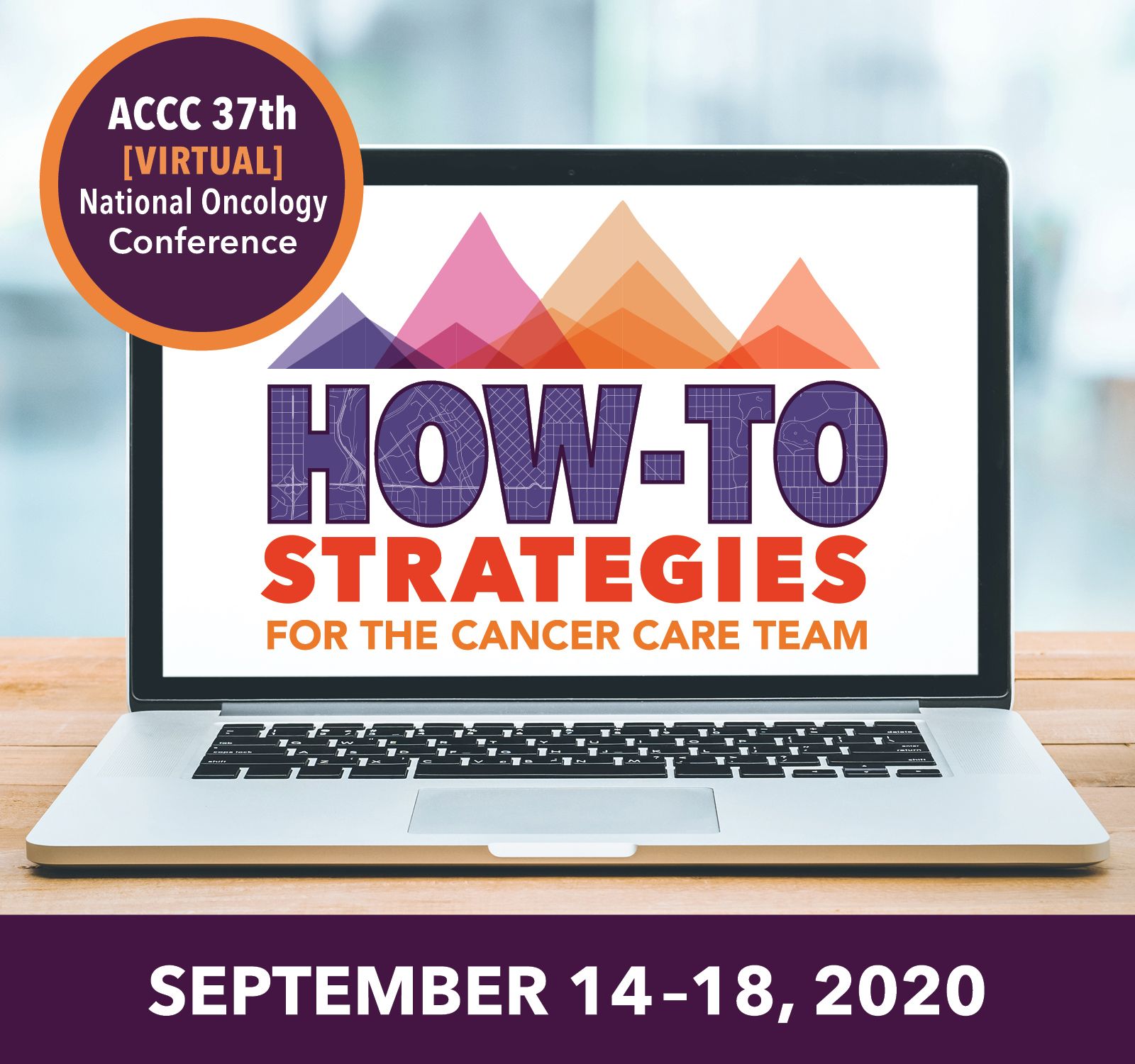
In kicking off the ACCC 37th [Virtual] National Oncology Conference, ACCC President Randall A. Oyer, MD, acknowledged the reverberating effects of the pandemic on all aspects of our lives, including how we meet, exchange information, and learn from one another. Dr. Oyer explained that this is reflected in the virtual delivery of this year’s conference, which is offering attendees the opportunity to remotely participate in engaging conversations with colleagues at a location and time that is most convenient for them.

This openness to new ways of doing established things, Dr. Oyer said, is not new to members of the cancer care team. “Adversity can and does inspire innovation,” he affirmed, giving as examples the ideas that have been developed and exchanged among ACCC members since COVID-19 began changing many of the old ways of doing things. “Members have quickly adapted and innovated and provided valuable information to one another,” affirmed Dr. Oyer.

Some prime examples of innovation inspired by adversity or created to meet changing needs are the programs developed by the recipients of the 2020 ACCC Innovator Awards. Launched in 2011, 81 enterprising programs have been awarded ACCC Innovator Awards. “These programs demonstrate that, at its best, innovation inspires collaboration in that all members of the cancer care team must come together to drive change,” said Dr. Oyer.

After sharing a video celebrating 10 years of ACCC Innovator Awards, Dr. Oyer announced the 2020 winners and showed brief video clips highlighting the winning programs. These programs will be discussed in sessions throughout the week, culminating with a live Q&A with award winners on Thursday, Sept. 17. Dr. Oyer then introduced the opening day’s keynote address, Leadership Resilience and Post-Traumatic Growth, delivered by Greg Hiebert, Leadership Educator, Coach, and Consultant with leadershipForward®.

Heibert began addressing his theme of resilience by drawing attention to how, for many cancer programs, COVID-19 has provided an unexpected springboard to innovation. Cancer care teams have been compelled to devise new ways of providing services when traditional avenues have been cut off, said Heibert. “The pandemic has seen us through the Fear Zone, the Learning Zone, and the Contribution Zone,” he explained, “where we have come up with innovative solutions to new problems.”

Heibert said the Contribution Zone originates in fear and builds on learning as people emerge from challenges to commit to a series of leadership strategies. These strategies enable them to rise above their self-interests and take into account the needs of the entire community. This occurs when people can acknowledge the following:

  • I work to use my skills in service to others.
  • I think of how I can help, support, and connect with others.
  • I find a purpose and meaning bigger than my self-interests.
  • I show empathy to others and myself.
  • I live in the present and focus on the future.
  • I maintain positive emotion and transmit hope.
  • I am grateful and share it with others.
  • I find ways to adapt to change and difficulty.
  • I practice calm, patience, and creativity.

When individuals confront tragedy, Heibert said turning the experience of that tragedy into growth can be a powerful tool. “Post-traumatic growth”—the type experienced by people who have faced tremendous obstacles, such as a pandemic and its casualties—is a necessary catalyst to developing a resilience that can see people through life-changing events. Such resilience, said Heibert, fosters the ability to grow and thrive in adversity by enabling people to deepen their sense of awareness, address their self-regulation, promote optimism, maintain mental agility, use strength of character, and build deeper connections.

Heibert called the cultivation of such resilience a journey rather than a destination. Maintaining awareness of how our perception of this journey is shaped by our own circumstances is also essential, said Heibert, as people are often unaware of how their personal circumstances influence their understanding of people and events. “We don’t see things as they are; we see them as we are,” said Heibert. “Everything we see is filtered through our experience of gender, race, class, and other factors.”

Heibert concluded by remarking that he has seen the power of community—so essential during this pandemic—actually deepening in an era in which close physical contact is often unadvisable. “Today at this conference, we are proving that we can reach and teach one another from a distance,” said Heibert. “Our ongoing challenge is to build and sustain resiliency in the midst of the storm.”

The ACCC 37th [Virtual] National Oncology Conference runs through September 18.